
By Sanjana Rahman Juthi
Many herbaceous plants are peeping out all around us. Do we recognise them all? They not only protect our environment but also have remarkable medicinal qualities. Notable among them is dipto luchi. The name may sound unfamiliar, but this herb is well known to all of us.
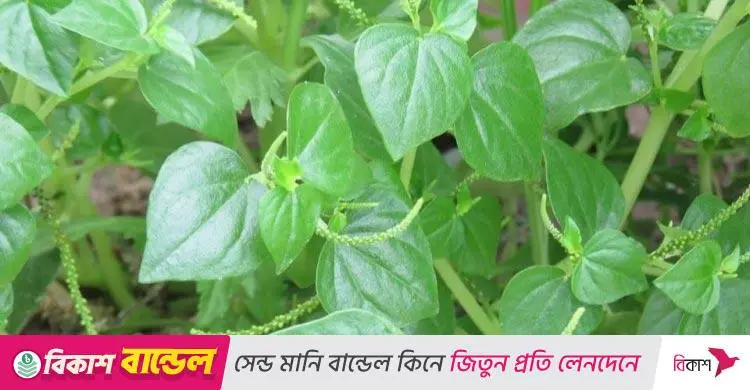
Children call dipto luchi leaves "English fish" or "prawn", because they make fish out of the plant to play with. Its leaves and flowers look rather like luchi, the fried flatbread. The leaves are broad and smooth, and when sunlight falls on the plant it gives off a kind of glow, hence the name dipto luchi ("glowing luchi").
A herb of damp, shady places
The scientific name of dipto luchi is Peperomia pellucida, a flowering herb of the Piperaceae family. The plant grows 15 to 45 centimetres tall and is usually found in damp places with little light. It has been used medicinally since ancient times.
Benefits
The writer lists the following benefits:
- Extract of the leaves and stem helps reduce pain, and is effective against rheumatic pain, headache and other body aches.
- In inflammatory conditions such as gout and arthritis, the plant's extract reduces inflammation.
- The plant's oil stops fungal growth, and is especially effective against the pathogen that causes brown spot disease in rice.
- Its active compounds may help prevent the growth of cancer cells.
- Leaf extract helps reduce fever; research has found its effect to be as effective as aspirin.
- Extract of the plant can kill bacteria, and in some cases shows a stronger antibacterial effect than penicillin.
- In Brazil the plant is used to lower blood cholesterol, which is why it is very well known there.
- Its extract helps remove excess water and salt from the body, improving kidney function.
- It increases bile secretion, which is good for digestion and liver health.
- It helps reduce excess internal heat, bringing relief from fever or when the body runs hot.
- Eating the fresh leaves as salad or as an infusion helps with gout and arthritis.
- Dipto luchi leaf extract is used in treating breathing disorders such as asthma and bronchitis.
- Applying extract of the fresh leaves to wounds, boils and acne brings quick healing.
- Washing the face with the leaves and stem helps with acne, blemishes and other skin problems.
Source: Jagonews24. First published in Bengali on The Agro News.

Comments
(0)