
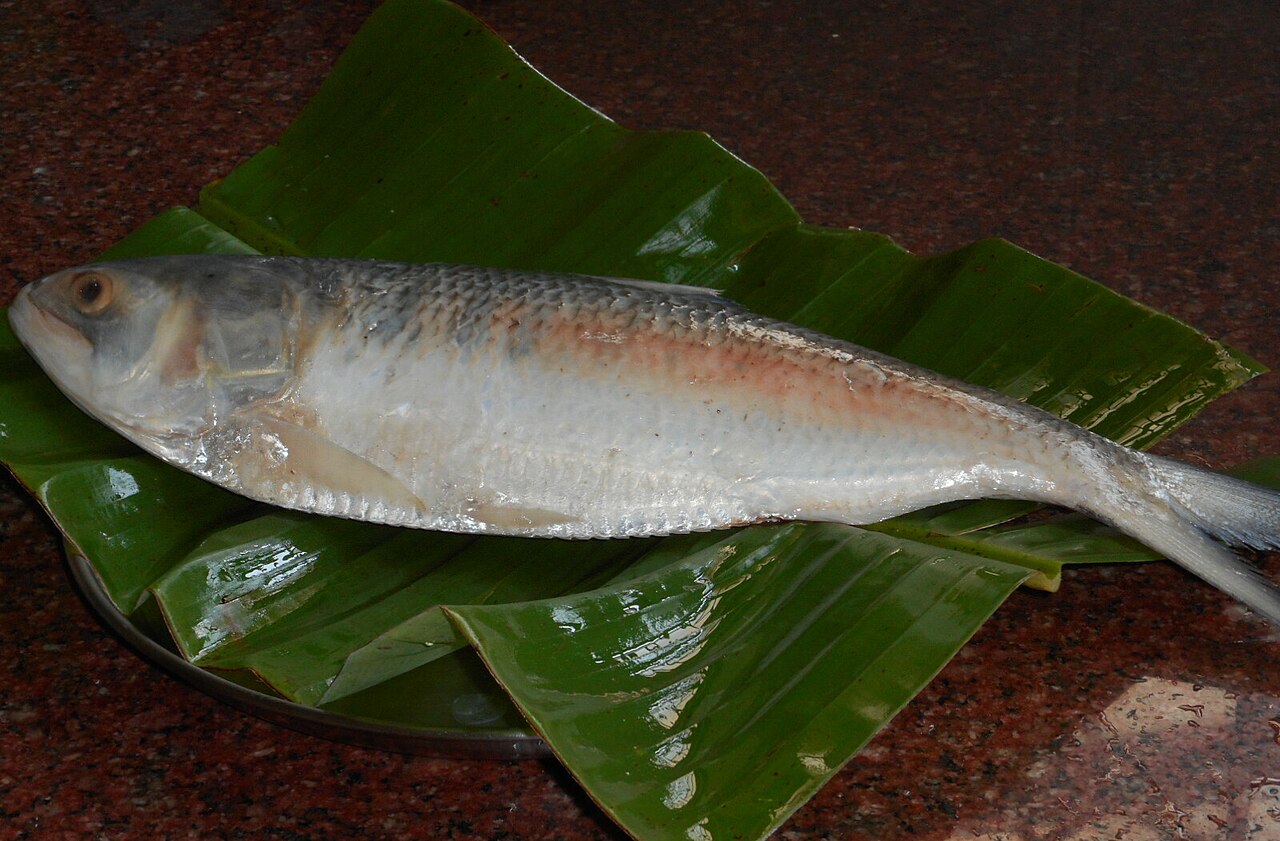
Hilsa leave the salty sea and swim upstream against the current to spawn in fresh water, then return to the sea. Where the rivers lose depth or shoals form, that journey is blocked. In a report in Amader Shomoy, researchers say silt and submerged shoals have increased in several upstream rivers since the Rabnabad channel serving Payra port was dredged, affecting the hilsa's migration route.
Department of Fisheries figures show a record hilsa catch of 571,342 tonnes in FY2022-23, falling to 529,487 tonnes in FY2023-24 and to 500,288 tonnes the year after. 'Hilsa catches have never fallen like this before, three years in a row,' said Dr Anisur Rahman, former director of the Bangladesh Fisheries Research Institute's riverine centre in Chandpur.
When flow slows, he explained, silt settles into chars and submerged shoals, and a shoal means a ruined migration route. The Rabnabad, Arial Khan, Hijla, Meghna and other southern rivers reach the sea through the Meghna and serve as hilsa routes; he sees changed flow from the Rabnabad dredging as a major factor. A study published this year in the Bangladesh Maritime Journal also found rapid siltation in channels near Rabnabad after dredging in 2022-24.
Molla Emdadullah, former director of the Hilsa Resource Development and Management Project, said more than 250 chars have formed in the Meghna-Tetulia alone; hilsa migration routes, spawning grounds and nurseries are being destroyed, pollution has risen, and young hilsa blocked by shoals from reaching the sea grow less. Professor Dr Md Yamin Hossain of Rajshahi University's fisheries department said that with rivers so shallow, there is hardly any current in the breeding season.
Researchers say the Rabnabad, Andharmanik and Tiakhali rivers in Patuakhali link the sea to inland waters for migratory fish, and the environmental assessment of the Payra power plant also identified the Rabnabad and Tiakhali as hilsa routes. Experts argue that keeping one shipping channel deep is not enough: the whole migration route, river flow, siltation, water quality and spawning grounds need to be monitored together. Amader Shomoy said the fisheries and livestock secretary could not be reached for comment.
Photo: Prabirghose / Wikimedia Commons (CC BY-SA 4.0)
Source: Amader Somoy
Comments
(0)