
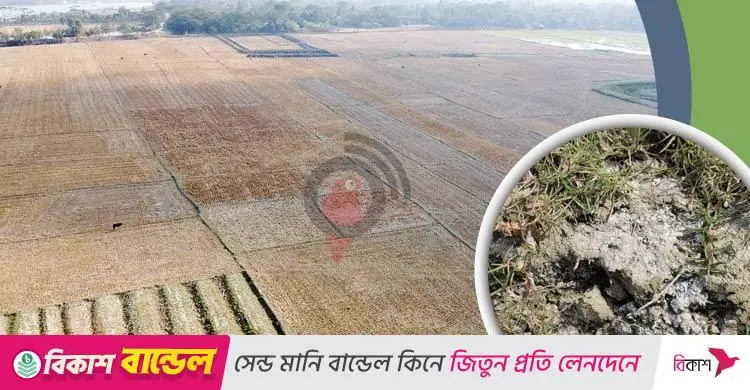
Salinity is rising in the soil and water of Patuakhali and other coastal areas. Over the past decade farmers in the region have faced many problems because of it: farming practices have had to change and much land has been left fallow. Much of the land that once produced two or three crops can now grow nothing but aman rice.
Soil and river readings
Data from the Soil Resource Development Institute (SRDI) show salinity in water and soil rising every year. The institute measures soil and water salinity in Patuakhali and Barguna every month. This April's data show that, across the two districts, soil salinity was highest at North Heubunia in Barguna Sadar upazila, beside the Bishkhali river, at 15.59 dS/m, classed as very highly saline. In Patuakhali the most saline area was Nachnapara in Tiakhali union of Kalapara upazila, at 8.71 dS/m, classed as moderately saline.
River water tests are alarming. In April 2023, salinity in the Tetulia river at the Dashmina point was 0.60 dS/m, safe for irrigation. In April 2025 the same point measured 1.85 dS/m, harmful for irrigation. In the Galachipa river, salinity rose from 0.69 dS/m in April 2023, safe for irrigation, to 2.56 dS/m at the same point in April 2025, harmful. In the Lohalia river, somewhat further from the sea, it was .55 dS/m in April 2023, safe, but the April 2025 report puts it at 1.35 dS/m at low tide, harmful for irrigation.
Ashik Elahi, principal scientific officer at the SRDI's Patuakhali regional office, said soil and water samples from Patuakhali and Barguna are tested every month. Soil is classed as non-saline, very slightly, slightly, moderately or very highly saline, and water is classed as safe, harmful or very harmful for irrigation.
Cropped area falling
Cropping records kept by the Patuakhali district office of the Department of Agricultural Extension (DAE) show that land under transplanted aman fell from 2,94,290 hectares in 2008-09 to 2,35,381 hectares in 2018-19, a fall of 58,909 hectares in 10 years. Aus land fell from 75,700 hectares to 29,525 hectares, and boro land from 4,990 hectares to 3,248 hectares over the same period.
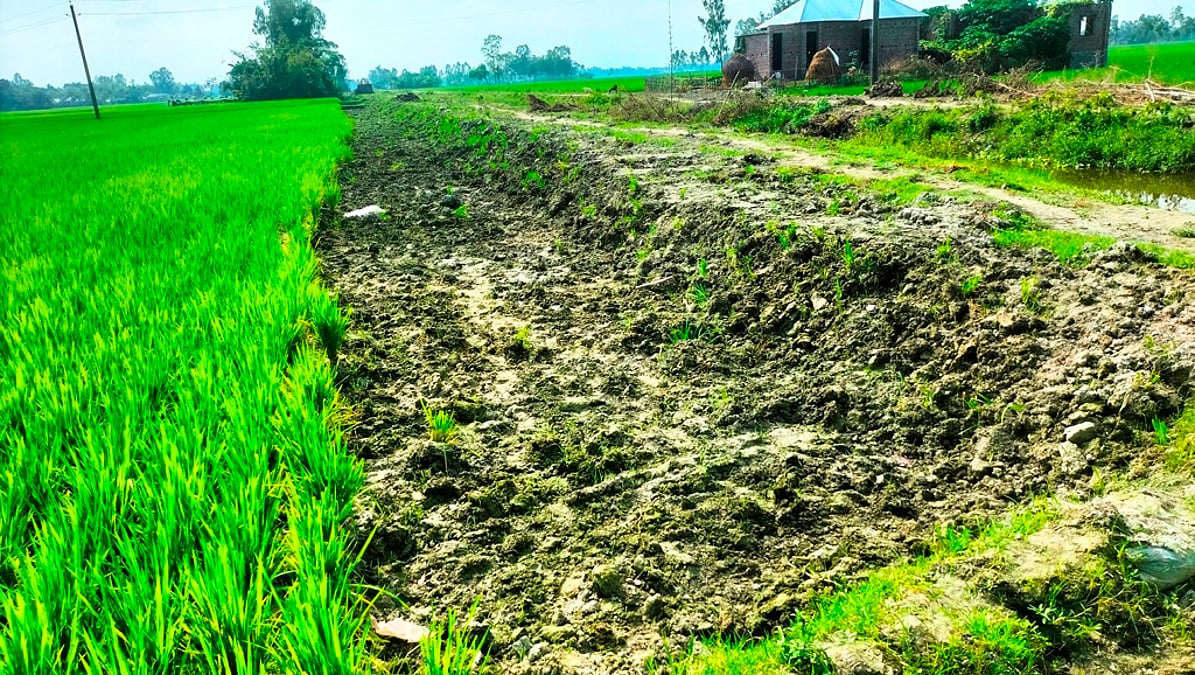
DAE deputy director Md Nazrul Islam, an agriculturist, said drought, excessive rain and heatwaves create many problems for farmers every year, forcing them to farm at great risk. The department is encouraging farmers to grow salt-tolerant crops, and sunflower and maize are becoming popular in the region.
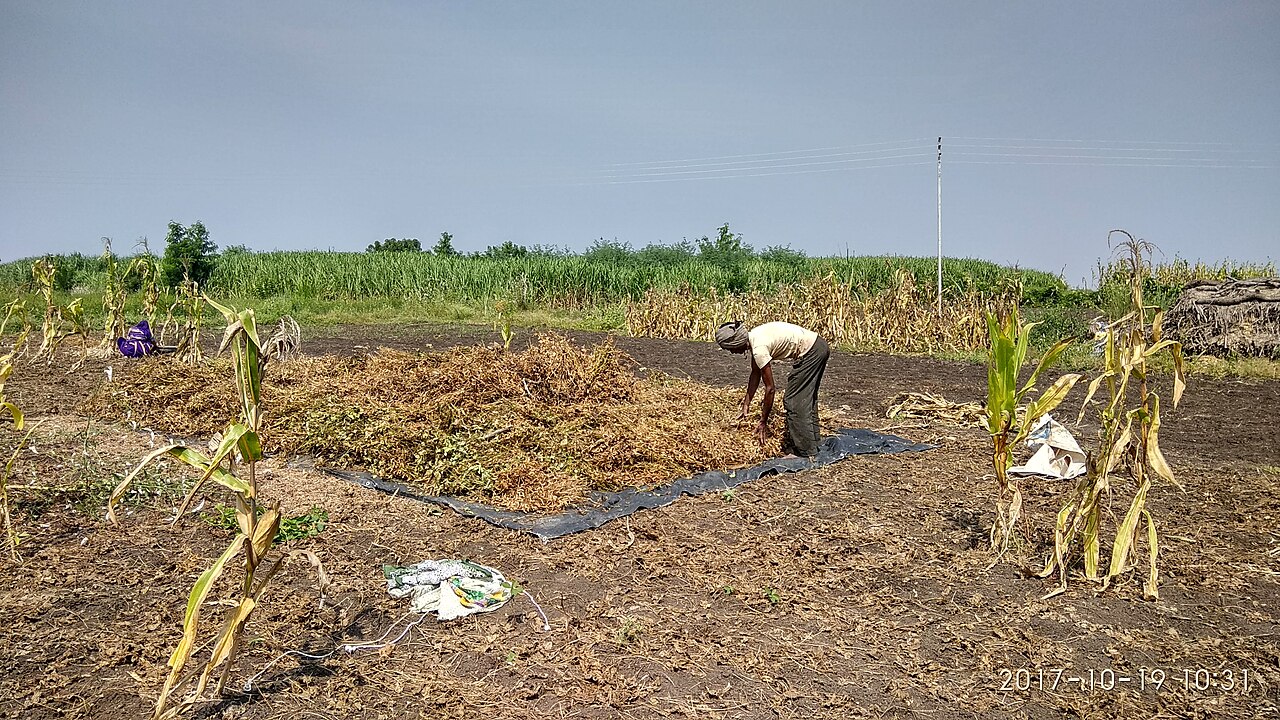
Zakir Hossain, a farmer from Kumirmara village in Nilganj union of Kalapara, said: "We used to not worry about seed or variety. Now we first have to think how many days a crop needs and get it home before the salt comes up. Not every crop grows on every plot, so we have to decide in advance which land gets rice and which gets vegetables or other crops."
Half the land saline
According to the Patuakhali DAE, 27.5 per cent of the district's cropland currently cannot grow any crop in the dry season, and salinity is appearing much earlier this year. Of Patuakhali's 3,07,875 hectares of cultivable land, 1,55,180 hectares, or 50.4 per cent, is saline. On 42,980 hectares farmers grow some crops but make no profit, and on 15,770 hectares no crop can be grown. A white crust of salt usually appears on the land in March and April, but this year it appeared in early February, adding to farmers' worries. Galachipa and Kalapara upazilas are the worst affected.
Coastal farmers say they used to sow local or ordinary seed, but now must choose varieties with salinity in mind, growing those that are salt-tolerant and can withstand the conditions. A wrong choice brings losses, so farmers must be more aware and gather more information.
Alongside the government, NGOs are working on coastal agriculture and climate change, helping farmers adapt. Since other crops cannot be grown on saline land, NGOs are supporting sunflower and maize cultivation.
BRAC is providing incentives and other support to farmers in the district's coastal areas. Sabbir Hossain, DMD of BRAC Bank and an agriculture expert, said: "Temperatures are rising, as we can all feel; they have already risen by 1.5 to 1.7 degrees. Much land cannot be cultivated because of drought, and if there has been a 20 to 25 per cent rise over the past 25 to 30 years, that is a big issue for farming. Since agriculture is our main occupation, we are working on how to turn single-crop land into double- or triple-crop land." The support for farmers in the region comes mainly from BRAC Bank's CSR fund, he said.
Agricultural scientists say farming is an ancient and ever-changing industry that builds civilisations, and it will survive the climate crisis, but agriculture and farmers must modernise.
Source: Jagonews24. First published in Bengali on The Agro News.
Comments
(0)