
By Zahidul Islam Mehedi
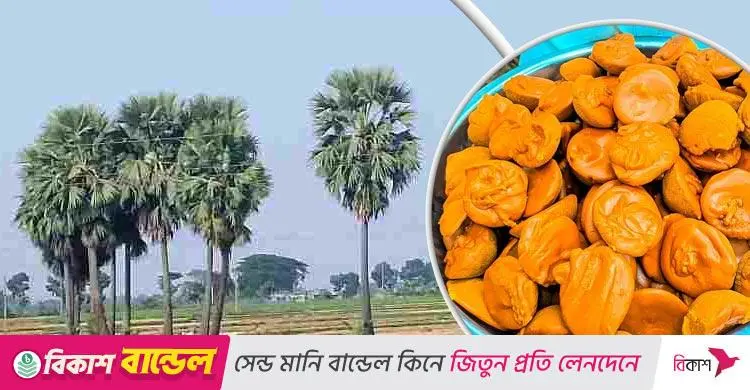
Patuakhali, Barguna and Pirojpur, three coastal districts in the south, were once known as a region of natural disasters. But over the past few years another identity has been standing tall in the country's markets: palm patali jaggery (gur).
Made from palm sap, this jaggery is unmatched in taste and far cheaper than other jaggery. It is steadily gaining popularity in the capital and other cities, and sells wholesale at the source for only Tk 180 a kg.
The sap collected from palm trees is boiled on a stove for several hours to make the jaggery. No chemicals or preservatives are added; it is a completely pure and wholesome natural sweet.
"No adulteration"
Md Shamsul Haque, a jaggery maker in Barguna's Amtali upazila, said: "I climb the trees at dawn to bring down the sap. In the morning I boil it on the stove, and by midday the jaggery is ready. Nothing is mixed in, so the taste is different from all other jaggery."
It would not be wrong to say its flavour carries an earthy aroma. Many say that as soon as they taste it, the faded flavour of childhood comes back.
Markets in Dhaka and other cities usually sell sugarcane jaggery or blended jaggery made as a substitute with artificial sugar. But palm patali jaggery, soft, glossy and unmatched in taste, is quickly winning over urban consumers.
Selina Rahman, a homemaker in Khilgaon in the capital, said: "I have this jaggery brought from my village home. It has none of the pungent smell of market jaggery. It tastes wonderful in payesh, pitha and even mixed with milk."
Obstacles to growth
There are limits to its potential, however. Makers and traders said falling tree numbers, labour shortages and a lack of modern processing mean the jaggery still cannot be produced and marketed on a large scale.
Azizul Haque, a farmer in Patuakhali's Kalapara upazila, said: "If the government helped with modern equipment, training and storage, we could produce much more jaggery. It could be sent abroad too."
Experts believe the jaggery could be a promising farm product not only at home but in foreign markets, but that this needs packaging, quality control and government patronage.
The Pirojpur Chamber of Commerce says that if palm patali jaggery is recognised as a geographical indication (GI) product, it could become established as an international brand. The jaggery is very popular among expatriates, who take it with them directly from home.
Palm patali jaggery is not just a food product but an important part of rural life in Bengal, carrying the pull of roots and the touch of tradition. With proper planning, preservation and marketing, it could become the sweet future of the coastal economy.
The writer is a feature writer and journalist.
Source: Jagonews24. First published in Bengali on The Agro News.


Comments
(0)