
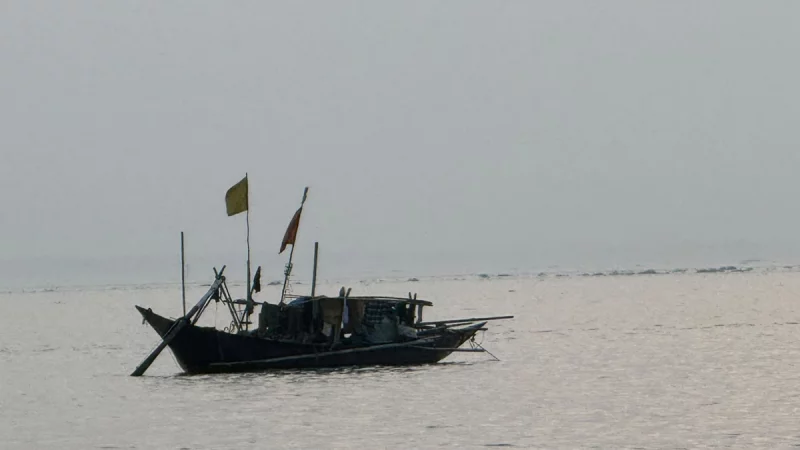
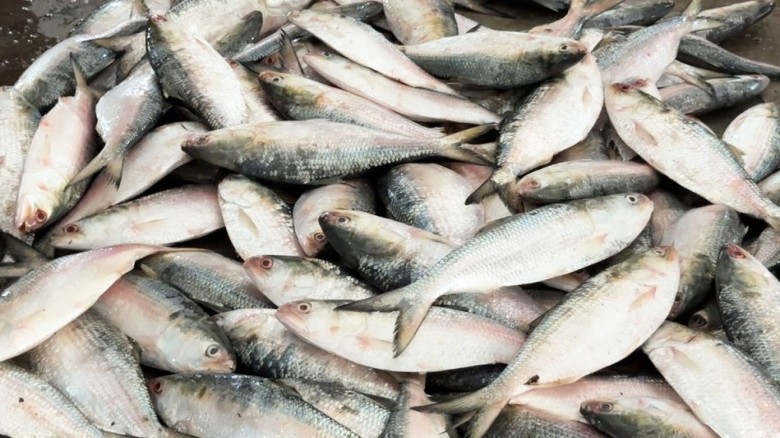
Fishermen on the Padma in Manikganj are no longer finding the hilsa their nets once filled with. Large numbers of people in Daulatpur, Shibalay and Harirampur upazilas depend on the Padma and the Jamuna, and Padma hilsa was the mainstay of their living; after several lean years, the catch barely covers the cost of running a boat, and many are being forced into other work.
The Department of Fisheries' Yearbook of Fisheries Statistics of Bangladesh puts the Lower Padma hilsa catch at 1,159 tonnes in the 2020-21 fiscal year, 1,117 tonnes in 2021-22, 1,122 tonnes in 2022-23, 1,090 tonnes in 2023-24 and just 622 tonnes in 2024-25. That is a fall of 537 tonnes, or about 46.33 per cent, in four years — 468 tonnes of it in the last year alone.
Faruk Hossain Bepari, a fisherman from Bahirchar village in Harirampur, said fishing alone no longer feeds a family, so he farms as well; he believes the river is not as deep as it was and the fish no longer come. Lalon Molla of Velabad village thinks the loss of depth and the noise of mechanised boats and ships are driving hilsa away. Liton, a registered fisherman from Darikandi village, has sold his boat and nets and now pulls a rickshaw.
Experts say silt-built shoals and chars on the route hilsa take from the sea to spawn in fresh water are blocking their movement, along with changes in salinity and flow, shifts in the timing of the rains, pollution from unmanaged waste and the breakdown of the river's natural food chain. The unchecked use of current nets and the harmful China duari traps to take jatka (juvenile hilsa) and brood fish is disrupting the breeding cycle as well.
District fisheries office figures show 262 drives and 75 mobile courts held to protect hilsa up to June 2026, seizing 3 tonnes of hilsa and 229,000 metres of illegal nets, filing 109 cases, jailing 70 people and collecting Tk 200,000 in fines.
Harirampur upazila fisheries officer Md Nurul Ikram said emerging chars, vessel traffic, pollution and illegal nets were obstructing hilsa movement and that legal action against illegal fishing continued. Manikganj district fisheries officer Sheikh Monirul Islam Monir said siltation, pollution and lack of awareness had brought the hilsa shortage to the Padma and Jamuna, but that government monitoring to protect breeding and movement had been stepped up. The report is by Ittefaq's Manikganj correspondent M Nazrul Islam.
Source: Ittefaq
Comments
(0)