
By Syed Mazarul Islam Rubel
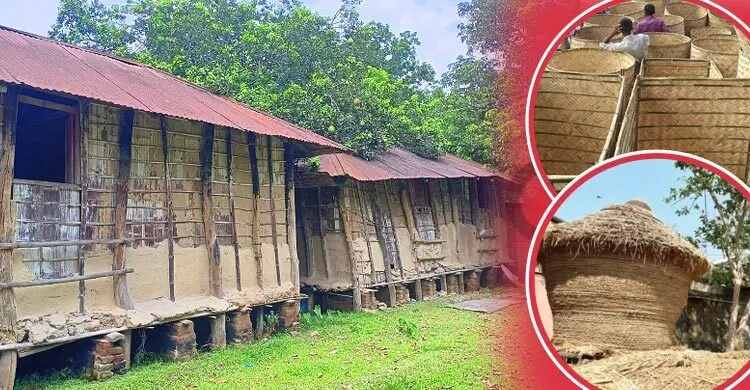
There was a time when every house in the village had a paddy granary, whether the farmer was a sharecropper or a landowner. Even village marriages were arranged after checking whether the household had a granary. But with time, because of automatic rice mills and imported rice, the granary is no longer seen.
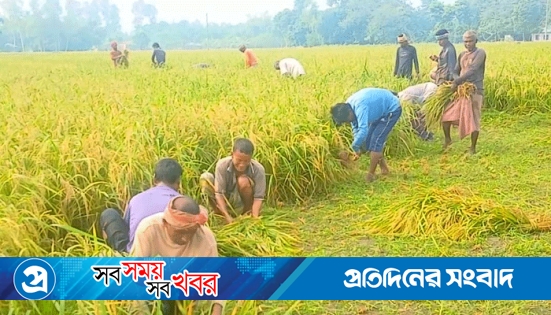
There are other reasons too. With rain and other bad weather, and a shortage of labour, hardly anyone wants to do the hard work of drying paddy and keeping it in a granary. So as soon as the paddy is harvested, everyone sells it raw for a nominal price, and then buys rice at a higher price with cash.
Middlemen gain
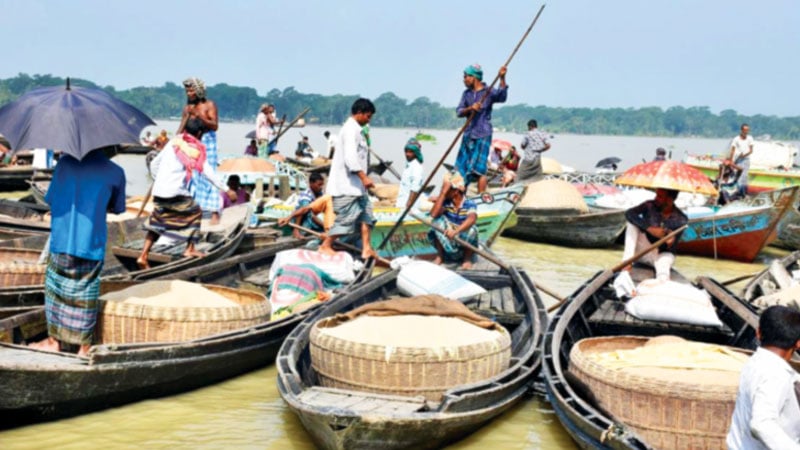
This lets a class of seasonal middlemen and mill owners profit. At the start of the harvest season all the paddy goes to the godowns of mill owners and hoarders. Fair prices are hard to get anyway, and on top of that they take 42 to 45 kg for each maund.
The local price of paddy is Tk 900 to Tk 950. The fair price set by the government stays on paper only; local farmers, sharecroppers and landowners get no benefit from it. All the profit goes to the middlemen. The farmer later has to buy back his own paddy at a higher price, and rice at a higher price still.
If a natural disaster or national crisis suddenly strikes, local people have no paddy stocks to meet even a few days' food shortage, which could lead to famine. Local storage of paddy is vital to face any unexpected crisis.
So we must turn towards agriculture. Alongside any profession, people in rural areas should give attention to farming. In a crisis like coronavirus we saw how prices of goods shoot up, and market prices are rising all the time. If there is no paddy or rice in the farmer's granary, one day he himself will go hungry. It is time to think about this.
The writer is a fiction writer and organiser.
Source: Jagonews24. First published in Bengali on The Agro News.
Comments
(0)