
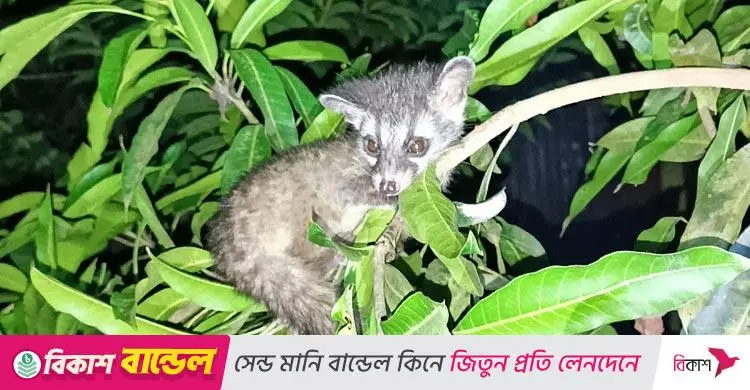
As evening falls, the scent of fragrant polao rice spreads through several areas of Bera upazila in Pabna. That is when locals know the endangered gandhagokul is nearby. Known locally as "nel", the animals can be seen running about after dusk.
Locals say the gandhagokul is still seen in several neighbourhoods of Bera municipality, including Maitrabandha, Sheikhpara, Daspara and Hatigara, though in smaller numbers than before.
When a photo of the animal was sent to Jahangir Kabir, wildlife inspector of the Rajshahi divisional wildlife management and nature conservation department, he identified it as a "bagdash". He said that although endangered, it is still seen in some places.
Neighbours of the townsfolk
Locals say that over the years the animal's presence has built a bond with residents, and most of them are fond of it. Even though it takes domestic ducks, chickens and pigeons, they have not set traps or done anything else to drive it away or harm it.
Shikha Raha, a retired schoolteacher in Maitrabandha, said: "They often pass over the roof of my house. I think they live in a tree or an abandoned building nearby. When I go on the roof after dusk I often smell polao. Sometimes I see two or three of them moving about. Three or four months ago I saw two young ones in the bushes of my rooftop garden. Two or three days later they were gone. Their mother probably moved them elsewhere."
Abdus Salam, retired assistant professor of zoology at Monjur Kader Women's College in Bera, said the gandhagokul is close to disappearing from many parts of the country. But in Bera municipality it is somewhat more common, and residents are sympathetic towards it.
A useful animal
Wildlife and environment experts say the animal is now on the way to extinction, though it was once commonly seen in bushes, villages and forests. It is very useful to the environment: by eating frogs, rats and harmful insects it plays a big role in helping plants thrive. It also eats palm fruit, date palm sap and small birds. It benefits the environment by eating harmful insects and by spreading the seeds of the fruit it eats. When it eats banyan figs or other fruit, the seeds passed in its droppings grow into healthy plants: passing through its gut gives the seeds the right conditions for germination, making them fully effective at sprouting later.
It usually breeds twice a year, with a gestation of a little over two months. It raises its young in hollows of old trees, forks in branches, abandoned houses, paddy stores or the tops of palm and betel nut trees, and usually has three young at a time.
Bera upazila livestock officer Mizanur Rahman said the gandhagokul is very shy and afraid of people. People kill it because of habitat destruction and to protect their ducks and chickens, which is why it is now endangered. Everyone should be sympathetic towards it, he said.
Source: Jagonews24. First published in Bengali on The Agro News.

Comments
(0)