
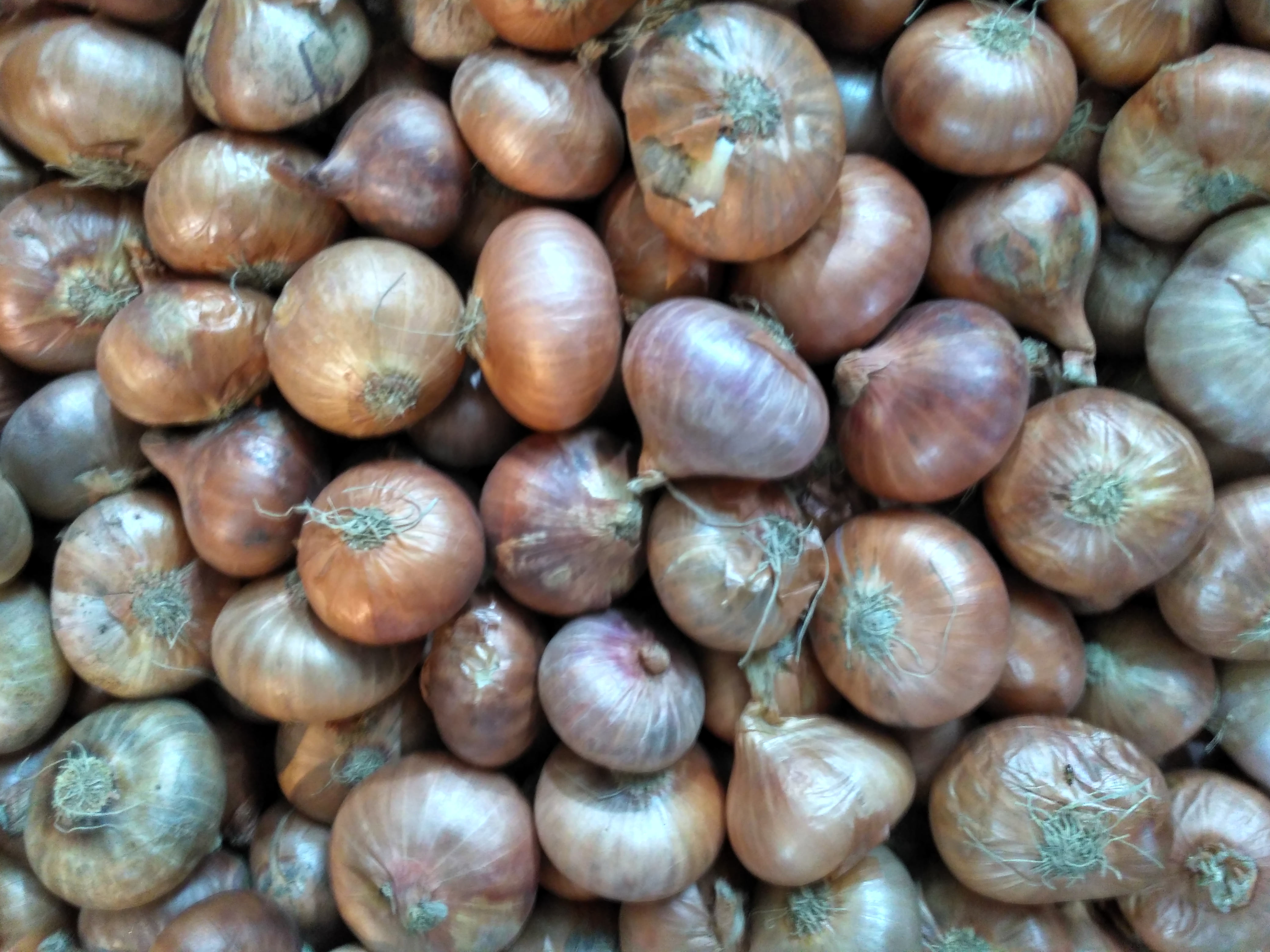
On Monday, 11 October 2021, the commerce ministry said Bangladesh had enough onions in stock but that the market for the kitchen staple was unsettled and could stay fragile for about a month. Commerce Secretary Tapan Kanti Ghosh told journalists this after a meeting in the ministry's conference room at the Secretariat in Dhaka, held to keep the stock, supply, imports and prices of essential goods normal and stable. Commerce Minister Tipu Munshi joined the meeting online. The Daily Ittefaq reported the meeting in its edition of 12 October 2021.
According to The Business Standard, officials of the National Board of Revenue (NBR), the Trading Corporation of Bangladesh (TCB) and the Bangladesh Competition Commission attended, along with traders' leaders and other stakeholders. The meeting covered the wider market for daily essentials, but onion prices were its main concern. Business Insider Bangladesh reported that day that onions had risen to about Tk 70 a kilogram at retail level.
The secretary's outlook: a fragile month before the new crop
"We have enough onion stocks," the commerce secretary said, according to Ittefaq. "Onion production is low from September to November. New onions will come to market in mid or late November, and prices will fall naturally then. Before that, prices may stay high for a month." He said the onion market would not get much worse, but that the production situation and rising onion prices in India would keep it fragile for the coming month. "Our effort will be to make sure prices are reflected reasonably and that traders cannot make excessive profits," he said.
The Business Standard reported that the secretary put the latest rise down to heavy rain in Bangalore (Bengaluru), in southern India. He said the agriculture ministry expected prices to take at least a month to settle, until the supply of new onions increased. Rain in Bangalore, together with fears that India might suspend exports in September and October, had unsettled the market, he said.
He also told reporters that prices had already come down by Tk 5 to Tk 6 a kilogram after the government stepped in, and that he expected further falls in the following days. Domestic production, he said, meets about 80 percent of the country's onion demand, and the remaining 20 percent comes mostly from India.
The secretary said letters had been sent to the district administrations asking them to monitor the markets and to watch whether traders were charging excessive prices. Efforts were being made to keep the situation bearable for consumers, he said.
Stocks of about five lakh tonnes, imports from India and Myanmar
Joining online, the commerce minister told journalists that the country had about 5 lakh tonnes of onions in stock, so there was no reason to panic, and that imports from India and Myanmar were continuing. "The supply of onions is normal as we've some 500,000 tonnes in stock," he said, as quoted by the news agency UNB in a report Prothom Alo English carried that day. He added that new onions would reach the markets in about a month.
The minister said the commerce ministry had stepped up market drives, and that the Directorate of National Consumer Rights Protection and the local administration had increased monitoring of markets in the field. The government had taken every measure to keep the supply, stocks and prices of onions normal, he said, and would take tough action against anyone who manipulated the onion market or created an artificial shortage. UNB reported that he urged traders to run their businesses with honesty and sincerity. The Business Standard quoted him as saying that efforts were under way to control the prices of essential goods but that "we can't interfere everywhere".
At the start of the meeting, AHM Safiquzzaman, an additional secretary of the commerce ministry, presented a comparison of international market prices with the situation in Bangladesh for onions, edible oil, sugar and lentils. Business Insider Bangladesh reported him as saying that the government had already procured 15,000 tonnes of onions from India and Turkey and that work was under way to buy more from other sources to meet local demand.
Requests to the NBR, the land ports and the agriculture department
The secretary said the National Board of Revenue had already been asked to withdraw the duty on onions. "We hope for a positive result on this within a day or two," he said. The Business Standard reported that the ministry's letter asked the board to withdraw the 5 percent duty on imported onions. The ministry also asked the NBR to cut import duties on crude soybean oil, palm oil and sugar, according to UNB, and Business Insider Bangladesh reported that it sought cuts in supplementary duty and advance income tax as well.
The NBR is the central tax authority of Bangladesh. It was set up in 1972 under the National Board of Revenue Order of that year, is attached to the Internal Resources Division of the Ministry of Finance, and administers customs duty, value added tax and income tax.
The commerce ministry said it had also asked the NBR to make special arrangements for onions to be released quickly at the ports. It asked the chairman of the land port authority to make sure that trucks carrying onions in the border areas did not get stuck in jams. Business Insider Bangladesh reported that the request went to the chairmen of all the land ports and asked for the smooth movement of onion-laden trucks. The Bangladesh Land Port Authority, created in 2001 and placed under the Ministry of Shipping, runs the country's land ports, among them Benapole, Hili, Bhomra, Burimari, Banglabandha and Teknaf, the port through which onions from Myanmar have come in.
The agriculture department was asked to issue onion import permits quickly. Under the Plant Quarantine Act 2011 (Act No. 5 of 2011), no importer may bring plants or plant products into Bangladesh without an import permit (section 9), and each consignment must enter through a designated point of entry with its permit and a phytosanitary certificate from the exporting country's plant quarantine authority, for examination by a plant quarantine officer (section 10). Until a separate National Plant Quarantine Authority is set up, the Act makes the Director of the Plant Protection Wing of the Department of Agricultural Extension that authority (section 3).
TCB's Tk 30 onions and market monitoring
To control the onion market, the commerce ministry said, TCB was selling onions on the open market at Tk 30 a kilogram. Onions were being sold every day from 400 trucks across the country, in quantities of 400 to 1,000 kg, the ministry said. UNB also reported that TCB was selling onions at Tk 30 a kilogram from trucks.
The Trading Corporation of Bangladesh is a state-owned trading body under the Ministry of Commerce, set up in 1972 by Presidential Order No. 68, according to Banglapedia. It took over the assets and staff of the former Trading Corporation of Pakistan and was meant to import goods the government needed and distribute them at fair prices to keep markets stable. With the open-market policies of the 1990s its share of imports fell sharply, but it has often acted in crises, importing essentials such as onions, lentils, salt and medicines. Its head office is at Karwan Bazar in Dhaka, with regional offices in Dhaka, Chattogram, Khulna, Rajshahi, Sylhet, Barishal and Rangpur.
Truck sales of onions were not new. When prices jumped in September 2019, The Financial Express reported that TCB was selling onions at Tk 45 a kilogram from 35 trucks across Dhaka while the market price stood at Tk 120 to Tk 130. The secretary of the Consumers Association of Bangladesh told the paper then that daily demand was about 2,000 tonnes and that the sales had almost no effect on the market. In November 2019, The Daily Star reported that TCB had begun selling onions at Tk 45 a kilogram at six points in Chattogram and that about 500 TCB trucks were to sell onions across the country.
Monitoring was also stepped up. Business Insider Bangladesh reported that two teams led by the commerce ministry would watch all the markets under the Dhaka North and Dhaka South city corporations, while deputy commissioners, upazila nirbahi officers and officials of the Directorate of National Consumer Rights Protection would keep monitoring markets across the country. The commerce secretary said the ministry was watching not only retail prices; the tariff commission and other agencies were also observing wholesale prices, especially of edible oil.
The Directorate of National Consumer Rights Protection is established under section 18 of the Consumer Rights Protection Act 2009 (Act No. 26 of 2009), with its head office in Dhaka (section 19). The Act treats selling a product above a price fixed under any law or rule as an act against consumer rights. Section 38 punishes a trader who fails to display a price list in a visible place in a shop when a law or rule requires it, and section 40 punishes selling above a fixed price; each carries up to one year in prison, a fine of up to Tk 50,000, or both.
How much onion Bangladesh grows, needs and imports
The country's onion figures vary from one official source to another, and the reports of 2021 gave them as ranges. The Financial Express, reporting the 11 October meeting, put annual demand at 2.2 to 2.5 million tonnes and said that, according to commerce ministry figures, imports had grown from about 0.4 million tonnes in the 2008-09 fiscal year to about 1.1 million tonnes in recent years.
In June 2021 the same paper gave the commerce ministry's estimate of demand as 2.3 to 2.5 million tonnes, with 0.9 to 1.1 million tonnes imported each year to cover the gap. The agriculture ministry expected output of 2.47 million tonnes in 2021 against demand of 2.5 million tonnes, the paper reported; the previous year's production had been put at 1.91 million tonnes after a loss of 25 percent during processing. Bangladesh had imported 0.53 million tonnes of onions up to 22 May 2021, and the shortfall was being met with onions from Egypt, Turkey, Myanmar, China, Pakistan and India.
In September 2020, the agriculture ministry said it aimed to produce at least 3.0 million tonnes in the coming rabi (winter) season, after about 2.5 million tonnes in the previous one, The Financial Express reported. The average yield was about 10 tonnes a hectare, which, the paper reported, could roughly double with new technology and varieties. Post-harvest losses were about 15 percent because onions, with their high water content, cannot be stored well in the existing cold stores. The country needed 1,100 to 1,200 tonnes of onion seed a year, of which the government produced about 60 tonnes and private companies supplied the rest.
The onion crop and its seasons
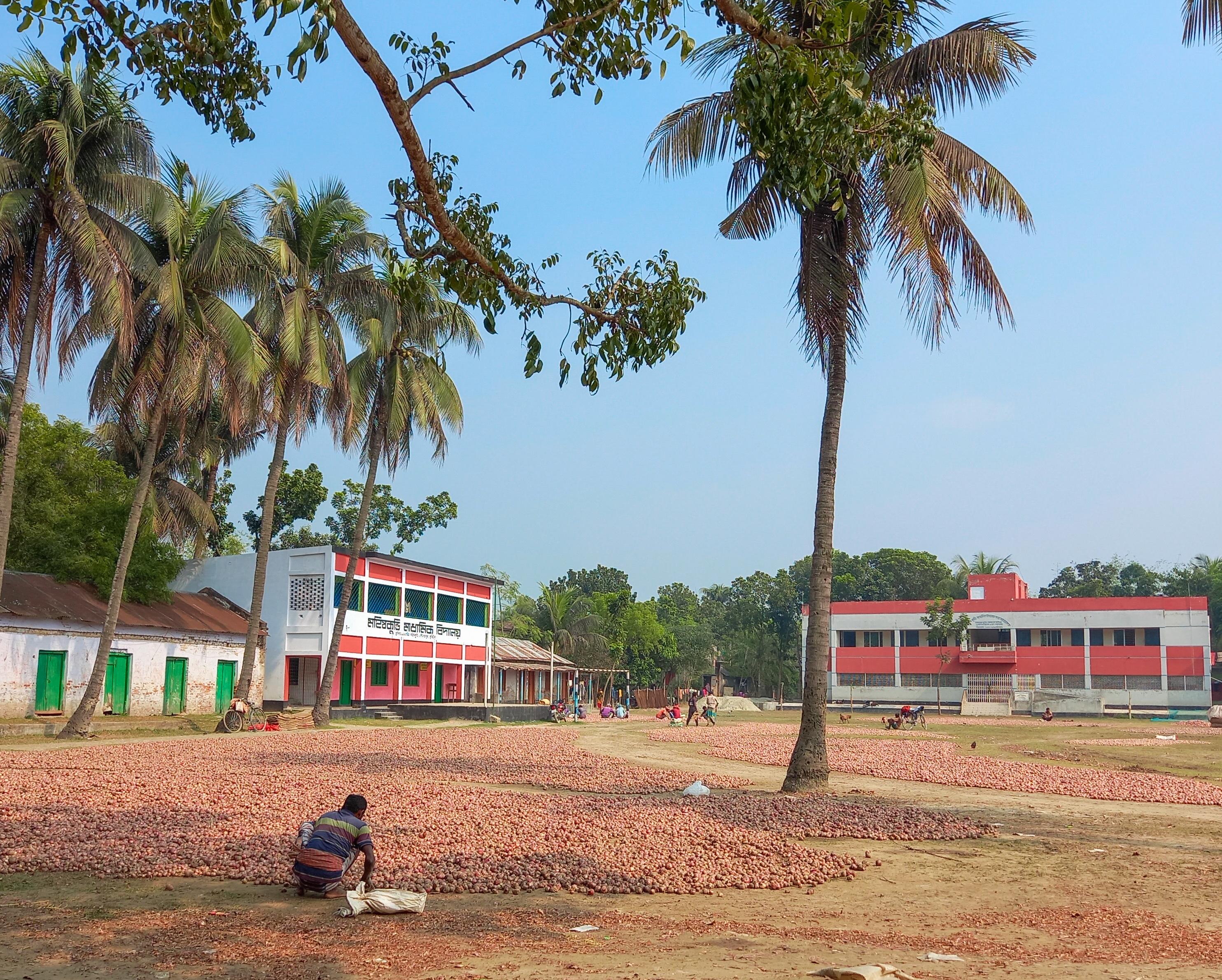
The onion (Allium cepa) is a bulbous herb of the family Alliaceae, according to Banglapedia. Its edible bulb is made of fleshy food-storage leaves, and the long, tubular green leaves are also eaten. Its pungency comes from a volatile oil, allyl-propyl disulphide, and varies by cultivar. The plant probably originated in western Asia. In Bangladesh it is eaten fresh as a vegetable, used as a spice, and goes into curries, sauces, soups, pickles and seasoning.
Banglapedia says the best time to transplant onion seedlings in Bangladesh is December or the first week of January, and that the bulbs are ready when the plants stop putting out new leaves. Onion is grown in every district, Faridpur is the largest producer, and Tahirpur and Faridpuri are the two important local varieties, alongside BARI Piaj-1 released by the Bangladesh Agricultural Research Institute. According to The Financial Express in 2020, nine districts produce nearly 80 percent of the country's onions: Faridpur, Manikganj, Pabna, Rajbari, Kushtia, Jhenaidah, Magura, Madaripur and Rajshahi.
Farmers also grow an early crop known as murikata. Ittefaq reported from Pabna in November 2020 that murikata planting there had begun in the middle of October and was nearly finished, with the harvest due in late December or early January. Pabna's Department of Agricultural Extension had set a target of 52,640 hectares for all onion types in 2020, including 9,540 hectares of murikata; in the previous season the district had grown onions on 51,480 hectares, of which 9,380 hectares of murikata produced 110,910 tonnes. Farmers there described onion as a risky crop that takes about two and a half months, costing Tk 50,000 to Tk 80,000 a bigha including leased land and yielding 45 to 55 maunds a bigha in a good year.
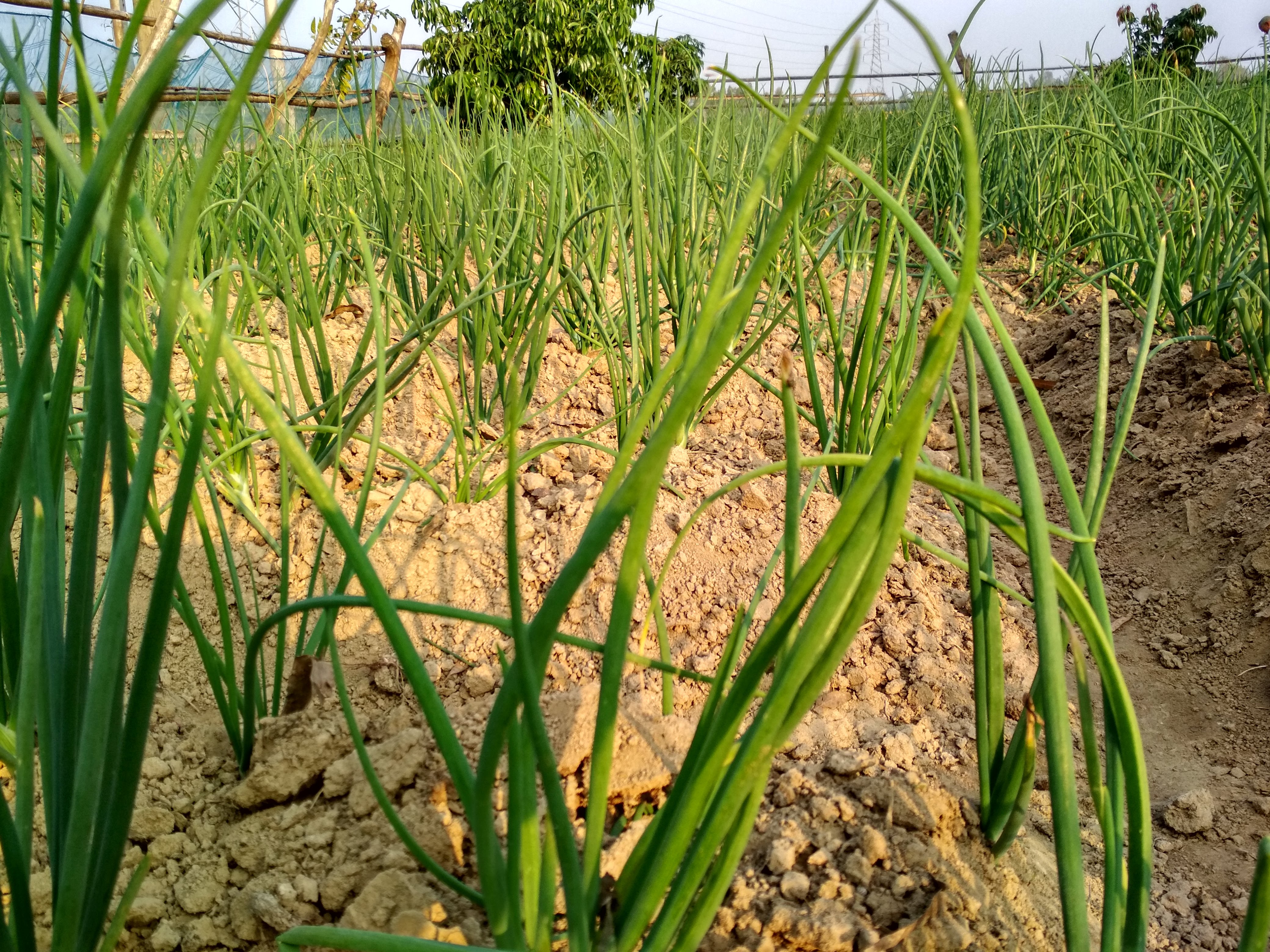
The government also looked beyond the traditional belt. In September 2020 officials spoke of extending onion growing to the Chattogram Hill Tracts, the Sitakunda hills and char lands, and of growing it between rows of sugarcane and maize, The Financial Express reported.
Why autumn is the risky season: India's export bans of 2019 and 2020
India is the world's largest onion exporter, and Bangladesh, Nepal, Malaysia and Sri Lanka rely on its shipments, Reuters reported in December 2020 in a report carried by Prothom Alo English. A report by the commercial wing of the Bangladesh mission in New Delhi, cited by The Financial Express in June 2021, said Indian onion prices had stayed stable in May and June 2021 but had risen sharply in August and September in each of the previous two years. India banned onion exports on 29 September 2019 and again on 14 September 2020, both times because of production shortfalls, and the sudden bans hit prices in Bangladesh hard. India's own production was put at 26.29 million tonnes in 2020-21, up from 26.09 million tonnes the year before, in its agriculture ministry's first advance estimates.
After the 2019 ban, retail onion prices in Dhaka rose by Tk 40 to Tk 50 a kilogram overnight to Tk 100 to Tk 130 on 30 September 2019, The Financial Express reported, and traders in Faridpur, Pabna, Magura, Kushtia and Jhenaidah raised local prices too. By mid-November 2019 retail prices had reached Tk 230 to Tk 250 a kilogram, The Daily Star reported; the commerce ministry booked cargo flights to bring in onions from Egypt and Turkey under a plan to import 50,000 tonnes, and some onions came from Myanmar through the Teknaf land port. Market monitoring teams had by then punished 2,500 traders for allegedly manipulating onion prices, the paper said. In June 2021 The Financial Express recalled that prices had come close to Tk 300 a kilogram in late 2019.
In 2020 the pattern repeated on a smaller scale. Onions that sold for Tk 30 to Tk 50 a kilogram on 1 September 2020 cost more than Tk 100 two weeks later, after reports of the Indian ban, The Financial Express reported. India lifted that ban from 1 January 2021, after wholesale prices there had more than halved in four weeks, according to India's National Horticultural Research and Development Foundation, as Bangladeshi farmers were harvesting their own crop.
No Indian ban was in force when the commerce ministry met on 11 October 2021, and the minister said imports from India were continuing. What the secretary described was a fear of one: rain in southern India had pushed prices up there, and the two previous bans had both come in September.
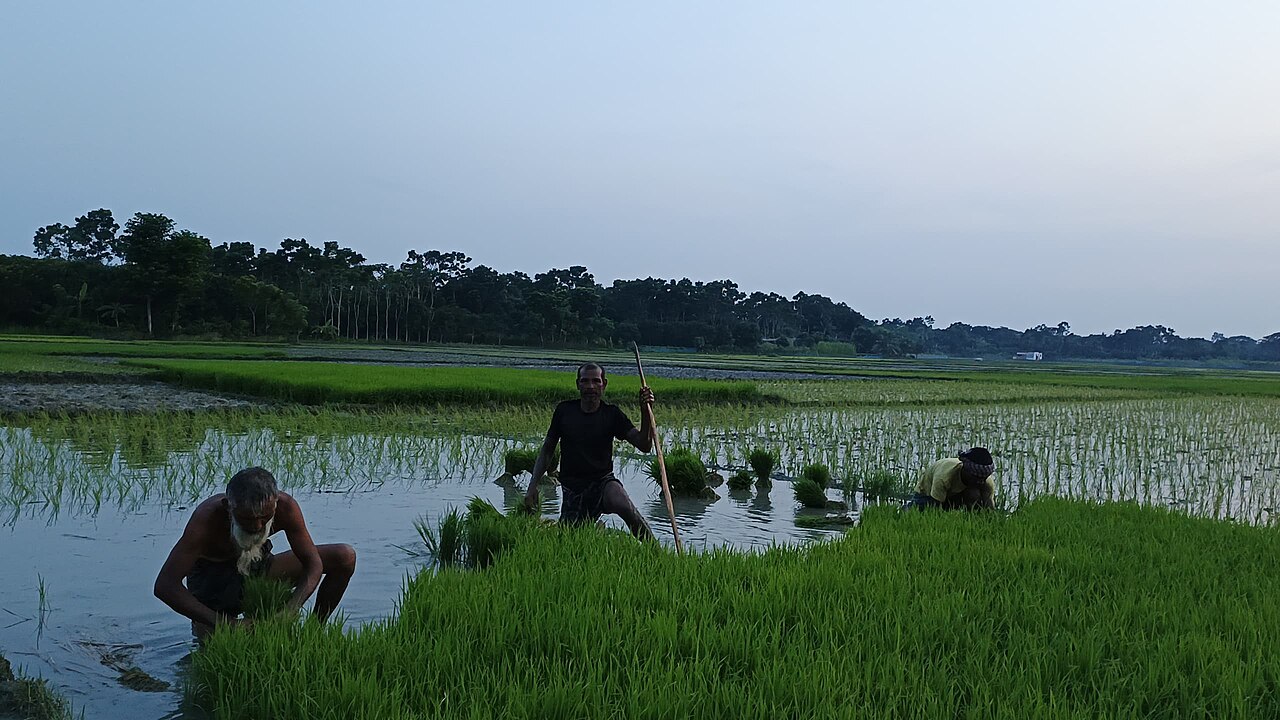
Photo: Salim Khandoker / Wikimedia Commons (CC BY-SA 3.0). The top picture shows onions for sale at a kitchen market in Moghbazar, Dhaka, in September 2018, as background.
Sources: The Daily Ittefaq (12 October 2021), The Business Standard (11 October 2021), Business Insider Bangladesh (11 October 2021), UNB via Prothom Alo English (11 October 2021), The Financial Express (11 October 2021, 12 June 2021, 26 September 2020 and 30 September 2019), The Daily Star (19 November 2019), Reuters via Prothom Alo English (29 December 2020), The Daily Ittefaq (6 November 2020), Banglapedia, Consumer Rights Protection Act 2009 and Plant Quarantine Act 2011 (bdlaws), Wikipedia

Comments
(0)