
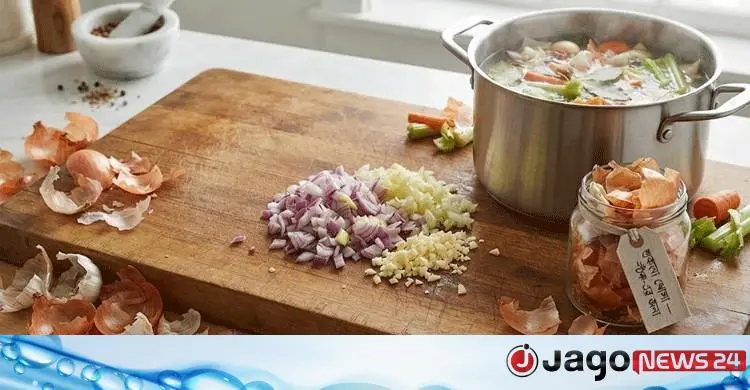
Onion and garlic are almost inseparable from everyday cooking, but most of the peel left after cutting them goes into the bin. We may think of this familiar kitchen waste as worthless, yet with a little different thinking onion and garlic peels have quite a few uses.
From adding flavour to food to making compost and even dyeing fabric naturally, onion peels can be put to work, cutting down on everyday kitchen waste and opening up something new to try.
Clean peels for stock and soup flavour
You can use clean onion peels when making vegetable or chicken stock. Boiled with meat or vegetables, the peels can give the stock a light colour and a change in flavour. Strain the stock at the end and the peels come out.
The same method works for soup. Cook a few clean peels with the vegetables or meat while they boil. Once the soup base is strained the peels are gone, but some of their flavour may remain.
When cooking dal, you can simmer a small amount of onion peel for a while, removing it before the dal is done. It can be used the same way in some curries and gravies.
There is no need to add a lot the first time. Cook with a little and see whether the taste and colour suit you.
When making pulao or herb rice, clean onion peels can be added to the water the rice is boiled in. This gives the rice a slight change of colour and aroma. The peels must be removed once the rice is cooked.
Compost, plants and dye
If you do not want to cook with them, the peels can go to compost instead of the bin. Chop onion and garlic peels small and mix them with other organic kitchen waste and dry leaves as compost material. But simply throwing peels at the base of a plant will not make fertiliser; proper composting is needed for good compost.
You can soak onion peels in water and give that water to plants; the minerals in the peel help add nutrients at the root. Soak clean peels in water for a while, then strain. Use it in moderation, alongside regular plant care, not to excess.
Onion peels also have a lovely use in home crafts. Dried onion peels can be used to give fabric natural yellow, golden or brown shades. Garlic peels are less commonly used in cooking than onion peels, so it is better not to use the two together; if you do, learn the small details first.
Which peels to use and how to store them
Not every peel is fit for use. Rotten, mouldy, very dirty or spoilt peels should never be used for cooking. Only peels in good condition should be cleaned and used.
While onion peels are used relatively often in cooking, garlic peel is much less common, so rather than using it in every dish like onion peel, it is better to use it according to need and the type of cooking.
To keep peels for later, first clean them well and dry them completely, then store them in a dry, clean container. Dried peels can also be ground to a powder and kept.
Keep them away from moisture during storage, as water or damp in the container brings a risk of mould. Use a dry container and take out peels with dry hands each time.
So before the onion and garlic peels go into the bin after cooking, take a fresh look at them. What seems like useless kitchen waste can, used properly, become a small ingredient for cooking, gardening or creative work.
The report drew on The Times of India.
Source: Jagonews24. First published in Bengali on The Agro News.
Comments
(0)