
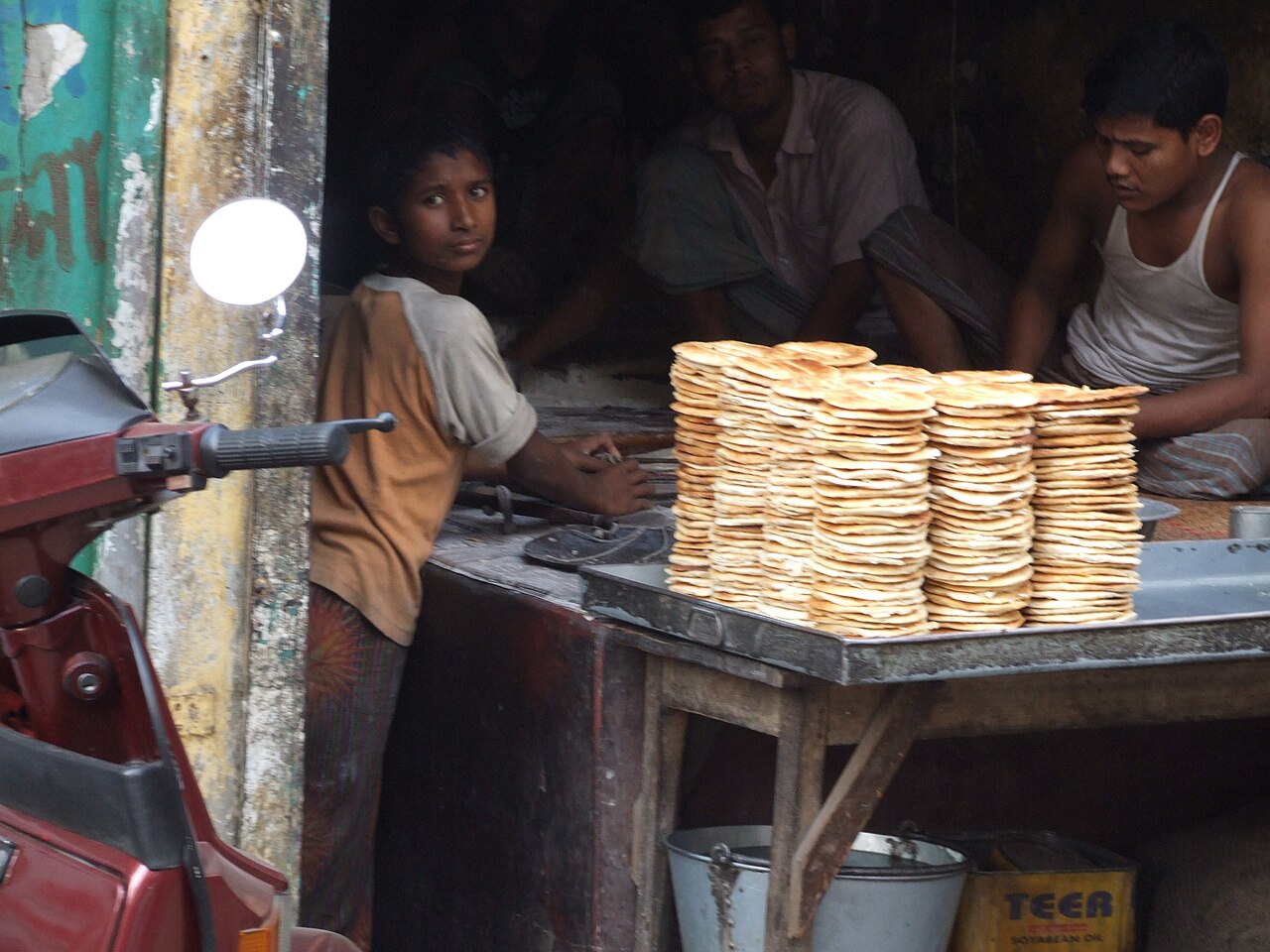
Long before refrigerators, Dhaka's kitchens made a beef dish that could be eaten for more than a month on the road. It was called jahaji kalia, the ship's kalia. Travellers on long journeys carried it with bakarkhani bread, and it was prized most of all by Hajj pilgrims. A piece in Amar Desh sets out the history and the old recipe of a dish that has nearly disappeared.
A round trip from Dhaka to Makkah, Madinah and Arafat once took at least about five months. Citing the historian Abdul Haq Chowdhury, the piece says that in the Sultanate period (1340-1538) pilgrims from Bengal sailed from Chattogram or Satgaon to Jeddah, a voyage of about 5,633 nautical miles. Under British rule Bombay became the main port for Hajj. According to the Dhaka researcher Hashem Sufi, his forebears took jahaji kalia with them when they travelled to Hajj with camel caravans.
In his book Dhaka Pachas Baras Pahle (Dhaka Fifty Years Ago), published in 1949, Hakim Habibur Rahman wrote that no description of Dhaka is complete without jahaji kalia. In his account both meat and fish were cooked in olive oil for it, and ghee or ordinary oil shortened its life. He had tasted it himself and feared that, apart from one or two families, no one in the city would be able to cook it any more.
The rules for keeping it were strict. The kalia was cooked and carried in china jars. It was never touched by hand, and only a wooden spoon could be used. The meat had to stay dry, and the jar was kept away from the heat of the fire.
The old recipe calls for 1 kg of beef mixed with salt, lemon juice, ground cumin, ground coriander, dried chilli powder and kewra water, one tablespoon of each. To this go three tablespoons of shahi garam masala, a paste of four green chillies, a cup of olive oil, a cup of yoghurt, and a teaspoon each of turmeric and sugar.
Everything was rubbed in and left covered for two hours, then cooked on a low flame for two hours more. Once the meat was tender it was fried down until dry and separate. The writer notes that these measures are an old recipe rendered in modern kitchen terms, and that it is hard to say for certain the original method was exactly this.
Photo: A bakarkhani shop in Old Dhaka, Mak / Wikimedia Commons (CC BY-SA 2.5)
Source: Amar Desh

Comments
(0)