
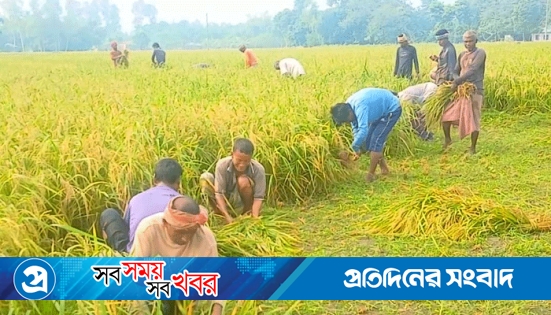
This year it cost a farmer Tk 12,000 to 13,000 to grow paddy on one bigha of his own land. For those who farmed as sharecroppers, adding a further Tk 7,000 brings the cost to Tk 17,000 to 18,000. Because the weather was unfavourable, paddy yields per bigha in the northern districts fell to almost half of the usual level. Where more than 20 maunds a bigha used to be harvested, this year yields ranged from 10 to at most 12 maunds, depending on the area.
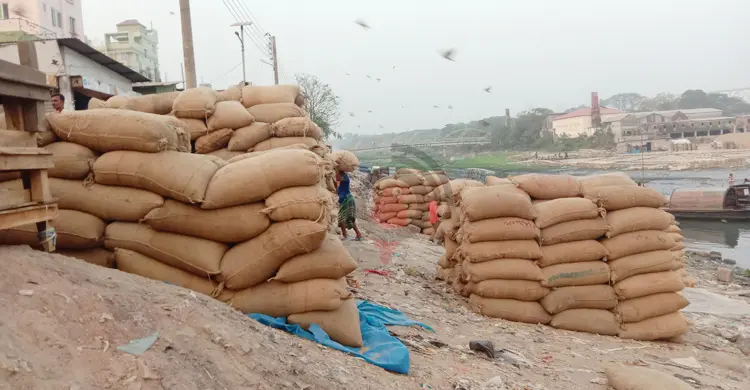
Wholesale paddy prices in the region's markets are now Tk 1,000 to 1,250. Farmers say that at these prices, far from making a profit, they will not even recover production costs. Nor can they keep the paddy at home, so they are being forced to sell all of it to middlemen (faria traders) below the market price.
Farmers count their losses
Golam Rabbani, a farmer of Sadhubari village in Sherpur upazila of Bogura, said he grew Aman paddy on 15 bighas. The average yield was 12 maunds a bigha, never what he had hoped for. Last year he harvested 22 maunds from the same land. Despite the lower yield, paddy prices in the market have fallen, and unable to sell at the expected price he has made a loss of Tk 5,000 to 6,000 per bigha.
Haidar Ali and Shafiqul Islam, farmers of Mamurshahi village, said the weather was unfavourable from the start of the season. There was little rain even at the height of the monsoon, and Aman seedlings had to be transplanted with irrigation from shallow machines, adding Tk 2,000 a bigha to costs. All farm inputs had to be bought at higher prices and labour costs doubled. Then, at the very end of the season, heavy rain flooded the paddy fields, and most of the grain turned to chaff. Yields in their area were 9 to 12 maunds a bigha.
Farmer Abdul Kaium said selling the paddy in the market was also a struggle. With few buyers, middlemen bought paddy at Tk 900 a maund, below the market price, causing losses. Growing Aman on one bigha cost Tk 12,000 to 13,000 this year, covering seedbed, land preparation, irrigation, labour, weeding, fertiliser and pesticides, with another Tk 4,000 for harvesting and threshing. But selling the paddy from a bigha (without going to a middleman) fetched only Tk 10,000 to 12,000, and when middlemen bought it the price was a further Tk 1,000 to 1,500 lower.
Aminul Haque, a farmer of Kulaghat village in Lalmonirhat Sadar upazila, said: "I grew paddy on 20 bighas and harvested 250 maunds, which works out at 12.5 maunds a bigha. I work on the land myself, yet the cost per bigha was Tk 10,500 to 11,000. A week ago paddy was Tk 1,150 a maund at the market; now it is Tk 1,050 to 1,100. When my cost alone is Tk 11,000, what will I live on by selling paddy at this price? Owning the land has saved me a little, but for sharecroppers this paddy has become a noose around the neck."
Dablu Pramanik, a farmer of the Ramnagar area of Dinajpur, said paddy prices at this market day were a little lower than at the last one. Prices were somewhat higher when the new crop first came in. This time they had to cultivate without rain and there was a fertiliser shortage, which pushed costs up.
The paddy market
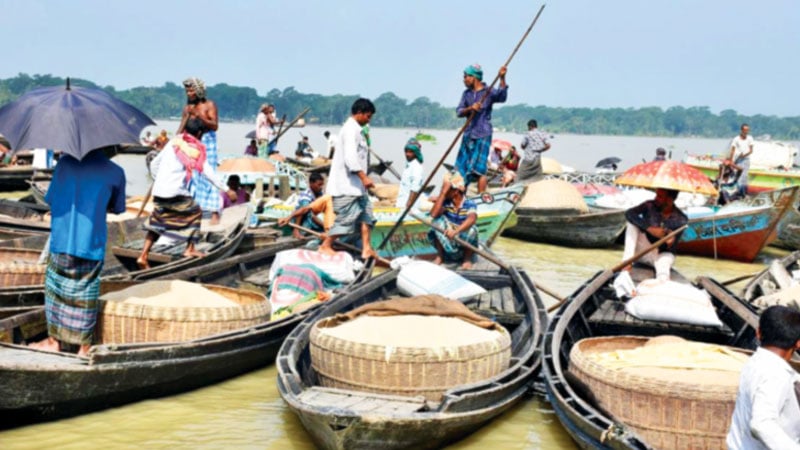
Enquiries at markets in several northern districts found BR-49 paddy selling at Tk 1,120-1,200, BR-51 at Tk 1,000-1,100, Shampa Katari at Tk 1,250-1,350 and variety 90 at Tk 1,150 to 1,200. While farmers are losing money at these prices, middlemen are growing rich. Through a syndicate they buy paddy cheaply and sell it at higher prices to large auto rice mills. Government paddy and rice procurement has begun but has had no effect on the market. Affected farmers say they are getting no benefit because they face various forms of harassment when they try to sell paddy to government warehouses and so cannot sell there.
Farmers allege that middlemen destabilise the paddy market and hold farmers hostage to buy cheaply. Acting as a syndicate, they first stop buying paddy, leaving the market without buyers. Farmers, needing money, are then forced to sell, and the middlemen use the chance to buy at low prices.
What it costs a farmer
On the cost of producing Aman on one bigha, Golam Rabbani and Mozammel Haque of Sadhubari village in Sherpur upazila said ploughing to prepare the land cost them Tk 2,000, but because of the adverse weather they had to spend an extra Tk 2,000 on irrigation from land preparation to harvest. Aman normally needs no irrigation, but this year there was no rain even in the monsoon, so Aman seedlings had to be transplanted with irrigation as in the Boro season. In all, farmers spent an extra Tk 2,500 to 3,000 per bigha on Aman.
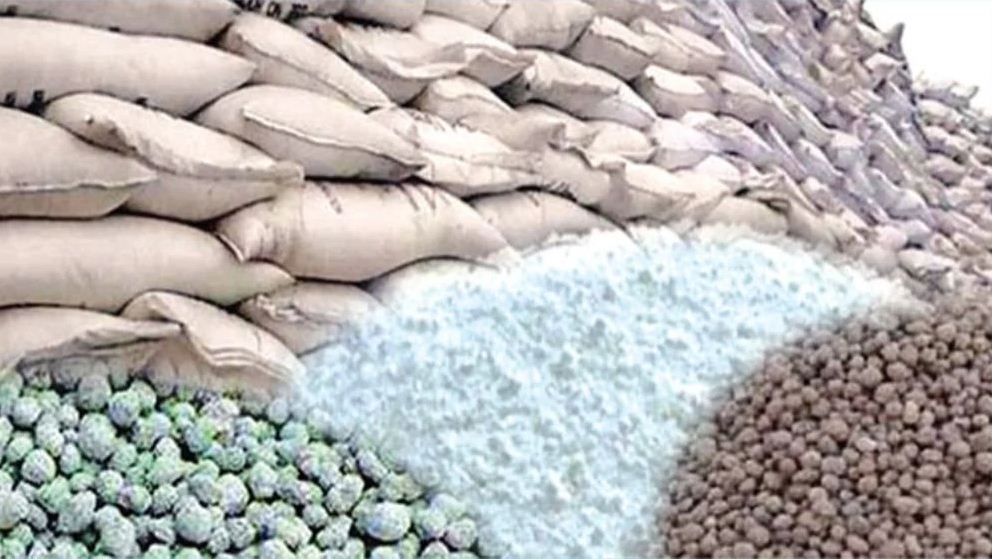
Other costs were: TSP 10 kg, Tk 300; MoP (potash) 10 kg, Tk 300; urea 5 kg, Tk 150; gypsum 10 kg, Tk 150; zinc 1 kg, Tk 200; sulphur 3 kg, Tk 120; magnesium fertiliser 2 kg, Tk 80; labour for trimming field ridges, Tk 200; transplanting seedlings, Tk 1,200; weed-control pesticide and 5 kg of urea, Tk 150; and labour for weeding, Tk 500.
In a second round they spent Tk 300 on 10 kg of urea, Tk 150 on 5 kg of MoP (potash) and Tk 120 on 5 kg of DAP, Tk 1,500 on pesticides, Tk 4,000 on harvesting and threshing and Tk 1,000 on seed and seedbed preparation. Sharecroppers must also spend an extra Tk 7,000 to lease the land.
Source: Jagonews24. First published in Bengali on The Agro News.
Comments
(0)