
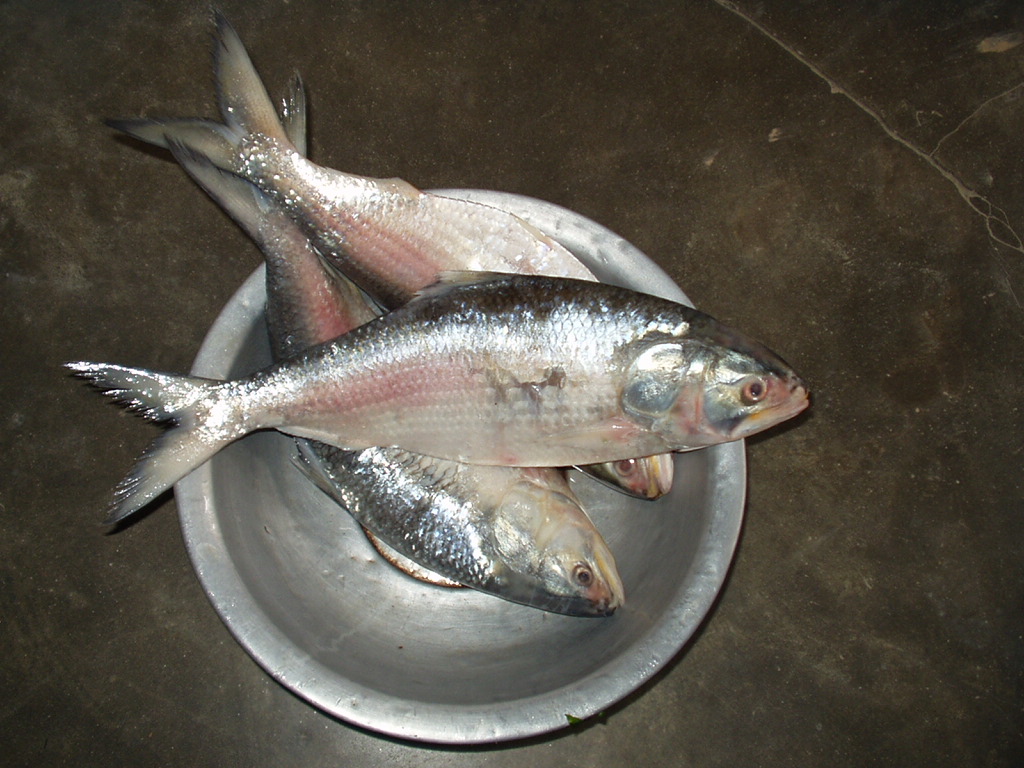
Mornings at the old fish market of Fishery Ghat in Chattogram start with traders calling out freshly caught hilsa and rows of workers cutting, cleaning and salting the fish. This is where Chattogram's traditional nona ilish, salt-preserved hilsa, is made so the seasonal fish can be kept and sold long after the catch, Banglanews24 reports.
For more than a century nona ilish has been part of coastal life and Chattogram's fish trade. When hilsa are plentiful in the rivers and sea, some are preserved in salt, then sold in markets around the country at the end of the season or when supply falls.
Workers scale and gut the fish, rub plenty of salt inside and out, and pack them in layers of salt in large containers or storage spaces. Traders say smaller or softer hilsa are usually used; after weeks to months in salt the fish takes on a distinctive taste and smell. Nona ilish is eaten mashed as bhorta, in spicy curries or cooked with vegetables.
Older traders say salted hilsa was once in great demand in the south, the hill districts and among Bengalis abroad; cold storage has reduced its use, but many still seek it out for the flavour. Raw hilsa prices have risen this year, from about Tk 8,000 to Tk 10,000 a maund last year to Tk 12,000 to Tk 18,000 now, pushing up costs; six salted hilsa now sell for about Tk 3,200 to Tk 8,000 depending on size and quality.
Every stage, from cutting and cleaning to salting, carrying and selling, needs skilled hands, and many families at Fishery Ghat depend on the work in season. Long before electricity and modern storage, coastal people relied on salt to keep fish, and that tradition still lives on at Fishery Ghat.
Photo: Mamun2a / Wikimedia Commons (CC BY-SA 2.5)
Source: Banglanews24


Comments
(0)