
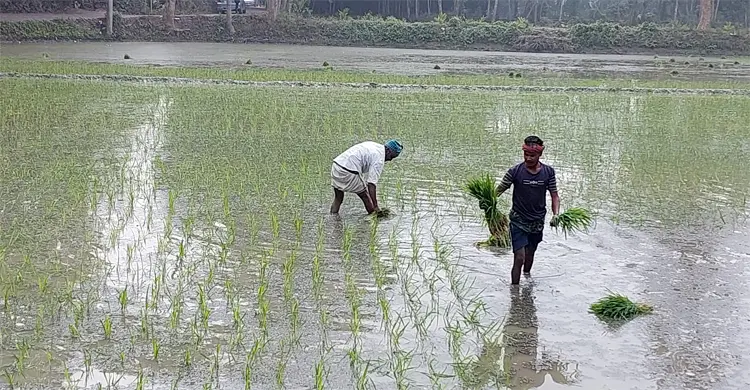
Irri-Boro planting is in full swing in remote parts of Noakhali. But this time farmers are at a loss over the abnormal rise in the prices of fertiliser, labour and other essential inputs.
On one hand, a dishonest traders' syndicate is creating an artificial crisis and selling fertiliser at excessive prices. On the other, labourers who used to earn Tk 500 a day are demanding Tk 800 to Tk 1,000, and they must also be given breakfast and lunch.
According to the district office of the Department of Agricultural Extension (DAE), Irri-Boro is being grown on 98,000 hectares in the district's nine upazilas this year: 82,575 hectares of hybrid varieties and 15,425 hectares of high-yielding varieties. The production target has been set at 6 lakh 96 thousand 237 tonnes of paddy. By mid-January, planting had been completed on 10,000 hectares. If the weather stays favourable, production may exceed the target.
Busy fields, rising prices
A visit found farmers busy with Irri-Boro in Chatkhil, Sonaimuri, Senbagh, Begumganj, Companiganj, Kabirhat, Sadar, Subarnachar and Hatiya upazilas of Noakhali. From dawn to dusk, ignoring the biting cold of Poush, they are preparing land, spreading fertiliser and transplanting seedlings. Having got good paddy prices last time, many have taken up cultivation with enthusiasm this year.
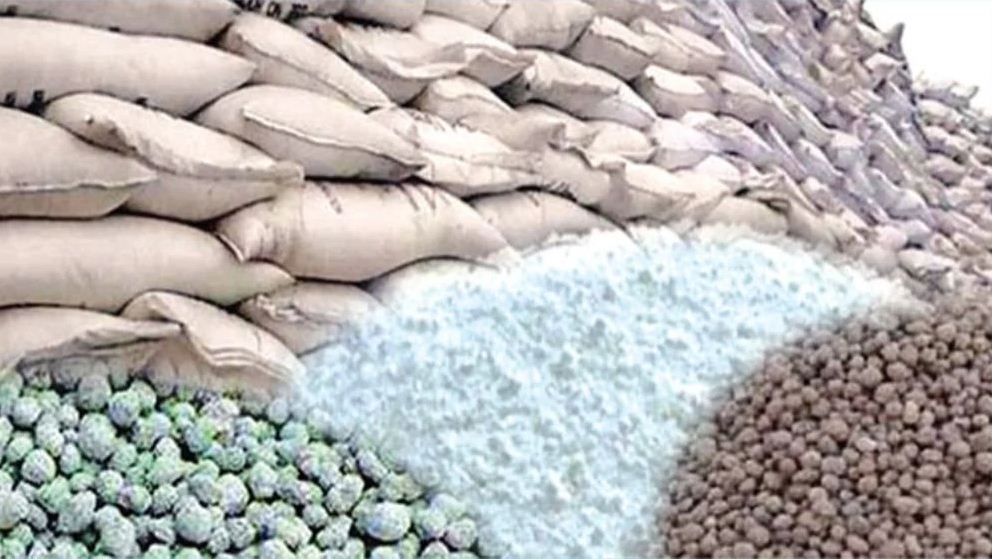
In the markets, urea is selling at Tk 29-30 a kg, and TSP, MoP and DAP are also selling above the fixed prices. Prices of fuel oil and other inputs have risen by 25 to 30 per cent.
Fewer seasonal labourers are seen at labour markets than before. Workers who used to work from 6am to 6pm for Tk 400 to Tk 500 a day with three meals now, citing the cold, agree to work only from 8am to 3pm, and still demand Tk 800 to Tk 1,000 a day with food.
Farmers' worries
Sudhir Chandra Das (60), a sharecropper from Sonapur village in Sonaimuri upazila, said: "For a long time I have farmed other people's land to secure food for my household. Last year I farmed 70 decimals, kept enough for food and sold 40 maunds of surplus paddy at Tk 1,200 a maund. This year I am farming 100 decimals and hope to get 100 maunds. But with fertiliser and labour prices rising at this rate, I am worried whether I will even recover my costs."
Nur Mohammad (50), a farmer from Sundarpur neighbourhood of Chatkhil municipality, said he is growing Irri-Boro on three acres (300 decimals) this year. The abnormal rise in the prices of fuel, fertiliser and labour will multiply the cost of producing paddy, and farmers are losing interest in cultivation.
He alleged that, with no monitoring of fertiliser in the market, a dishonest syndicate keeps raising the prices of fertiliser and all other inputs abnormally. If the upazila agriculture extension office and the administration took proper steps, farmers would benefit greatly in this peak season.
Officials respond
Md Shahidul Haque, deputy director of the district DAE, told Jago News that Irri-Boro activities will continue throughout January. There is enough fertiliser in the market, and action will be taken according to the rules if specific complaints of overcharging are received.
Noakhali Deputy Commissioner Dewan Mahbubur Rahman said the district has adequate fertiliser stocks and there is no scope for selling fertiliser above the fixed price. No complaint has reached him yet, and necessary action will be taken if one does.
Source: Jagonews24. First published in Bengali on The Agro News.
Comments
(0)