
The Shialjani canal runs through Mohanganj municipality in the haor district of Netrokona. Boats once used it, people relied on it daily, and it carried water from the Kangsha river into the haors. More than Tk 29 crore was spent restoring it, yet today it is choked with water hyacinth, polythene and rubbish. Sarabangla's Netrokona correspondent reported from the canal.
Work to re-excavate the Kangsha branch canal and restore its flow began in 2016. In 2018 the Bangladesh Water Development Board (BWDB) and Mohanganj municipality took up a joint project to clear illegal structures and beautify the banks. According to the municipality, the BWDB spent Tk 15.87 crore on concrete-block protection along both banks of the 2,000-metre stretch from Goruhatta Road to Mailora, the municipality spent Tk 5 crore on five bridges, and another Tk 8.04 crore went on drains and other works.
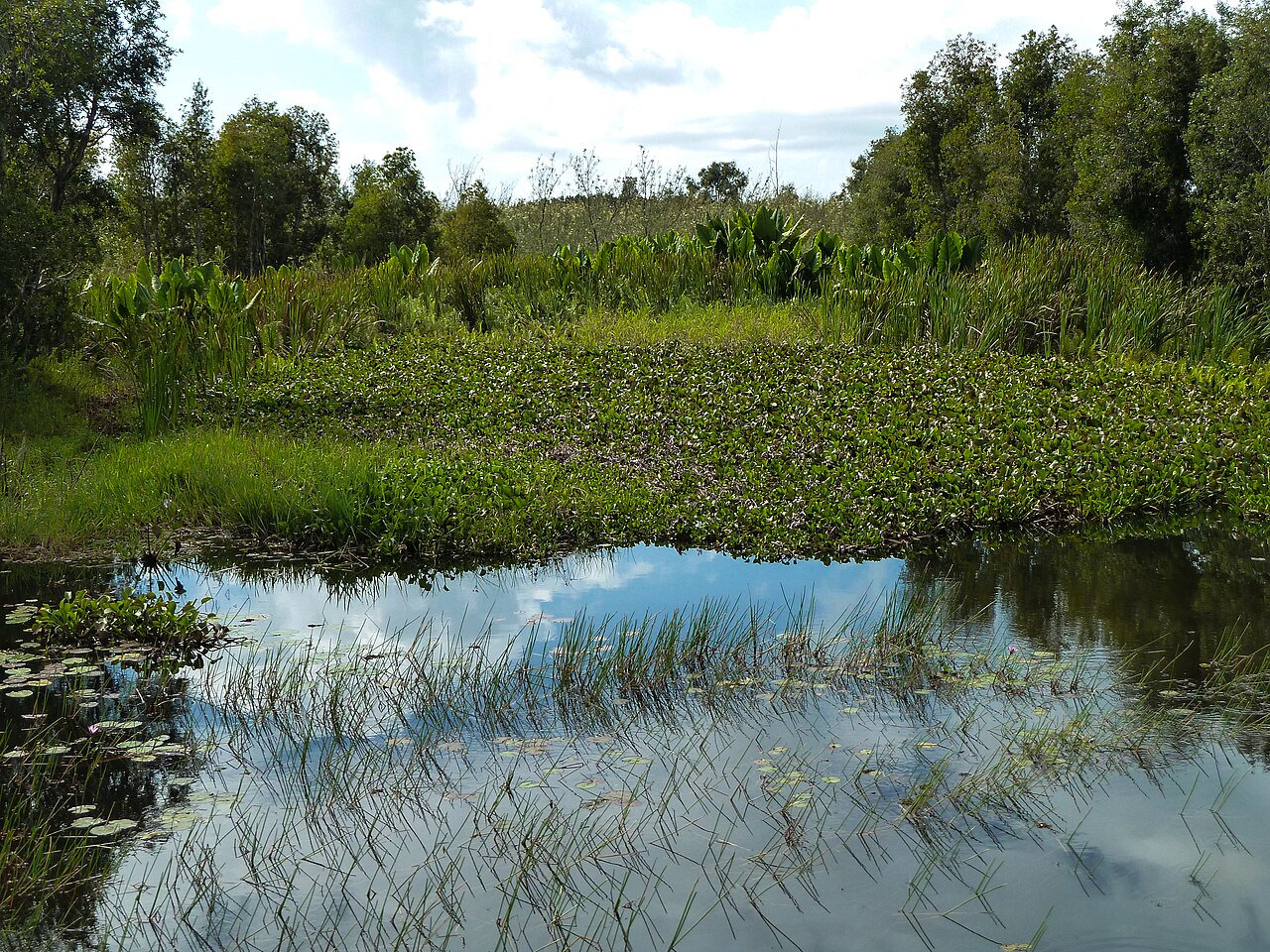
Now the whole canal is covered in water hyacinth, and road waste and plastic have stopped the water moving. Bushes have swallowed the bank paths and several lamps are broken. Residents say traders dump waste whenever they can because nobody supervises, the stench makes the canal-side road hard to use, and after dark there are thefts, muggings and drug users gathering.
Resident Jibon Saha said people once bathed and washed dishes in the canal and boats plied it, and that it urgently needs restoring again. Another resident, Shafiqul Islam, said market traders throw rubbish in, and homeless people use the banks as a toilet.
The two agencies blame each other. Municipal engineer Saiful Amin said the BWDB has not formally handed the canal over, so the municipality cannot act. BWDB sub-assistant engineer Enayet Hossain said the canal was handed to the municipality after the work, so cleaning it is their job.
Mohanganj upazila nirbahi officer Amena Khatun said steps will be taken, subject to funding, to clean the canal quickly and free it of pollution, and that the BWDB has been asked to act. With this channel blocked, it is not only the town's environment that suffers but also the flow of water to the surrounding wetlands.
Photo: Hardscarf / Wikimedia Commons (CC BY-SA 3.0); the picture above is illustrative
Source: Sarabangla

Comments
(0)