
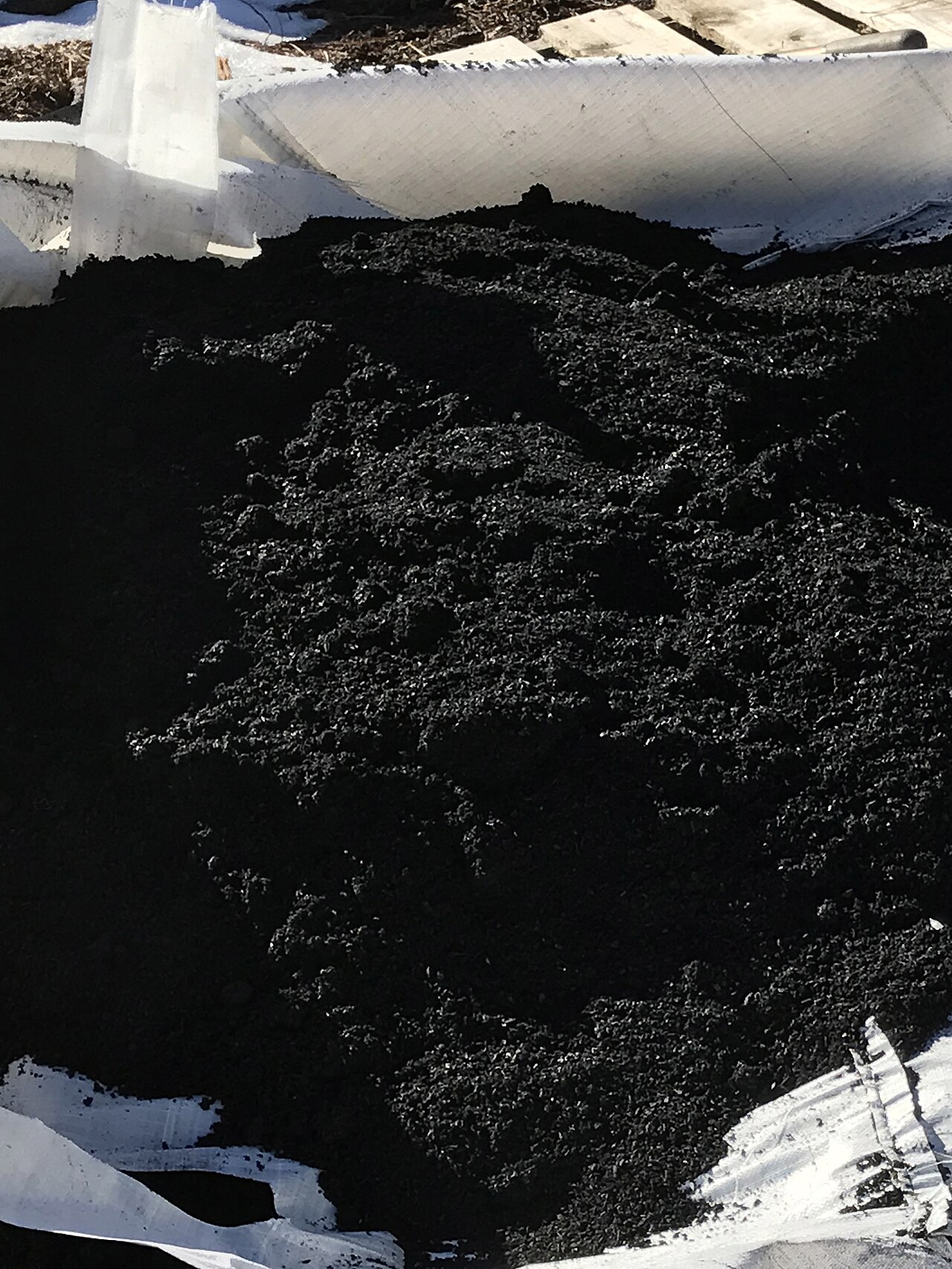
A five-year trial on working farms in Switzerland has found that biochar, often promoted as a reliable way to lock carbon into farmland, raised soil organic carbon on three farms, barely changed it on one and lowered it on another, although every field received the same material at the same rate. The study, by Jens Leifeld of Agroscope, Switzerland's federal agricultural research institute, and Dilani Rathnayake of Agroscope and the University of Peradeniya in Sri Lanka, was issued in Frontiers in Soil Science on 16 November.
Biochar is made by heating organic matter such as wood with little oxygen, a process called pyrolysis, which turns part of its carbon into a stable form that resists decay. Most research behind carbon claims used far higher rates than farmers apply. Here, five arable farms near Flaach in Canton Zurich applied wood-based biochar at about one tonne per hectare a year for three to five years. On each farm one field was split into two halves managed identically except for the biochar, and soil carbon and nitrogen were measured at 20 points per half down to 60 cm, from a 2017 baseline through 2019 and 2022.
Across all five farms the statistical model found no overall rise in soil organic carbon from biochar, and differences between farms explained about a third of the variation. The farm where carbon fell had just come out of a three-year grass-clover rotation. By the final 2022 sampling, biochar plots as a whole held significantly more carbon than their controls, although the spread between farms stayed wide. Some control plots also gained carbon from the compost and manure they received, a reminder that soil carbon follows a field's whole fertility programme.
The clearest result concerned nitrogen. Across 400 paired samples, control plots needed about 0.10 kg of nitrogen for each kilogram of soil carbon gained, while biochar plots needed about 0.056 kg, roughly 44% less, because biochar adds carbon without demanding matching nitrogen. Over five years the biochar added only about 25 kg of nitrogen per hectare, against the 150 to 200 kg a hectare a year of fertiliser nitrogen typically applied on these farms.
The authors stop short of recommending biochar as a dependable carbon-sequestration tool: the size and direction of the response could not be predicted from soil type, climate or application rate, and a side-by-side control was needed on every farm to detect any effect. A vegetable farm with frequent tillage and little crop residue returned showed no carbon benefit, and farmers reported no change in yields over the five years. The researchers describe the work as the first to measure soil carbon and nitrogen together, at depth, under commercial farming with biochar at realistic rates.
Photo: U.S. Department of Agriculture / Wikimedia Commons (public domain)
Source: Global Agriculture

Comments
(0)