
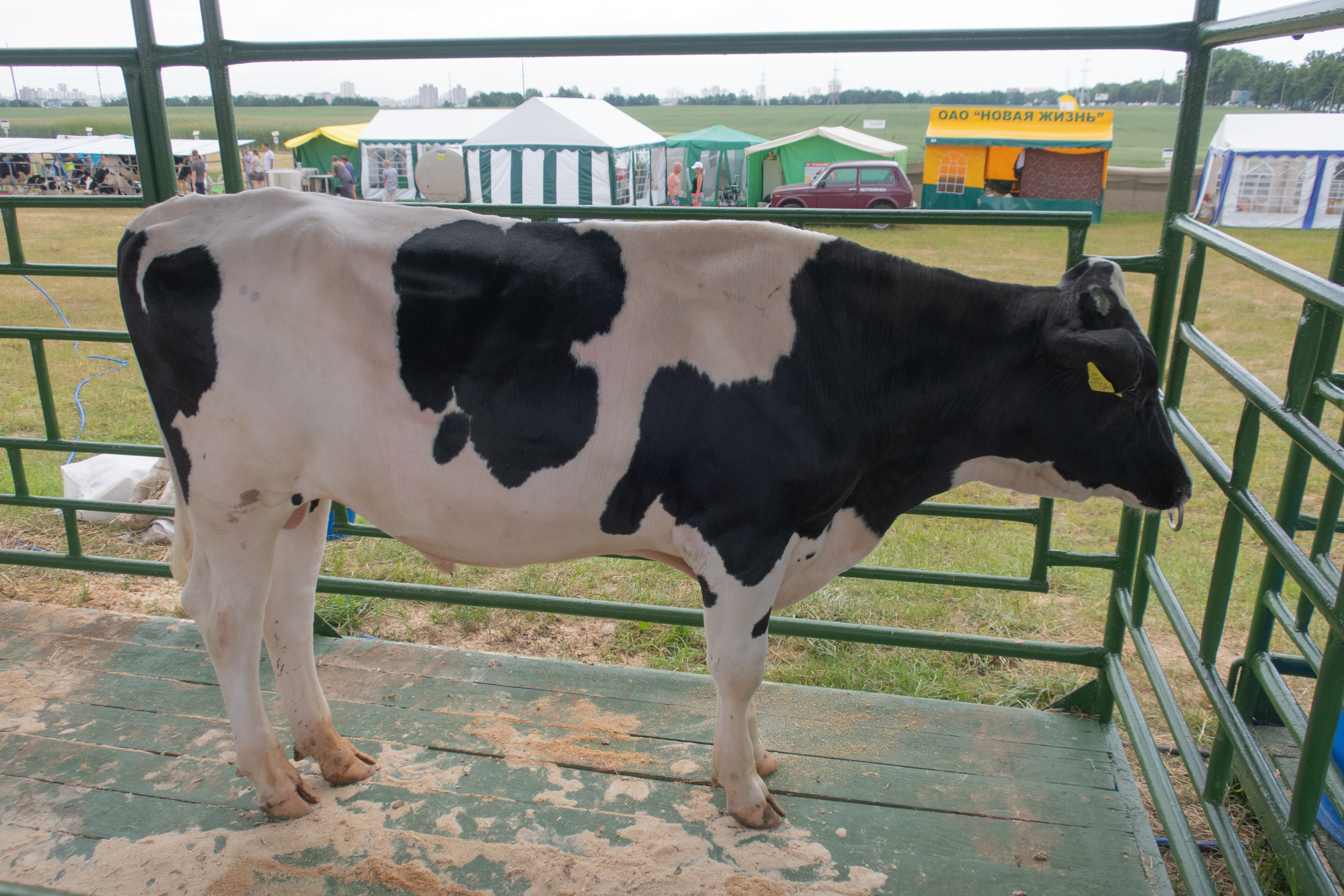
A huge bull named 'Isha Khan' was the centre of attention in Fachika village, Kailati union, Netrokona Sadar upazila, in the run-up to Eid-ul-Azha in 2026. Jagonews24 reported on 24 May 2026 that the black-and-white Friesian bull, aged three years and eight months, weighed about 42.5 maunds, stood 5.5 feet tall and was nearly 9 feet long. Its owner, Khairul Islam, was preparing to sell it for the Eid sacrifice and said he would sell after negotiation if he was offered a good price.
According to the report, Khairul Islam is a former union parishad member for Ward 5 of Kailati union. The bull's favourite food was the leaves of the sheora tree. A day earlier, on 23 May, Prothom Alo had also reported on 'Isha Khan', giving the same age, breed, colour, weight, height, length and favourite food.
When the Jagonews24 correspondent visited the farmer's home on the afternoon of Sunday 24 May, the bull was tied with plastic rope between two jackfruit trees in the yard. Curious visitors and buyers who had come from far and wide were looking at it; some were taking photographs and others filming videos.
Born on the farm, named 'Isha Khan' at two months
Local people and the farmer told the reporter that the bull was born on Khairul Islam's own farm. From birth it was fed its mother's milk and raised by traditional methods, growing steadily with regular feeding and care. When the calf was only two months old, the family saw a particular dignity in the way it moved and named it 'Isha Khan'.
The previous year, in 2025, some buyers had offered up to Tk 9 lakh for the bull, but Khairul Islam did not sell it because he had grown attached to it. For the 2026 Eid he decided to sell. The report gave no asking price for 2026; the farmer said only that he would settle the price by negotiation with a good buyer.
Khairul Islam told Jagonews24 that he had raised the bull like his own child, alongside his son and two daughters, and could not sleep at night without seeing it first. Prothom Alo carried the same account and added that the first thing he did on waking each morning was to look in on the bull.
What the bull ate and how it was kept
According to the farmer, Isha Khan's diet included:
- fresh grass and straw
- bananas
- wheat bran and rice bran
- oil cake
- broken rice
- vegetables
- leaves and vines of various trees, above all sheora leaves
Khairul Islam said the calm-natured bull was kept under an electric fan at all times and had to be bathed every day. In all it needed about one maund of feed a day. He said the animal looked small in photographs and videos but was very big in reality, and that he would sell it straight away, after negotiation, if a good buyer came.
The maund (mon in Bengali) is a traditional unit of weight whose value varied across the subcontinent over the centuries. In 1833 it was standardised in the Bengal Presidency at 100 troy pounds, which later became 37.3242 kilograms in metric terms; in Bangladesh one maund is generally reckoned at 40 kg. The kilogram equivalent of '42.5 maunds' therefore depends on which maund is meant; the district livestock officer gave the bull's weight in kilograms himself, as reported below.
What the district livestock officer said
Netrokona district livestock officer Mohammad Shahidul Islam told Jagonews24 that Khairul Islam had raised the bull on the advice of the livestock department, and that fed entirely on natural feed it had grown to an enormous size. In his view it was probably the biggest bull in the district, weighing more than 1,600 kg, and the department would continue its efforts to produce cattle like it. Prothom Alo's report of 23 May carried the same statement.
The district livestock office is the field arm of the Department of Livestock Services (DLS) under the Ministry of Fisheries and Livestock. The department traces its origin to a veterinary unit formed for the British cavalry in 1795. It became the Civil Veterinary Department in 1883, the Directorate of Animal Husbandry of East Pakistan after Partition, and, after several further changes of name, the Department of Livestock Services. It has an office in every upazila of the country, where farmers obtain livestock and veterinary services.
At a press conference in November 2025 the Ministry of Fisheries and Livestock said the livestock sector accounted for 1.81 per cent of Bangladesh's GDP and 16.58 per cent of agricultural GDP, with a growth rate of 3.19 per cent, and put the sector's GDP at Tk 91,036 crore.
The Friesian breed and crossbred cattle in Bangladesh
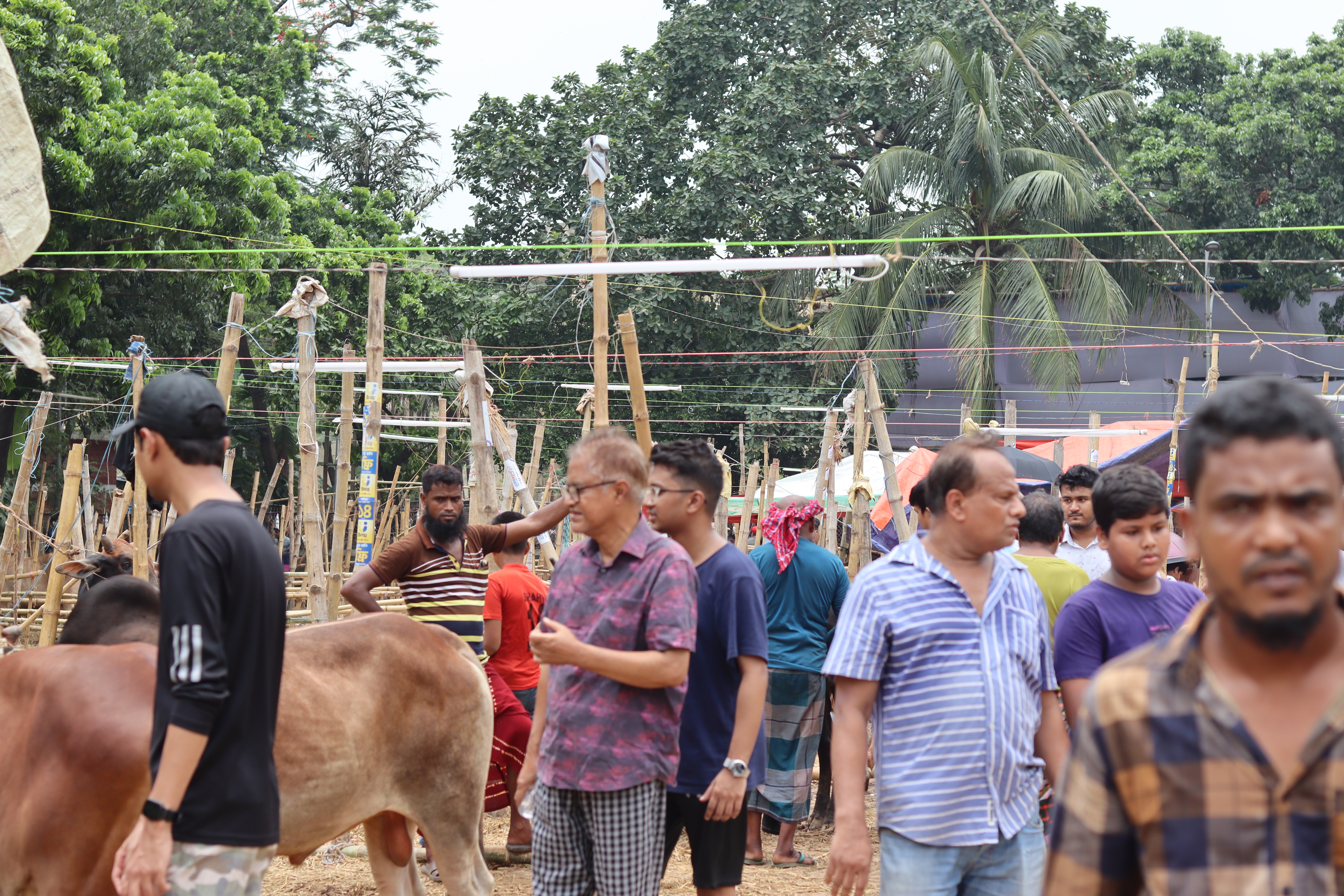
The Friesian, or Holstein Friesian, is an international breed, or group of breeds, of dairy cattle. In modern American usage 'Holstein' refers to animals based almost entirely on stock from the Netherlands; in the United Kingdom 'Friesian' is the more common name, and the two are considered so similar that they are not distinguished for statistical purposes. The first Holland cow in the United States was bought in 1852. The breed has one of the largest gene pools in the world, so its genetic progress has been faster than that of other dairy breeds, and it is the breed of choice for most dairy farmers worldwide. An average Holstein cow in the United States gives about 10,000 kg of milk a year; European Holsteins average 7,000 to 8,000 litres.
Banglapedia, the national encyclopaedia of Bangladesh, describes two main species of domestic cattle. Bos indicus, the humped zebu of the subcontinent, generally grows more slowly, is smaller and less productive, but resists some infectious diseases. Bos taurus, the temperate cattle, are medium to heavy in size, mature earlier and have high potential for milk and meat. The Friesian belongs to the second group.
Since the 1960s, Banglapedia notes, Bangladeshi farmers have kept three categories of cattle: pure breeds, crossbreeds and local animals. To raise the output of local cattle, there were repeated attempts to cross them with exotic breeds, among them Holstein-Friesian, Jersey, Sahiwal, Sindhi and Sahiwal-Friesian. Of the crossbreds the encyclopaedia lists, the Friesian cross gives the most milk, about 1,800 litres per lactation. The same source says pure and crossbred cattle have higher nutritional needs, adapt less well and are more susceptible to parasites and disease than local cattle, which are hardier and tolerate heat; harsh conditions, scarce green fodder, unskilled management and gaps in health care often keep crossbreds from reaching their potential.
The national herd has also grown. Prothom Alo reported on 22 May 2026 that the country had about 2.37 crore (23.7 million) cattle in 2015-16 and more than 2.51 crore (25.1 million) in the latest fiscal year, 2024-25. In the same report the DLS director general, Md Shahjaman Khan, said about 90 per cent of the country's livestock farmers were smallholders and that they were driving the sector forward, while Mohammad Ashiqul Islam, chairman of the Department of Dairy Science at Bangladesh Agricultural University, said livestock rearing was often not science-based and that improved breeds, better feed and modern husbandry had yet to spread widely.
Why a Friesian needs fans and a daily bath
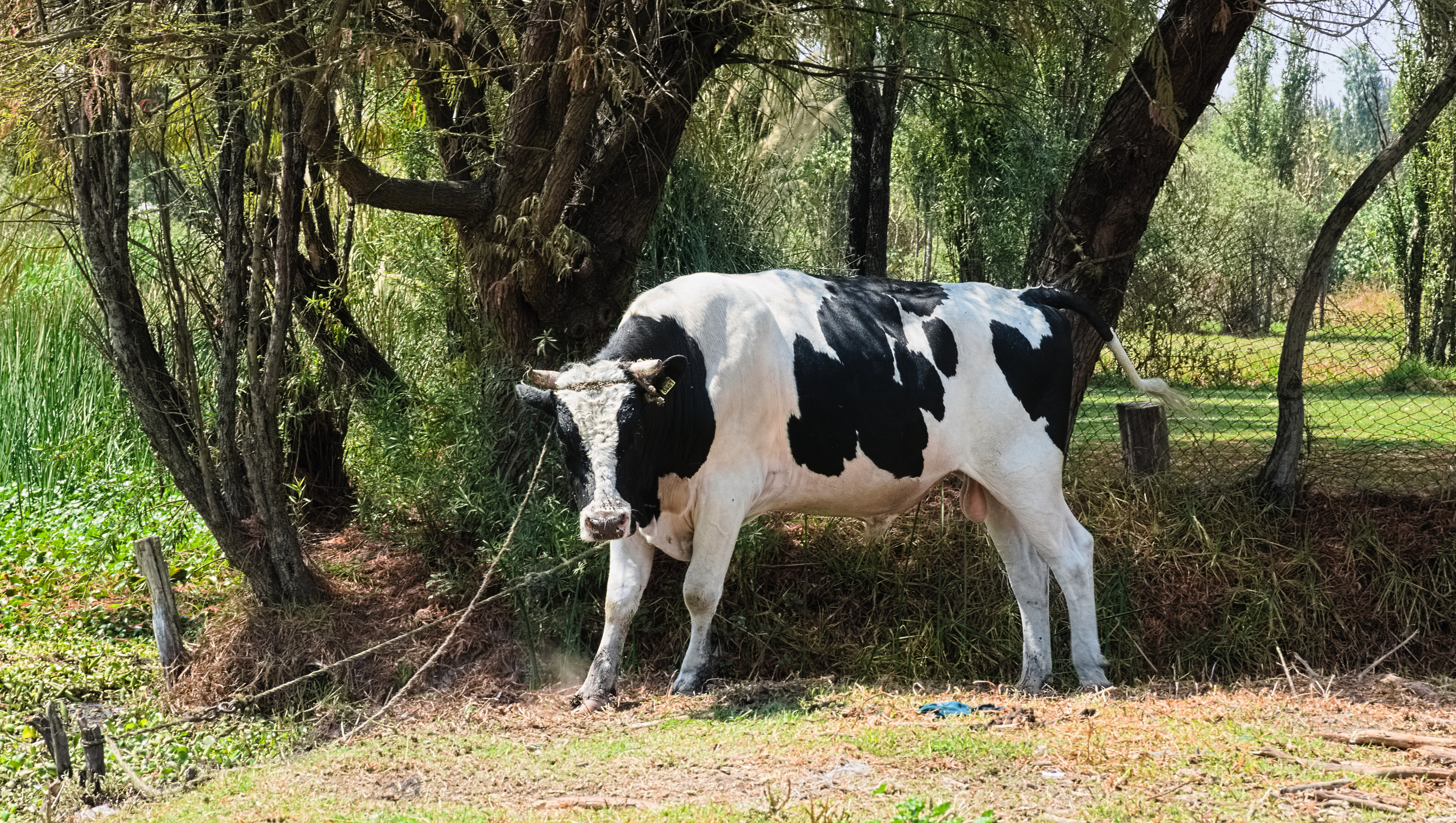
Khairul Islam kept Isha Khan under a fan and bathed it every day. Research in Bangladesh shows why cattle with Friesian blood need protection from heat and humidity. A study in the Bangladesh Journal of Animal Science (2017 volume) measured the effect of heat on Holstein Friesian crossbred cows kept under intensive management. The authors noted that grading up local cattle with temperate breeds increases their sensitivity to heat stress. The average temperature-humidity index (THI) of the barn was 70.83 in the cool season and 83.87 in the hot season. Average daily milk yield fell from 14.92 litres in the cool period to 12.84 litres in the hot period for 50 per cent Friesian cows, and from 19.54 to 15 litres for 75 per cent Friesian cows: the higher the share of Friesian blood, the greater the loss in hot weather.
A second study, published in the journal Climate in January 2025, placed Holstein-Friesian crossbred cows in Bangladesh in a climate chamber at THI 75 and THI 80 for just 24 hours. Compared with THI 72, at THI 80 rectal temperature rose by 5.1 per cent, heart rate by 8.6 per cent, respiration rate by 23.5 per cent and water intake by 19.1 per cent. Feed intake fell by 6.5 per cent at THI 75 and by 14 per cent at THI 80. The authors concluded that these crossbred cows are particularly vulnerable to heat stress even over a short period, which can cause economic losses for Bangladeshi farmers.
Both studies were on dairy cows, not bulls, but they show why heat protection matters for Friesian-type cattle. For any health or heat-related problem in cattle, the safe course is to consult the veterinary surgeon at the upazila livestock office.
Sheora: the bull's favourite food
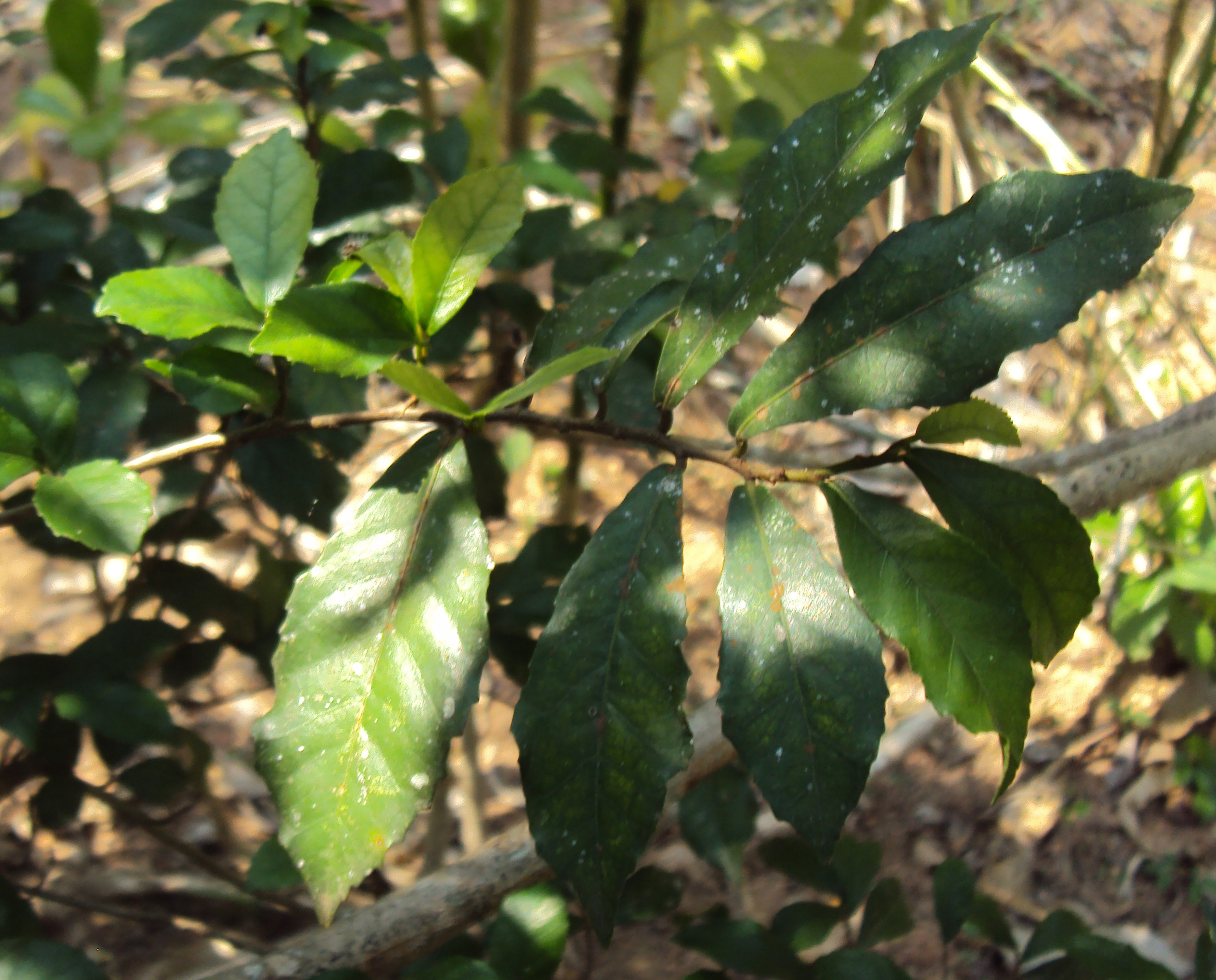
Sheora (Streblus asper) is a medium-sized tree of the Moraceae, the fig and mulberry family. It is native to a wide area of South and South-East Asia, including Bangladesh, India, Nepal, Myanmar, Thailand, southern China and the Philippines. In Bengali it is called shaora, shahra or sheora. Its leaves are about 5 to 10 centimetres long, rigid, oval and irregularly toothed, and so rough that Vietnamese woodworkers use them as natural sandpaper. Its twigs were once used to clean teeth, which is why it is also called the toothbrush tree, and in Thailand its bark has been used for papermaking for seven hundred years.
The value of sheora leaves as livestock feed has been studied in Bangladesh. A study in the Indian Journal of Animal Sciences, published by the Indian Council of Agricultural Research, analysed the leaves of ten tree species from Bangladesh, among them sheora, mulberry, mango, jackfruit, ipil-ipil (leucaena), jujube and sesbania. Crude protein ranged from 8.5 to 23.9 per cent, and all the leaves were rich in calcium and phosphorus. The authors concluded that mulberry, sesbania, leucaena and sheora leaves in particular have great potential as livestock feed. Feedipedia, the animal feed database of the Food and Agriculture Organization (FAO) and partners, lists a 1991 study by Akbar and Alam on feeding mango and sheora leaves to Black Bengal goats in Bangladesh.
According to Banglapedia, feed for ruminants in Bangladesh comes mainly from crop residues, cereal by-products, shrubs, fodder trees and grasses growing along roadsides and field bunds. Green roughage includes jackfruit and mango leaves, ipil-ipil, and aquatic plants such as water hyacinth, algae and duckweed. With fodder trees, animals usually eat only the leaves and young shoots. The grass, straw, bran, oil cake and tree leaves on Isha Khan's menu all belong to these traditional sources.
Natural feed and the ban on hormones
The district livestock officer stressed that Isha Khan had grown on 'entirely natural feed'. The question comes up every Eid season because of the risk that harmful substances are used to put on weight quickly. Bangladesh's Fish Feed and Animal Feed Act, 2010 regulates feed for land and aquatic animals and in particular bans the use of hormones and growth promoters in animal and fish feed.
Livestock officials spoke of monitoring before the 2026 Eid as well. bdnews24.com reported on 17 May 2026 from Rangpur division that, according to livestock officials there, animals on the division's farms had been raised in a healthy way and field-level surveillance had been stepped up to prevent the use of artificial hormones or other harmful substances.
Banglapedia's entry states that planned beef fattening programmes are usually not practised in Bangladesh, but that there is a seasonal demand for cattle at Eid-ul-Azha, when people generally prefer to sacrifice healthy animals. It notes that farmers fattening yearling bull calves use feeds such as green grass, wheat bran, rice bran, rice gruel, urea-molasses blocks and urea-molasses straw.
The 2026 sacrificial market and Netrokona's picture
On the evening of 18 May 2026 the National Moon Sighting Committee, meeting at the Baitul Mukarram National Mosque, announced that the Zilhajj moon had been sighted, so Bangladesh would celebrate Eid-ul-Azha on 28 May; Saudi Arabia had set its Eid a day earlier, on 27 May. Eid-ul-Azha commemorates Prophet Ibrahim's willingness to sacrifice his son in obedience to Allah, and is marked by special prayers, animal sacrifice and the distribution of meat to the poor and needy. When the report on Isha Khan appeared on 24 May, Eid was four days away.
At a briefing at the Ministry of Fisheries and Livestock on 3 May, the government put the likely demand for sacrificial animals in 2026 at 1,01,06,334 (about 10.1 million) against 1,23,33,840 (about 12.3 million) animals available, leaving a surplus of about 22,27,506. The available animals comprised 56,95,878 cattle and buffaloes, 66,32,307 goats and sheep and 5,655 animals of other species. The briefing also said:
- More than 3,600 cattle markets would be held across the country, 27 of them in Dhaka (16 in the North City Corporation and 11 in the South).
- Twenty veterinary medical teams would be on duty round the clock at the Dhaka markets.
- A policy decision had been taken not to hold cattle markets in border areas, to protect domestic farmers.
- No levy or market fee would be charged on animals bought online.
- Professional and amateur butchers were being trained so that hides would not be spoiled.
That was a larger supply than the year before. By the DLS count, 91,36,734 animals were sacrificed at Eid-ul-Azha in 2025, including 47,05,106 cattle and buffaloes and 44,30,668 goats and sheep, against 1,04,08,918 in 2024. The ministry said the figure was estimated by stratified random sampling, with a sample of at least 1 per cent from three villages (small, medium and large) in every upazila.
The original report gave no district figures for Netrokona's 2026 demand and supply. The previous year's picture comes from The Daily Ittefaq's report of 21 May 2025 on a district administration preparatory meeting, which said that Netrokona needed 1,06,100 sacrificial animals that year and had 1,34,077 ready, more than the demand, and that 163 applications had been filed to hold cattle markets in the district.
Netrokona, Kailati and the name 'Isha Khan'
Netrokona is a district of Mymensingh Division, bounded by the Garo Hills of the Indian state of Meghalaya to the north, Sunamganj to the east, Kishoreganj to the south and Mymensingh to the west. Banglapedia gives its area as 2,794.28 square kilometres. The 2022 census counted 2,324,853 people. The district has ten upazilas; the Netrokona subdivision formed in 1882 became a district in 1984. Its main rivers include the Kangsha, Someshwari, Dhala, Mogra and Teorkhali; the south-east of the district turns into haor wetland in the monsoon, while the north and west are mostly alluvial plain. The economy is largely agrarian: on Banglapedia's figures from the 2011 census, agriculture was the main source of income for 72.43 per cent of the district's people.
Netrokona Sadar upazila covers 341.71 square kilometres and had 421,964 people in the 2022 census. It is made up of one municipality and 12 unions, one of which is Kailati; Banglapedia's table gives Kailati union an area of 5,481 acres. The Mogra river runs past Netrokona town, and the name is commonly explained as coming from netra (eye) and kona (corner), after the eye-like outline of the town formed by the river's course.
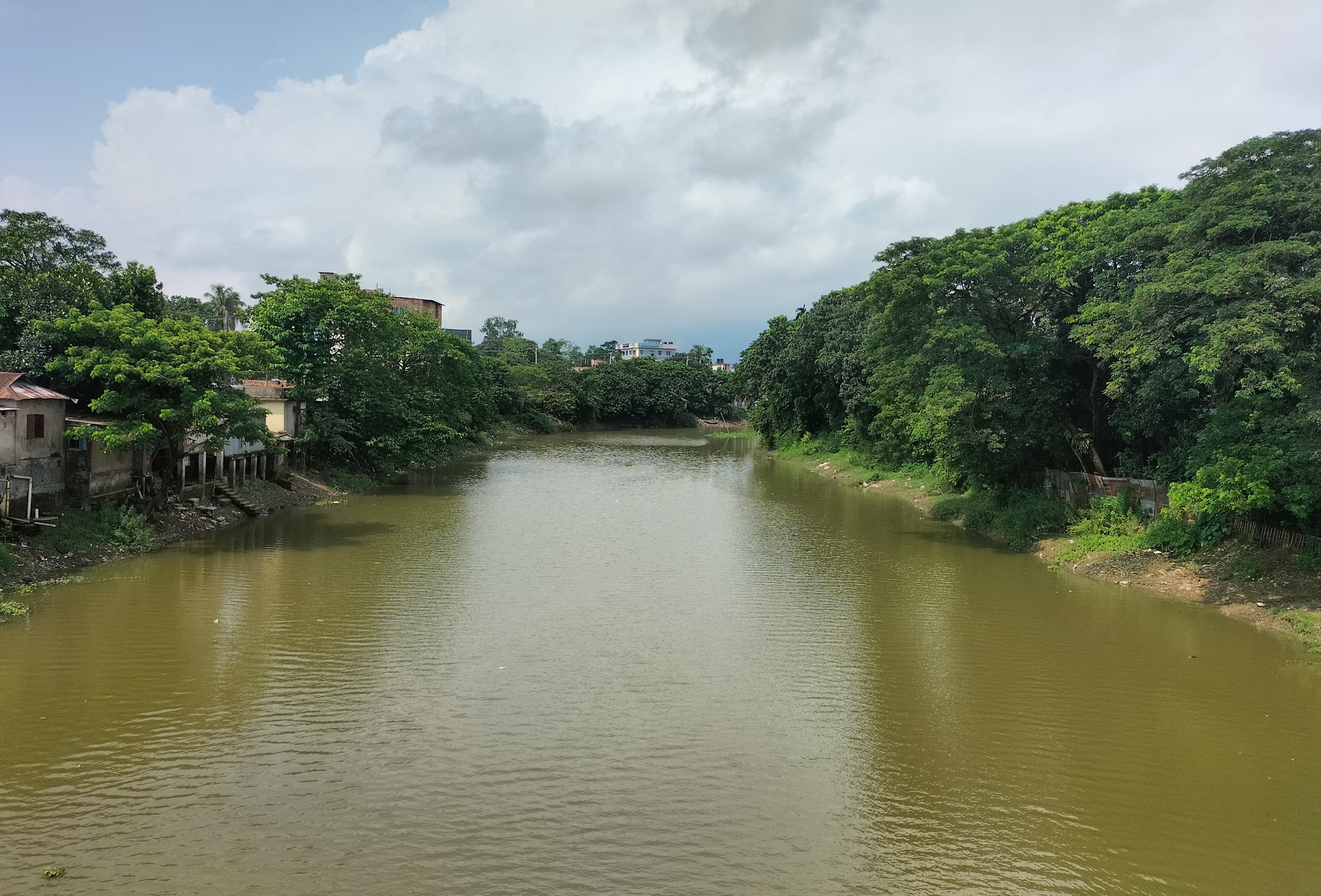
'Isha Khan' (Isa Khan) is the name of the sixteenth-century leader of the Baro-Bhuiyan chieftains of Bengal. Born into the zamindar family of Sarail, he ruled the Bhati region and united the chieftains of Bengal to resist the Mughal invasion. He made Sonargaon his administrative centre and established Egarasindhur, in present-day Pakundia upazila of Kishoreganj, as a political and trading centre; in 1585 he took Jangalbari Fort in what is now Karimganj upazila of Kishoreganj. Before the Mughal conquest the Netrokona region was part of his domains. He died in 1599, and only after his death did the region pass fully under Mughal control. He remains an iconic figure in Bangladesh, a symbol of rebellious spirit and unity. Khairul Islam's family gave the name to their calf at two months because of what they saw as its noble bearing.
Photo: Homoatrox / Wikimedia Commons (CC BY-SA 3.0)
Sources: Jagonews24, Prothom Alo, The Business Standard, The Daily Ittefaq, bdnews24.com, Banglapedia, Bangladesh Journal of Animal Science, Climate (MDPI), Indian Journal of Animal Sciences, Feedipedia (FAO), AMPEID, Wikipedia
Comments
(0)