
By Suraiya Yasmin Sumi
The neem is a beneficial plant that plays a special role in serving people in many ways, and it can play a special role in nature too. Environmentalists advise planting neem at home precisely because they recognise its value. Yet through our neglect the tree is gradually disappearing.
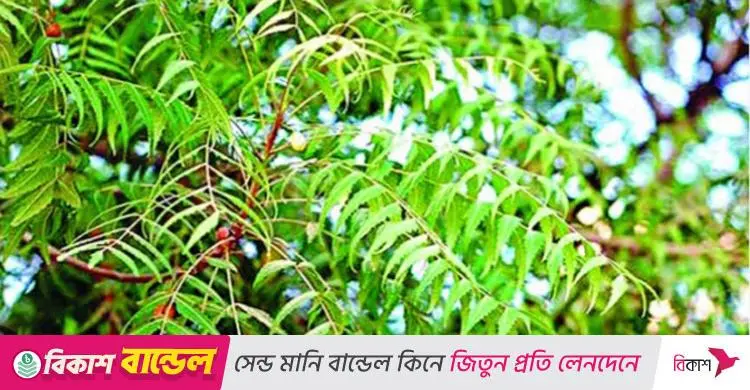
The neem's scientific name is Azadirachta indica, and it belongs to the family Meliaceae. It is a medicinal tree, also known by many other names such as nimbo, vepa and tamar. The neem is a useful friend: its branches, leaves and sap are all used in many ways in daily life. The trunk of a mature neem is used to make furniture, and neem wood is also used for window and door frames.
How the tree grows
The neem is a perennial evergreen tree, usually 40-50 feet tall, with a trunk 20-30 inches in diameter. Compound leaves 10-12 inches long grow around the branches. The leaflets are usually curved like a sickle, have 10-17 notches along the edge and are 2.4-4 inches long.
The neem bears a grape-like fruit with a single seed. It ripens in June-July; it tastes bitter when green but turns sweet once it ripens and turns yellow. The tree takes about ten years to reach maturity. It grows naturally in any soil and is most often seen in open spaces and along roadsides.
It does well in regions with a warm climate. A soil pH of 6.2-8.5, rainfall of 18-46 inches and a temperature of 120 degrees Fahrenheit are beneficial for the neem. Honey from neem flowers is more nutritious and medicinal than honey from other flowers. The tree is regarded as the best remedy against pox and as an air purifier.
A tree of many uses
Neem prevents soil erosion and desertification and plays a large part in holding back river erosion. It is used in making cosmetics, and neem oil can be burnt in lamps. Neem sap is very effective against worms, and people in ancient times used neem wood to make musical instruments.
The wood is very hard. It never rots, insects do not nest in it and even termites cannot eat it. Neem twigs are very good for strengthening the gums. The tree grows even when left uncared for, yet this useful medicinal tree seems to be vanishing day by day. Everyone must therefore become aware and plant more neem trees.
The writer is a third-year honours student in the Department of Geography and Environmental Science, Government BL College, Khulna.
Source: Jagonews24. First published in Bengali on The Agro News.

Comments
(0)