
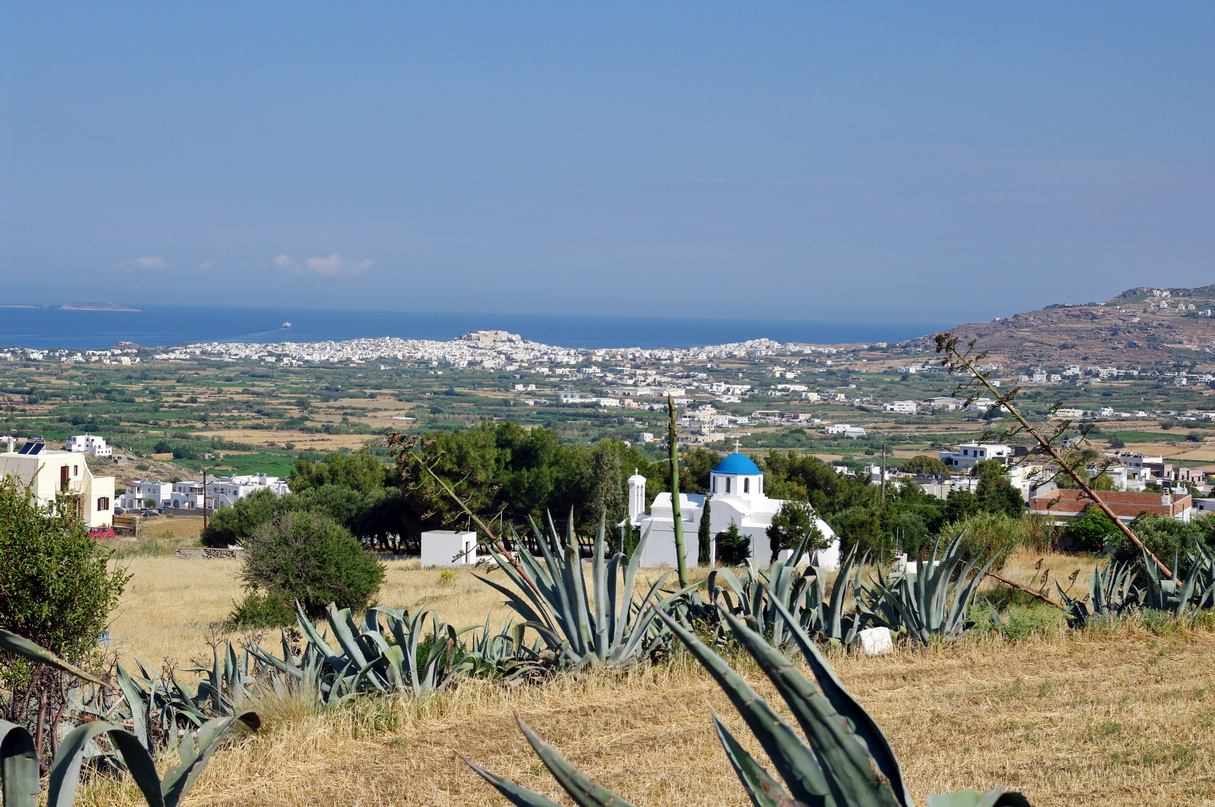
The Naxos potato, a protected-designation crop from the Cycladic island since 2010, is being grown by fewer hands each year. Annual production reached 15,000 tonnes in the 1980s, when every member of a farming family worked the crop; today about 300 families are involved and output has dropped to some 5,000 tonnes, Euronews reports in its Food Detectives series.
Stelios Vathrakokoilis, one of the island's largest growers and president of the Galanado Agricultural Cooperative, credits year-round sunshine, the sea three or four kilometres away on every side, and cow manure on the fields for the potato's reputation. The cooperative first sold under the Naxos label through the AB Vassilopoulos supermarket chain, then Sklavenitis and the other chains, so that the crop now goes straight to supermarket shelves.
Protected status means a potato must be certified before it can carry the Naxos name, but fraud persists. "Certain people buy potatoes from other regions, even other continents, especially Egypt. They take them into their packing plants, package them and sell them as Naxos potatoes," Vathrakokoilis said. Street markets are worse: of 40 stalls claiming Naxos potatoes, he said, perhaps one or two sell the real thing, because the name commands a higher price.
Labour has become the acute constraint, with workers who have the legal right to work hard to find, and water is spread thinner by more residents, more tourists and prolonged drought; farmers buy expensive municipal water from desalination plants. "It makes no sense for one stremma of land to leave €1,500 in a Dutch farmer's pocket, €1,200 for an Israeli farmer and €50 for a Greek farmer," Vathrakokoilis said, arguing that growers are still using decades-old methods rather than moving to hydroponics or smaller, better-managed areas. With diesel at €2.5 a litre, fertiliser and seed prices "through the roof" and monthly wages around €2,500, he said, "if you try to farm under these conditions, you will end up completely in the red", and in five to ten years "we will be searching with binoculars to find a farmer, not only on Naxos but across Greece".
The Union of Agricultural Cooperatives of Naxos, which marks its centenary this year, says it stands by the growers. "Naxos potatoes are not just another product. They are the history of the place, its production, its economy," said its president, Dimitris Kapounis, noting that potatoes reached the island before the time of Kapodistrias. The 17th Potato Festival, held at the port of Naxos on 12 September alongside the union's centenary celebration, drew more than 3,000 people to Nikiforos Mandilaras Square.
Photo: Bgabel / Wikimedia Commons (CC BY-SA 3.0)
Source: Euronews – Green/Agriculture
Comments
(0)