
By Niamur Rashid Shihab
Within just two decades, more than fifty of our country's native fruits have come under threat, depriving people of their taste, nutrition and variety. Experts say natural and man-made causes, along with a market flooded with foreign fruit, are behind this.
Agriculturists blame the indiscriminate felling of fruit trees to build homes for an ever-growing population, unplanned industrialisation and the effects of climate change as the main reasons traditional native fruit trees are disappearing. In their view, imports of foreign fruit are also largely responsible for the fall in native fruit production.
Sixty to seventy native fruits
According to the agricultural extension department, 54 percent of native fruit is available in the four months from Boishakh to Srabon, and 46 percent in the other eight months of the year. There are now about 60–70 native fruits in the country, major and minor.
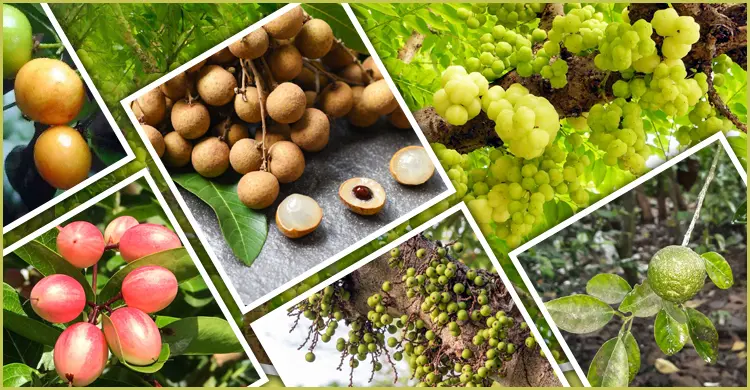
Notable among them are mango, jackfruit, lychee, guava, jam (black plum), rose apple, coconut, kul (jujube), toikor, bichikola, bilimbi, betfol, lemon, amloki, sapodilla, custard apple (ata and sharifa), green banana, pomegranate (dalim and anar), pomelo, betel nut, bangi, watermelon, bokul, bel (wood apple), carambola, olive, chalta, dewa, papaya, tamarind, palm, gab, water chestnut, kodbel, pineapple, date, jamrul, banana, latkan, amra, orange, orboroi, satkora, lukluki, chukur, passion fruit, ashfol, makhna, adhajamir, peach, fosla, jogdumur, cashew nut, fig, kaufol, karamcha, paniala, jamir, boichi, munia, defol and chambul.
Of these, kaufol, karamcha, dewa, ashfol, gab, jogdumur, chambul, atafol, fig, chalta, orboroi, bilimbi, sharifa, satkora, toikor, defol, lukluki, boichi and munia are barely clinging on. They can still be seen in villages but hardly ever in towns.
Imports take 80 percent of the market
Agriculturists say there were once more than a hundred kinds of fruit tree scattered across the fertile villages of this agricultural country. For various reasons that number has fallen to about fifty over the past two decades. Imported foreign fruit now takes 80 percent of the country's fruit market, notably apples, oranges, grapes, dates, pomegranates, malta, strawberries, dragon fruit and pears. Eating these chemical-laced fruits is raising health risks and creating problems of nutrient deficiency.
Doctors say eating such fruit has no immediate effect at first, but it can later lead to liver cirrhosis, kidney failure, impaired function of membranes and other vital organs, and serious, complex diseases. Chemical-laced fruit can also reduce immunity; it creates not only health risks but nutritional deficits.
Increasing and expanding native fruit production is vital to meet the nutritional needs of the country's large population and keep food security intact. Alongside private initiatives, the agriculture department must give native fruit production and expansion greater priority. Only then will our native fruits survive with pride.
The writer is a student in the computer department of Barishal Polytechnic Institute.
Source: Jagonews24. First published in Bengali on The Agro News.

Comments
(0)