
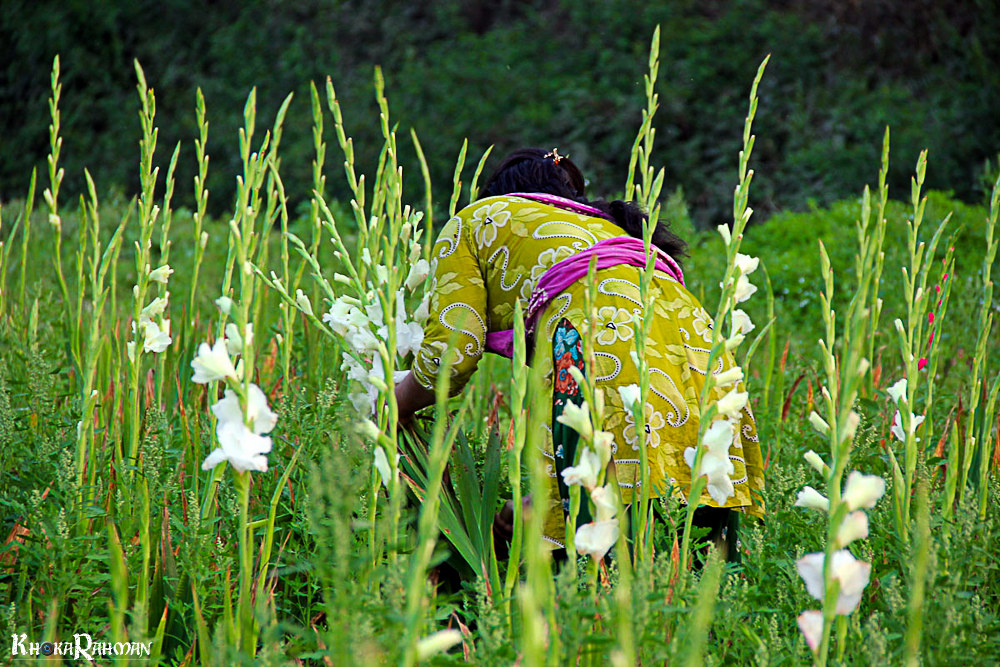
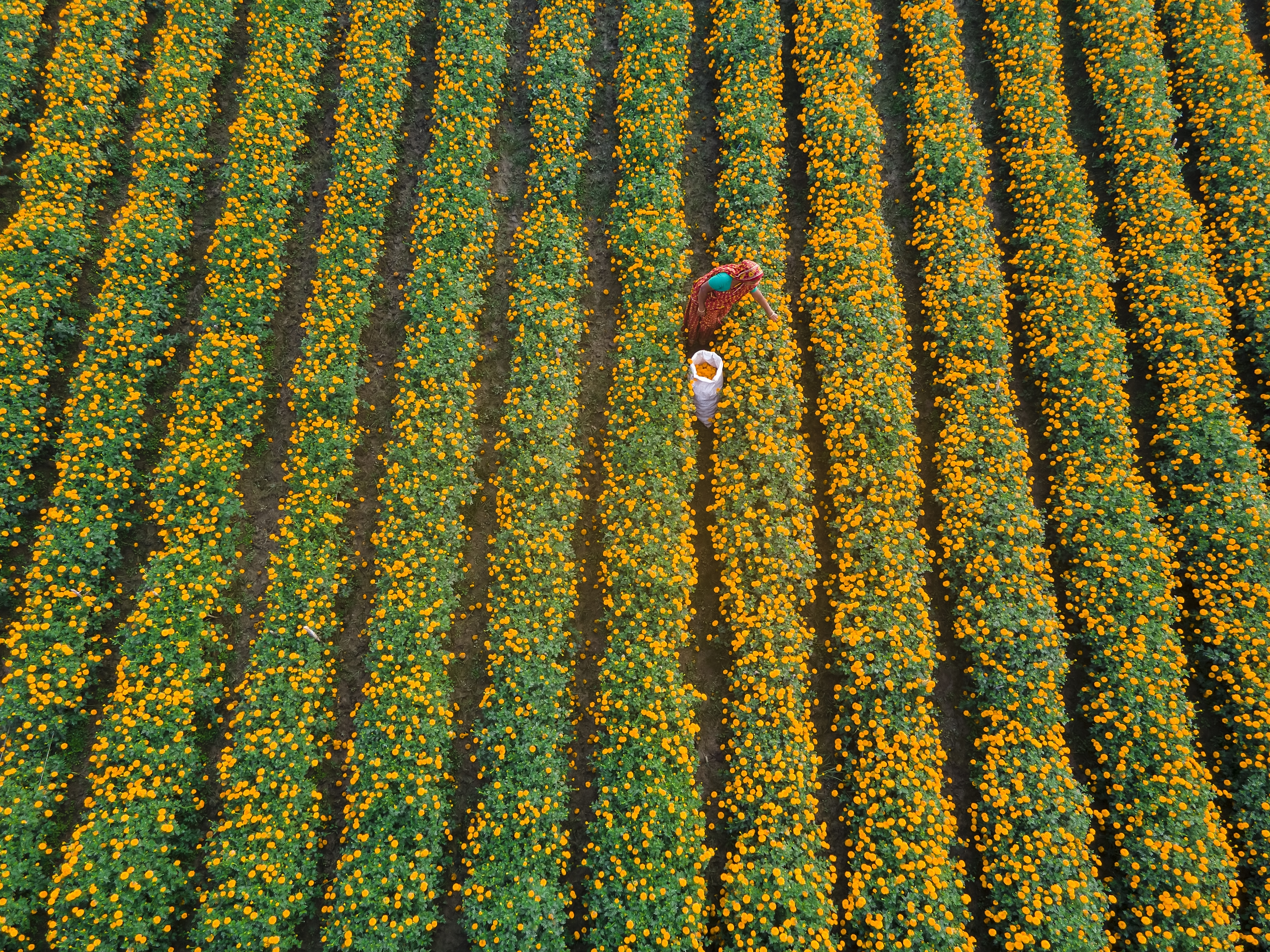
On 10 February 2026, Jagonews24 reported that the Sabdi, Mirkundi and Dighaldi areas of Bandar upazila in Narayanganj were once again covered in flowers, as they are every winter, but that less land had gone under flowers that season and many plants had not fully bloomed even though the selling season had arrived. Growers told the paper that monsoon water had been slow to drain from the fields, so seedlings went into the ground late. The Bandar upazila agriculture officer said the area under flowers was smaller than the year before because the national days fell in Ramadan that year and because of the parliamentary election, and that many flower farmers had grown winter vegetables instead.
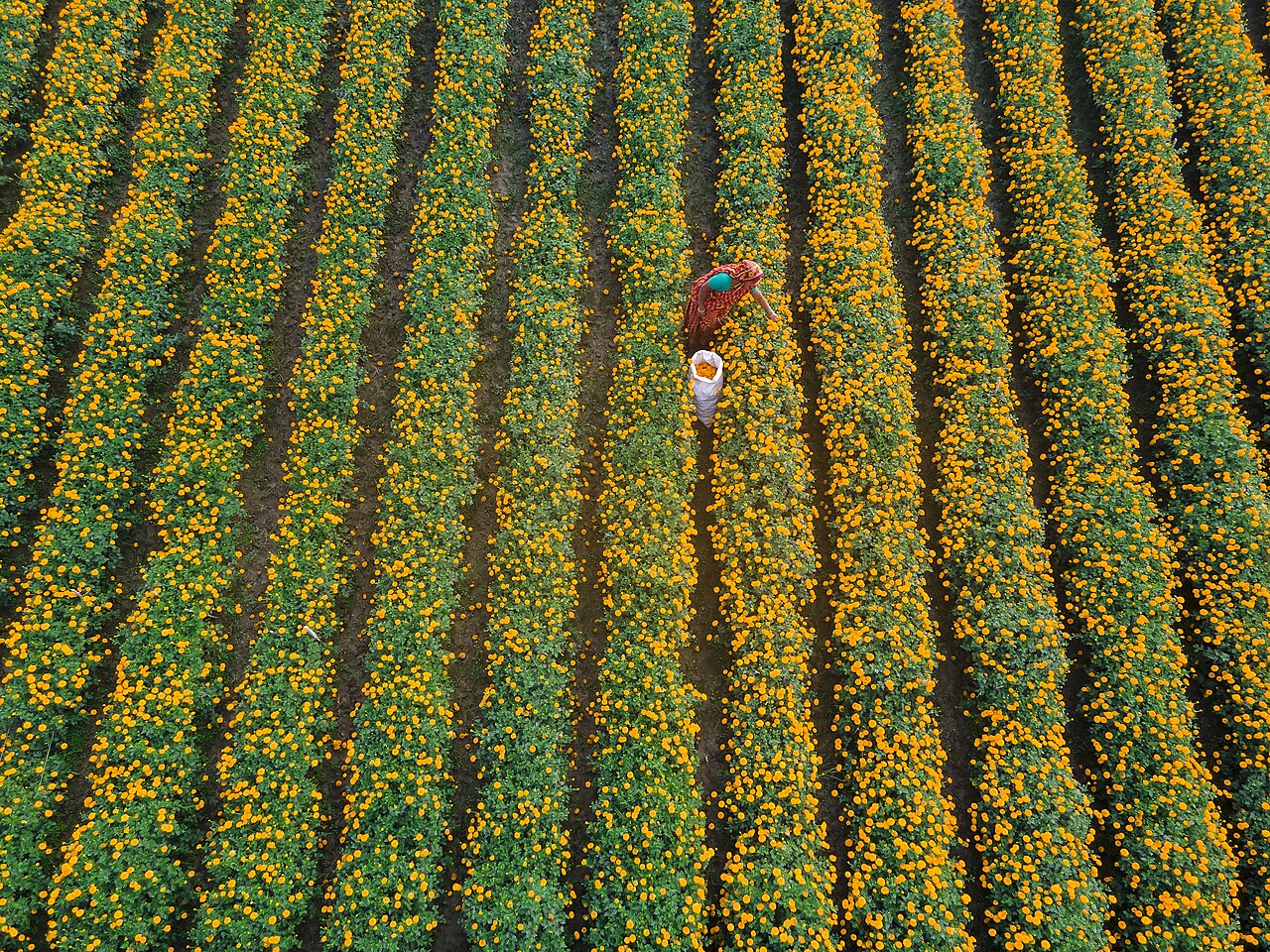
The flower fields of Sabdi and Dighaldi in February 2026
The report described the area as one large flower garden. Wherever one looked there were flowers, and visitors came every day to see them, with crowds swelling on holidays. Farmers told the reporter that flowers are grown all year round in several parts of Bandar upazila, including Dighaldi and Sabdi, but that almost every grower plants them in the winter season, when demand is highest.
According to the report, about 65 hectares in Dighaldi and Sabdi villages were under gypsy, marigold, gladiolus, cherry, Japanese, chrysanthemum and other flowers, the local trade names the growers use. Field after field of red marigold and gladiolus stretched across the area. Yet the area under flowers was smaller than in other years, and although the selling season had begun, the flowers had not fully opened.
The flower growers of Dighaldi and Sabdi meet much of Narayanganj city's demand, and their flowers also go to other parts of the country. The flowers are bought for birthdays, weddings, paying respects to the departed and decorating homes. Demand rises most around Basanta Baran (the welcoming of spring), Valentine's Day, the Bengali and English New Year, Independence Day and International Mother Language Day. In Narayanganj, much of that demand is met by flowers from Sabdi, Dighaldi and Mukuldi in Kalagachhia union of Bandar upazila.
One visitor, Asmaul Husna, told Jagonews24: "It feels very good to leave the noise of the city and come to this beautiful place. People should come out with their families. The place is very beautiful. Just seeing so many kinds of flowers lifts your mood."
Growers blamed late planting after the monsoon
Durjoy Barai, who works in the flower fields alongside his studies, said the season had been only moderate. "Flowers have been grown moderately this year, because the monsoon water was slow to recede and the seedlings could not be planted on time," he said. "That is why the flowers have not bloomed even though it is selling time. Still, I hope we will recover our costs."
Nakul Chandra Haldar, who has been involved in flower farming and the flower trade for about 40 years, gave the same explanation. "The situation is not that good this year," he said. "Because of the monsoon water, seedlings were planted two months late. If we had planted two months earlier, the flowers would have come two months earlier. Ramadan is coming, and flowers don't sell much during Ramadan. All in all, the situation is not good."
The growers' point rests on how the two main field flowers develop. For the African marigold, the extension guide of Tamil Nadu Agricultural University in India says the seedlings are raised in a nursery and moved to the field about four weeks after sowing; the growing tip is pinched out about 30 days after planting to make the plant branch; flowers are picked once every three days beginning about 60 days after planting; and the crop lasts about 130 to 150 days. The same guide recommends a well-drained loamy soil and warns that water must not be allowed to stand in the field.
Gladiolus is grown from a corm rather than a seed. Purdue University's extension service in the United States notes that, depending on the cultivar, gladioli take from 60 to 120 days from planting to produce flowers. These are general figures from other countries, not measurements from Bandar, but they show why the growers saw a direct link between the date the fields could be planted and the date the flowers would be ready for sale.
What the upazila agriculture office said
Bandar upazila agriculture officer Taslima Akter told Jagonews24 that less land was under flowers than in the previous year. "This is because the national days fall in Ramadan this year. There is also the matter of the parliamentary election. That is why flower farmers have grown winter vegetables this year," she said.
"This year flowers have been grown on 65 hectares in Bandar, Narayanganj," she added. "As every year, farmers have grown them with a target of selling about Tk 4 crore worth of flowers."
Switching to winter vegetables fits the farming pattern of the upazila as Banglapedia, the national encyclopedia of Bangladesh, describes it. It lists potato, paddy, jute, mustard and wheat as the main crops of Bandar, and potato and mustard among its main exports. It also records that agriculture is the main source of income for 7.18 percent of households in the upazila, against 23.47 percent for commerce and 29.05 percent for service, and that 70.16 percent of households own no agricultural land.
Ramadan, national days and the selling season
The parliamentary election had been set for 12 February 2026, The Daily Star reported on 11 December 2025, which placed it in February, the flower trade's busiest month.
The government's list of public holidays for 2026, notified in November 2025 and reported by The Daily Star, set out the other dates that shape the flower trade. It listed Shab-e-Barat on 4 February, Shaheed Day and International Mother Language Day on 21 February, Shab-e-Qadr on 17 March, Jumatul Bida on 20 March, Eid ul Fitr on 21 March, Independence and National Day on 26 March, and Bangla New Year (Pahela Baishakh) on 14 April. The dates of the religious days depend on the sighting of the moon and could change.
Pahela Falgun, the first day of spring in the Bengali calendar, has been celebrated on 14 February since 2020, when a revision of the Bangladeshi calendar moved it to the same day as Valentine's Day; before 2019 it fell on 13 February. The celebration in its present form was started in 1991 by students of the Faculty of Fine Arts at Dhaka University. International Mother Language Day on 21 February commemorates the Language Movement of 1952; UNESCO declared the day on 17 November 1999, and it has been observed worldwide since 21 February 2000.
How much these days matter to the trade was clear from earlier seasons. On 19 February 2023, UNB, in a report carried by the Dhaka Tribune, quoted the president of the Bangladesh Flower Society as saying that flowers worth Tk 50 to 60 crore had sold each day on the three February occasions the year before, and that if conditions stayed favourable sales on 21 February alone could reach Tk 130 to 150 crore. Traders said wholesale prices that year were Tk 5 to 40 a piece higher than the year before, depending on the variety, with roses at Tk 5 to 60, gerbera and gladiolus at Tk 20 to 40 and tuberose at Tk 5 to 20.
Flower traders elsewhere had already seen how a clash of dates can affect sales. On 14 February 2025, The Daily Star reported from the Gadkhali wholesale market in Jashore that prices were sharply lower than the year before. The general secretary of the Gadkhali flower farmers' and traders' association said that because Shab-e-Barat and Valentine's Day fell on the same day that year, many buyers were not taking risks, while a training officer of the Department of Agricultural Extension (DAE) in Jashore said peak harvesting had pushed supply above demand.
Bandar upazila, Kalagachhia and the Shitalakshya
Bandar is one of the five upazilas of Narayanganj district. Banglapedia gives its area as 54.39 square kilometres and its population at the 2011 census as 312,841. It is bounded by Sonargaon upazila on the north and east, Munshiganj Sadar upazila on the south, and Narayanganj Sadar upazila and the Shitalakshya river on the west. Bandar was made a thana in 1964 and an upazila in 1993. Its rural area is divided into five unions: Kalagachhia, Dhamgar, Bandar, Madanpur and Musapur. Banglapedia names Sabdi bazar among the upazila's noted markets and Sabdi Mandir among its religious sites.
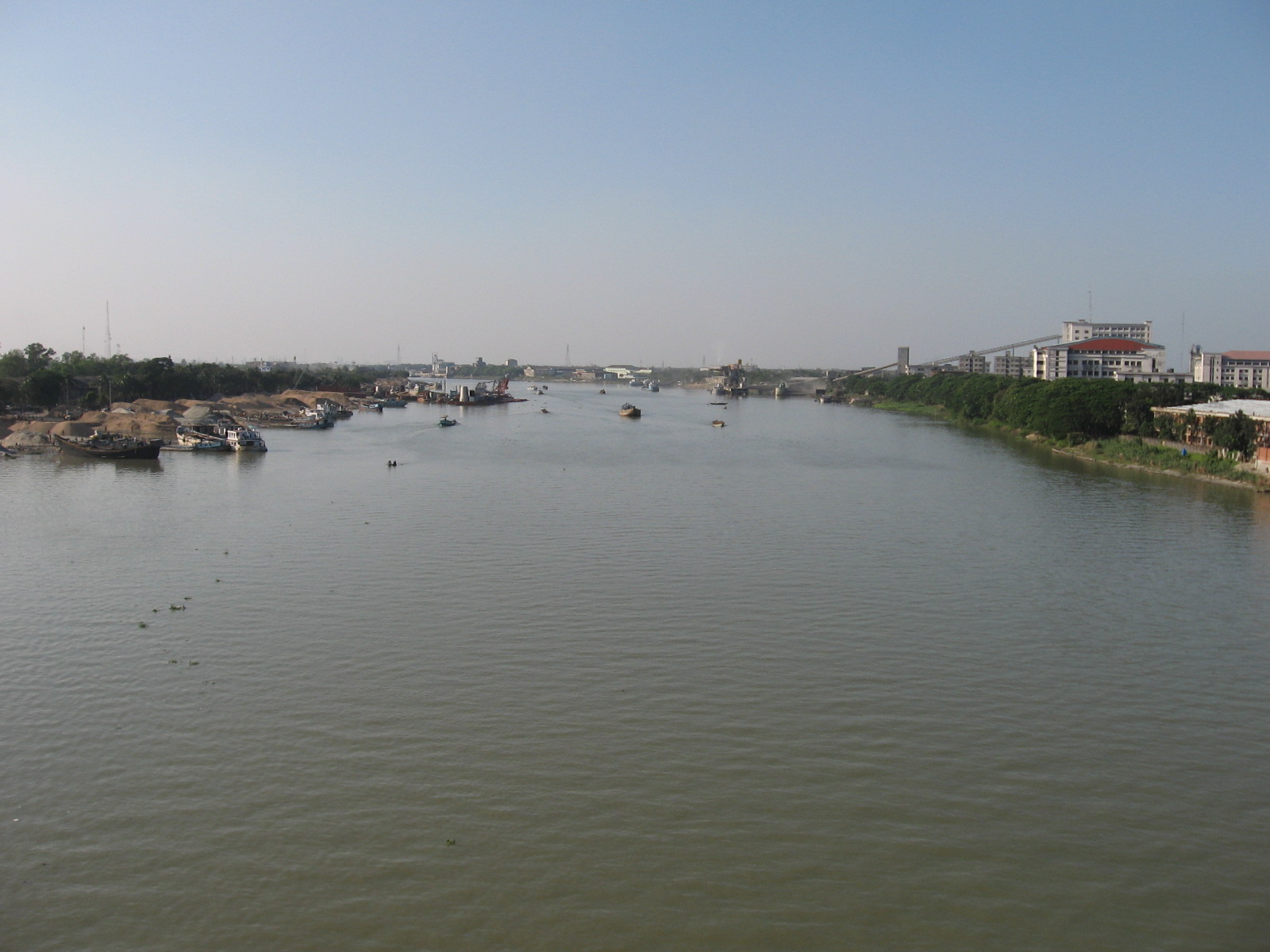
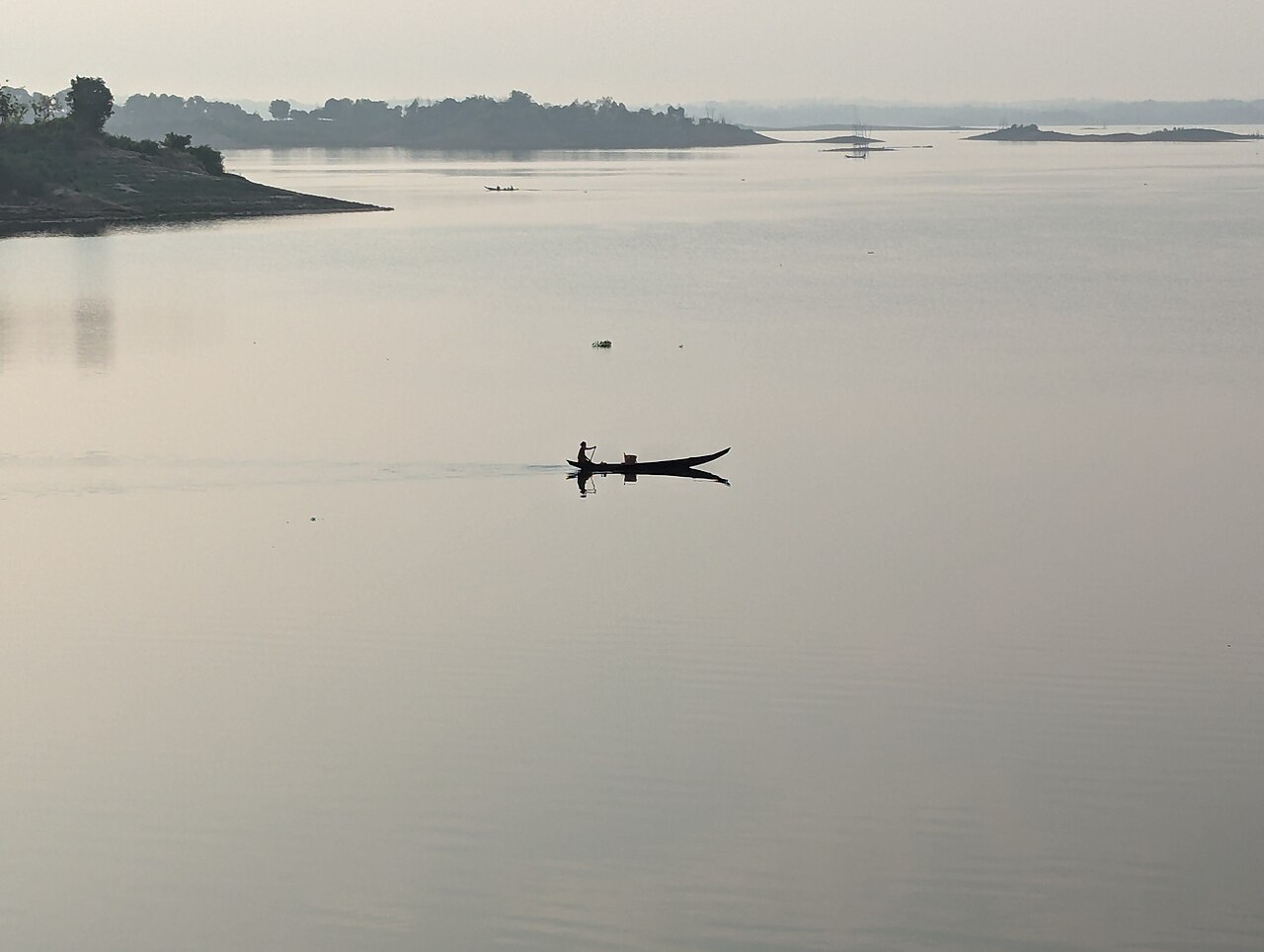
The Shitalakshya, the upazila's main river, is a distributary of the Brahmaputra. It is about 110 kilometres long, is navigable all year, and is at its widest, about 300 metres, near Narayanganj. It flows past the city and joins the Dhaleshwari near Kalagachhia, the union where Sabdi, Dighaldi and Mukuldi lie. Old landmarks stand on its banks, among them the Bandar Shahi Mosque, built in 1481, and the Kadam Rasul shrine, as well as the Sonakanda Fort.
Narayanganj district covers 684.37 square kilometres. Banglapedia lists its main rivers as the Shitalakshya, Meghna, Old Brahmaputra, Buriganga, Balu and Dhaleshwari. The town became a sub-division in 1882 and a district in 1984, and the Narayanganj City Corporation was established on 5 May 2011. Agriculture is the main source of income for 14.38 percent of households across the district, which is better known for industry and trade.
Sabdi's flowers in earlier seasons
The flower villages of Kalagachhia had been in the news before. On 20 February 2020, UNB reported from Narayanganj that growers in villages of Kalagachhia union expected to sell flowers worth Tk 20 crore that season because production had been plentiful. The agency described Sabdi as a "Kingdom of Flower" and named Sabdi, Dighaldi and Madhabpasha, along the bank of the Brahmaputra, among the growing villages.
According to that report, several hundred people were involved in the flower business there, about 400 bighas across ten villages of the union were under flowers, and about 50 hectares in Sabdi village alone had been planted that year. Around 40 varieties were grown, including marigold, cherry, chrysanthemum, rosemallow (joba), sunflower, dahlia, kath maloti, belli and gerbera. The growers aimed their harvest at Pahela Falgun, Valentine's Day, International Mother Language Day and Independence Day, and traders came from Narayanganj, Dhaka and Narsingdi to buy.
A grower in Dighaldi told UNB that production had been very good that year, while another said that the growers could not expand on a large scale despite high demand because they lacked money. An additional deputy director of the DAE in the district said many steps had been taken to expand flower cultivation, that the department was in touch with the growers, and that support including loans through the upazila and zila parishad loan committees would be provided.
The flowers in Bandar's fields
Banglapedia traces the commercial cut-flower trade in Bangladesh to flowers sold at holy shrines, and says cut flowers became popular with the general public after independence, when farmers began growing them commercially to meet the demand of the capital and other towns. Among the locally produced cut flowers it lists as traded regularly are rose, gladiolus of several varieties and colours, marigold in yellow, red and orange, chrysanthemum and tuberose. It notes that the Bangladesh Agricultural Research Institute (BARI) opened a floriculture research centre to promote commercial flower cultivation. The encyclopedia adds that demand for foliage plants, for cut flowers, mainly rose, tuberose, orchid and gladiolus, and for seeds of seasonal flowers has been rising slowly, that private nurseries are coming up to meet it, and that limited quantities of rose and tuberose are exported to the Middle East and Europe.
Marigold, the flower that colours Bandar's fields, belongs to the genus Tagetes. Banglapedia names Tagetes patula and Tagetes erecta as the species grown. Tagetes erecta, known in English as the African or Mexican marigold despite its origin, is native to Mexico and Central America, grows to about 30 to 110 centimetres, and is cultivated around the world, with many cultivars grown as ornamentals and for the cut-flower trade.
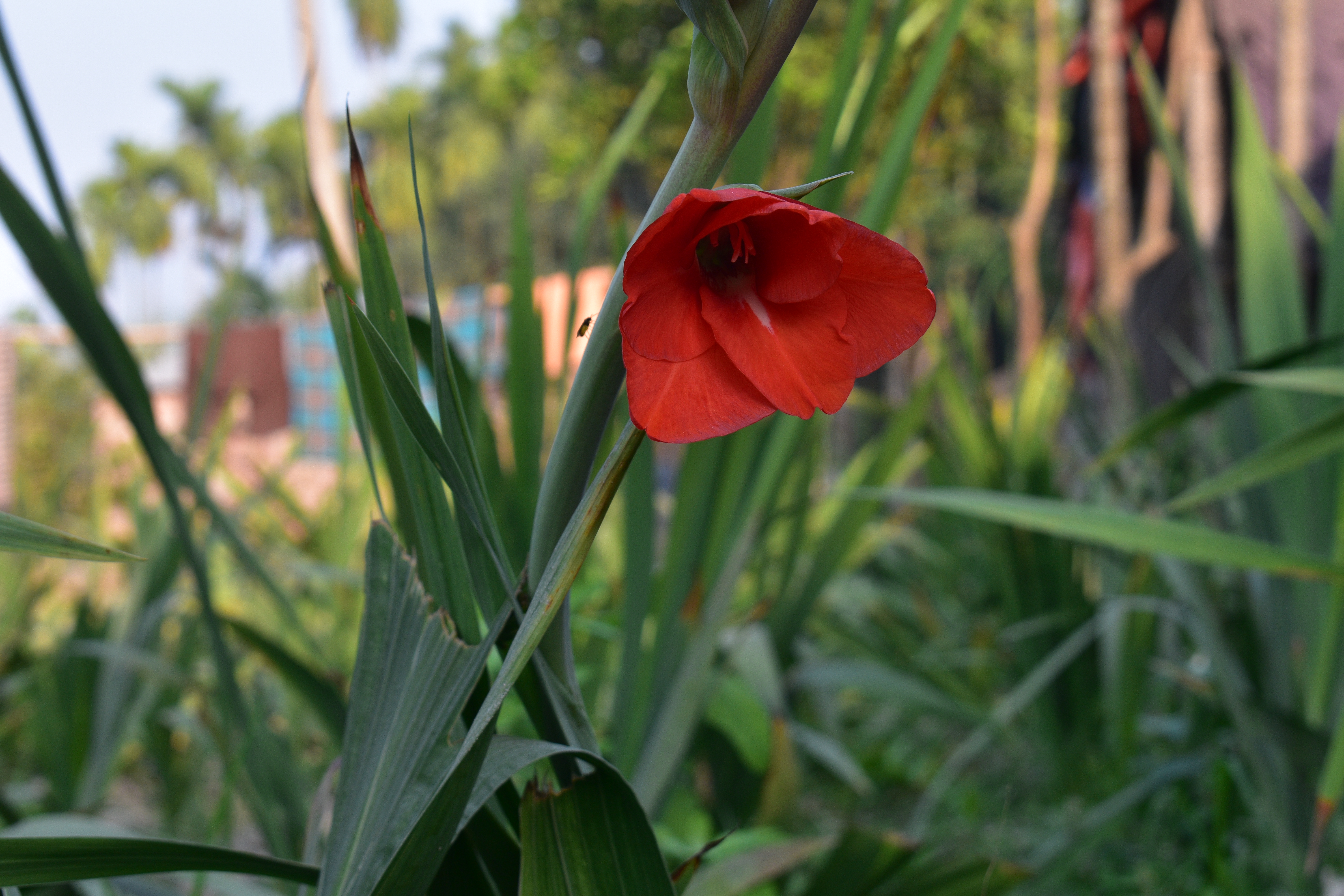
Gladiolus is a genus of perennial plants of the iris family that grow from corms. The large flower spikes sold in markets are the product of centuries of hybridisation and selection. Mississippi State University's extension service advises planting corms in succession, seven to fourteen days apart, so that cut stems are available over a longer period, and harvesting stems for long-distance shipping when the lowest buds begin to show colour. Cut stems should go straight into clean water; because gladioli bend towards gravity, they are stored upright, and they are sensitive to ethylene, so they need care when kept with other produce.
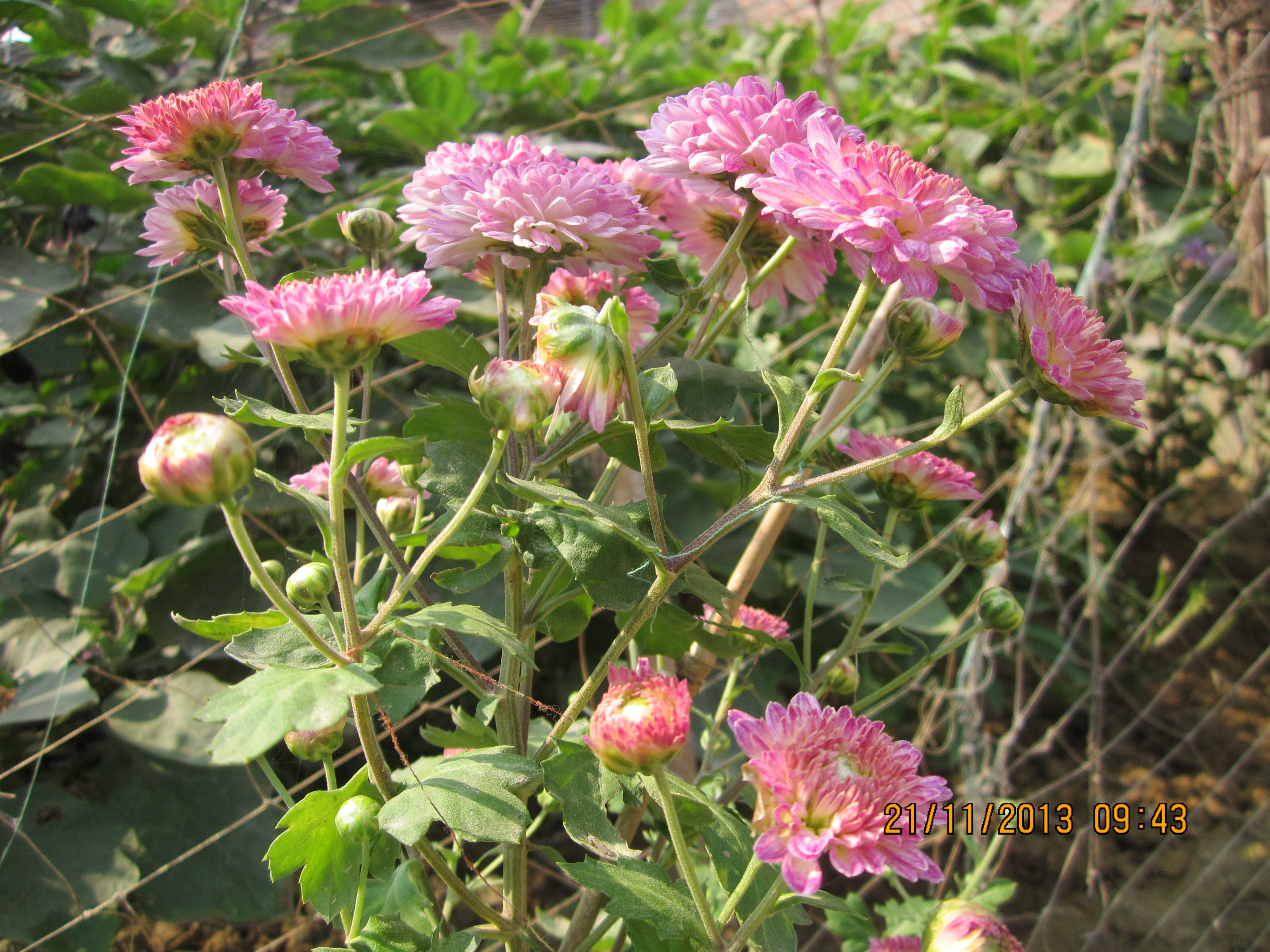
Chrysanthemum (chandramallika in Bengali) is a perennial of the daisy family, Asteraceae, native to East Asia, with its centre of diversity in China, where it was first cultivated as far back as the 15th century BCE. It is a late-season flower that blooms in autumn, and many thousands of horticultural varieties exist. The "gypsy" of the growers is gypsophila, or baby's breath, a genus of the carnation family whose species Gypsophila paniculata is the one most used in bouquets.
Bangladesh's flower trade before the 2026 season
On 19 February 2023, UNB, in a report carried by the Dhaka Tribune, cited Bangladesh Bureau of Statistics (BBS) figures putting the country's flower production at 32,120 tonnes from 3,930 acres, with roses making up 67 percent. The president of the Bangladesh Flower Society said then that sales in February would cross Tk 300 crore. Traders said most sales took place in the Shahbagh and Agargaon wholesale markets in Dhaka, which were supplied from Jashore, Narayanganj and Savar, and quoted marigolds at Tk 200 to 400 per 1,000 flowers.
Jashore remains the largest centre. On 10 February 2024, UNB reported from Jhikargachha upazila that growers expected to sell flowers worth about Tk 70 crore in February, around Pahela Falgun, Valentine's Day and Amar Ekushey. The Jhikargachha upazila agriculture officer said 630 hectares were under flowers that year, and the president of the Jashore flower growers' and marketing cooperative said the main season ran from mid-December to 14 April. Gladiolus was then quoted at Tk 15 to 17 a piece and marigold at Tk 200 to 250 per 1,000. The cooperative's president put the region's yearly flower sales at about Tk 550 crore, and growers hoped to reach Tk 100 crore over the whole run of occasions from Valentine's Day to Pahela Baishakh.
A year later, The Daily Star's report of 14 February 2025 from Gadkhali cited the DAE as saying that flowers were grown on 637 hectares there by about 3,000 farmers. Wholesale prices that day were Tk 6 to 12 a piece for gladiolus and Tk 3 to 6 for marigold, with gypsy at Tk 20 a handful. The paper said the Gadkhali bazar was busiest on 12, 13 and 14 February, and more than 1,000 growers brought flowers to the market that day.
Photo: Mahbubur Rahman Khoka / Wikimedia Commons (CC BY-SA 4.0)
Sources: Jagonews24, UNB, The Daily Star, Dhaka Tribune, Banglapedia, Tamil Nadu Agricultural University, Purdue University Extension, Mississippi State University Extension Service, Wikipedia
Comments
(0)