
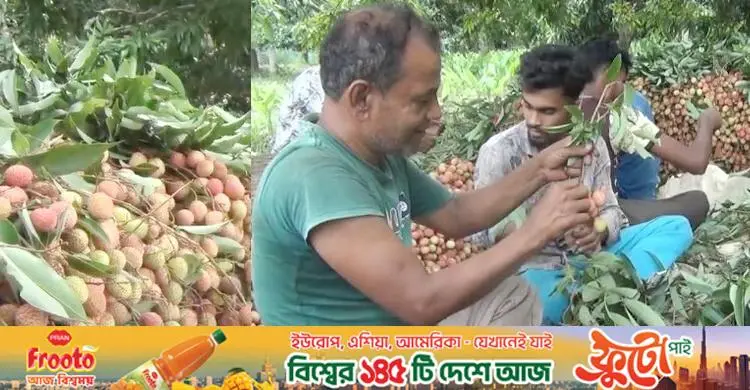
Litchi growers in Narail district have not generally had much success, but the picture is different in Pankabila village in Sadar upazila. Litchi growing here has a history of a hundred years; farmers have grown litchis since British rule. They are happy with this season's good yield and prices. The chemical-free litchis meet local demand and are sent to at least 20 districts.
Pankabila became known as a litchi village long ago. At least Tk 2 crore worth of litchis are bought and sold from the village every season, and its success has made farmers in neighbouring villages interested in growing them too.
A village on the Chitra
Pankabila lies on the bank of the Chitra river, on the far side of Narail town, just a kilometre and a half from the town. Its people have been growing litchis since British rule, and every season the area bustles with traders and growers.
This year is no exception. From the start of the season the village has been busy with litchi traders and others from different parts of the country. From dawn to dusk people are at work: some sit on the top branches picking litchis, others sort them, and many are busy counting and packing.
Growers and traders say favourable weather has produced a better yield this season than in the past ten years. The fully organic litchis meet local demand and go to at least 20 districts, including Jashore, Satkhira, Khulna, Gopalganj, Barishal, Bogura, Rangpur, Chattogram and the capital. In the local market, 100 litchis sell at retail for Tk 200 to Tk 350, while wholesalers are buying 1,000 litchis for Tk 2,000 to Tk 3,500.
District agriculture officer Agriculturist Mohammad Arifur Rahman said: "The village became known as the litchi village long ago. Seeing its success, litchi growing has started in nearby villages. I think it will expand further in future."
This year litchis are grown commercially on 42 hectares in the village, usually various local varieties along with Bombai, Mozaffar and China Three. Those involved expect 400 to 450 tonnes from the orchards this season, with a market value of at least Tk 2 crore.
Source: Jagonews24. First published in Bengali on The Agro News.

Comments
(0)