
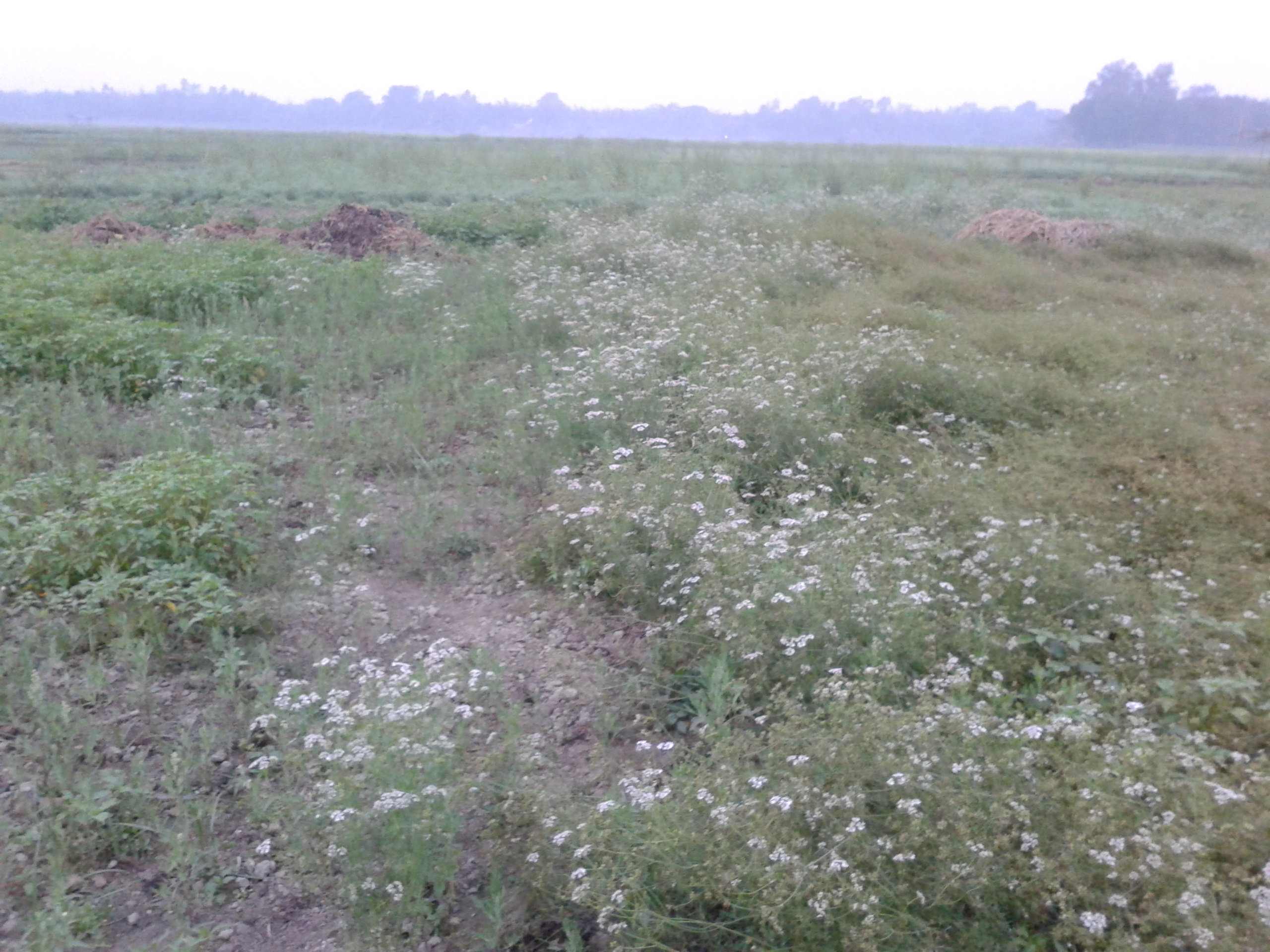
Farmers in Narail, a district in south-western Bangladesh, sowed far more coriander in the 2018-19 winter season than the agriculture office had planned for. Jagonews24's Narail district correspondent reported on 16 February 2019 that the district agriculture office had set a target of 150 hectares of coriander across the district's three upazilas for the season, but that the crop had been sown on 680 hectares. In the previous season, the office said, coriander had been grown on 150 hectares in the district.
Most of the extra land was in Lohagara upazila, where about 450 hectares were under coriander that season. Farmers told the reporter they had turned to the crop because it cost little to grow and earned more. The upazila and district agriculture officials quoted in the same report gave the same reasons: low production costs, little disease and good demand for coriander leaves in the market.
680 hectares against a 150-hectare target
The figures came from the agriculture office in Narail, the district office of the Department of Agricultural Extension (DAE). According to the report, 150 hectares had been under coriander in the 2017-18 season; the target for 2018-19 for the three upazilas, Narail Sadar, Kalia and Lohagara, was set at the same 150 hectares; and the area actually sown reached 680 hectares. Of the three upazilas, Lohagara had the most, with about 450 hectares.
The agriculture office counts land in hectares, but farmers in Bangladesh still measure it in bighas. In Bangladesh one bigha is 1,600 square yards, or 14,400 square feet, a size standardised in undivided Bengal under British rule, and one hectare equals 7.475 bighas. The farmers in the report measured their harvest in maunds, and throughout Bangladesh one maund is 40 kilograms.
Lohagara upazila agriculture officer Samaren Biswas told Jagonews24: “Because coriander has low costs and little disease, farmers have turned to it more than in other seasons. That is why more coriander will be produced than our target.” Chinmoy Roy, deputy director of the DAE in the district, said: “Farmers in the area are profiting more from coriander. There is good demand for coriander leaves in the market. With low production costs and high profits, farmers are turning to coriander.”
Lohagara's loam soils and a mild winter
The Lohagara agriculture office said the upazila's sandy loam and loam soils give good yields of spice crops, and that the upazila is suited to coriander, groundnut and onion. Little coriander had been grown in the area the season before, the office said, but in 2018-19 it was grown widely.
Farmers said most of the coriander had been sown on high land and on homestead land. Because the cold was less severe and the fog less dense that winter, growers expected a good yield, and they said they would benefit financially if they got the market prices they hoped for.
According to the report, coriander in the area is sown by broadcasting in the Bengali months of Ashwin and Kartik and harvested in Falgun and Chaitra. With favourable weather there had been little disease that year, and because of market demand farmers also earned money by selling the leaves while the plants were still young. Banglapedia, the national encyclopedia of Bangladesh, says the crop is sown in the country in October and November and matures in 90 to 105 days. When the report appeared in mid-February 2019, Narail's coriander fields were in flower and the seed harvest was still to come.
Narail and Lohagara
Banglapedia describes Narail District, in Khulna Division, as covering 967.99 square kilometres. The district was formed in 1984, and Narail Sadar is the largest of its three upazilas, at 381.76 square kilometres. Narail is bounded by Magura District to the north, Khulna and Bagerhat to the south, Faridpur and Gopalganj to the east and Jessore to the west. Its main rivers are the Madhumati, the Chitra, the Nabaganga and the Bhairab, and Narail Town stands on the bank of the Chitra. The 2011 census counted 721,668 people in the district. Agriculture was the main source of income, for 62.08 percent, followed by commerce at 13.20 percent and service at 9.87 percent.
Lohagara upazila covers 284.91 square kilometres. Lohagara Thana was formed in 1861 and became an upazila in 1984. It is bounded by Mohammadpur upazila to the north, Kalia to the south, Alfadanga, Kashiani and Gopalganj Sadar to the east, and Narail Sadar and Shalikha to the west. Its main rivers are the Nabaganga, the Madhumati and the Ichamati, and its notable water bodies include the Chhatra and Gondob canals and the Naldi, Kumri and Amadar beels. The upazila has 12 unions: Itna, Kashipur, Kotakul, Joypur, Dighalia, Naldi, Noagram, Mallikpur, Lakshmipasha, Lahuria, Lohagara and Shalnagar. The 2011 census counted 228,594 people there.
According to Banglapedia, agriculture is the main source of income in Lohagara, for 58.07 percent, followed by commerce at 13.28 percent and service at 12.72 percent; 62.22 percent of the people own land and 37.78 percent are landless. The main crops are paddy, jute, wheat, mustard, betel leaf and vegetables, and the main exports are betel leaf, betel nut, banana, papaya and vegetables. The upazila has 40 hats and bazaars, among them Lohagara Bazar, Baradia Bazar, Naldi Bazar, Dighalia Bazar and Itna Hat. The entry, based on the census and a 2007 cultural survey, does not list coriander among the upazila's main crops.
Costs, yields and prices in the farmers' words
Farmer Tajibar Sheikh told Jagonews24: “After preparing the land you just have to broadcast the coriander seed. Fertiliser, pesticide and labour costs for this crop are also low, so coriander is grown at a nominal cost. Each bigha yields 3 to 4 maunds.”
Farmer Aktar Talukder said: “I expect a good coriander yield this year. The coriander we grow sells in the market for Tk 6,000 to 8,000 a maund. If the yield is good in the end, we will make money.”
Research figures put these yields in context. Banglapedia says coriander in Bangladesh yields 1,000 to 2,000 kilograms of dried fruit per hectare. Three scientists of the On-Farm Research Division of the Bangladesh Agricultural Research Institute (BARI) in Faridpur wrote in the Bangladesh Journal of Agricultural Research in June 2016 that the country's average coriander yield was 825 kilograms per hectare, while the research yield was 1.5 tonnes per hectare (SAARC Agriculture Centre, 2006). In their view, one of the main reasons for the low yield was imbalanced and improper use of fertiliser.
Prices in Narail can also be set beside those in the country's main coriander area. The Daily Star reported from Shariatpur on 11 April 2018 that, according to the DAE, coriander seed had been grown on 5,570 hectares in Shariatpur district that season, 2,200 of them in Jajira upazila alone. One Jajira farmer who grew coriander on one bigha (33 decimals) said he had spent about Tk 6,000, harvested six maunds of seed and sold at an average of Tk 4,000 a maund, and that he also paid Tk 3,000 to lease the land. A wholesaler at Kazirhat in Jajira told the paper that coriander sold for Tk 2,400 a maund at the lowest and Tk 4,000 at the highest. Farmers there were asking for an orderly market, saying they got a fair price one day and an unfavourable one the next.
Bees among the white flowers
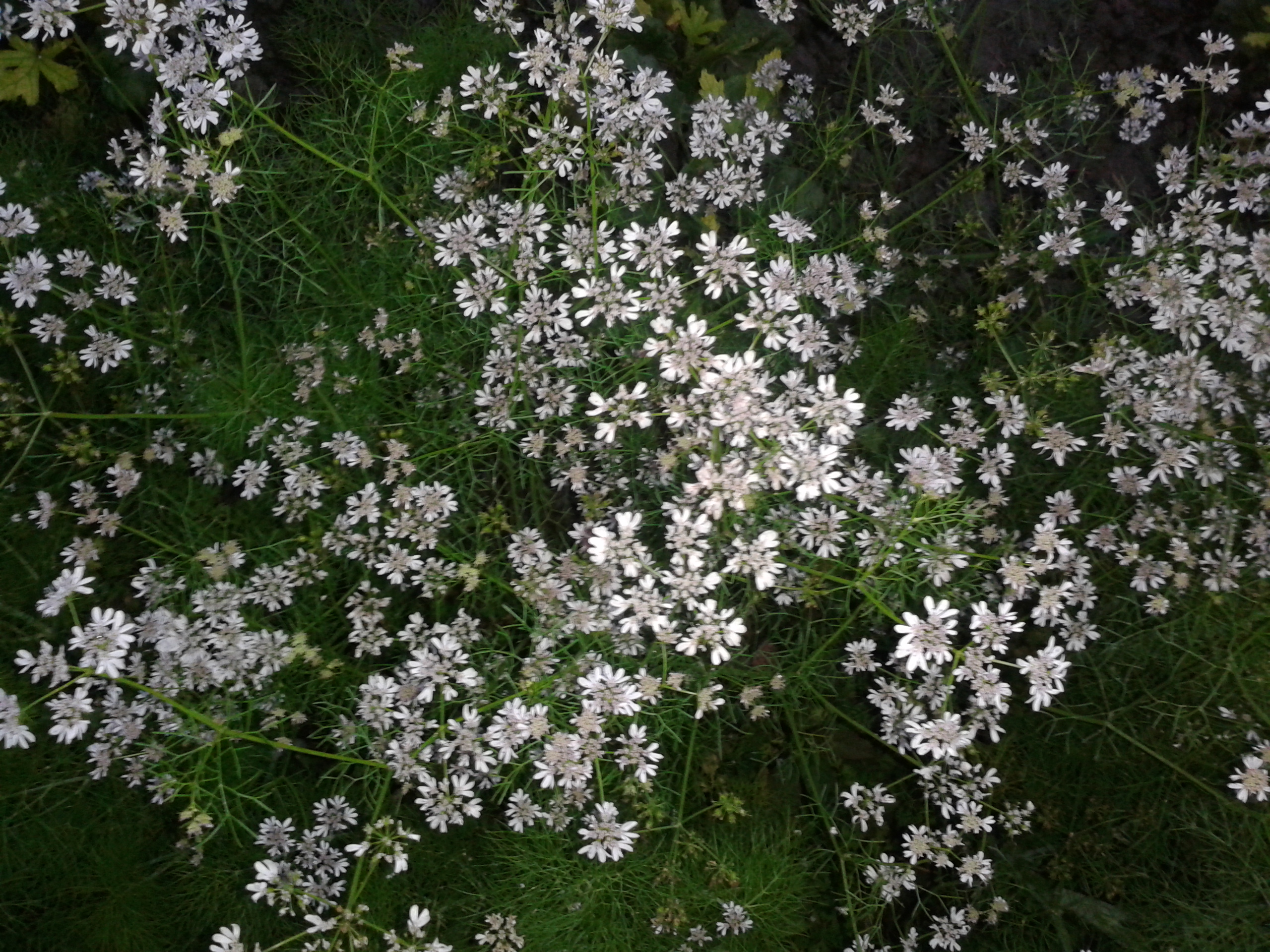
The flowering fields also drew beekeepers. Imanuddin of Gandab village and Motiar Rahman of Chachai village in Lohagara told Jagonews24 that swarms of honeybees were moving among the green leaves and white flowers to collect nectar in Rajupur, Baka, Shinga, Dighalia, Mallikpur, Chachai, Debi, Sharshuna and Satrahajari in the upazila. Beekeepers, meanwhile, had set up hive boxes beside the coriander fields to collect honey.
Banglapedia lists coriander among Bangladesh's honey plants. The agricultural crops it counts as potential honey plants are cucurbits, beans, okra, radish, coriander, onion, mustard, niger, sesame and cotton; most of them blossom from December to March, and the sugar content of their nectar is between 45 and 70 percent. The encyclopedia's entry on honey says most honey in the country is collected from December to June, with the peak from February to April, and that beekeeping was being popularised in Khulna, Jessore, Bogra, Mymensingh, Tangail, Dhaka and Chittagong.
Banglapedia's entry on apiculture says the most important honeybee in Bangladesh from a commercial standpoint is Apis cerana indica, while the wild Apis dorsata nests in forests and on large trees. The honeybee's chief value lies in its ability to pollinate more than 60 agricultural crops and so increase the production of fruits and seeds. Commercial beekeeping in the country is described as still in its infancy, with some successful beekeepers moving their hives to areas where nectar plants abound; the best known honey is mustard honey, and there are no statistics of the annual honey production of the country's beekeepers. The DAE periodically organises beekeeping training at upazila level and gives trainees hives, and the Bangladesh Small and Cottage Industries Corporation (BSCIC) and the Bangladesh Institute of Apiculture also train beekeepers and organise mobile beekeeping in the main mustard-growing areas in winter.
The Daily Star's 2018 report from Jajira described the same scene a year earlier: hive boxes all around the upazila, and honey collectors, known as moual, staying in tents beside the fields and collecting honey from mustard, coriander and litchi flowers in their seasons. A sub-assistant agriculture officer told the paper: “Many farmers are learning about the pollination and they now know how the bees are helping their spice crops.” One of the honey collectors said: “Farmers now invite us to their fields to collect honey as they now know about the magic of pollination.”
Coriander, a leaf and a spice
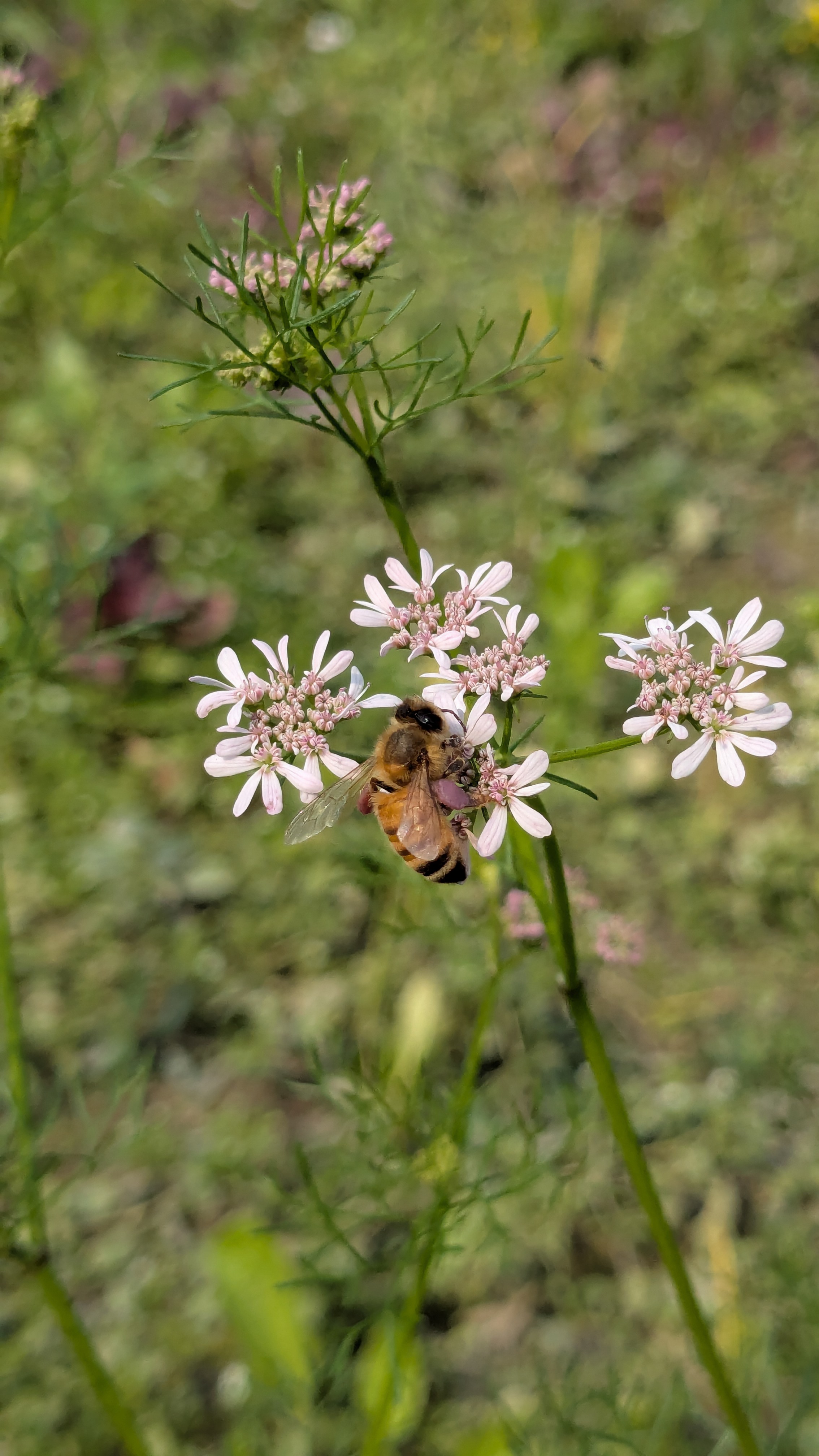
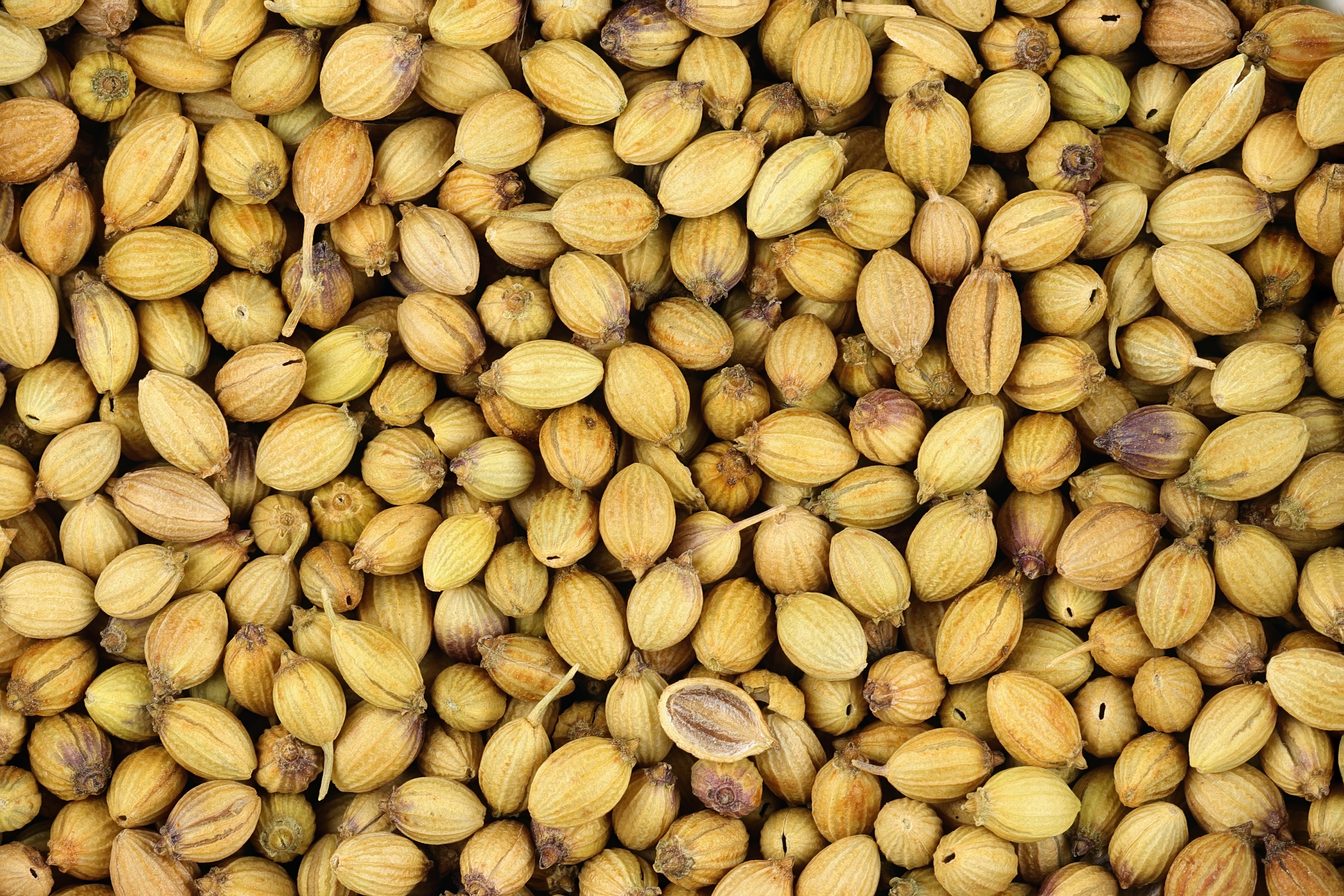
Coriander (Coriandrum sativum) is a strong-smelling annual herb of the family Umbelliferae, also called Apiaceae. Banglapedia says it is native to the Mediterranean region, where it has grown since ancient times, and that it is extensively cultivated as a winter crop in Bangladesh. The plant grows 30 to 70 centimetres high; its lower leaves are broad with lobed margins and its upper leaves finely cut. The small white or pink flowers are borne in compound umbels at the tips of the stems, and the fruits are globular, yellow-brown, ribbed, about 3 millimetres across and two-seeded.
According to Banglapedia, the dried seeds are an important ingredient of curry powder and are also used in pickling spices, sausages, seasonings and confectionery, and to flavour spirits such as gin. Young plants go into chutneys, sauces, curries and soups, and the volatile oil in the fruit is used for flavouring and in medicines. The encyclopedia's entry on spices names coriander among the spices commonly grown in Bangladesh, with ginger, garlic, turmeric, onion, red pepper, Indian cassia and peppermint, and says the young coriander plant is commonly used to flavour vegetable and fish curries. Spices and condiments covered about 23,617 hectares in 2004-05, with production of about 23,865 tonnes, yet many spices were still imported from India, Malaysia and Indonesia.
Leaf and seed taste different. According to the English Wikipedia entry on coriander, the dominant flavours of the leaves come from the aldehydes 2-decenal and 2-dodecenal, while the main flavour compound of the seeds is linalool. The leaves spoil quickly once removed from the plant and lose their aroma when dried or frozen, which is why coriander leaves are sold and used fresh; the young leaves Narail's farmers were selling, and the demand for leaves the district's deputy director described, belong to that fresh-leaf market. The same entry notes that about half a litre of coriander seed was recovered from the tomb of the Egyptian king Tutankhamun, and that coriander may have been cultivated in Greece since at least the second millennium BCE.
How the crop is grown
The Narail farmers' method is simple: prepare the land and broadcast the seed, with little spent on fertiliser, pesticide or labour. Banglapedia gives a seed rate in Bangladesh of 10 to 20 kilograms per hectare.
A study published in the Bangladesh Journal of Agricultural Research in June 2013, carried out in the 2007-08 rabi season at Bangabandhu Sheikh Mujibur Rahman Agricultural University (BSMRAU) in Gazipur, describes how coriander was grown in a research field. The fruits were rubbed to separate the two halves and soaked in water for 24 hours to improve germination. Seed was sown by hand in rows 20 centimetres apart on beds raised 15 centimetres, mixed with four to five times its weight of loose soil so that it would fall evenly. After germination the crop was irrigated three times, at 30, 60 and 80 days after sowing. It was harvested when half the green seeds on a plant had turned brown, cut at the base with sickles early in the morning so that the seeds would not shatter, dried in the sun, beaten with sticks to separate the seed, winnowed, and dried to about 10 percent moisture.
Fertiliser was studied directly in Faridpur. BARI's On-Farm Research Division ran trials with the variety BARI Dhonia-1 in the rabi seasons of 2011-12 and 2012-13 at Hatgobindapur in Faridpur Sadar, on slightly alkaline clay to clay loam soil of the Low Ganges River Floodplain (agro-ecological zone 12). A soil-test-based dose of 118 kilograms of nitrogen, 47 of phosphorus, 26 of potassium, 10 of sulphur, 2.2 of zinc and 0.8 of boron per hectare gave 1,311 kilograms of seed per hectare, a gross margin of Tk 41,769 per hectare and the highest marginal rate of return, 108 percent. Plots given no fertiliser yielded 728 kilograms per hectare. The researchers recommended that dose for that soil and wrote that 75 percent of it cut nutrient costs by a third and could suit farmers with few resources. The paper notes that fertiliser needs vary with the variety and the soils of each agro-ecological zone. The dose is therefore for that Faridpur soil; farmers elsewhere should have their soil tested and ask the upazila agriculture office for the dose that suits it.
The Gazipur trial used 80 kilograms of nitrogen, 35 of phosphorus, 60 of potassium and 20 of sulphur per hectare, with 10 tonnes of cow dung. All the cow dung, the phosphorus from TSP, the potassium from MP, the sulphur from gypsum and half the nitrogen were applied at final land preparation, and the rest of the nitrogen was top-dressed in two equal instalments 30 and 60 days after sowing.
The disease recorded in the Gazipur trial was stem gall: five of the 14 genotypes tested were attacked, one of them BARI Dhonia-1, and those plants yielded less. No fungicide was sprayed; infected plants were pulled up as soon as they were noticed and buried in the soil. In Narail, farmers said there had been little disease in the 2018-19 season because of favourable weather.
Coriander in Bangladesh: area, varieties and research
Citing DAE figures published in 2015, the BARI researchers in Faridpur wrote that coriander in Bangladesh covered about 0.33 lakh hectares in 2013-14, with production of 0.38 lakh tonnes. Faridpur district ranked first in both area and production, with 2,573 hectares and 2,433 tonnes. The same paper said Bangladesh imported about 93 tonnes of coriander seed in 2006 and 190 tonnes in 2008-09. The 2013 Gazipur paper noted that the area and production of coriander seed had been rising every year from 2005-06 to 2009-10 and called coriander a remunerative crop in the rabi season.
Varieties had lagged behind. The authors of the 2013 paper wrote that although coriander was one of the most important spice crops, very little importance had been given to its improvement, and that there was no recognised commercial variety in Bangladesh except BARI Dhonia-1; more varieties suited to seed production were needed to meet rising demand. Their trial compared 14 genotypes collected from seed shops in Siddique Bazar in Dhaka, from Jessore, Magura, Faridpur, Hathazari in Chittagong, Tangail, Chuadanga, Raikhali in Rangamati and Gazipur, and from BARI. The highest seed yields came from CS011, collected in Chuadanga, at 1.34 tonnes per hectare, and CS007, from Hathazari, at 1.05 tonnes. Local seed from Narail's neighbours Jessore, Magura and Faridpur was part of the collection.
The research behind these figures came from several institutions. The Faridpur fertiliser study was done by BARI's On-Farm Research Division, the variety comparison at BSMRAU's horticulture field laboratory, and both papers cite the annual reports of BARI's Spices Research Centre at Shibganj in Bogra.
The Department of Agricultural Extension
The Department of Agricultural Extension, whose office supplied Narail's figures, is the government department responsible for agricultural extension in Bangladesh. It works under the Ministry of Agriculture and is based in Dhaka. The Agriculture Directorate (Extension and Management) and the Jute Directorate were set up in 1975, and in 1982 the DAE was formed by merging them with the Plant Protection Directorate, the Horticulture Board, the Tobacco Development Board and the Central Extension Resource and Development Institute (CERDI). The department ran the Training and Visit programme for farmers until 1990 and then moved to group training, and in 1996 the government adopted the New Agricultural Extension Policy to plan its activities.
In the districts the department's office is headed by a deputy director, and each upazila has an upazila agriculture officer; both spoke in the Narail report, and the seasonal targets and sown areas it carried came from those offices. Sub-assistant agriculture officers work with farmers in the field, as the Shariatpur report shows, and, according to Banglapedia, the department also runs beekeeping training at upazila level.
Photo: Hopeoflight / Wikimedia Commons (CC BY-SA 4.0). The top picture shows a coriander field at a village in Bangladesh, as background; it was not taken in Narail.
Sources: Jagonews24 (16 February 2019), Banglapedia (Coriander, Spice, Honey, Honey Plant, Apiculture, Narail District, Lohagara Upazila), Bangladesh Journal of Agricultural Research (June 2013; June 2016), The Daily Star (11 April 2018), Wikipedia (Coriander, Department of Agricultural Extension, Bigha, Maund)
Comments
(0)