
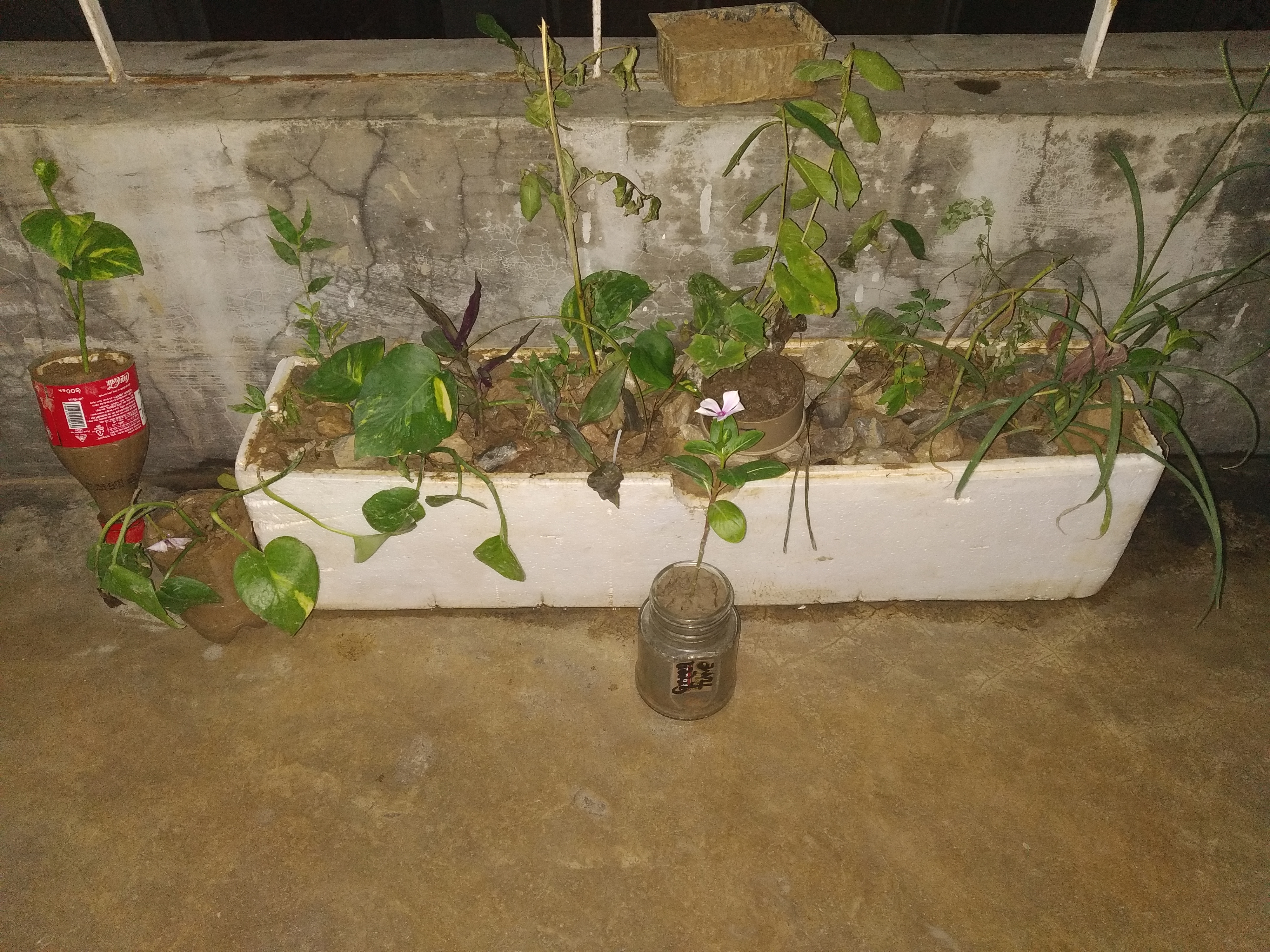
In the Sultanpur area of Naogaon town, Ahsan Habib Ratan turned the roof of his house into a garden of fruit, flowers and vegetables, Jagonews24 reported in March 2018. He had started it as a hobby. By the time of the report, orange trees he had planted in drums were bearing fruit, and pots large and small held about 80 kinds of plants. The garden, the report said, gave him pleasure as well as clean, fresh vegetables and fruit for the household.
Ratan, who studied for a diploma in agriculture, told the paper that he fed his plants with vermicompost and that neighbours had begun coming to him for advice. The Naogaon office of the Department of Agricultural Extension (DAE) said roofs did not have to lie unused and that its field staff would help anyone who wanted to start a garden on a roof.
From flower pots to fruiting drums
According to the report, Ratan began with flowers: his first plants on the roof were flowering plants in pots. Wanting a bigger garden, about a year before the report he brought orange saplings from Bogura and planted them in 10 drums. In March 2018 those trees carried fruit.
Oranges were not the only fruit. The report listed several kinds of Thai pomelo, strawberry, guava, olive, carambola and karamcha, along with aloe vera, rose and marigold, growing in small and large pots. Counting fruit, flower and other plants together, the garden held 80 kinds, the paper said.
"I use vermicompost at the base of the plants in the rooftop garden. Apart from that, they are looked after every three months," Ratan told Jagonews24. "This makes a rooftop garden very profitable. When relatives come to the house I can give them clean fruit to eat. Neighbours are also coming to take various kinds of advice on making gardens on their roofs."
The report did not give the area of the roof, the number of oranges picked or any money earned from the garden, and those details are not added here. Researchers had already studied rooftop gardens of this kind elsewhere in Bangladesh, as a later section describes.
Oranges, a fruit Bangladesh mostly imported
Oranges are an unusual crop for a roof in northern Bangladesh. Banglapedia, the national encyclopaedia published by the Asiatic Society of Bangladesh, describes orange (komola) as the common name of fruits of the genus Citrus in the family Rutaceae. The fruit possibly originated in China, where people began planting it about four thousand years ago. The commercially important species the encyclopaedia names are the common or China orange (Citrus sinensis), the mandarin orange (Citrus reticulata), some varieties of which are known as tangerines, and the sour or Seville orange (Citrus aurantium).
In Bangladesh, Banglapedia says, orange is grown in some places of Sylhet, the Chittagong Hill Tracts, Rangpur and Panchagarh, and the country's total orange production in 2005-06 was 1,000 tonnes. Its entry on fruit adds that oranges and mandarins are among the common imported fruits, and that oranges are cultivated only in very limited areas of Sylhet and in remote parts of Rangamati (Sajek) and Bandarban (Ruma) districts.
The orange plant, the encyclopaedia explains, is a perennial, medium-sized upright tree with lance-shaped leaves and narrowly winged leaf stalks. It is propagated vegetatively, by grafting or budding, and starts bearing four to five years after planting. Flowers grow singly or a few together where the leaves join the stem. The fruit is loose-skinned and medium-sized, turns orange when ripe, and has eight to ten easily separated segments of juicy, sweet pulp, each with a few pointed seeds.
By Banglapedia's figures, every 100 g of orange contains 0.93 g of protein, 0.3 g of fat and 11.02 g of carbohydrate. The fresh fruit is valued for its vitamin C, and oranges are also made into jam, jelly, juice and squash; perfume is produced from the flowers, leaves and skin.
The Bangladesh Agricultural Research Institute (BARI) had released a variety named BARI Kamala Lebu 1, Banglapedia records. Its fruit is nearly round, juicy and sweet; a mature plant may produce 300 to 400 fruits, and the average fruit weighs 190 g. The Jagonews24 report did not say which variety Ratan's saplings were, or whether they were grafted.
Bogura, where the saplings came from, is Naogaon's neighbour. Banglapedia lists Joypurhat, Bogura and Natore as the districts on Naogaon's eastern side. Bogura district covers 2,898.68 square kilometres and had a population of 3,400,874 at the 2011 census, according to the encyclopaedia, which cites the Bangladesh Bureau of Statistics.
Pomelo, guava, carambola and the other plants in the pots
Pomelo (jambura) is one of the largest citrus fruits. In a survey of rooftop gardens in Sylhet city, described in a later section, researchers listed pomelo (Citrus grandis) among the fruit trees people grew on their roofs, together with guava, carambola, lemon, mango, litchi and papaya.
Guava, according to Banglapedia, belongs to the genus Psidium, which has about 150 species; the one grown in Bangladesh is Psidium guajava, which came from tropical America. The tree grows 2 to 10 metres tall with shallow roots. It does best at 23 to 28°C, though mature trees can tolerate up to 45°C, and it grows well under mild sunlight or partial shade. It can be propagated by air layering, grafting and budding; plants raised from seed do not keep the mother plant's character and are slow to fruit. One well-known variety, Kazi Piyara, was collected from Thailand in the 1980s; its oblong, crisp fruit averages 500 g. Banglapedia cites a figure of 260 mg of vitamin C per 100 g of edible portion (Rahim, 2008), noting that nutrient content depends on variety, season and maturity.
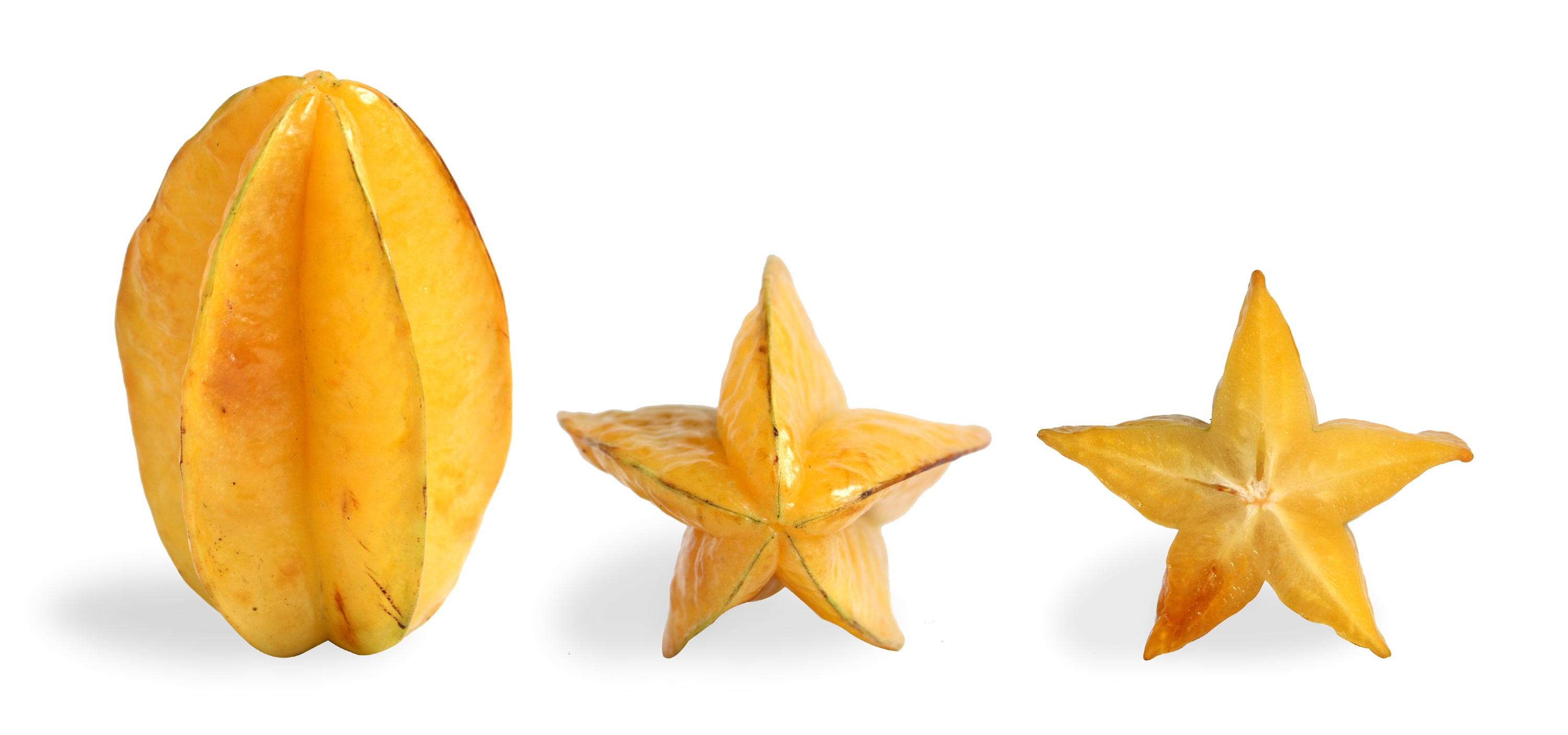
Carambola or star fruit (kamranga), Averrhoa carambola, is believed to have originated in Southeast Asia. In Bangladesh it is mainly grown in Barisal Division and was gaining popularity in other parts of the country, Banglapedia says. The tree is evergreen and can reach about 12 metres. Seedling trees begin to flower three to five years after planting, and the ribbed fruit, 6 to 13 cm long, looks like a star in cross section. The country has two types: sour fruit, which is used for preserves, drinks, pickles and jam, and sweet or mildly acid fruit eaten fresh. Carambola trees are mostly grown around homesteads.
The olive of Bangladesh (jalpai) is not the Mediterranean olive. Banglapedia explains that the true olive is Olea europaea, cultivated mostly as the source of olive oil, while the jalpai found in Bangladesh is a different plant, Elaeocarpus floribundus, known as Indian olive. It is a much-branched deciduous tree with oblong, green, one-seeded fleshy fruits. The ripe fruit is eaten or made into pickle; unlike the true olive, it contains no such oil. It flowers and fruits around December and is largely a homestead plant.
Karamcha is Carissa carandas, a plant of the family Apocynaceae that is commonly known in India as karaunda, according to a 2014 paper in the journal BioMed Research International.
Strawberry (Fragaria × ananassa, family Rosaceae) is native to temperate zones but grows well in subtropical areas, scientists from BARI's Fruit Research Station and the University of Rajshahi wrote in the journal Mycobiology in 2009. It was becoming more popular in Bangladesh and growing in importance as a commercial product, they noted, though little was known about its diseases in the country. Their study identified the fungus Colletotrichum gloeosporioides as the cause of strawberry anthracnose in Bangladesh. Banglapedia's entry on tissue culture lists strawberry among the crops BARI works on in the laboratory.
Aloe vera (Aloe vera (L.) Burm. f.) originated in tropical and subtropical Africa and is now cultivated in warm areas of Asia, Europe and America, according to a 2016 review of its cultivation in Frontiers in Plant Science. The review points to its drought resistance and succulence, which allow it to be grown in arid and semi-arid areas. It is traditionally propagated from suckers, the side shoots that grow from the base, and from rhizome cuttings; each mother plant produces three to four suckers over the growing season.
Rose, Banglapedia says, covers more than 150 species of the genus Rosa. Roses can be raised from seed, cuttings and layering and by budding or other forms of grafting; for commercial production budding is by far the most suitable. Local varieties raised in Bangladesh include 'Fatema Sattar', 'Shibly' and 'Rahela Hamid'. Marigold (Tagetes patula and T. erecta), grown in yellow, red and orange forms, is one of the locally produced cut flowers traded regularly on a commercial scale, according to Banglapedia's entry on floriculture.
Vermicompost: compost made by earthworms
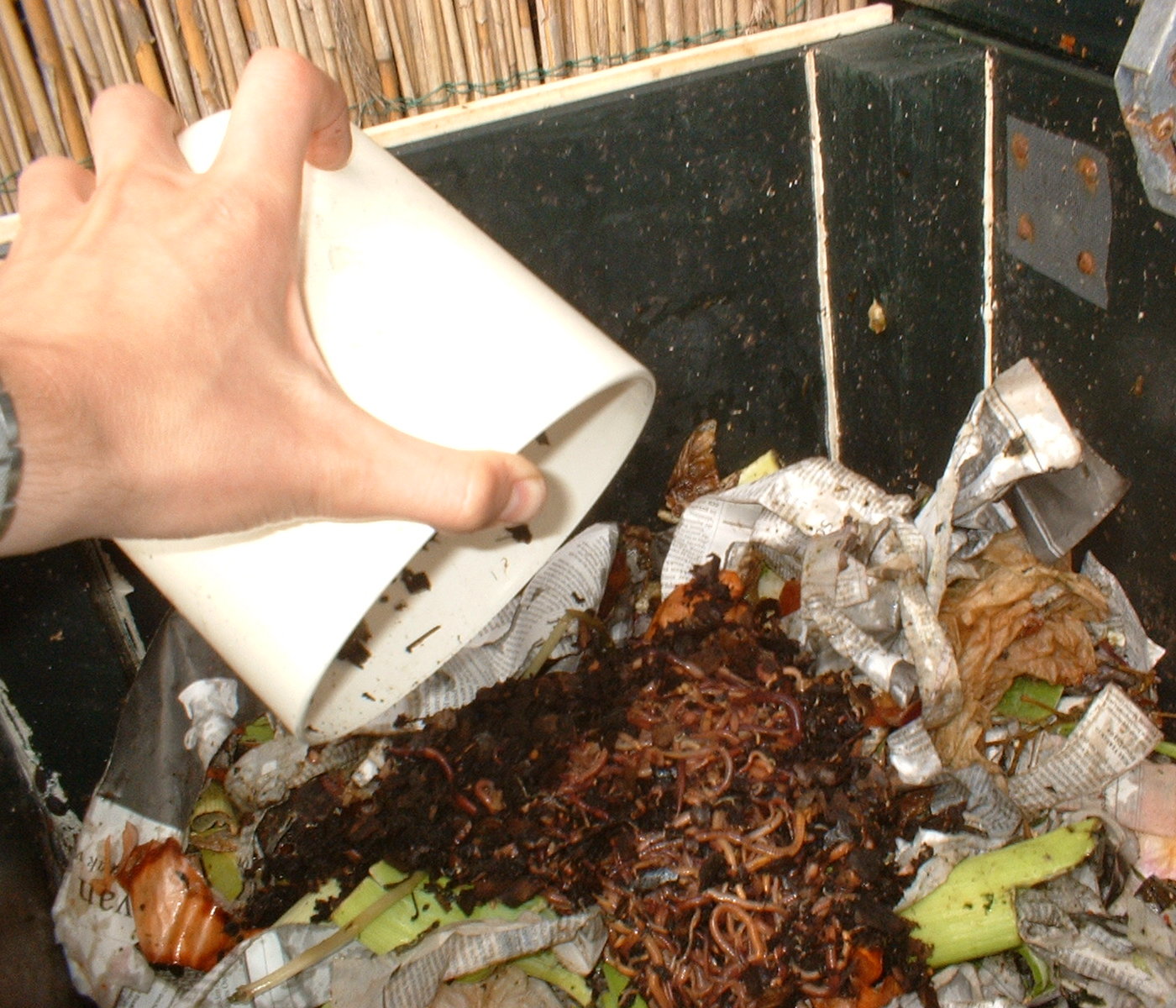
The one input Ratan named was vermicompost. The Food and Agriculture Organization of the United Nations (FAO), in its 2003 guide On-Farm Composting Methods, defines vermicomposting as the use of earthworms for composting organic residues: the material is broken down by enzymes as it passes through the digestive system of the worms.
Earthworms can consume practically all kinds of organic matter and can eat their own body weight per day, the FAO guide says, so 1 kg of worms can consume 1 kg of residues every day. Their excreta, called castings, are rich in nitrate and in available forms of phosphorus, potassium, calcium and magnesium. The passage of soil through earthworms promotes the growth of bacteria and actinomycetes, and the content of actinomycetes in worm casts is more than six times that in the original soil.
Not every worm suits the work. FAO names Lumbricus rubellus (the red worm) and Eisenia foetida as tolerant of heat and particularly useful. The African night crawler (Eudrilus eugeniae), a large tropical worm, tolerates higher temperatures than Eisenia foetida does if there is ample humidity, but it cannot survive below 7°C. A moist compost heap 2.4 m long, 1.2 m wide and 0.6 m high can support more than 50,000 worms, and where worms do the mixing and aeration, turning the heap is not necessary.
The guide describes a method used in India. Raw materials are shredded into small pieces, and carbon-rich materials such as sawdust, paper and straw are mixed with nitrogen-rich ones such as biogas slurry. The piles are first allowed to heat to 50 to 55°C for seven to ten days. After that the moisture is kept at 40 to 45 percent and the temperature at 28 to 30°C, and the pH of the raw material should not exceed 6.5 to 7. The compost is ready after about a month: black, granular, lightweight and rich in humus. Watering stops two to three days before the beds are emptied, which drives about 80 percent of the worms to the bottom.
In Bangladesh, earthworms are among the least studied animal groups, according to Banglapedia: of more than 7,000 species around the world, 42 had been identified in the country, in three families. A few species, the encyclopaedia notes, are used to produce quality vermicompost in Bangladesh. Its entry on organic farming explains that organic materials improve the physical, chemical and biological properties of soil, unlike synthetic fertilisers, and that organic farming can be extended to vegetables and horticultural crops.
Neither the report nor this account gives an amount of vermicompost per pot or drum. The Sylhet researchers noted that the amount of fertiliser and pesticide a rooftop garden needs depends on the species and the soil mixture, and the Naogaon DAE office directed people who wanted to start rooftop gardens to its sub-assistant agriculture officers for advice.
What a survey of Sylhet's rooftop gardens found
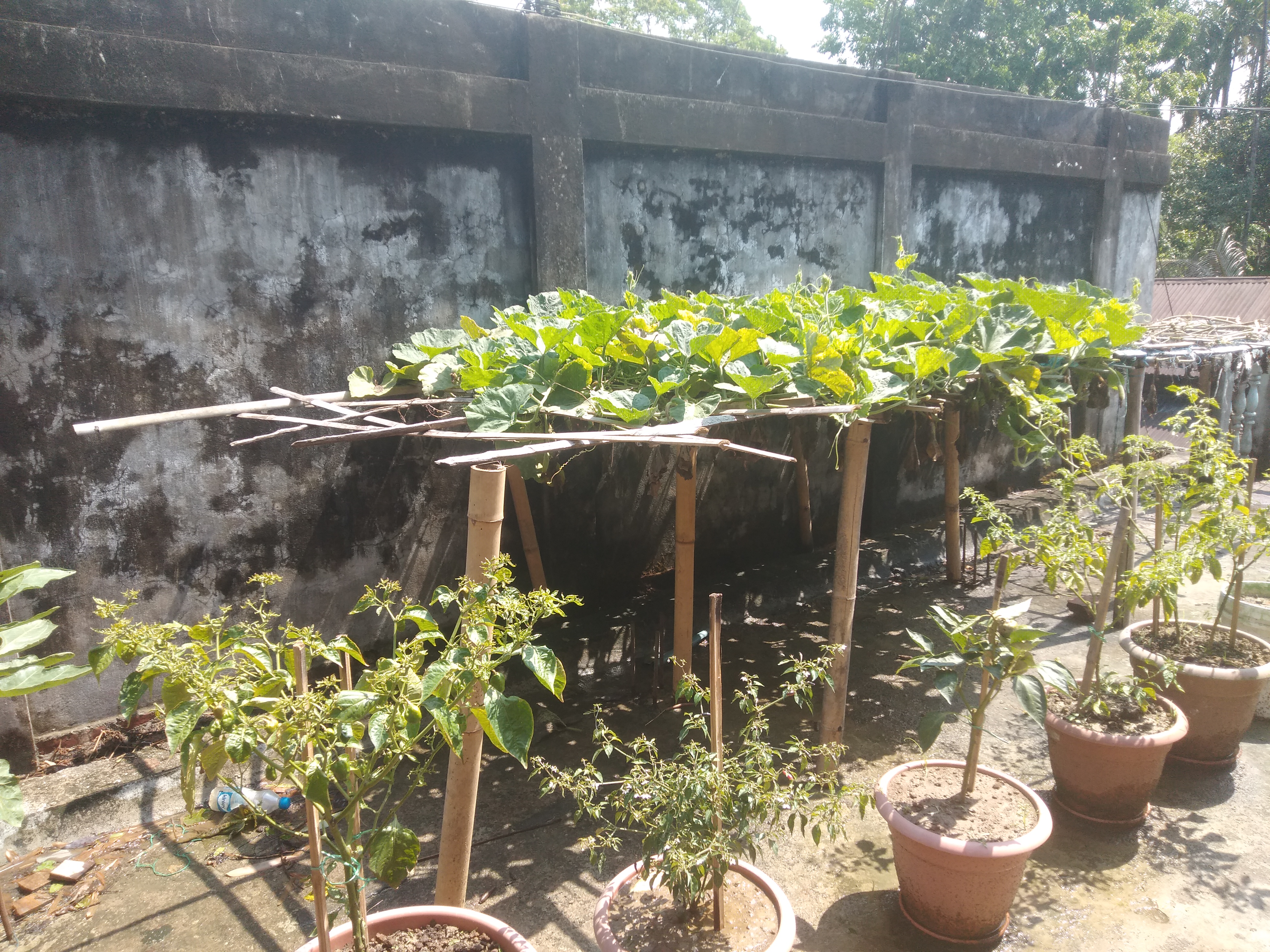
Rooftop gardens like Ratan's had been studied in Bangladesh before 2018. In a paper published in the Journal of Forest Science in February 2013, researchers from Shahjalal University of Science and Technology and the Bangladesh Institute of Social Research reported on 450 rooftop gardeners in the Sylhet City Corporation area, chosen at random and interviewed between July and September 2010. The authors defined rooftop gardening as the art and science of growing plants on the unused spaces in, around or next to a residence.
Their findings echo the reasons Ratan gave. Mental satisfaction was the most common purpose, named by 95.3 percent of gardeners, followed by leisure-time activity (87.8 percent), aesthetic value (82.9 percent), environmental improvement (54.9 percent), luxury (39.3 percent) and financial gain (29.8 percent). Very few people treated their rooftop garden as a commercial venture, the survey found.
The researchers recorded 53 plant species from 35 families. Food crops made up 36 percent of the species, flowers 30 percent, fruit 21 percent and medicinal plants 13 percent; the gourd family, Cucurbitaceae, had the most species, eight. Gardeners, the authors wrote, preferred species that needed little space and little maintenance cost and time.
Containers mattered too. Of the gardens surveyed, 77 percent used earthen containers, 8 percent cement beds, 7 percent drums, 5 percent brass pots and 3 percent other containers. About 89 percent of gardeners got their planting material from nurseries, markets, fairs, neighbours, relatives and friends; seedlings were the most common starting material (48 percent), followed by direct sowing of seed (21 percent).
Watering was usually done twice a day, in the morning and the afternoon, and gardeners applied both organic and inorganic fertilisers, such as compost and cow dung, and insecticides when necessary. The first harvest of vegetables and flowering plants came about three months after planting; fruit was harvested two to three years after planting. There was no organised market for rooftop produce: gardeners sold their surplus here and there in local markets, directly or through intermediaries, with no uniform prices.
The authors concluded that rooftop gardening could be financially viable if properly and scientifically managed, that it could help household food security and nutrition, and that government bodies and NGOs could play a vital role by providing training and motivating people on the technical side.
Naogaon, a farming district in the Barind
Naogaon is a district of Rajshahi Division covering 3,435.65 square kilometres, Banglapedia says. It borders the Indian state of West Bengal on the north, Natore and Rajshahi districts on the south, Joypurhat, Bogura and Natore on the east and Nawabganj on the west. At the 2011 census it had 2,600,157 people. Its main rivers are the Atrai, Punarbhaba, Little Jamuna, Nagar and Shib, and the Chalan Beel wetland is notable. Naogaon became a subdivision of Rajshahi district in 1877 and a district in 1984; it has eleven upazilas, of which Niamatpur is the largest and Badalgachhi the smallest. Agriculture is the main source of income for 74.29 percent of households.
Naogaon town lies in Naogaon Sadar upazila, which covers 275.72 square kilometres. The municipality, by Banglapedia's 2011 census table, covers 37.08 square kilometres in 9 wards and 62 mahallas, with an urban population of 150,549. The upazila's main crops are paddy, wheat, potato, onion, garlic, pulses, mustard and vegetables, and its main fruits are mango, jackfruit, litchi and papaya. Oranges and pomelos are not on that list.
The district lies largely in the Barind Tract, the largest Pleistocene physiographic unit of the Bengal basin, which Banglapedia says covers about 7,770 square kilometres and most of the old districts of Dinajpur, Rangpur, Pabna, Rajshahi, Bogura, Joypurhat and Naogaon. Rainfall there is comparatively low, averaging about 1,971 mm and falling mainly in the monsoon, and the region has been designated drought prone. Average temperatures range from 25 to 35°C in the hottest season and from 9 to 15°C in the coolest, and the region is generally rather hot and considered semi-arid.
Where rooftop gardeners could get help
"Instead of leaving the roofs of houses unused, it is possible to grow various kinds of vegetables and fruit on them," Monojit Kumar Mallick, deputy director of the DAE in Naogaon, told Jagonews24. "This makes it possible to produce pesticide-free fruit. Sub-assistant agriculture officers will help people make gardens on their roofs. Besides that, many can also learn from the agriculture department's website."
The DAE is the government's main farm extension body. Banglapedia records that the old Directorate of Agriculture was reorganised as the Department of Agricultural Extension in 1982, and that the Horticulture Development Board, set up in 1973-74, was then merged with the DAE's Food Crops Wing. The board was created partly to help farmers grow more vegetables, fruit and spices to improve nutrition and to train urban women in production technology. Its booklets included one on growing vegetables in pots, Tobe Sabji Chas, and it gave training and technical guidance on homestead gardening. The Food Crops Wing ran 74 horticulture centres across the country, 12 of them in the Rajshahi region, which produced grafts, saplings, cuttings and seedlings for farmers.
Other bodies support that work. The Agriculture Information Service, set up in 1961 under the Ministry of Agriculture, produces information materials for field staff and farmers, publishes the monthly magazine Krishi Katha and serves the DAE among about 15 organisations, according to Banglapedia. The Central Extension Resources Development Institute at Joydebpur in Gazipur, established in 1976, trains the DAE's extension staff. BARI, an autonomous institute under the Ministry of Agriculture that traces its origin to an agricultural research laboratory founded in Dhaka in 1908, is responsible for research on all crops except rice, jute, sugarcane and tea, and runs a Horticultural Research Centre among its crop research centres.
Photo: Wiki Ruhan / Wikimedia Commons (CC BY-SA 4.0)
Sources: Jagonews24 (March 2018), Banglapedia (Asiatic Society of Bangladesh), FAO, On-Farm Composting Methods (2003), Journal of Forest Science (Rahman et al., February 2013), Mycobiology (2009), Frontiers in Plant Science (2016), BioMed Research International (2014)
Comments
(0)