
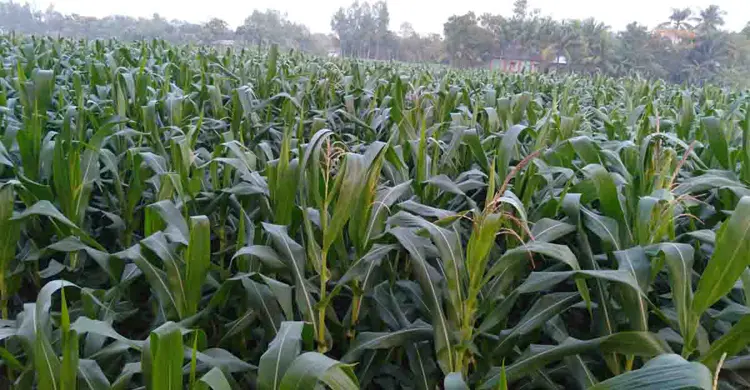
Maize cultivation in Naogaon is growing every year, with the area under the crop in the district rising by about 3,845 hectares over the last five years. Farmers have turned to maize because it costs less and needs less work than rice, wheat and other crops, and fetches a good price. Government incentives and support have also pushed the area up each year. Farmers hope for a good harvest if the weather holds.
Area by upazila
According to the district Department of Agricultural Extension (DAE), maize has been grown on about 7,145 hectares in the district this year, 285 hectares more than before. By upazila, that is 255 hectares in Sadar, 420 in Raninagar, 5,150 in Atrai, 80 in Badalgachhi, 120 in Mohadevpur, 35 in Patnitala, 390 in Dhamoirhat, 20 in Sapahar, 15 in Porsha, 615 in Manda and 45 in Niamatpur. There are also 300 demonstration plots. Improved varieties Super Sign, Miracle, Don and 111 have been grown.
Last year maize was grown on 6,860 hectares; it was 6,220 hectares in 2018, 4,500 hectares in 2017 and 3,300 hectares in 2016. From 2016 to 2020 the area grew by about 3,845 hectares.
Across the district's fields, maize farmers are nurturing hopes among the lush green leaves. In places the plants have begun to flower, in others fresh plants are emerging, and elsewhere they are medium or tall. Farmers grow maize as a rabi crop because it takes less time and uses less groundwater. Ploughing, seed, fertiliser, pesticide and labour cost about Tk 6,000–7,000 a bigha, and a little less if maize follows potatoes. Jute is often grown on the land after maize.
Yields and prices
A good crop yields 35–40 maunds a bigha, and at least around 20–25 maunds. New maize fetches Tk 500–600 a maund in the market. Maize suffers little from disease. Last year growers suffered some losses from natural disasters, and this year they have planted more to make up for them. Farmers are hopeful of a good yield if there is no natural disaster.
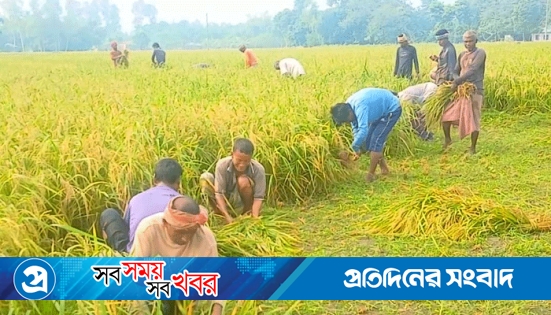
Meanwhile, some land has been switched from boro rice to maize. The cost of growing rice — from planting through fertiliser, pesticide, harvesting and threshing — has risen, and rice prices are comparatively low. Pest attacks are also hard for farmers to control. For these reasons farmers have turned to maize as an alternative.
Rezaul Karim, a farmer from Biproboalia village in Atrai upazila, said he had grown maize on 3 bighas this year. Most land in the upazila grows two crops a year, with jute following maize. Maize is being grown as an alternative because of low rice prices. Last year maize was badly damaged by natural disasters, he said.
Sonaton Pramanik of Krishnapur village in Raninagar upazila said he had grown maize on 1.5 bighas. Maize costs less and takes less work than other crops, and the price is good; selling a little later can fetch Tk 900 to Tk 1,000 a maund. The agriculture office also gives all-round advice, he said.
Officials push water-saving crops
Atrai upazila agriculture officer KM Kawsar Hossain said: "Our target was 5,040 hectares, and 5,150 hectares have been achieved. There are 50 demonstration plots under the Adarsha project, and 1,050 farmers have been given incentives. If farmers wait a little before selling, they will get a better price."
Sirajul Islam, deputy director of the Naogaon DAE, said farmers were being encouraged to grow rabi and other crops that need less water and less time, to reduce the use of groundwater. Farmers are being encouraged to grow maize, and the agriculture office is giving them all-round support, he said.
Source: Jagonews24. First published in Bengali on The Agro News.
Comments
(0)