
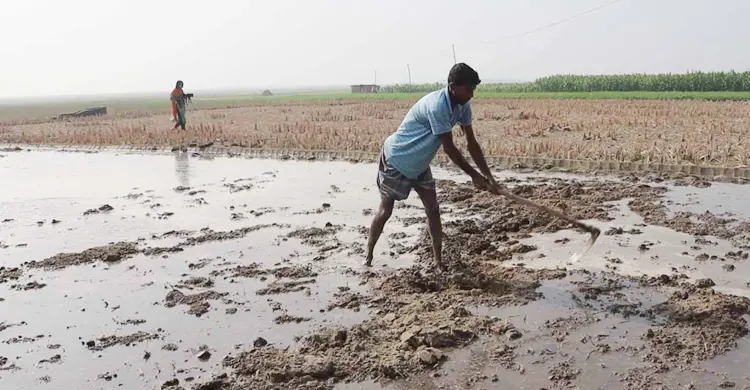
Carrying the burden of last year's losses, farmers in Naogaon have gone back to Iri-Boro cultivation with fresh energy and are busy transplanting. The biting cold and fog are causing some difficulty, and production costs have risen, but farmers hope for a good yield if the weather holds.
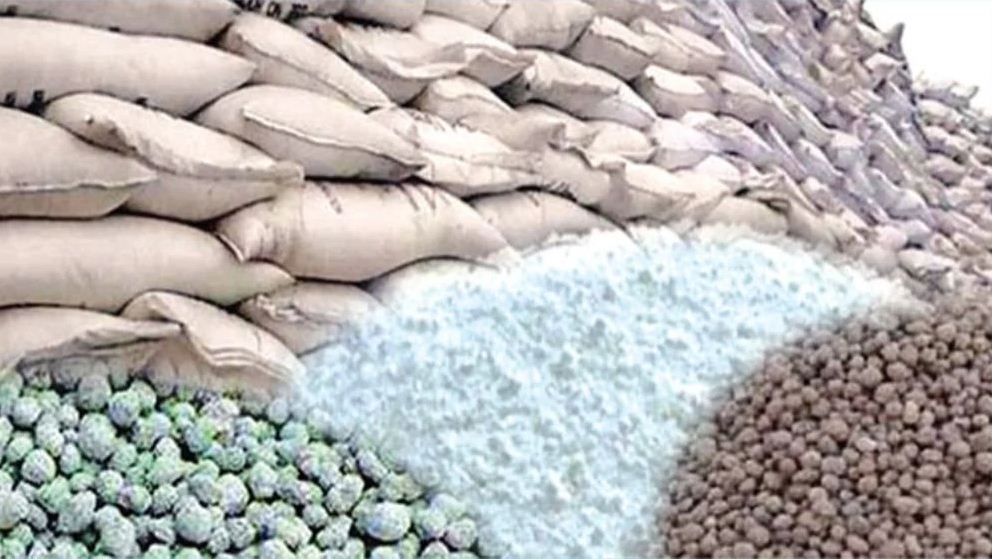
According to the district office of the Department of Agricultural Extension (DAE), 40,000 farmers in the district were given 5 kg of seed, 10 kg of DAP and 5 kg of MOP fertiliser as an incentive for Boro this year. Boro seedbeds have been prepared on 10,800 hectares in the district, and transplanting has been completed on about 14,000 hectares so far.
Farmers in fields across the district are busy preparing land and planting, though the cold is causing some delay this year. Zirashail, BRRI dhan28, BRRI dhan48, Subarna Lata and hybrid varieties are being planted.
Hoping for kinder weather
Saiful Islam of Chakchapai village in Sadar upazila said the crop suffered heavy damage last Boro season; because of a natural disaster the paddy had to be cut and threshed in the field. If the weather stays good this year and there is no disaster, he hopes to bring the crop home properly. He has grown Boro on 16 bighas this time.
Khabir Uddin Pramanik, a farmer of the same village, said the cost of fertiliser, pesticide, fuel and labour has pushed up production costs. He gave his per-bigha costs as:
- ploughing Tk 1,000
- DAP fertiliser Tk 440 (20 kg)
- potash fertiliser Tk 440 (20 kg)
- urea Tk 630 (30 kg)
- pesticide Tk 2,000
- transplanting Tk 1,500
- weeding Tk 1,500
- irrigation two maunds of paddy (market value Tk 2,400)
- harvesting and threshing Tk 5,000-6,000 (total Tk 14,910)
From planting to bringing the crop home, Boro costs about Tk 15,000 a bigha, he said, and the yield is about 24-28 maunds a bigha. Although he was hit by a natural disaster last year, he hopes there will be no problem this year and that paddy will fetch a good price.
Cold damages seedlings
Majnu Sardar, a farmer of Shoilgachhi village, said he planted his land 17 days ago, but heavy fog and cold are turning the seedlings yellow and killing them. Where seedlings have died he will have to replant, which will cost extra.
Amirul Islam, who came from the district's Sapahar upazila to work, said 15 of them came to Sadar upazila to transplant Boro because there was no work at home. They are planting on contract at Tk 1,300-1,500 a bigha. Working in the mud and water is very hard in the cold, and because of it they can plant only 3-4 bighas a day, so their earnings have fallen.
Fazlur Rahman, a farmer of Kalikapur village in Atrai upazila, said fertiliser, pesticide, fuel and labour have become more expensive. Paddy prices have been rising since last Boro season, but growing paddy takes a lot of work and money, and farmers do not profit in proportion. Since production costs have risen, it helps farmers if the paddy price stays above Tk 1,200, he said.
Md Abu Hossain, deputy director of the DAE in Naogaon, said the district's Boro target this year is 189,100 hectares, which could produce about 12.5 lakh tonnes of paddy. The rice production target has been set at 828,000 tonnes. The cold wave is causing some problems, but he hopes the target will be met.
Source: Jagonews24. First published in Bengali on The Agro News.
Comments
(0)