
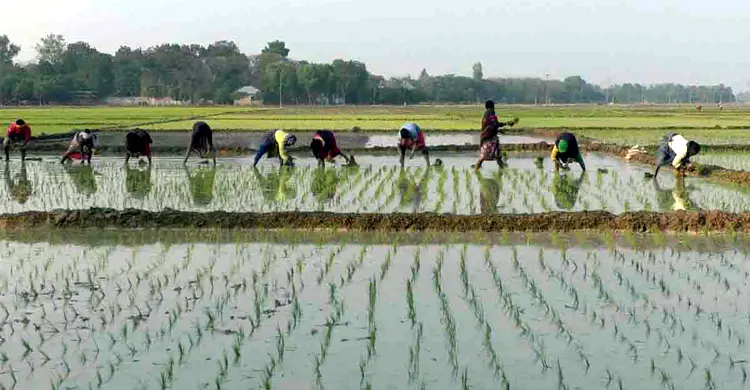
Carrying the burden of losses, farmers in Naogaon are busy with Iri-Boro cultivation. Several spells of rain, dense fog, cold and bad weather during the winter damaged seedbeds, so planting started late. Farmers say they currently have no paddy at home. What is being sold in the market belongs to big traders. The government is buying paddy, but not enough.
According to the district Department of Agricultural Extension (DAE), Boro was grown on 1,88,275 hectares in the district last Boro season. This year Boro paddy is being grown on 1,80,360 hectares. In the current Ropa-Aman season, about 1,97,000 hectares were cultivated in the district.
Costs, yields and prices
Farmers said they had made losses growing paddy over the past few years. Last year, before the Boro paddy was harvested, Cyclone Fani caused extensive damage to the crop. With lower paddy output on one side and rising labour costs and low paddy prices on the other, farmers were at a loss. Growing a bigha costs Tk 12,000-14,000, and yields were 15-19 maunds a bigha.
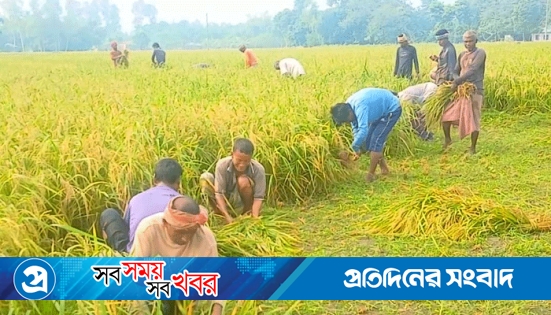
Growing Aman paddy, including fertiliser, pesticide and harvesting and threshing, costs about Tk 8,000-9,000. Yields have been good this year, at about 18-22 maunds a bigha. Brown planthopper attacks appeared at first, but the crop was saved with pesticide. The government had announced it would buy early Aman paddy at Tk 26 a kg. But farmers worry about open-market prices all year round. Currently in the market Zirashail sells for Tk 1,030-1,040 a maund, Katari for Tk 1,100-1,150, Chinigura for Tk 1,900-1,950 and Aman Swarna-5 for Tk 720-740. In the past 15 days paddy prices have risen by Tk 50-100 a maund.
Mizanur Rahman Chowdhury, a farmer from Bhatshail village in Badalgachhi upazila, said: "The weather is favourable now. Land is being prepared with water, irrigation and ploughing. But the seedbeds were damaged by the extreme cold, and we had to sow seed again. That is why planting is going slowly."
Altab Hossain, a farmer from Chakrail village, said: "Last year growing Boro paddy cost more and the crop was damaged. The paddy the government is buying is not enough, so we have to sell at low prices in the open market. The government should keep farmers alive by paying for their paddy. Farmers would also benefit if it bought more paddy."
Md Mahbubar Rahman, additional deputy director (plant) at the district DAE, said: "With the weather favourable, paddy planting is moving ahead fast. About 55 percent of the land has already been planted. Although the cold damaged seedbeds slightly, farmers have since made up for it."
Source: Jagonews24. First published in Bengali on The Agro News.
Comments
(0)