
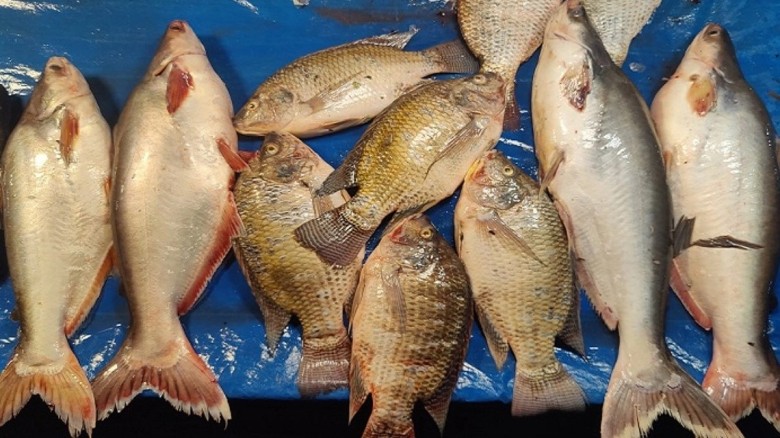
Intensive shing fish farming in ponds, using a technology developed by the Bangladesh Fisheries Research Institute (BFRI) from its research, has opened a new horizon. Abu Raihan, a farmer from Majhihati village in Mymensingh Sadar, followed this new BFRI method and earned Tk 11 lakh after costs in five months from a 32-decimal pond.
BFRI Director General Dr Yahia Mahmud said shing is a very popular fish in Bangladesh. It is low in fat and rich in high-quality, easily digestible protein, so everyone wants it, and it fetches a much higher market price than carp. If shing is farmed intensively based on BFRI's research findings, it will add a new dimension to the fisheries sector, and the technology must now be spread across the country. He hoped this would make shing easily available to people while also bringing farmers financial gains.
How the farmer did it
Shing farmer Abu Raihan said he followed the institute's intensive shing farming method from the start. "I stayed in regular contact with the institute's scientists and took their advice. Along with regular care of the pond and the fish, I made sure the fish had a regular supply of balanced feed. I also stocked fry of the same size, especially female fry, stocked them at high density and applied lime and salt regularly. The water was changed regularly, and the pond was kept relatively deep."
In June 2019, he stocked 5,000 shing fry weighing 4 grams per decimal in his 32-decimal pond. After five months of farming, the harvested fish averaged 52 grams. Production was 280kg per decimal, about 9,000kg in total. Selling the fish at Tk 280 a kg, he earned about Tk 25 lakh in all, which left Tk 11 lakh after costs from the 32-decimal pond in five months.
With BFRI's technical support, more and more people are becoming interested in intensive shing farming. Besides Majhihati Para village, fish farmers in Trishal, Phulbaria, Muktagachha, Nandail, Haluaghat and Bhaluka in Mymensingh, Nakla in Sherpur and Chatkhil in Noakhali have started using the technology.
Scientist's advice
BFRI Chief Scientific Officer Dr A H M Kohinoor said fish farmers usually raise shing semi-intensively, but BFRI's research has shown that intensive shing farming in ponds is easily possible. Intensive farming of high-value shing is more profitable than the other fish now being farmed.
He said the pond must be closely monitored so that the water never goes bad, with fresh water supplied four to five days a week. A filter net fence can be put around the pond to keep out harmful aquatic animals, and effective biosecurity and disease-prevention measures are needed to avoid the risk of disease during farming. Fish are usually harvested six to seven months after stocking, when they average 55–65 grams. The pond must be dried completely to harvest the shing. Following this method, 8–9 tonnes of shing can be produced from a 50-decimal pond in seven months.
Source: Dhaka Tribune. First published in Bengali on The Agro News.
Comments
(0)