
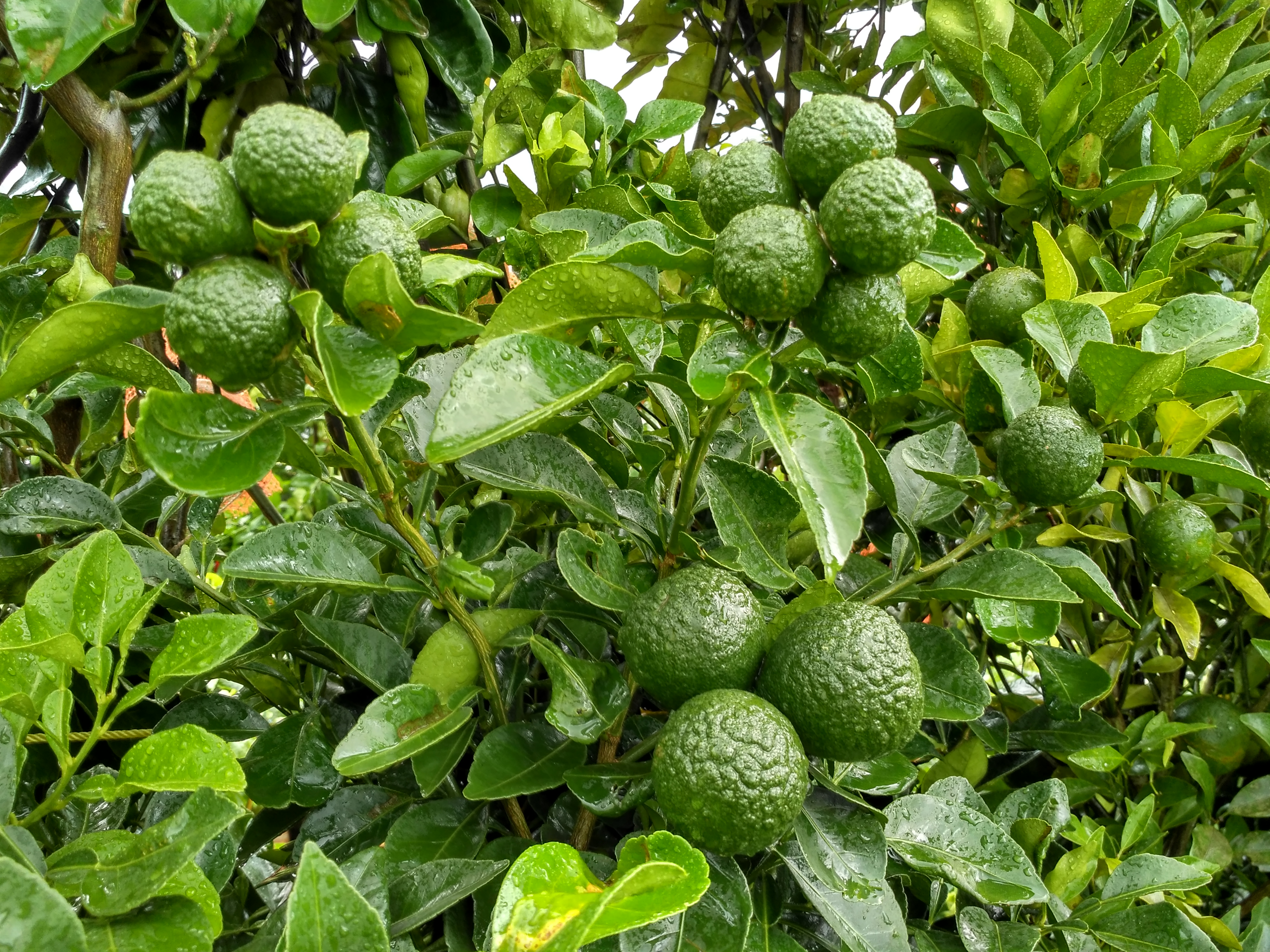
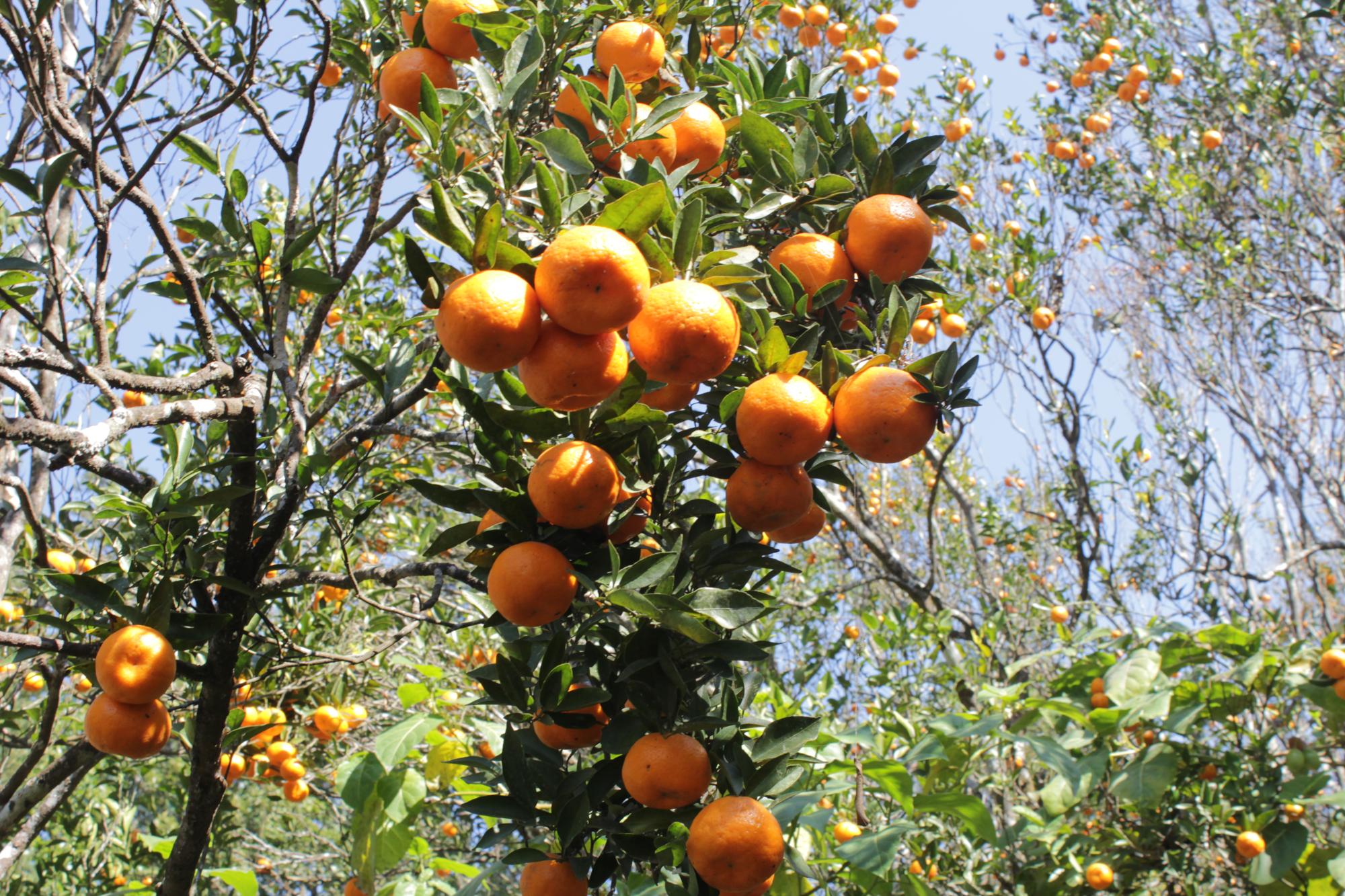
In mid-December 2024, Jagonews24 reported from Mymensingh that two young men had made a commercial success of growing oranges in two upazilas of the district, Ishwarganj and Bhaluka. In Ishwarganj, Md Mahfuz had planted a small-fruited China variety of orange in Longai village of Sarisha union. In Bhaluka, Shahid Ahammed had raised an orchard in Akhalia village of Dakatia union. Both were selling ripe fruit from heavily laden trees that winter, both said they had first learned about the crop from videos on YouTube, and both told the reporter they expected sales worth several lakh taka. The Mymensingh office of the Department of Agricultural Extension (DAE) said oranges were grown on 19 hectares in the district that year.
Oranges are not a traditional crop of this part of Bangladesh. The fruits that Banglapedia, the national encyclopedia, lists for both upazilas are mango, jackfruit, banana, litchi, coconut, palm and other familiar trees, with no mention of oranges. The two orchards were part of a wider change that the DAE, the Bangladesh Agricultural Research Institute (BARI) and the newspapers had been recording for more than a decade: oranges and mandarins moving out of their old strongholds in the Sylhet hills and the Chittagong Hill Tracts onto plain land across the country.
Fruit-laden trees in Longai and Akhalia
When the reporter visited the two orchards, the trees were carrying heavy crops, and some branches were bending under the weight of the fruit. Workers were tending the trees under the direction of the two young men. Local people were coming to eat and buy oranges, and wholesalers were buying the fresh fruit to sell in other markets.
Local people said that a few years earlier hardly anyone in the area had known Mahfuz or Shahid, but the orchards had made them widely known, and they were now recognised as successful entrepreneurs. Others had begun turning to oranges after seeing their results, and the two men were encouraging newcomers and passing on advice on how to make an orchard pay.
Hazrat Ali of Longai village told Jagonews24: "Mahfuz has succeeded through his own ability and hard work. He spends most of the day in the orchard. When local people go there, he lets them eat oranges, and many take a few home free of charge. We are happy at his success."
Zahirul Islam, who works in Mahfuz's orchard, said he had worked as a labourer in different areas before. "Four years ago, when the orange orchard was set up near my home, I contacted Mahfuz and he gave me work. What I earn working close to home keeps my family going," he said.
Sarwar Hossain, a resident of Akhalia village, described Shahid's path to the orchard: "Shahid went abroad to earn money and turn his life around, but he only lost more. After coming back home he profited from orange farming. Now he is earning lakhs of taka."
Idris, who works in Shahid's orchard, said his work included looking after the trees and other jobs. According to him, no chemical fertiliser was used in the orchard, the oranges were grown by organic methods and were free of chemicals, they tasted good, and for that reason they were selling easily at good prices. That is his account of how the orchard was run; the report did not cite any test of the fruit.
The growers' own figures
Mahfuz explained how he started: "I saw on YouTube that many people were profiting from oranges. So I took courage and planted 97 orange saplings on 40 decimals of land four years ago. Last year there was some fruit. This time about 70 maunds of oranges have set. Many have already ripened, and they are selling at Tk 150 a kilogram. In all I hope to sell oranges worth Tk 4 lakh 20 thousand."
Shahid Ahammed said: "After watching YouTube I planted 230 saplings of the China variety and 70 of the Darjeeling variety on one and a half acres. About 200 maunds of oranges have set in the orchard. I have already sold several lakh taka worth, and I hope to sell Tk 12 lakh worth in all. I am also selling saplings made by grafting, which will bring a good profit too."
The maund (mon) in which both men measured their crop is the old South Asian unit of weight of 40 seers. India and Pakistan fixed it after independence at exactly 37.3242 kilograms, while in everyday Bangladeshi trade a mon is commonly counted as 40 kilograms. The sales totals both men gave were their own expectations for the season, as they told the reporter, not audited accounts.
Their price can be set beside other reports of the time. In December 2023 The Daily Star's Bangla edition found locally grown oranges and malta selling at retail for Tk 130 to Tk 150 a kilogram in Rangpur, while imported fruit cost Tk 250 to Tk 300. In November 2024, a month before the Mymensingh report, the same paper described an orchard of Darjeeling and mandarin oranges at Satkhamair in Sreepur upazila of Gazipur, just south of Bhaluka, where Darjeeling oranges sold for Tk 300 a kilogram and visitors paid a Tk 30 ticket to pick fruit. In November 2022 The Daily Ittefaq reported that a returnee migrant in Bijoynagar, Brahmanbaria, had sold 1,000 to 1,200 kilograms of China-3 oranges at Tk 170 a kilogram.
What the district agriculture office said
Dr Nasrin Akter Banu, deputy director of the DAE in Mymensingh, gave the official picture: "This year oranges have been grown on 19 hectares in the district, including 1 hectare in Ishwarganj and 10 hectares in Bhaluka. Mahfuz and Shahid are profiting from orange farming. Local agriculture officers are guiding them, and others are being encouraged to grow oranges."
The DAE is the agriculture ministry's extension agency, the body whose district and upazila offices advise farmers, run training and distribute planting material. In December 2020 a deputy director of its fruit and flower horticulture wing told The Daily Star that the department was producing more grafted orange and tangerine plants and training farmers, and that he hoped production would rise in the following years.
Mymensingh district covers 4,080.18 square kilometres, according to Banglapedia. It is bounded by the Garo Hills and the Indian state of Meghalaya to the north, Gazipur to the south, Netrokona and Kishoreganj to the east, and Sherpur, Jamalpur and Tangail to the west, and its main rivers are the Old Brahmaputra, the Bhogai, the Bajua and the Kangsa.
Ishwarganj lies in the east of the district, between Gauripur, Nandail, Kendua, Mymensingh Sadar and Trishal. It covers 280.43 square kilometres in 11 unions, Sarisha among them, and is crossed by the Old Brahmaputra, Mogha, Soai and Kanchamatia rivers. Its main crops, in Banglapedia's list, are paddy, jute, wheat, potato, bitter gourd, pointed gourd, mustard, chilli, betel leaf and sugarcane.
Bhaluka is the district's southern upazila, bordering Fulbaria and Trishal to the north and Sreepur of Gazipur to the south. It covers 444.05 square kilometres in 11 unions, Dhakatia among them. Its main crops are paddy, jute, wheat, sugarcane, potato, pulses, mustard and vegetables, and alongside its farms it has rice mills, textile and spinning mills, ceramic factories and a fish feed factory.

China and Darjeeling: the oranges in the two orchards
Banglapedia describes three kinds of orange grown in Bangladesh: the common or China orange (Citrus sinensis), the mandarin orange (Citrus reticulata), some varieties of which are known as tangerines, and the sour or Seville orange (Citrus aurantium). The trees are perennial and medium-sized; the fruit has a loose skin, turns orange when ripe and has eight to ten easily separated, juicy segments. Plants are propagated by grafting or budding, begin to bear four to five years after planting, and a mature plant may give 300 to 400 fruits averaging 190 grams each.
BARI's scientists have described the China-origin orange as a mandarin (Citrus reticulata). The mandarin is a moderate-sized, thorny tree whose fruit is small, 40 to 80 millimetres across, and flattened rather than round, with a thin, loose peel that comes away easily. The species evolved in a restricted region of southern China and Vietnam; it is tender to cold and suited to tropical and subtropical climates.
BARI had worked on a China-origin mandarin for years before the Mymensingh orchards were planted. In December 2012 The Daily Star reported that scientists at BARI's Hill Agricultural Research Station in Khagrachhari, who began work on the variety in 2008, had grown 22 trees on a 100-square-metre plot, each carrying 20 to 25 fruits. The fruit turned yellow when fully ripe, weighed 30 to 40 grams, had a thin peel, 13.2 per cent total soluble solids and 1.16 per cent acid. The station's officials said it is planted from May to July, from seed or grafts, at about 625 saplings a hectare; trees start fruiting within three to four years, flower in March and April and are harvested in November and December. They said sandy, well-drained soil suits it and that with irrigation and mulching it can yield well. The station had proposed it to the National Seed Board for registration as BARI Kamala-2.
In November 2020 a BARI senior scientific officer told The Business Standard that oranges are not native to Bangladesh but can be grown in its climate, and that the two most commonly grown varieties were BARI Kamala 2, a small orange of up to 70 grams, and BARI Kamala 3, a larger one of up to 160 grams. Banglapedia also names BARI Kamala Lebu 1, a nearly round, juicy and sweet orange released by the institute.
The second variety in Shahid's orchard carries the name of Darjeeling in India. In September 2022 Prothom Alo reported that the Indian Darjeeling variety and the Chinese mandarin were spreading through the northern and coastal districts of Bangladesh, and in December 2023 the DAE in greater Rangpur listed China, Darjeeling Mandarin and Darjeeling Nagpuri as the three varieties in the region's orchards.
Grafted saplings and the care an orchard needs
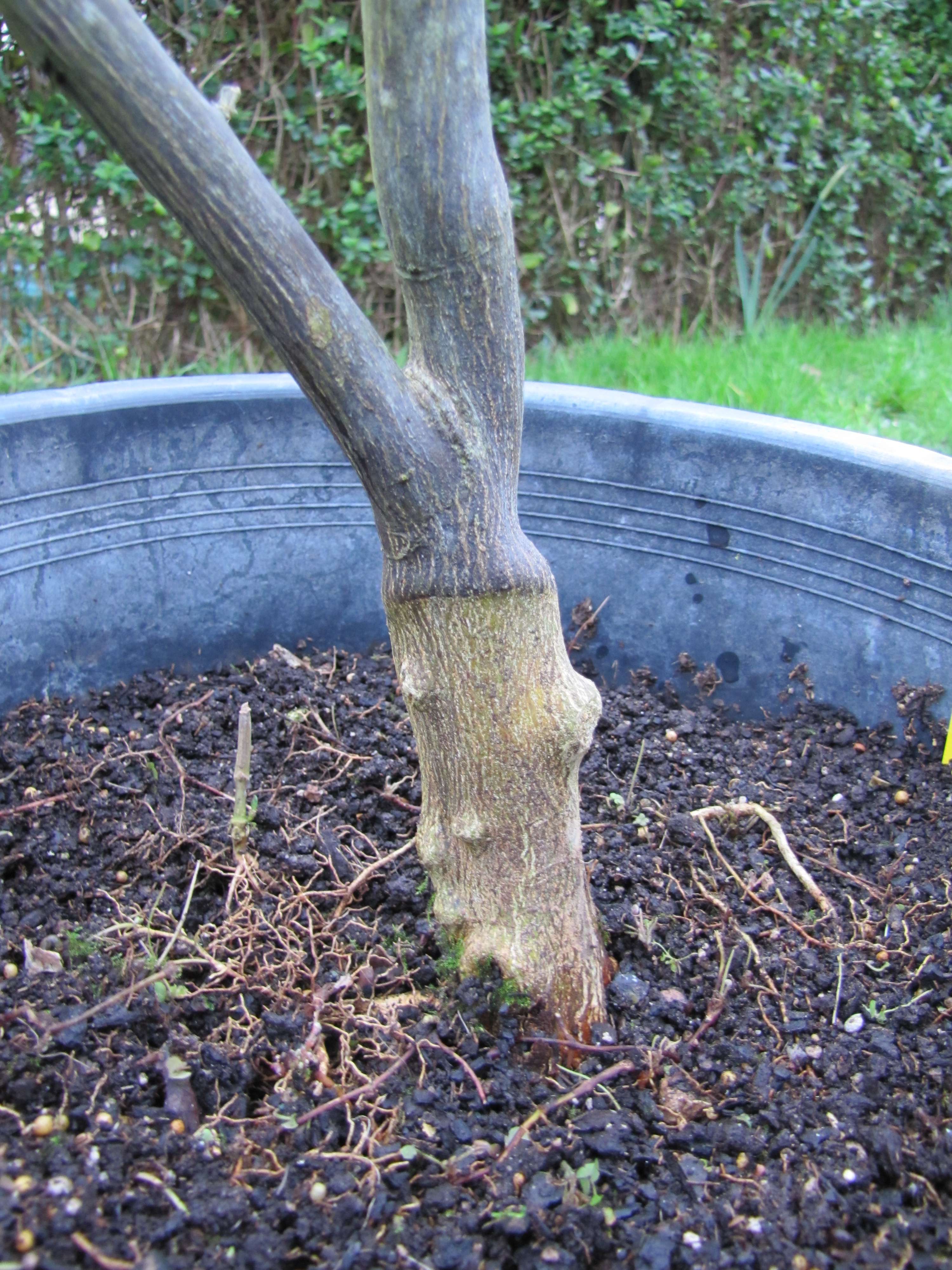
Shahid's plan to sell grafted saplings follows the standard way oranges are multiplied: Banglapedia notes that orange plants are propagated vegetatively, by grafting or budding, so that each sapling carries the fruit of its parent. Sapling sales had become a business of their own. In November 2020 The Business Standard reported that a fruit farmer at Jamtala in Chapainawabganj had produced 30,000 orange saplings that year from his mother plants and was selling them at Tk 80 to Tk 150 each, depending on size.
An orange tree is slow to pay back. Mahfuz's own timeline, planting four years before the report, a first small crop the year before and a full crop in 2024, matches the three to five years before bearing that BARI and Banglapedia describe. The Daily Star, reporting on orange growers in Moulvibazar in December 2020, noted that the fruit takes about eight months to mature after flowering.
BARI's scientists have stressed that the crop needs close attention. The senior scientific officer who spoke to The Business Standard in 2020 warned that orange growing requires careful management and that high temperatures can damage the plants. In Sylhet, where many old orchards had declined, the Beanibazar upazila agriculture officer told The Business Standard in December 2020 that poorly maintained orchards, falling soil fertility and heat during flowering, which can make flowers and young fruit drop, lay behind the poor yields.
Disease is another risk. In a paper in the Journal of Plant Pathology in 2017, Bangladeshi researchers reported the first molecular detection in the country of Candidatus Liberibacter asiaticus, the bacterium behind huanglongbing or citrus greening, in sweet orange samples collected in July 2016 from Jaintapur in Sylhet, Akbarpur in Moulvibazar, Dighinala in Khagrachhari and Hathazari in Chattogram. The disease causes mottled leaves, stunted growth, poor roots, malformed fruit and the decline of the tree. The sources for this story give no fertiliser or pesticide doses; growers are advised to take those questions to their upazila agriculture office.
From the Sylhet hills to plain land
For most of Bangladesh's history, oranges came from a few hill areas. Banglapedia lists parts of Sylhet, the Chittagong Hill Tracts, Rangpur and Panchagarh as the growing areas and puts the country's total production in 2005-06 at 1,000 tonnes. Research centred on the Citrus Research Station at Jaintiapur in Sylhet, set up in 1960-61 on 21.46 hectares to work on fruits, especially citrus, and part of BARI since the institute became autonomous in 1976.
Sylhet's old orchards were shrinking even as the crop spread elsewhere. The Business Standard reported in December 2020 that the DAE's Sylhet office counted about 450 orange orchards in 2008 and about 300 by then, some no longer productive. A Greater Sylhet Integrated Orange Cultivation Development project begun in 2001 had planted 250 orchards across four districts of Sylhet division, but cultivation stalled after it ended in 2007.
On the plains, the change was quick. The Daily Star reported in December 2020, citing DAE data, that oranges were grown on more than 4,000 hectares in fiscal 2019-20, and that citrus including tangerines covered 7,500 hectares, against about 2,000 hectares some six years earlier. In September 2022 Prothom Alo reported that national orange production had risen from about 5,000 tonnes in 2010 to about 50,000 tonnes, that oranges were grown in at least 35 districts, that 20 to 25 varieties were in cultivation, and that DAE data showed domestic output growing by about five per cent a year over the previous two years.
Regional reports filled in the picture. In December 2023 the DAE counted 108 orange and malta orchards on about 400 acres in the five districts of greater Rangpur, producing about four and a half thousand tonnes of fruit a year, after five to six years of commercial growing. The Sreepur orchard just south of Bhaluka, run by four entrepreneurs on eight bighas of red soil, was in its third harvest in November 2024.
Government programmes behind the spread
Much of the expansion came through two DAE projects. The Year-Round Fruit Production for Nutrition Improvement project, run since 2014-15, had by May 2019 trained more than one lakh farmers and planted 21 to 22 lakh fruit trees, and farmers had planted about two crore more on their own, The Daily Star reported. The project's aim was a fuller fruit supply in a country where, by the agriculture ministry's figures, people ate about 80 grams of fruit a day against the 250 grams recommended for adults.
A second project, for the expansion, management and increased production of citrus crops, began in 2019. In an October 2022 report on BARI Malta-1, a green-skinned malta released by BARI in 2003, bdnews24 quoted the DAE as saying that the variety was grown in 123 upazilas of 30 districts and that, under the project, it had been grown and demonstrated on 2,134 hectares through August that year. The project director gave its aims as bringing fallow land under cultivation, making up vitamin C shortfalls from citrus fruit and saving the dollars spent every year on imported malta and oranges. In September 2022 the director of the DAE's year-round fruit project told Prothom Alo that a project aimed to raise orange and mandarin output by a further 40,000 tonnes, which he expected to cut imports and make oranges cheaper for consumers.
Projects were not the only route. Both Mymensingh growers started on their own after watching videos, and the district office said it came in afterwards, with local agriculture officers guiding the two men and trying to interest other farmers in the crop.
Imports, duties and prices
Home-grown oranges compete with a large import trade. The Daily Star reported in May 2019 that imports of apples, mandarins, oranges, pears and grapes had been 2.82 lakh tonnes in the first eight months of fiscal 2017-18 and 2.52 lakh tonnes in the same period of 2018-19. The DAE's plant quarantine wing put citrus imports at 250,700 tonnes in fiscal 2018-19. In September 2022 Prothom Alo, citing a United States Department of Agriculture report published that August, said orange imports had reached about 2.5 lakh tonnes in the previous fiscal year and that Bangladesh had become the world's sixth largest orange importer, up from 14th two years before.
Higher duties and a shortage of dollars then cut into that trade. In July 2024 FreshPlaza reported that Bangladesh had raised its import duty on oranges from Tk 88 to Tk 101 a kilogram, and that orange exports from India's Vidarbha region to Bangladesh, more than 141,000 tonnes in 2020-21, were expected at 25,000 tonnes in 2023-24. In December 2023 an importer at the Burimari land port in Lalmonirhat told The Daily Star that he had imported about 60 per cent less fruit than a year earlier because importers could not obtain dollars, while a fruit trader in Lalmonirhat town said demand for local fruit was greater than the supply.
Learning from YouTube: successes and warnings
Mahfuz and Shahid were not alone in learning orange growing from online videos. The Daily Ittefaq reported in November 2022 that a man who returned to Bijoynagar in Brahmanbaria after about two decades abroad watched a video by an orange grower in Chuadanga, visited his orchard and planted China-3 saplings on leased land, the first commercial planting of that variety in the area. The upazila agriculture officer said the area had not been thought suitable for oranges, and that the office would now support commercial growing.
Others fared badly. In December 2021 Bangla Tribune reported that farmers in Jhenaidah and Chuadanga who had planted China oranges after watching YouTube videos could not sell their fruit, and that many had cut down their trees. They said the fruit had seeds, that the juice dried up on the tree and that it left a bitter taste; in one village of Chowgachha upazila in Jashore, about 40 of the 45 to 50 bighas planted had already been cleared. The Chuadanga Sadar upazila agriculture officer, who had made a video about one China orange orchard, said he had never advised anyone to grow it commercially, and the Kaliganj upazila agriculture officer said the variety had not been tested by the horticulture centre and that officials did not advise farmers to plant it commercially, though a few trees could be tried.
Local conditions and care matter too. In December 2023 the DAE's deputy director in Lalmonirhat told The Daily Star that the region's sandy loam soil made it suitable for oranges and malta, and that farmers who looked after their trees properly would get the yields they hoped for. Against that background, the Mymensingh office's figure of 19 hectares in 2024, ten of them in Bhaluka, showed oranges still at an early stage in the district, with the two orchards in Longai and Akhalia among its best-known examples.
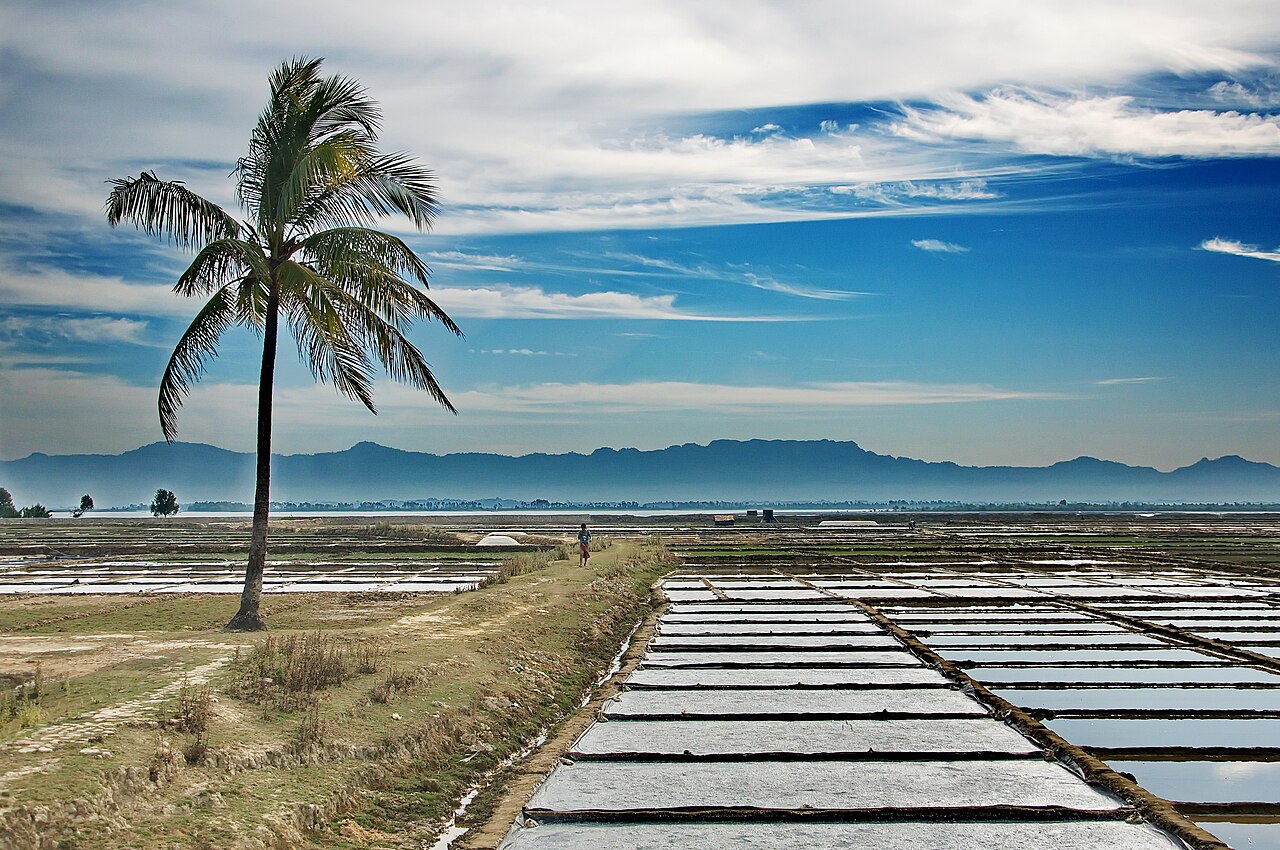
Photo: Salim Khandoker / Wikimedia Commons (CC BY-SA 3.0)
Sources: Jagonews24, Banglapedia, The Daily Star, The Daily Star Bangla, The Business Standard, Prothom Alo, bdnews24.com, The Daily Ittefaq, Bangla Tribune, FreshPlaza, Journal of Plant Pathology, Wikipedia
Comments
(0)