
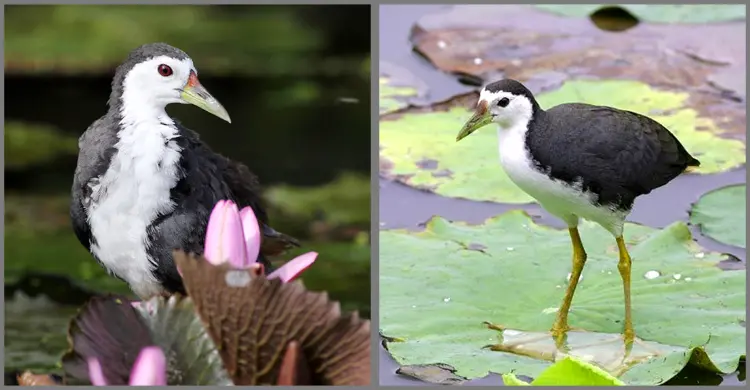
The waterhen (dahuk) is a medium-sized water bird. It is very wary and an expert at hiding. Is it because it is so timid that the bird is so beautiful?
Ponds, canals, wetlands, beels and holes along riverbanks are its favourite places to live. But with rapid urban expansion, this beautiful bird is disappearing.
Even two decades ago, waterhens lived in groups in the bushes beside the haors, baors, canals, beels, ditches, drains and large ponds of Moulvibazar district.
In the evenings their calls could be heard from the bushes along village ponds, and late at night many people were woken by them. Nowadays their voices are no longer heard.
Once, in the monsoon and autumn, waterhens would wander about with household ducks and chickens. Now they are no longer seen. The waterhen has begun to disappear.
Breeding and diet
The monsoon is its breeding season. At this time it nests close to water, inside bushes or on the bushy branches of small trees. If it is safe enough, the bird also nests on the ground. It lays 5-7 eggs, pale yellow or white tinged with pink.
Male and female incubate the eggs together. The chicks are always black. The eggs hatch in about 21-24 days, and the chicks leave the nest 24-30 hours later.
After about three months the young birds choose separate lives. During breeding, one male cannot tolerate another and they fight as soon as they meet. The bird has a combative nature.
The waterhen's favourite food is aquatic insects. It also eats the soft parts of water lily and lotus flowers, tender water chestnuts, aquatic algae, the soft parts of creepers, paddy, foxtail millet, pulses, mustard, snails, earthworms, leeches, fish, small fish, vegetables and fruit.
The bird is found in Bangladesh and India as well as in various countries of South and South-East Asia. It ranges over a vast area of the world, about 83 lakh 40 thousand square kilometres.
Habitat loss and hunting
But its habitat is now being destroyed. For many reasons, including food shortages and hunters' attacks during the breeding season, this environment-friendly species is disappearing. Even the waterhens living deep in the forests are not ultimately safe from hunters.
The IUCN recently declared the species least concern, and it has been declared protected under Bangladesh's wildlife law.
Sana Mia of Poitura village on the edge of Kawadighi haor said: "The waterhen is becoming quite endangered. It is seen only now and then. Because bushes are being destroyed, the waterhen is not doing well. To keep it safe in nature, the destruction of its habitat must be stopped. Otherwise the day is not far off when the waterhen's name will be written on the red list of endangered species."
Selim Uddin, who lives beside Baldar Sagar Dighi in Rajnagar upazila, told Jago News: "A few days ago a hunter came and set a trap to catch waterhens at that pond. When it was reported to Rajnagar police station, police came to the spot. Sensing their presence, the hunter fled with the caged bird."
Forest range officer Shahidul Islam told Jago News: "To keep nature beautiful, birds must be given protection. Since last November we have rescued 15 waterhens from hunters and released them in Lawachara National Park. Whenever we get news of birds being held anywhere, we carry out a rescue operation."
Source: Jagonews24. First published in Bengali on The Agro News.

Comments
(0)