
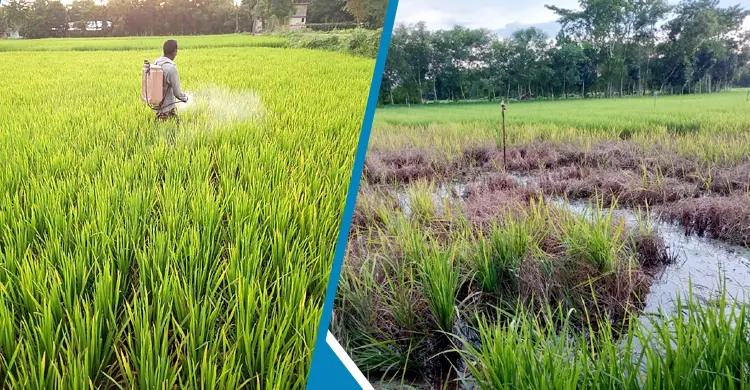
Bacterial leaf blight is spreading in aman rice plants in Moulvibazar because of a lack of potash and sulphur. Farmers say normal care is making no difference: they have applied pesticide and fertiliser to affected fields without result, and they are in despair.
The agriculture department says this is not a major disease. The leaves are turning reddish because of a lack of the necessary rain and of nutrients in the rice plants, and because of farmers' incorrect care it will take a little time for the leaves to turn green. Crops on about 5,000 hectares in the district's seven upazilas have turned red.
According to the agriculture department, the aman target in the district this season is 1 lakh 16 thousand hectares. Last year aman was grown on 1 lakh 1 thousand hectares.
Yellowing across seven upazilas
Aman rice is Moulvibazar's leading crop. Just as the paddy fields were turning green, insect attacks appeared, and seedlings planted in the fields were also seen turning yellow. Farmers in different parts of seven upazilas, including Rajnagar, Kamalganj, Kulaura and Sadar, are worried as their rice plants turn yellow.
Farmers say the rice plants are growing slowly because the green leaves are turning yellow and burning. In many fields the seedlings are discoloured, and applying pesticide and fertiliser is not helping. The worst affected are the BR11 and BRRI dhan49 varieties.
On Thursday 6 October, in Pathantula, Kharpara and, on the edge of Kawadighi haor, Jalalpur and Bhumiura villages of Rajnagar upazila, fields hit by leaf blight stood out among the green expanse. Several people in Jalalpur village on the edge of Kawadighi haor spoke to the reporter. Farmer Kuti Mia said the rice on his 6 bigha had turned yellow and the tips had burned, and applying pesticide had done no good.
What farmers say
Iyabor Mia of Bajua village in Rajnagar upazila told Jagonews24 that a kind of small brown planthopper attacked the base of the rice plants, after which the plants began to rot. "The rice on my 5 bigha is completely ruined," he said.
Hossain Box and Imani Mia of the Pathantula area told Jagonews24 that the leaf-dying disease had appeared 15 days earlier and that applying fertiliser and pesticide was not helping.
Jalal Uddin, a farmer of Hingajia village in Kulaura upazila, said the sudden attack of the disease turning rice leaves red had left him in despair, and fertiliser and pesticide were not working.
Abdul Ahad, a farmer of Munshitila village in Kamalganj, said they thought it was a stem borer attack and bought pesticide from the local market to apply, but the reddish colour had not gone after 20 days.
Agriculture office: not a major problem
Samsuddin Ahmed, deputy director of the agriculture department in Moulvibazar, told Jagonews24 that it is not a major problem. The agriculture department is advising farmers not to panic and to apply the right amounts of pesticide and fertiliser to their land.
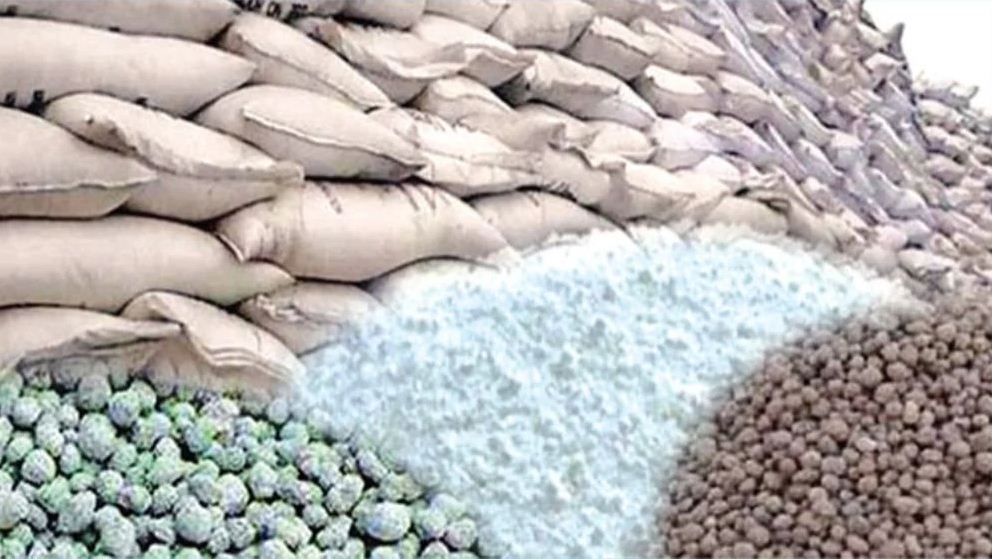
Because of farmers' incorrect care, it will take a little time for the leaves to turn green, he said. Farmers in remote areas are caring for their fields incorrectly, which will delay the leaves turning green. With less rain than usual at the right time, the rice plants are short of nutrients. Once the shortage of potassium and sulphur is made up, the plants will turn green, he said.
Source: Jagonews24. First published in Bengali on The Agro News.
Comments
(0)