
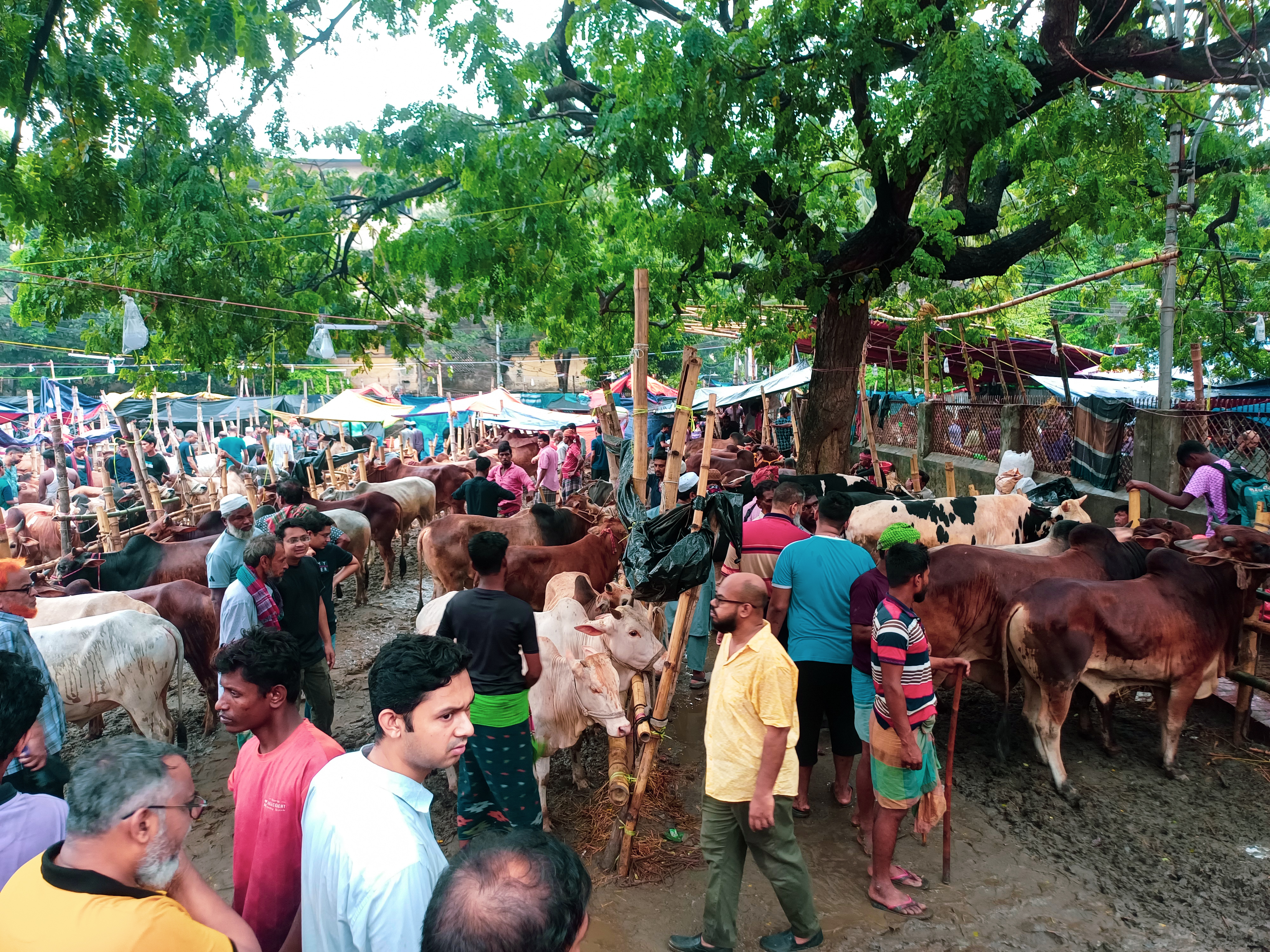
Dhaka Metropolitan Police (DMP) said on Saturday, 18 July 2026, that it had arrested five men in the capital's Motijheel area whom it accuses of firing at the office of a Qurbani cattle market leaseholder in South Kamalapur in May and of threatening the same businessman with death while demanding Tk 10 lakh over WhatsApp. Police said three foreign-made firearms and seven rounds of ammunition were recovered after the arrests. The information was given at a press conference at the DMP Media Centre on Minto Road, as Jagonews24 reported that afternoon.
The briefing was given by Mohammad Osman Goni, the DMP's Additional Commissioner (Estate, Development and ICT), who was also holding additional charge of Crime and Operations. According to police, the main accused is Tanim Reza alias Bappi, 46, whom police described as a shooter. The four others arrested were named as Mohammad Jewel, 48, Shakil, 27, Md Manik Kazi, 50, and Rakibul Islam Bhuiyan alias Rizon, 35. All of the accounts below of what the men are said to have done come from the police; the Jagonews24 report carried no statement from the accused or their lawyers, and none of the allegations had been tested in court.
What police said about the threat and the firing
According to Osman Goni, the trouble began on 15 May 2026, when the leaseholder, a businessman who held the lease of a sacrificial cattle market for Eid-ul-Azha, received a demand for Tk 10 lakh over WhatsApp from a foreign phone number. The message, police said, came with a threat to kill him. Then, on 19 May, criminals fired at his office in South Kamalapur, the officer said.
A case was then filed at Motijheel police station. Police said the investigation that followed found that Tanim Reza Bappi and his associates were involved in both the threat and the shooting. They had not been arrested earlier, the officer said, because they had been in hiding for a long time. Police did not say in the reports read for this story whether anyone was hurt in the firing on 19 May, and none of the reports said so; this story therefore says nothing about injuries.
The officer also told reporters that police had information linking Bappi to several other shootings and that there were allegations of extortion against him from various businesses in Motijheel. He said Bappi faced seven cases in all at different DMP police stations, on charges that include extortion, robbery, abduction, attempted murder, repression of women and children, and narcotics. These are cases and allegations, as the police described them, not findings of guilt.
Arrests near Hotel Purbani and in North Kamalapur
Police said officers of the DMP's Motijheel division arrested Bappi in a drive near Hotel Purbani in Motijheel on the morning of Friday, 17 July 2026. Three associates who were with him at the time, Jewel, Shakil and Manik Kazi, were arrested at the same place, according to the officer.
The fifth man was arrested later. Osman Goni said that information given by the detainees during questioning, together with technical assistance, led police to the North Kamalapur area of Motijheel, where they arrested Rakibul Islam Bhuiyan alias Rizon. Police did not describe the technical assistance further.
Weapons recovered and the cases filed
Acting on what the detainees told them, police said, officers raided an office of Bappi's in South Kamalapur on the night of 17 July. The officer listed what was recovered there:
- one foreign-made revolver
- two foreign-made pistols
- five rounds of revolver ammunition
- two rounds of pistol ammunition
- two magazines
- one electric shock gun
- one foreign-made Chinese axe
A separate case had been filed at Motijheel police station under the Arms Act over the recovered weapons, the DMP officer said. He added that legal action was being taken against the five arrested men and that drives to arrest their other associates and to recover illegal arms were continuing. Police did not name, in the reports of 18 July, the leaseholder whose office was fired upon or the market he held, and this story does not name them either.
A threat in the weeks before Eid-ul-Azha
The dates matter because of the season. Eid-ul-Azha, popularly called Kurbanir Eid in Bangladesh, falls on the tenth day of the month of Dhul Hijjah, and Muslims who can afford it sacrifice an animal on that day or on the days that follow, as Banglapedia describes the festival. Cattle, goats and buffaloes are the animals usually sacrificed in Bangladesh; a cow or a buffalo may be sacrificed on behalf of seven people, a goat or a lamb on behalf of one.
In 2026, the National Moon Sighting Committee met at the Islamic Foundation at Baitul Mukarram on the evening of 18 May, reported that the Dhul Hijjah moon had been sighted, and announced that Eid-ul-Azha would be celebrated across Bangladesh on Thursday, 28 May, as Bangla Tribune reported that evening. The demand for money that police described therefore reached the leaseholder in mid-May, as Dhaka's temporary cattle markets were being leased and prepared. The firing at his office followed on 19 May.
It was not the first time that year that threats sent from foreign numbers over WhatsApp had made news. On 26 January 2026, bdnews24.com reported that the deputy commissioner and the superintendent of police of Bagerhat said they had received abusive and threatening calls from several foreign numbers on their official WhatsApp numbers; the superintendent said the matter was being looked into. That case was unrelated to the Kamalapur incident, and police in Dhaka did not link the two.
How Dhaka's Qurbani cattle markets are leased
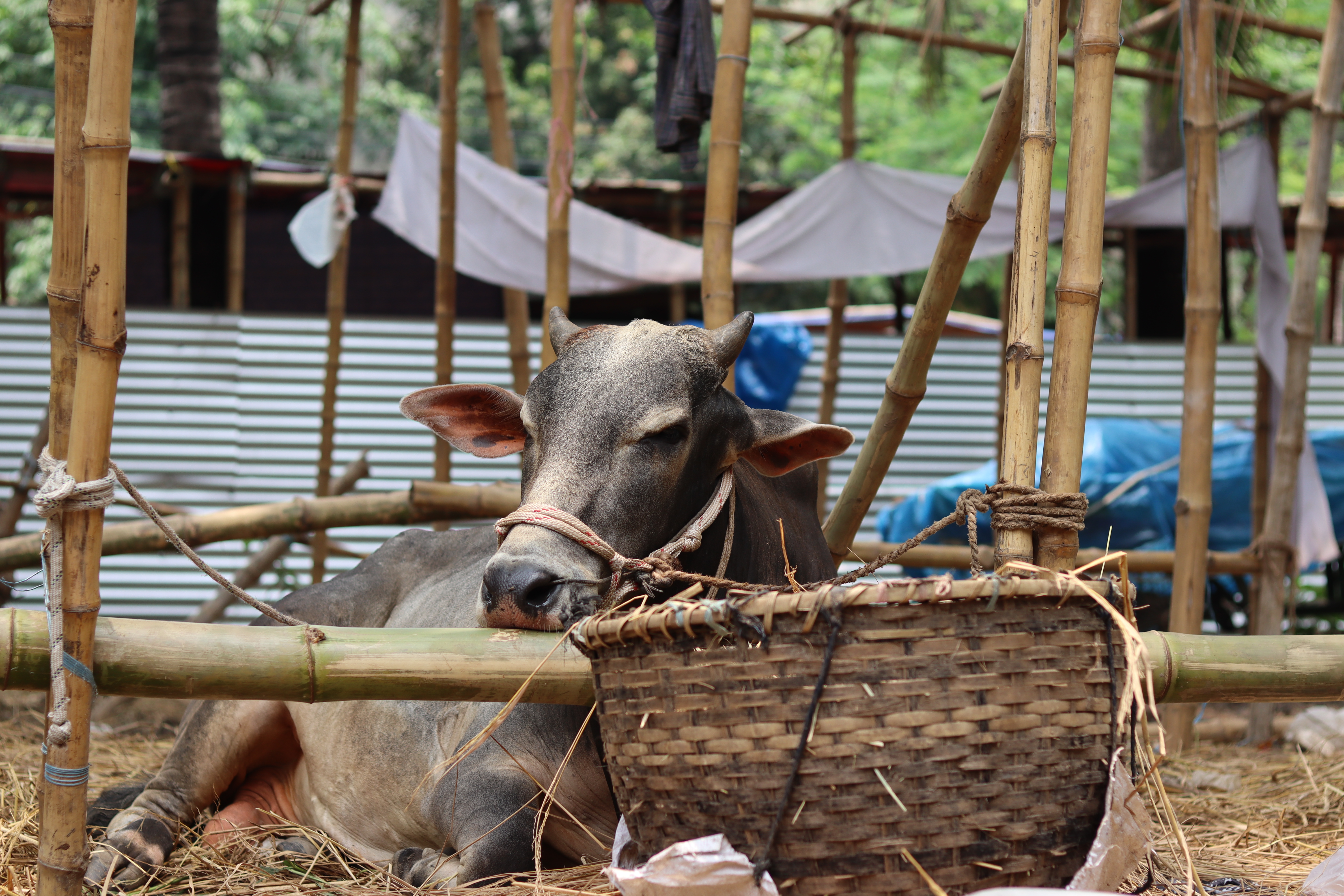
A cattle market leaseholder of the kind police described holds, for a fee, the right to run a market for a limited time and to collect the charges the law allows. The legal framework in force in 2026 was the Hats and Bazars (Establishment and Management) Act, 2023 (Act No. 10 of 2023, dated 13 February 2023), which replaced the Hats and Bazars (Establishment and Acquisition) Ordinance of 1959. The Act's definition of a hat or bazar expressly includes places where animals are bought and sold.
Section 4 of the Act deals with exactly the kind of market that springs up before Eid. It allows the local authority concerned, with the prior approval of the deputy commissioner, to set up a temporary market for a religious or other special festival at a place other than an established market, for a fixed period of the year and without building any permanent structure. Section 6 leaves the leasing procedure, objections and appeals, the contract with the leaseholder and the handling of lease money to rules made under the Act. Section 7 says that in a city corporation area the corporation fixes the rates of toll, tax, rate or fee after examining the value of goods traded, obtains the government's approval and publishes the list, and that the approved rates must be written into the lease notice, the tender schedule and the leaseholder's contract. Under section 12, illegally occupying a market's government khas land, or building or trying to build an illegal structure on it, is punishable with up to one year of simple imprisonment, a fine of up to Tk 5 lakh, or both.
In practice, the two Dhaka city corporations advertise the markets for tender each spring. On 19 April 2026 the Daily Ittefaq reported that the corporations had decided on 26 Qurbani markets in the capital, 13 in the Dhaka South City Corporation (DSCC) area and 13 in the Dhaka North City Corporation (DNCC) area, and that lease notices had already been published in newspapers. By 21 May the list had settled at 27 temporary markets, Dhaka Times reported: 11 under DSCC and 16 under DNCC, including the permanent market at Gabtoli. The DSCC's chief estate officer told the paper that bids above the government price had been received for nine of the 11 DSCC markets; for the other two the bids were unsatisfactory, so the decision had been referred to the divisional commissioner. The highest bidders had already been handed their sites.
The rules the leaseholders work under were spelled out at a DNCC meeting with leaseholders on 20 May 2026. According to bdnews24.com, the DNCC administrator said that no cattle market could be held anywhere except at a legally leased or designated site, that the markets would run for five days under the rules, and that any trading before then would be treated as illegal. About 100 officials had been given magistracy powers to run mobile courts against irregularities, he said. The leaseholder could take a hasil, or market charge, of 5 percent of the sale price of an animal, and could take no other money from the seller. Leaseholders were also told to remove each day's waste the same day, to install separate toilets for women and to keep water from collecting on market grounds.
Leasing does not always go smoothly. In 2025, Prothom Alo reported on 3 June that three markets in the two Dhaka corporations had still not been leased on the day sales began, because the government-set price had not been reached; the corporations had written to the Local Government Division for a decision. In one DNCC case the government price was Tk 80 lakh, and three rounds of tenders had failed to produce an acceptable bid, the corporation's estate department said.
The livestock trade behind the markets
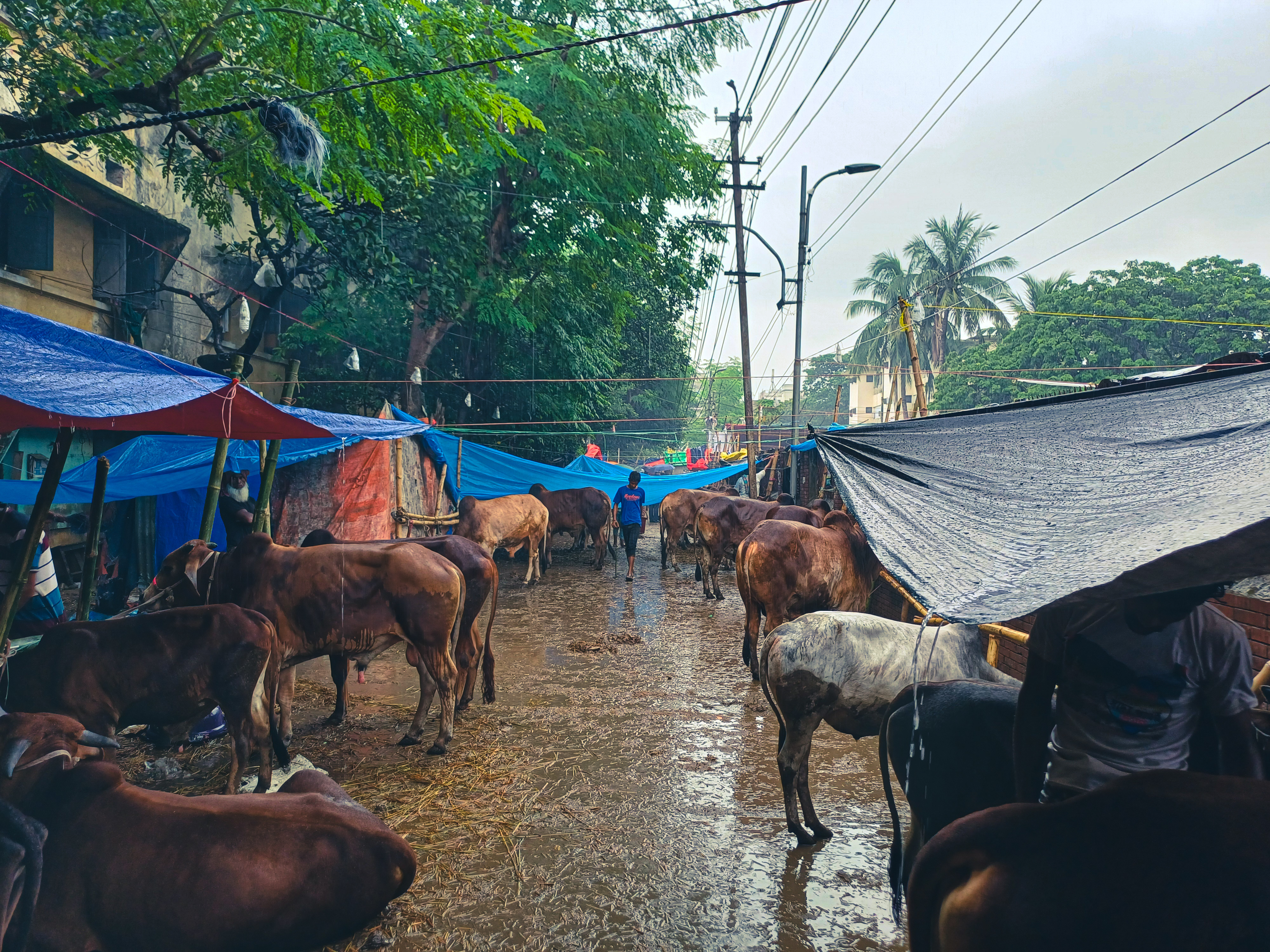
The money that passes through these markets explains why a leaseholder can become a target. Bangla Tribune reported on 22 May 2026, citing the Department of Livestock Services (DLS), that the likely demand for sacrificial animals across the country that year was 1,01,06,334 head, against 1,23,33,840 animals ready for sale. Of those, 56,95,878 were cattle and buffalo, 66,32,307 were goats and sheep, and 5,655 were other species. The DLS deputy director (farms) told the paper that there was no shortage and that about 22 lakh animals would be left over after demand was met.
The same report set out the trend of recent years: about 1.25 crore animals were raised in 2023 against roughly 1 crore sacrificed; 1.21 crore were raised in 2024 against about 95 lakh sacrificed; and 1.24 crore were raised in 2025 against about 90 lakh sacrificed. The supply was uneven across the country. In the Dhaka division the likely demand was 21,58,869 animals against an availability of 14,43,942, and Chattogram also faced a shortfall of about 50,000, while Rajshahi, Rangpur, Khulna and Mymensingh divisions had large surpluses, Rajshahi alone about 19 lakh. A large part of the animals sold in the capital's markets therefore came from the north.
The Ministry of Fisheries and Livestock said that more than 3,600 cattle markets would be held across the country that year, and that 20 veterinary medical teams would work in the capital's 27 markets, Bangla Tribune reported. The fisheries and livestock minister had said the government would take a strict stand against extortion from trucks carrying animals and that law enforcement agencies would be on duty at markets and on the roads. Dhaka Times reported that plain-clothes police would be deployed in the markets, that the ministry had said no animal could be brought to a market without a health certificate, and that no hasil would be charged on animals bought and sold online.
What the law says on extortion and illegal arms
The offences police described fall under two old but still current laws. The Penal Code, 1860 defines extortion in section 383 as intentionally putting a person in fear of injury to that person or to anyone else and thereby dishonestly inducing them to hand over property or a valuable security, or to give a donation or subscription of any kind. Under section 384, extortion is punishable with imprisonment of up to three years, a fine, or both. Sections 386 and 387 deal separately with extortion by putting a person in fear of death or grievous hurt, and with putting or trying to put a person in such fear in order to commit extortion, and the Code punishes these far more heavily than ordinary extortion.
The Arms Act, 1878 governs the weapons. Section 14 forbids anyone to possess or control a firearm or ammunition except under a licence and as the licence allows. Section 19(f) makes possession in breach of section 14 punishable with imprisonment for life or rigorous imprisonment of not less than seven years, the penalty set by an amendment of 1991. Section 19A provides that where the offence involves a pistol, revolver, rifle, shotgun or other firearm, the punishment is imprisonment for life or rigorous imprisonment of not less than ten years. The police said only that a case had been filed under the Arms Act; the reports of 18 July did not say which sections were cited, and whether any of the men is guilty of any offence was a matter for the courts.
Motijheel, Kamalapur and the Dhaka Metropolitan Police
Motijheel, where the arrests were made, is the commercial heart of Dhaka. Banglapedia describes Motijheel Thana as covering 3.69 square kilometres, formed in 1976 and bounded by Ramna, Rampura and Khilgaon on the north, Sutrapur on the south, Khilgaon and Sabujbagh on the east, and Paltan and Ramna on the west. The head offices of Bangladesh Bank and of banks including Sonali, Janata, Agrani, Rupali and Pubali are in the thana, as are the Dhaka Stock Exchange, Biman Bangladesh Airlines and many other public and private bodies. At the 2001 census the thana had 225,999 people, and service and commerce were the main sources of income.
Kamalapur, where the leaseholder's office was fired upon and where police later raided Bappi's office, lies within the same thana around Kamalapur Railway Station, the capital's main railway terminus, whose Balaka sculpture Banglapedia lists among the area's landmarks. Banglapedia also records a mass grave from the 1971 Liberation War at South Kamalapur. North Shahjahanpur, where one of the DSCC's temporary cattle markets of 2026 stood on the Maitri Sangha ground beside the railway colony, according to Dhaka Times, is in the same part of the city.
The force that made the arrests was created by the Dhaka Metropolitan Police Ordinance, 1976 (Ordinance No. III of 1976), dated 20 January 1976, which provided for a separate police force for the Dhaka Metropolitan Area. Its Motijheel division, which made the arrests, covers the area where both the firing and the raids took place, and the case over the threat and the shooting, as well as the new Arms Act case, were filed at Motijheel police station.
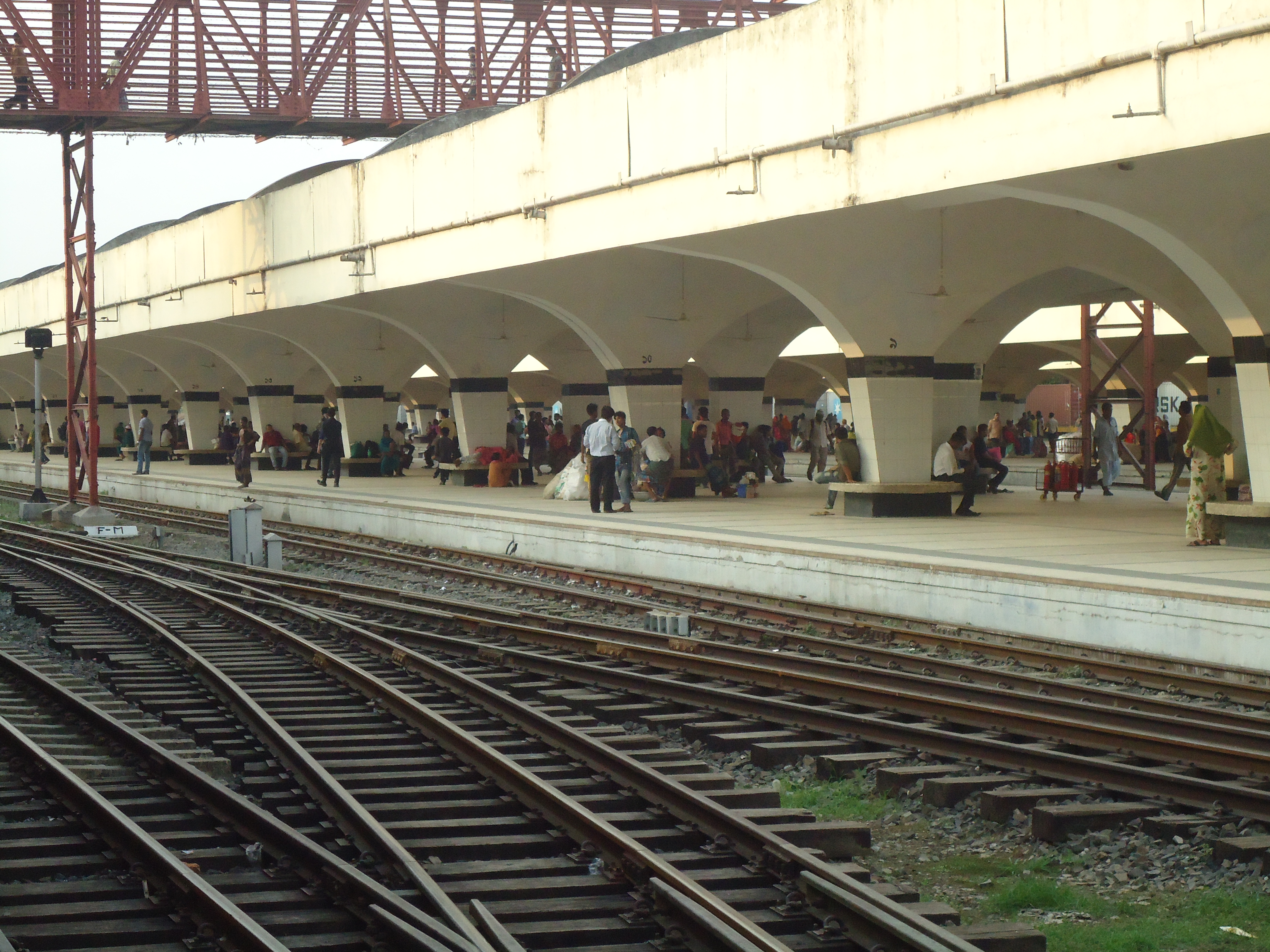
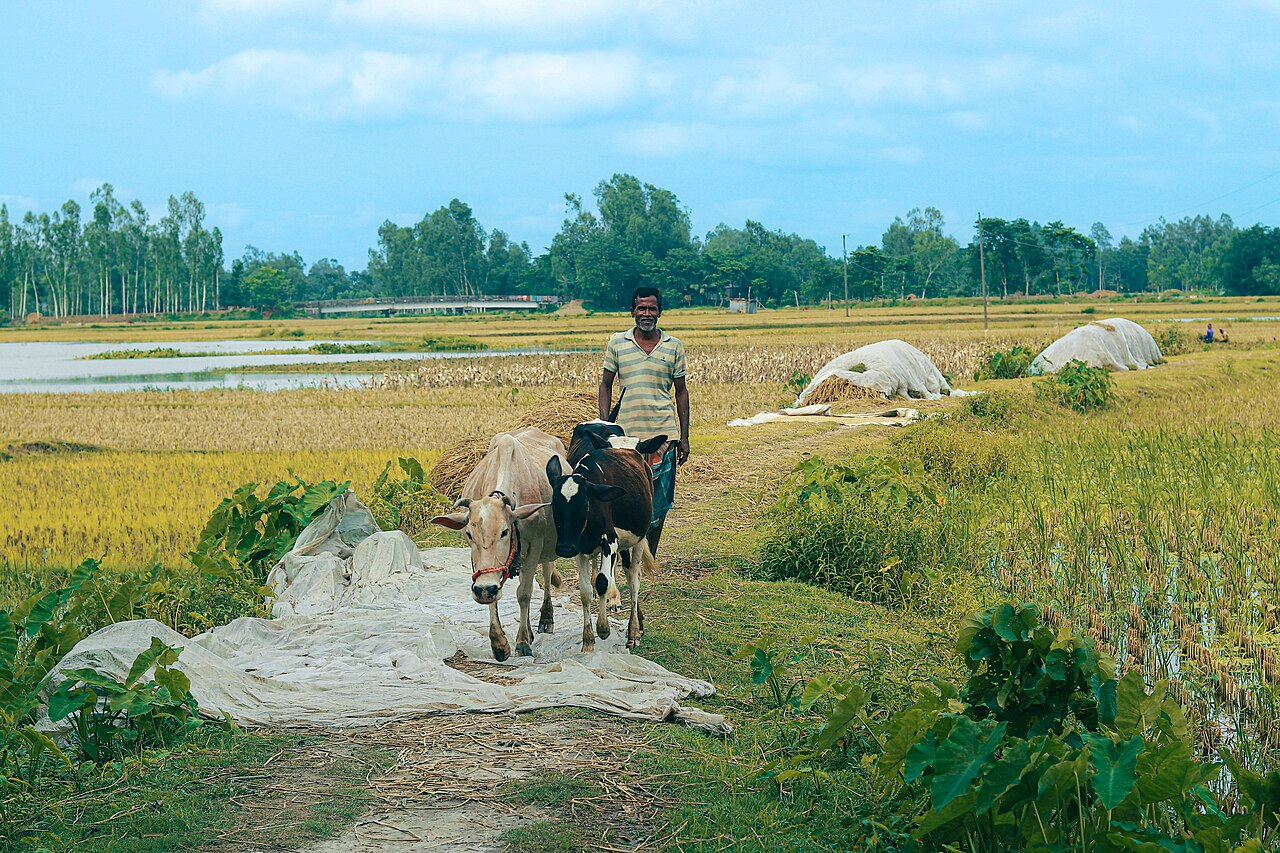
Photo: S.M.M. Musabbir Uddin / Wikimedia Commons (CC BY-SA 4.0)
Sources: Jagonews24 (18 July 2026), Bangla Tribune (18 May and 22 May 2026), Dhaka Times (21 May 2026), The Daily Ittefaq (19 April 2026), bdnews24.com (26 January and 20 May 2026), Prothom Alo (3 June 2025), Hats and Bazars (Establishment and Management) Act 2023, Penal Code 1860, Arms Act 1878 and Dhaka Metropolitan Police Ordinance 1976 (Laws of Bangladesh, Legislative and Parliamentary Affairs Division), Banglapedia (Motijheel Thana, Eid-ul Azha)
Comments
(0)