
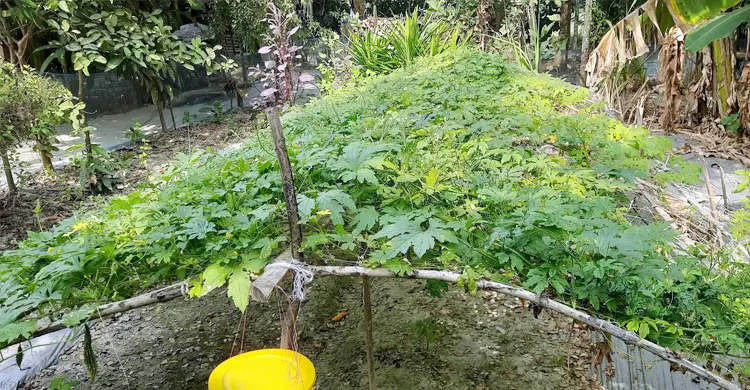
In the coastal upazila of Mongla, farming and livestock rearing had almost disappeared because of excessive salinity. Now seasonal vegetables are being grown and goats and sheep reared there, and more than a hundred women have become financially self-reliant. Besides feeding their families, they earn extra by selling produce. This has been possible with help from the upazila agriculture and livestock offices and the non-government organisation Friendship.
The upazila agriculture and livestock offices say Mongla is a coastal area dominated by salt water. Once, plenty of crops were grown here, every household had cattle, buffaloes and goats, and seasonal crops were grown in the yards. But climate change and a steadily falling groundwater table began to disrupt farming, and as salinity gradually rose, livestock rearing and crop farming almost stopped.
Seeds, training and livestock
Considering the hard lives of people in this salt-affected area, the NGO Friendship stepped in. In North and South Ulubunia and several other villages of Sonailtala union, housewives have taken up farming with the salt-tolerant improved crop seeds and goat and sheep rearing inputs it provides. The agriculture and livestock departments trained the women, and they have made a striking success of growing salt-tolerant vegetables and rearing sheep and goats.
In several villages of Sonailtala union, 120 women have set an example in seasonal vegetable farming and sheep and goat rearing. Using organic fertiliser and no pesticides, they grow winter and monsoon vegetables and rear livestock all year round, and have turned their fortunes around. Their success is inspiring many other women.
Mukti Roy and Nowroz Sultana, beneficiaries in Ulubunia village, said: "We got training and 15-16 kinds of vegetable seeds from Friendship and grew them on the fallow land around our homes. After meeting the family's needs, we earned an extra Tk 10,000-12,000 in the last monsoon season. We have benefited financially, and we will be able to earn more than Tk 10,000 from this winter's vegetables too. We are much better off now than before."
The 16 kinds of vegetables include lettuce, and the women have caused a stir by growing lettuce in a saline area. They also give surplus seed to neighbouring women, so vegetable farming keeps spreading.
Shibani Mondal and Hena Begum, beneficiaries from the same area, said: "We were not well off before and could not afford to buy goats or sheep. But Friendship gave us goats and sheep. Over two years we have reared them and their numbers have grown. We sell goat milk and drink it too. Each of us now has four or five goats and sheep or more, and we can buy one or two ourselves. We have become small farmers and are much better off financially."
What the organisers say
Md Nausher Sheikh, member for ward 8 of Sonailtala union, said salinity had made the area unsuitable for vegetables and livestock. But Friendship's ASD project has been working for two years and has trained the women in farming and livestock rearing. As a result they have transformed vegetable farming and goat and sheep rearing, are becoming financially self-reliant, and women in nearby villages are following their example.
Md Anwar Hossain, project officer of Friendship's ASP project (as the text names it), said: "When we toured the area we saw that because crops would not grow due to extreme salinity, nobody farmed their yards or even kept animals. We then researched it, found alternative methods and trained the women, and that has brought great success. Besides feeding their families, the women are earning thousands of taka a season from vegetables, sheep and goats. Their fields are now full of vegetables and the number of animals in their sheds is growing."
Md Shahidul Islam, Friendship's ASD project manager, said the economic condition of people in the villages was very poor when they came to work in the upazila. Because of salinity, land, especially land for vegetables, lay fallow, and nobody kept ducks, chickens, sheep or goats. They formed four groups with 120 families and asked the members whether they would come forward if given seed and training in modern vegetable growing. When they did, Friendship contacted the upazila agriculture and livestock officers and arranged training in modern vegetable farming and goat and sheep rearing.
"Now we supply 15-16 kinds of seed twice a year, in the monsoon and winter. With those seeds they grow pesticide-free vegetables and rear goats and sheep, meeting their families' food needs and earning Tk 10,000-12,000 as well. We give each woman one goat and one sheep according to need, and with them they have built farms. Each now has four to six goats and sheep. There has been a very positive response, and other women are being inspired," he said.
Upazila agriculture officer Sakhawat Hossain and upazila sub-assistant livestock officer Md Yunus Ali said that after the beneficiaries were trained in modern methods to make good use of Friendship's inputs, they have transformed vegetable farming and livestock rearing. By farming with alternative methods in a saline area, the women have become financially self-reliant, and the offices are ready to train and support new women who come forward.
Source: Jagonews24. First published in Bengali on The Agro News.
Comments
(0)