
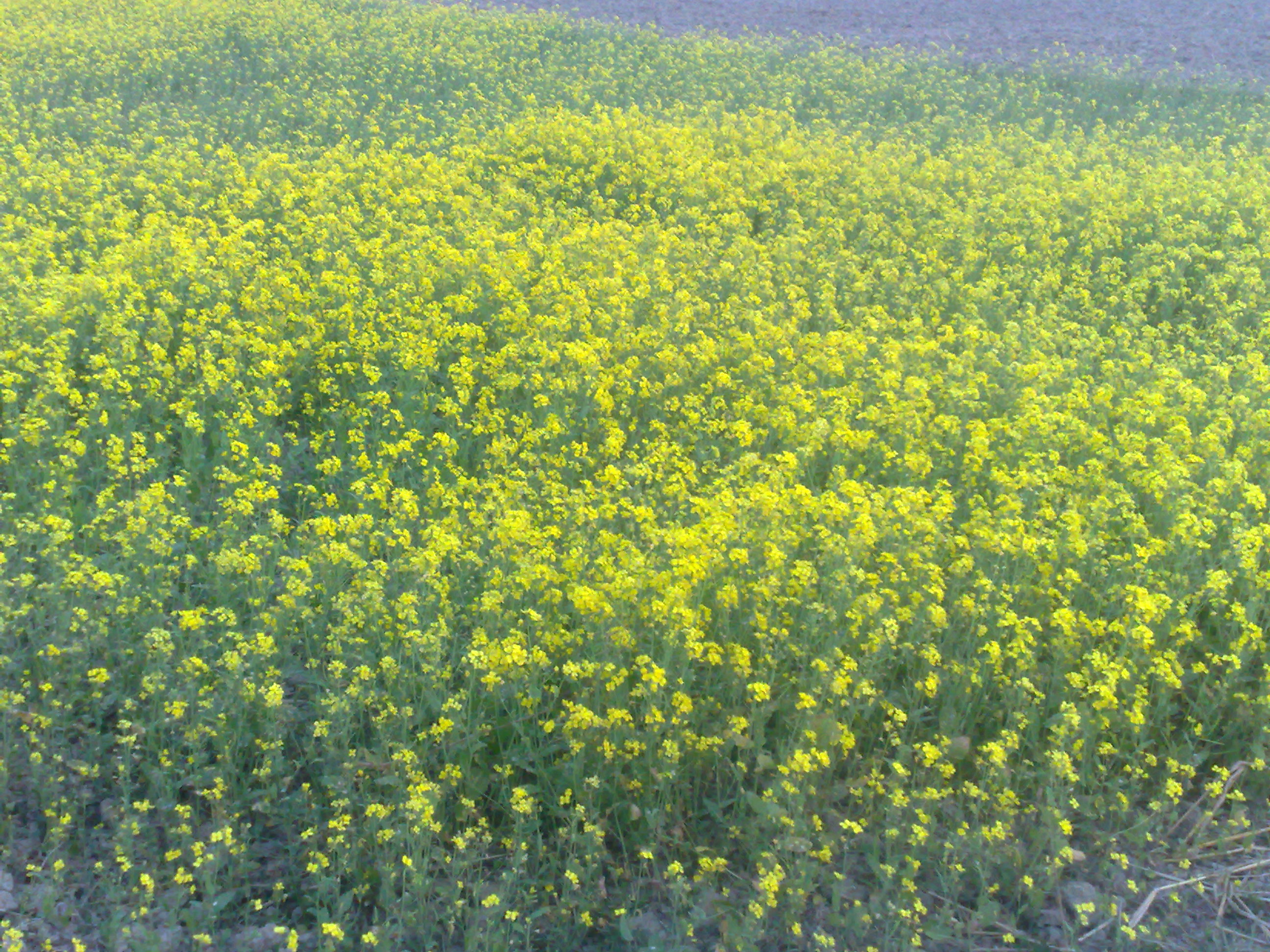
Farmers in Mirsarai upazila of Chattogram district were busy harvesting mustard in March 2026, after a season in which the crop covered 665 hectares, according to the upazila agriculture office. That was 625 hectares more than in 2019-20, when mustard was grown on just 40 hectares across the upazila's 16 unions and two municipalities. Jagonews24 reported on 22 March 2026 that the fields, yellow with flowers a few weeks earlier, were now bowed under the weight of ripe pods, that farmers described the yield as good, and that they were hoping for good prices. Low costs and high returns, the farmers said, were drawing more of them to the crop each year.
From 40 to 665 hectares in six seasons
The upazila agriculture office gave Jagonews24 the figures season by season. In 2019-20 mustard was grown on 40 hectares. The area rose by 10 hectares to 50 hectares in 2020-21 and by another 10 hectares to 60 hectares in 2021-22. The jump came in 2022-23, when mustard was sown on 320 hectares. In 2023-24 the area grew by a further 305 hectares to 625 hectares, and in 2024-25 it reached 650 hectares. In the 2025-26 season it stood at 665 hectares.
- 2019-20: 40 hectares
- 2020-21: 50 hectares
- 2021-22: 60 hectares
- 2022-23: 320 hectares
- 2023-24: 625 hectares
- 2024-25: 650 hectares
- 2025-26: 665 hectares
This season the largest areas were in Durgapur, Khoiyachhara, Ichhakhali, Wahedpur and Karerhat unions. In Zorarganj union, the sub-assistant agriculture officer responsible for the area said mustard had been grown on 15 hectares. The upazila agriculture officer put the number of farmers growing mustard in the upazila this season at 5,000.
The sharp rise from 2022-23 matched what was happening across the country. That season the Ministry of Agriculture began a three-year plan to cut the country's dependence on imported edible oil, and it reported in May 2023 that the national mustard area had grown by more than 200,000 hectares in a single year. Jagonews24 had already reported from Mirsarai in January 2024 that mustard there had been sown on twice the area targeted for that season.
Why Mirsarai's farmers are turning to mustard
According to the Jagonews24 report, the area expanded because farmers across the upazila's unions and municipalities were given government incentives and were encouraged to grow mustard. Demand for mustard oil in the upazila had also risen compared with earlier years. Because mustard needs little time and little capital, the farmers said, it had become a very profitable crop for them.
Bipul Das, a farmer from Masjidia village in Khoiyachhara union, said he grows mustard every year and had sown one acre again this season, with a good yield. He presses oil from his own mustard and sells it.
Ekramul Haque, a young agricultural entrepreneur, said he had bought mustard seed online and grown the crop for the first time this season, on 54 decimals of land, with a good yield. He sowed BARI Sarisha-17 in one plot and BARI Sarisha-14 in the other. Many people who had seen his crop were interested and planned to collect seed to grow it the following year, he said.
Another farmer, Nurul Absar, said he had grown only a little mustard the year before but, because the profit was good, had sown three plots this season. His family takes its own mustard to the market to have it pressed and uses the oil all year, he said, so he no longer needs to buy soybean oil.
Mohiuddin Tipu, a farmer from Maddhyam Wahedpur village in Wahedpur union, said he used to grow mustard on a small plot to feed his own family. Now he was growing more of it to sell.
What the agriculture office says
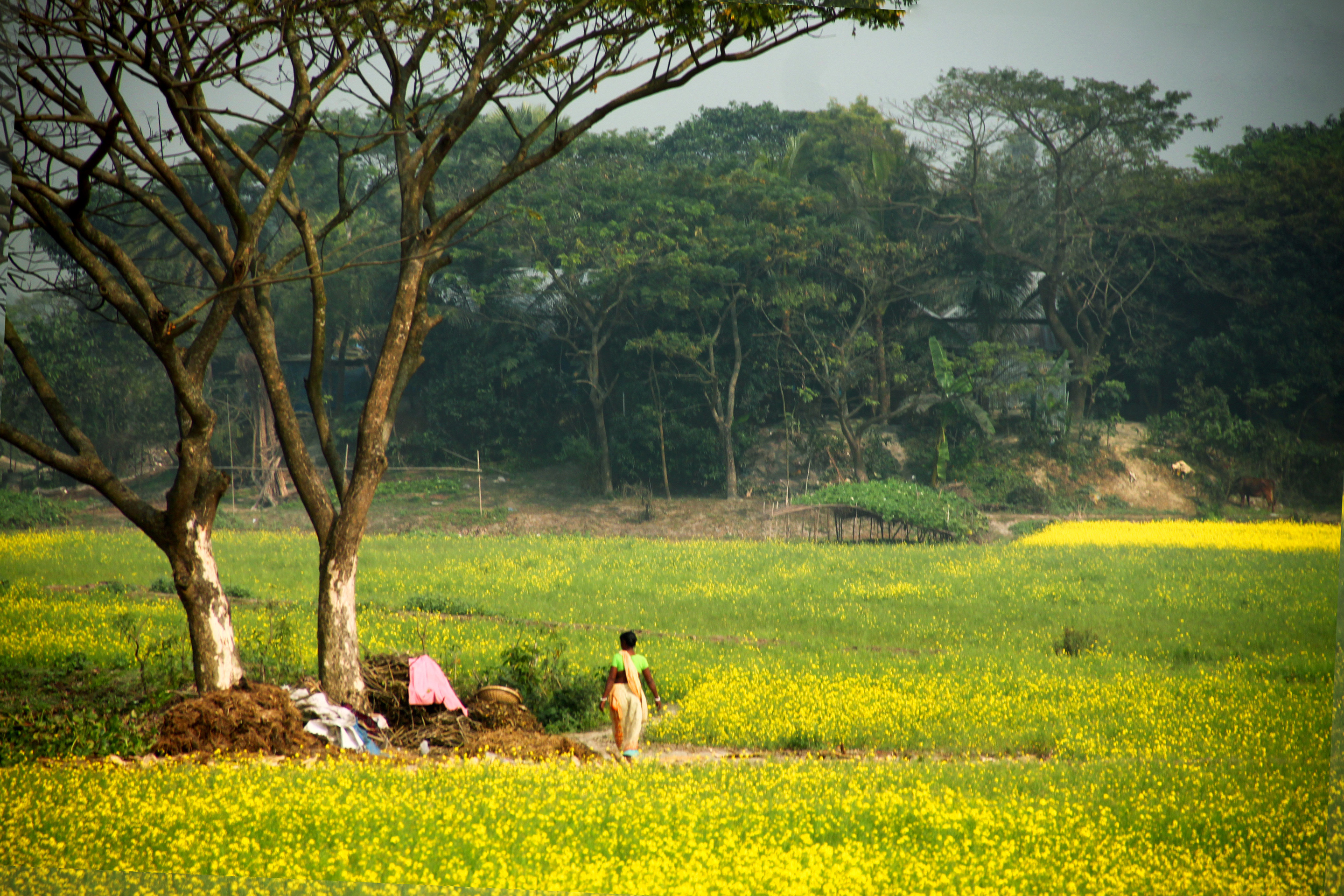
Monjur Haider, the sub-assistant agriculture officer for Zorarganj union, told Jagonews24 that cultivation in his area was increasing step by step through the farmers' own efforts and government support.
Pratap Chandra Roy, the Mirsarai upazila agriculture officer, said the agriculture office had supported farmers with training, seed, fertiliser and other inputs, and that mustard farming had grown many times over in five years. In his view the crop was meeting local demand for edible oil and, as a cash crop, also contributing to the local economy.
Support of this kind is part of a national pattern. Upazila agriculture offices of the Department of Agricultural Extension (DAE) distribute seed and fertiliser to mustard growers through incentive programmes, and the agriculture ministry said in May 2023 that farmers were receiving incentives through its oilseed crop production enhancement project. The Daily Star reported in April 2024 that a Tk 278 crore government scheme for mustard, sunflower and groundnut, running from 2020 to 2025, aimed to raise oilseed acreage and yield by up to 20 percent. In January 2026 the Bangladesh Sangbad Sangstha (BSS) reported similar support in Barguna, where the upazila agriculture office promoted mustard through demonstration plots, seed support and awareness work.
Mirsarai: hills, canals and a crop that had nearly vanished
Mirsarai is an upazila of Chattogram district on its border with Feni district. Banglapedia, the national encyclopedia, gives its area as 482.88 square kilometres and describes it as bounded by the Indian state of Tripura and Chhagalnaiya and Feni Sadar upazilas on the north, Sitakunda upazila and the Bay of Bengal on the south, Fatikchhari upazila on the east, and Sonagazi and Companiganj upazilas on the west. Its main river is the Feni, the Sandwip Channel lies on its coast, and the Isakhali, Mahamaya, Domkhali, Hinguli and Mayani canals cross it. Mirsarai Thana was formed in 1901 and became an upazila in 1983. Its two municipalities are Mirsarai and Baraiyarhat.
Farming remains the largest single source of income. Banglapedia, drawing on the census, lists agriculture as the main income of 38.93 percent of households, with commerce at 13.26 percent and service at 18 percent. Paddy, pulses, potato, brinjal, vegetables and bamboo are named as the main crops, and bamboo, fish, paddy, potato, banana and vegetables as the main exports. Among the upazila's 52 markets and bazaars, Banglapedia names Abu Torab Bazar, Karerhat, Baraiyarhat and Shantirhat. The 2022 population census counted 472,794 people in 111,009 households in the upazila.
The same Banglapedia entry lists mustard, together with sugarcane, jute, sesame, linseed and groundnut, among the upazila's "extinct or nearly extinct crops", in an account based on the 2001 and 2011 censuses and a cultural survey of 2007. The figures from the agriculture office show how far that has changed: from 40 hectares in 2019-20, mustard had returned to 665 hectares by 2025-26.
Khoiyachhara, one of this season's leading mustard unions, lies on the Dhaka-Chattogram highway. It gives its name to the Khoiyachhara waterfall, which lies in the hills about 4.2 kilometres east of the highway at Baratakia market, in a forest area that the government brought into a national park in 2010.
BARI Sarisha-14 and BARI Sarisha-17
The two varieties Ekramul Haque grew were both developed by the Bangladesh Agricultural Research Institute (BARI), the government research body that, together with the Bangladesh Institute of Nuclear Agriculture (BINA) and the agricultural universities, has released more than 20 mustard varieties, according to a Dhaka Tribune report of January 2025. The same report noted, citing the United States Department of Agriculture (USDA), that Bangladeshi farmers grow both rapeseed (Brassica campestris and Brassica napus) and mustard (Brassica juncea) and call both of them mustard.
BARI Sarisha-14 is a high-yielding, short-duration variety. In February 2021, the DAE deputy director in Jashore told Prothom Alo that it is ready for harvest in 75 to 80 days and yields about 1,500 kilograms a hectare, and that Boro rice can be grown on the same land after the mustard is cut. Because the plant is tall, he said, its fallen leaves mix into the soil and add organic matter.
BARI Sarisha-17 is also a short-duration variety. In a field trial by Bangladesh Agricultural University (BAU) in the Kishoreganj haor, reported by BSS on 9 February 2026, six short-duration mustard varieties from BAU, BARI and the Bangladesh Atomic Energy Commission were sown on three dates in November 2023. Binamustard-9 gave the highest yield when sown on 20 November, and BARI Sarisha-17 gave a similar yield. In the second year of the trial, in 2024-25, the two varieties were tested at different fertiliser doses and seed rates. In January 2026, BSS reported from Barguna that BARI Sarisha-14, 17, 18 and 19 and Tori-7 were among the high-yielding varieties grown there that season.
A newer variety had also been reported. In January 2025 the Dhaka Tribune wrote that BU Sharisha-1, developed at Bangabandhu Sheikh Mujibur Rahman Agricultural University, has a yield potential of 2 tonnes a hectare against a national average of 1.3 tonnes, and that the Bangladesh Agricultural Development Corporation (BADC) was producing foundation seed of it.
Mustard between the Aman and Boro rice crops
Mustard is a Rabi, or dry-season, crop. According to the Dhaka Tribune report, oilseeds in Bangladesh are sown in the Rabi season and harvested in February and March, which matches the harvest under way in Mirsarai in March 2026. Banglapedia notes that mustard is grown in almost every district, and names Chittagong among the districts with comparatively high acreage of this Rabi crop, alongside Sylhet, Dhaka, Tangail, Jessore, Bogra, Sirajganj and Pabna.
The main room for expansion lies in the gap between two rice crops. The Financial Express reported in May 2022, from the agriculture ministry's draft roadmap, that about 2.0 million hectares of land lie fallow for two to three months between the Aman and Boro seasons, and that short-duration oilseeds would be given to farmers after the Aman harvest so that they could grow mustard in that period. In October 2023 the agriculture ministry said at a workshop organised by BINA and the DAE in Faridpur that scientists had developed high-yielding, short-duration rice and mustard varieties so that mustard could be grown between Aman and Boro as an additional crop, without cutting rice output. The BSS report from Barguna in January 2026 described the same sequence: mustard sown on fallow or single-crop land after the Aman harvest, followed by Boro on the same land.
The BAU trial in Kishoreganj looked at a different setting, the haor, where a single Boro crop is grown and land lies fallow for the rest of the year. According to BSS, the researchers found that the fallow-Boro-fallow pattern covers about 40 percent of cropped land in that region, and that mustard suits the higher land there if it can be sown in time.
Mustard and Bangladesh's edible oil gap
Banglapedia notes that only a few decades ago mustard oil was the only cooking oil in Bangladesh, and that cheaper imported soybean and sunflower oil later reduced the area under mustard. By 2022 the country was producing only a small share of the oil it ate. The Financial Express reported in May 2022 that total cooking oil demand was 2.4 to 2.5 million tonnes a year, while oil extracted from local seeds came to about 0.3 million tonnes, or 12.5 to 13 percent of demand. The rest, soybean, palm, sunflower and other vegetable oils, was imported. Local oilseed output was about 1.2 million tonnes, more than 60 percent of it mustard, grown on 0.82 million hectares.
That year, after weeks in which many grocery shops ran out of edible oil and soybean and palm oil sold far above official prices around Eid-ul-Fitr, the agriculture ministry drafted a roadmap. Its short-term goal, over the three fiscal years from 2022-23 to 2024-25, was to raise local supply to 40 percent of demand. Mustard had top priority and was projected to make up 98 percent of locally produced cooking oil in that period.
The ministry reported early results in May 2023. According to DAE figures in its press release, the mustard area rose from 610,000 hectares in the previous season to 812,000 hectares in 2022-23, and production from 824,000 tonnes to 1,152,000 tonnes, an increase of about 40 percent. The ministry estimated that the extra seed would yield about 121,000 tonnes more oil, worth about Tk 3,000 crore. For 2023-24, the Dhaka Tribune reported from DAE data that the total oilseed area reached 1.34 million hectares and production about 1.83 million tonnes, up 31 percent and 29 percent on the previous year, mainly because of the spread of mustard.
Imports remained costly. The Daily Star reported in April 2024, from Bangladesh Bank data, that edible oil and oilseed imports cost Tk 41,250 crore in 2022-23, about double the Tk 20,493 crore of three years earlier. It also cited a USDA report that higher mustard oil output had reduced local demand for soybean oil. In January 2025 the Dhaka Tribune put annual edible oil imports at more than Tk 30,000 crore and noted that soybean and palm oil made up about 75 percent of the cooking oil Bangladeshis buy. Nurul Absar's remark that his family no longer needs to buy soybean oil reflects, on a single farm, the shift the national plan was aiming for.
From seed to oil in the village
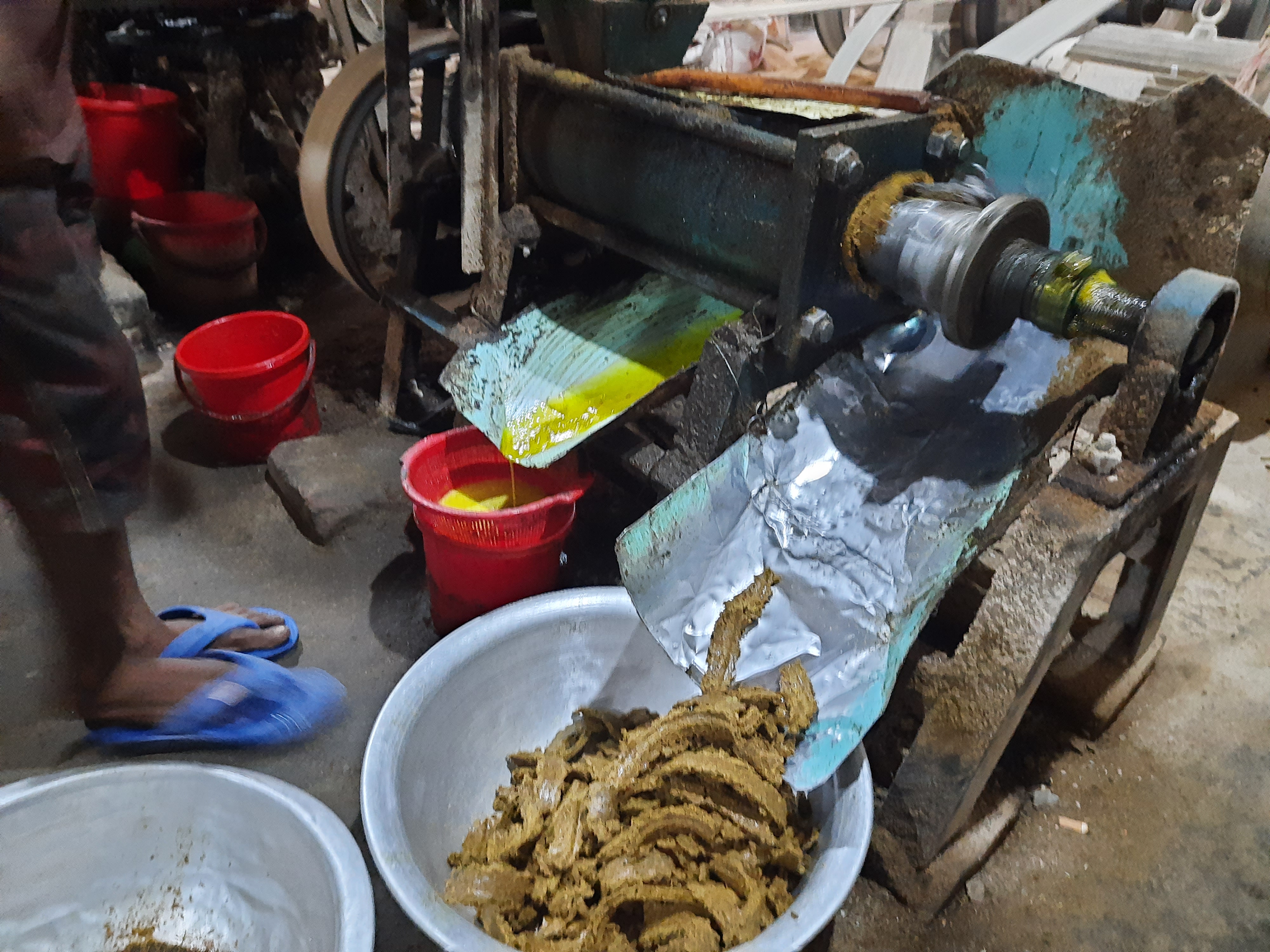
Several of the Mirsarai farmers process their own crop. Bipul Das presses oil from his mustard and sells it, and Nurul Absar's family has its mustard pressed at the market for its own use. Banglapedia describes how mustard oil was traditionally squeezed in a ghani, a grinding mill turned by a bullock for long hours; the oil presser was called a kolu, and the phrase "kolu's bullock" became a byword for someone doing endless routine work. Today, it notes, most mustard oil is extracted in electric mills.
Oil makes up about 30 percent of mustard seed. The sharp, pungent taste that marks Bengali cooking with mustard oil comes from allyl isothiocyanate, a compound found in plants of the mustard family. Mustard oil can contain a high share of erucic acid, though some varieties have much less: in January 2022 a BADC deputy director in Faridpur told Bangla Tribune that BARI Sarisha-18 has very low erucic acid and could serve as an alternative to soybean oil.
Photo: Hopeoflight / Wikimedia Commons (CC BY-SA 3.0)
Sources: Jagonews24, Banglapedia, Bangladesh Sangbad Sangstha (BSS), Prothom Alo, Dhaka Tribune, The Daily Star, The Financial Express, United News of Bangladesh (UNB), The Business Standard, Bangla Tribune, Bangladesh Bureau of Statistics (2022 census, via Wikipedia)
Comments
(0)