
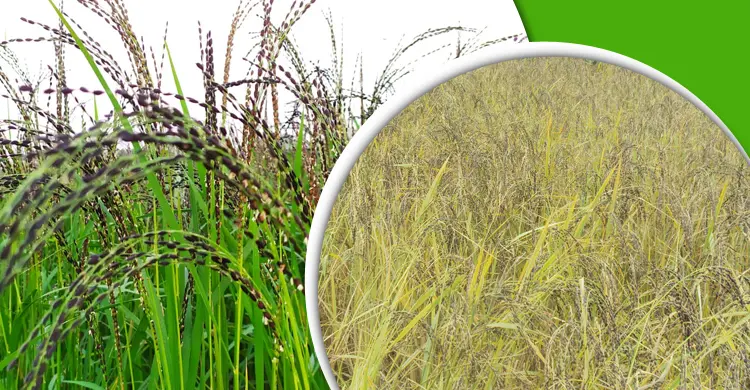
Cultivation of Kalojira paddy has declined over time in Mirsarai, Chattogram. Because of hybrid paddy, farmers no longer grow it as they once did. It was once popular among the upazila's farmers and was essential to village life, but high-yielding hybrid varieties have taken its place.
As recently as seven or eight years ago, Kalojira paddy was stored in every home. The fragrant fine rice of this variety makes mouths water. On special occasions it was used for pitha, polao, biryani, khichuri, kheer, payesh, firni, jarda and many other tasty dishes. Hindu devotees also use Kalojira rice for offerings and sweets at various pujas and festivals, so the paddy was important to everyone. But all this is now a memory.
The rice is no longer found in the upazila's more than 50 markets large and small, and the traditional aromatic paddy is on the way to disappearing. By Bengali tradition, a son-in-law visiting his in-laws is served fine rice, and even in poor or middle-class homes this rice was cooked at least once a day. The Kalojira harvest used to bring the Nabanna festival to the villages. Those days are gone. A shortage of seed and rising prices of fertiliser and diesel, among other reasons, are causing the aromatic paddy to disappear.
Low yield, double the price
Mirsarai Sub-Assistant Agriculture Officer Kazi Md Nurul Alam told Jagonews: "Kalojira paddy has been grown on 220 acres in the upazila this season. At one time this variety was grown far more. Now hybrid paddy is grown more instead of Kalojira."
Growers say that if the agriculture department took the necessary steps or set up demonstration plots for the variety, it could gradually be saved from extinction. In the farmland of Karerhat, Hinguli, Zorarganj, Wahedpur, Katachhara, Durgapur and Mirsarai Sadar unions, very little land is under Kalojira.
Paddy farmers say the variety yields little: where other varieties produce 15 to at most 20 maunds a bigha, Kalojira yields at most 8 maunds. But it fetches double the price at market and needs less fertiliser, irrigation and care, so growing it barely makes a loss. Villagers still value it highly.
Saifullah, a farmer in Middle Wahedpur village of Mirsarai, said: "When rice from gua paddy (Kalojira) was cooked, the fragrance filled the whole place. You could eat it on its own. I'll never forget the taste of that rice."
Enamul Haque, a grower in the South Moghadia Ghona area, said: "At one time every farmer grew some of this paddy. Ten years ago I grew Kalojira on 30 of my 120 decimals. Now I grow it on 4–5 decimals. Every farmer has lost interest like this, and some don't grow it at all, because the yield is far lower than other paddy."
Mirsarai Upazila Agriculture Officer Raghunath Naha told Jagonews: "Farmers are losing interest because of the low yield. About 220 acres have been planted with this paddy in Mirsarai upazila. BRRI dhan34 is being grown as an alternative. Farmers grow it of their own accord. It is just like Kalojira and yields more."
Source: Jagonews24. First published in Bengali on The Agro News.
Comments
(0)