
Like zakat, there is a custom of donating the sale value of Qurbani animal hides. Accordingly, many people are donating hides to mosques and madrasas.
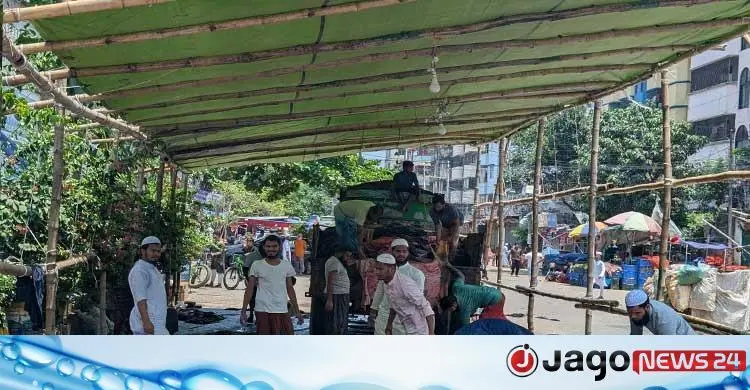
Sacrifices of cows and goats began on the morning of Eid day, Thursday (28 May), and students from different madrasas collected hides afterwards. Temporary bamboo-framed awnings were put up in front of mosques and madrasas to store hides collected from homes, and some madrasas were loading hides onto lorries for the tanneries at Savar.
That was the scene in Pallabi, Kalshi and Mirpur 12 in the capital.
Fewer hides this year
In front of Al Jamiatul Islamia Baitus Salam Madrasa at Mirpur 12, a temporary awning had been set up for hide collection, and madrasa students were bringing hides by van and rickshaw.
Asked at 11:30am, the madrasa's principal, Saifuzzaman, said there had been fewer sacrifices this time and fewer hides were coming in. At last Eid 700 to 800 hides had arrived by this time, and the year before about the same by 11 to 11:30am, but this time only 400 had come in. "Go round the lanes and you will see there were fewer sacrifices this time," he said.
In Pallabi, madrasa students were collecting hides by van, with four hides on one van and five on another.
Madrasa student Saimum said that at the last Eid their vans filled up every little while and one lane alone yielded seven or eight hides. This time it was a bit less. "People sacrificed fewer animals, and fewer of those who used to give more than one sacrifice did so," he said.
Who should receive the proceeds
According to Islamic scholars, the sale value of hides must be given to people eligible to receive zakat, and to one's own poor relatives where possible. That brings two rewards: the reward of charity and the reward of maintaining family ties. Many also advise giving it to orphaned and poor madrasa students, which likewise brings two rewards: that of charity and that of helping religious education.
Source: Jagonews24. First published in Bengali on The Agro News.

Comments
(0)