
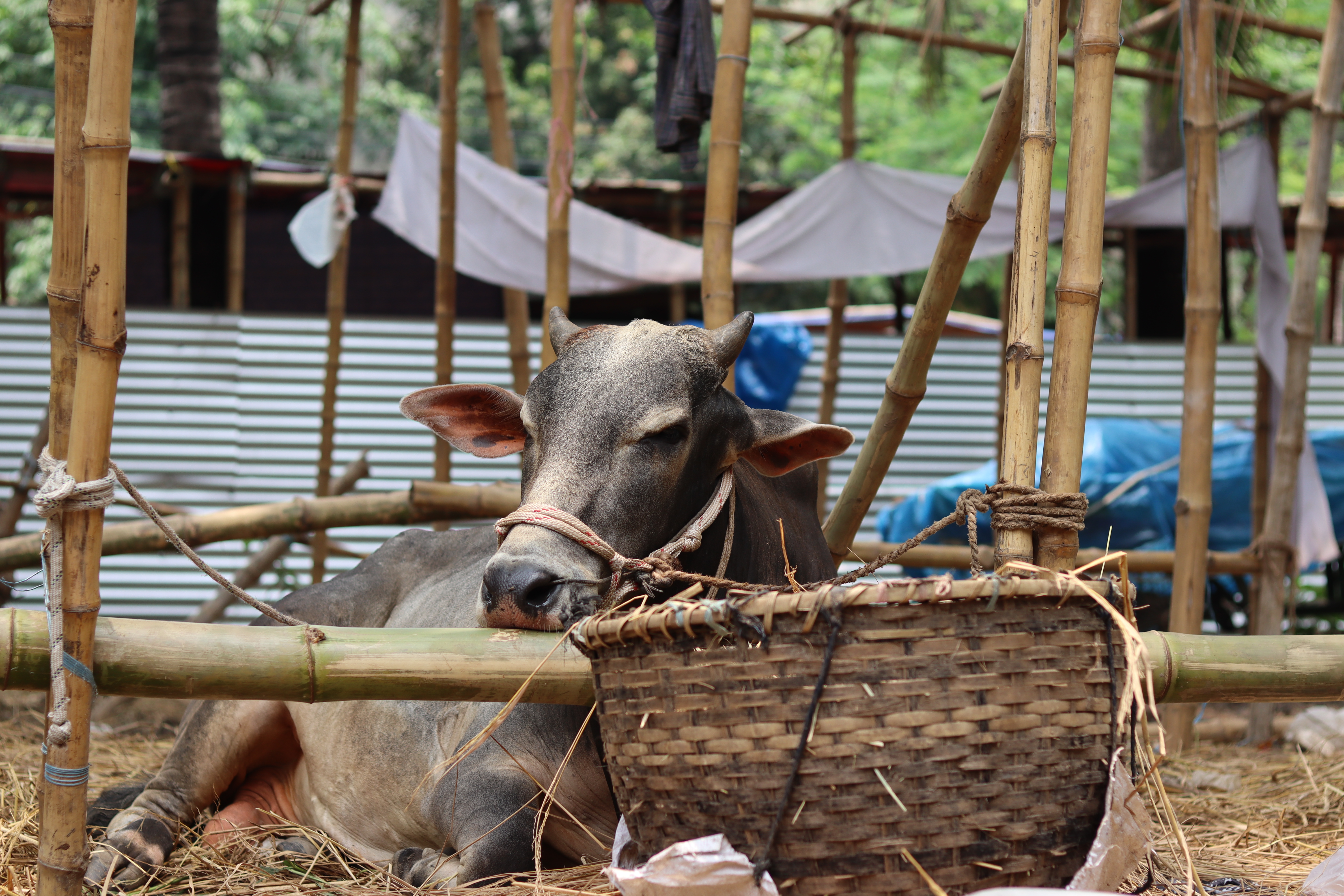
The government had taken comprehensive measures for security and against counterfeit money at the country's sacrificial cattle markets, Fisheries and Livestock Minister Mohammad Aminur Rashid said on Sunday, 24 May 2026, ahead of Eid-ul-Azha, which was expected to be observed on 28 May. Special arrangements had been made by the administration to keep traders, farmers and buyers safe at markets across the country, he said. The minister, who also held the agriculture portfolio, spoke to journalists after inspecting the sacrificial animal market at Diabari in Uttara, in the capital, that morning, according to a release of the Press Information Department carried by the state news agency BSS.
Machines that detect counterfeit notes had been installed at the markets, the minister said. Banking services had also been arranged in the market areas so that sellers could deposit their money safely and, if needed, open new accounts on the spot to keep it. He said the government had deployed the personnel needed to keep order, security and fair trading at cattle markets in the capital and across the country, and that this work would continue until Eid. Director General of the Department of Livestock Services (DLS) Md Shahjaman Khan, the department's director Dr Md Boyjar Rahman, project director Dr Md Abdur Rahim, Dr Md Safikur Rahman and other senior officials of the ministry and the department were present.
What the minister said at Diabari
Answering journalists' questions, the minister said the country had an adequate supply of animals fit for sacrifice and that this year's demand could be met entirely with animals raised at home. The cattle, goats and buffalo produced by the country's farmers and rearers were enough to meet the demand for Qurbani, he said.
On complaints about thieves and lost animals at the markets, he said the administration, law enforcement agencies and volunteer teams were working round the clock at the big markets. Announcements by loudspeaker, monitoring and immediate help had been arranged to trace lost animals, and in many cases lost cattle were being found quickly and returned to their owners, he said.
On cattle coming in from India or across the border, the minister said the government had taken a strict stance against the illegal entry of animals. Before Eid, an inter-ministerial meeting had given the necessary instructions to the border guard force, the local administration and law enforcement agencies, he said.
On prices, he said animals in Bangladesh were still mostly bought and sold by bargaining, judged on build, health, size and appearance, so animals of the same kind could fetch different prices. If a culture of selling animals by weight, the 'live weight' system, gradually developed, pricing would become more transparent and settled, he said. With thousands of sellers and buyers in the market, he added, it was hard for anyone to form an artificial syndicate; prices were set by competition and by supply and demand.
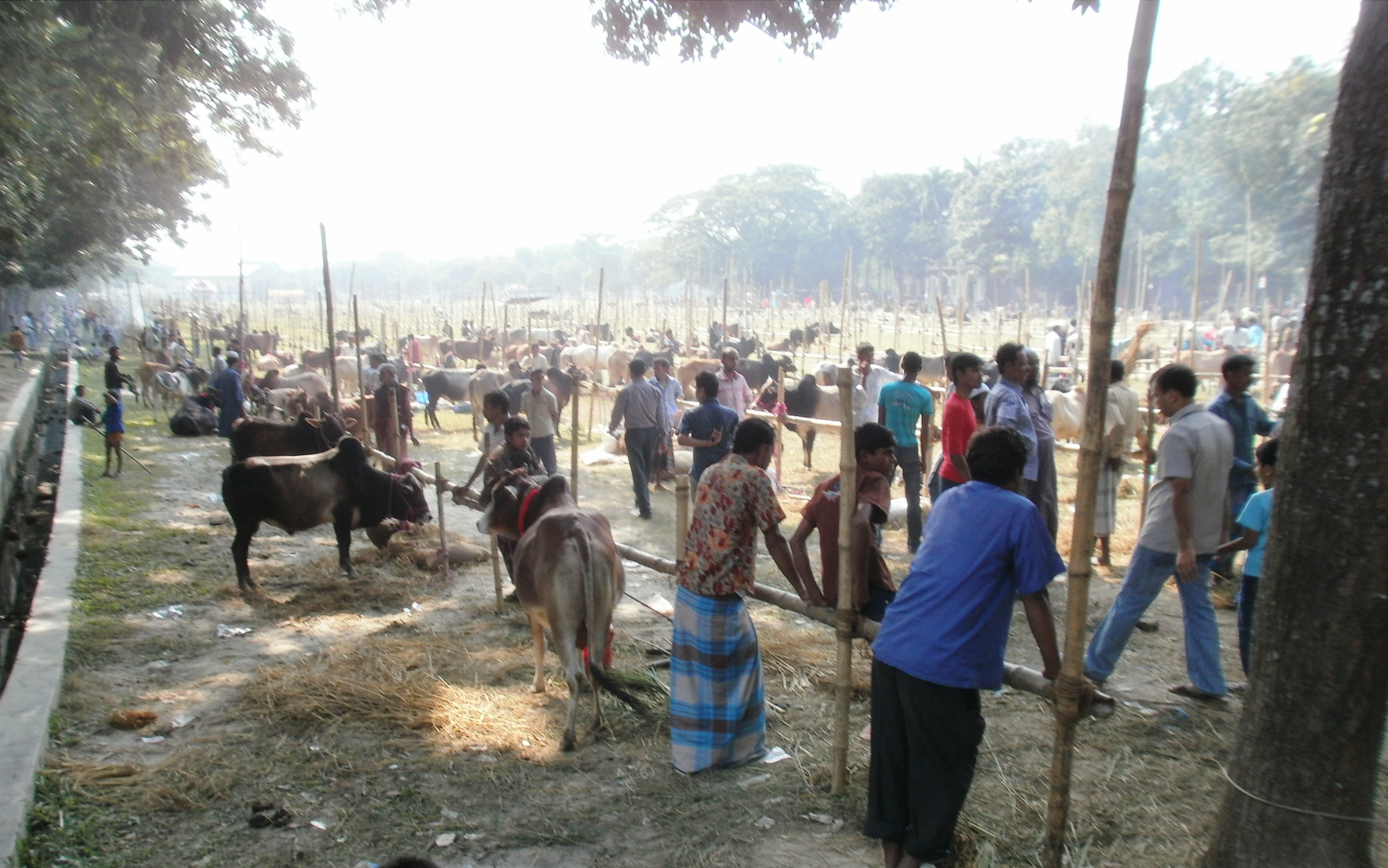
Bank booths to check notes: Bangladesh Bank's order of 10 May
The fake-note checks the minister described rested on a circular Bangladesh Bank issued on 10 May 2026. In it, the central bank instructed all scheduled banks to set up counterfeit currency verification booths at the authorised sacrificial animal markets across the country, to stop forged notes circulating during the busiest trading season of the year, BSS reported that day.
Under the circular, as BSS and the Daily Ittefaq reported it:
- The booths had to run without a break from the day the markets opened until the night before Eid-ul-Azha.
- Banks had to check notes and count cash for traders and buyers free of charge.
- Each booth was to have modern note-counting and counterfeit-detection machines and experienced cash officers able to identify forged notes.
- Every booth had to display a banner marking it as a 'Fake Note Verification Booth'.
- Each scheduled bank had to appoint an official of Deputy General Manager rank as coordinator.
- In districts where the central bank has no branch, Sonali Bank PLC was to lead the work through its chest branches, together with the other scheduled banks.
- Banks were to coordinate with city corporations, municipalities and upazila administrations, and with the police, Rapid Action Battalion, Border Guard Bangladesh and Ansar for security.
- All bank branches were to show videos of the security features of genuine notes on their monitors during banking hours before Eid.
- Banks had to report on the booths' work to the central bank's Department of Currency Management within 30 working days after Eid.
The circular also named banks for the main markets in the capital. Islami Bank Bangladesh PLC and Simanto Bank PLC were given the Gabtoli permanent cattle market, and BRAC Bank PLC and Bangladesh Commerce Bank the market in Sectors 16 and 18 of Uttara Diabari, where the minister spoke. United Commercial Bank PLC was assigned to the Merul Badda kitchen market area, IFIC Bank PLC and Meghna Bank PLC to the area near the Dhaka Polytechnic Institute, Jamuna Bank PLC to the Shyampur Kadamtali truck stand and Mercantile Bank PLC to the Golapbagh staff quarter area. The news agency UNB reported that each bank had to send the name and contact details of its focal officer to Bangladesh Bank by 17 May, and that in Dhaka South 19 banks had been deployed to run booths at 13 designated markets.
If a note is fake: the procedure and the law
The central bank told banks to follow its existing counterfeit-note rules whenever a forged note turned up at a booth. Under that procedure, as reported on 10 May, a suspected counterfeit note is seized at once and the full identity of the person who presented it, including local and permanent addresses, is recorded. The officials take a statement on where the note came from and have the person sign or put a thumb impression on the back of the impounded note, which is then marked 'Forged' or 'Fake' in red ink. If the bank officials suspect the note was presented knowingly and in bad faith, the matter is referred to the police.
Bangladesh Bank's website lists two laws under which counterfeiting is punished: the Special Powers Act, 1974 and the Penal Code, 1860. Under section 489A of the Penal Code, anyone who counterfeits a currency note or bank note, or knowingly takes part in any stage of counterfeiting, can be punished with imprisonment for life or imprisonment of up to ten years, and is also liable to a fine. Section 489B carries the same punishment for anyone who sells, buys, receives or uses as genuine a note they know or have reason to believe is forged. Section 489C makes it an offence to possess such a note intending to use it as genuine, with imprisonment of up to seven years, a fine, or both.
For ordinary people, the central bank's own advice was set out in a public advisory it issued in October 2025, when reports of forged notes were circulating. It asked people not to panic and gave four points:
- When receiving notes, check their security features, such as the watermark, the raised (intaglio) print, the security thread, the colour-shifting ink and the micro-text.
- Make large transactions through formal banking channels.
- Use digital payment methods instead of cash wherever possible.
- If a suspicious note is found, or someone has information about one, contact the nearest police station or call the National Emergency Service on 999.
Bangladesh Bank said detailed information on the security features of genuine notes was available on its website, www.bb.org.bd, and that posters and banners showing how to identify real notes were displayed at every bank branch.
Police plans for the markets
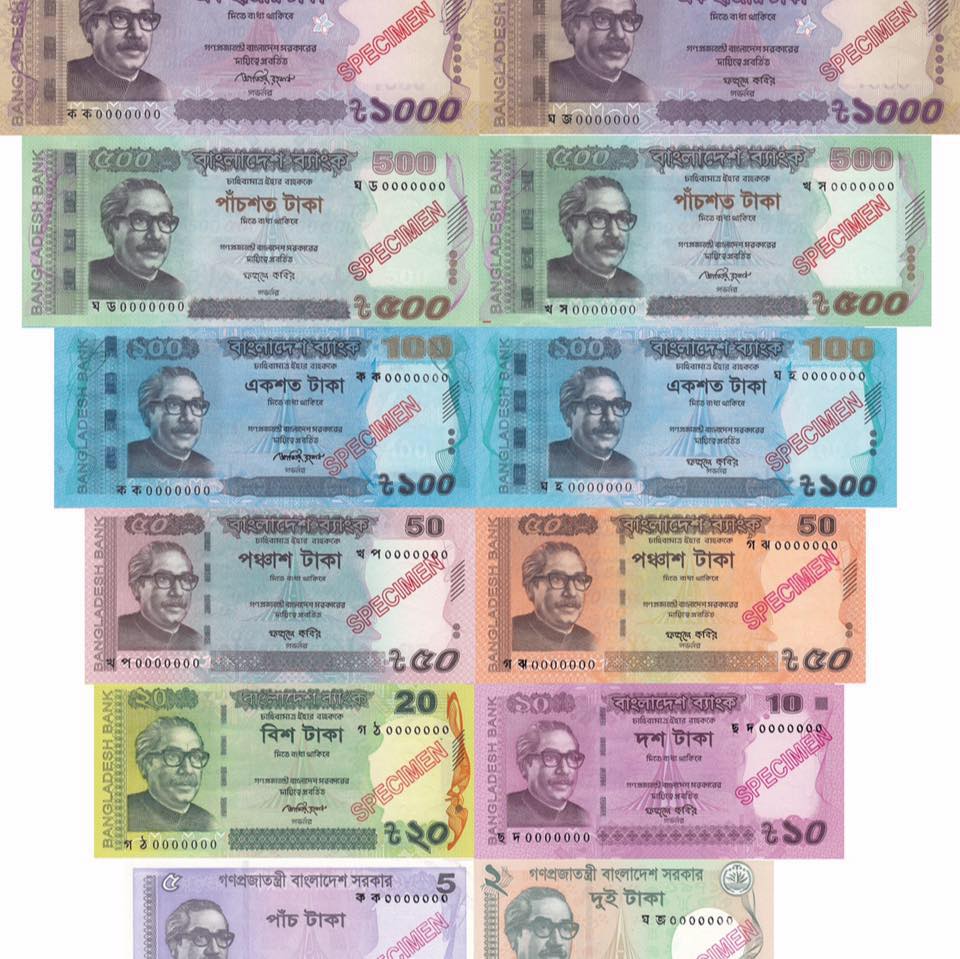
On 22 May, the Dhaka Metropolitan Police (DMP) told BSS it had adopted a combined security plan for the capital's cattle markets. DMP spokesman and Deputy Commissioner N M Nasiruddin said enough uniformed and plainclothes police would be posted at and around every market, patrol teams in vehicles and on motorcycles would keep watch round the clock, all markets would be brought under CCTV surveillance, and police camps and watchtowers would be set up. Checkposts on the main roads into and out of the city would be strengthened and kept open 24 hours a day.
Because the use of fake notes tends to rise in Eid-ul-Azha trading, he said, the DMP would supply 150 counterfeit-note detection machines to the markets, and it had asked the city corporations, market leaseholders and banks to arrange more. A special drive against counterfeiting gangs had begun on 1 May, and several people had been arrested in Dhaka with fake notes and the equipment to make them. As in earlier years, the DMP planned a 'money escort' service to help traders and others move large sums of cash safely. The spokesman said more than 1,900 people, including muggers, drug dealers and extortionists, had been arrested in the drive since 1 May.
At the national level, Home Minister Salahuddin Ahmed had said on 6 May, after a session of the Deputy Commissioners' Conference, that no cattle market would be allowed on roads or near railway tracks and that police would use body-worn cameras and fake-currency detectors at major markets, The Business Standard reported. In a BSS report of 23 May, he said a special monitoring cell had been opened at Police Headquarters to run for seven days before and seven days after Eid, and that there would be special watch at the cattle markets against counterfeit money and online fraud. Police Headquarters said a hotline had been opened to take complaints about extortion from vehicles carrying sacrificial animals.
How many animals: the Department of Livestock Services count
The minister's assurance at Diabari repeated figures the ministry had given at a briefing on 3 May 2026. According to the count of the Department of Livestock Services, the probable demand for sacrificial animals that year was 10,106,334, while 12,333,840 animals were available, leaving a surplus of about 2,227,506. The available animals were 5,695,878 cattle and buffalo, 6,632,307 goats and sheep and 5,655 animals of other species, The Business Standard's Bangla edition reported.
At the same briefing the minister said more than 3,600 cattle markets would be held across the country, including 27 in Dhaka, 16 under the Dhaka North City Corporation and 11 under the Dhaka South City Corporation, and that 20 veterinary medical teams would be on duty at the capital's markets throughout. Buyers who bought animals online would not pay the market levy, known as hasil, which applies only to purchases made at a cattle market, BSS reported.
The figures were close to those of the year before. On 4 May 2025, the then fisheries and livestock adviser said 12,447,337 animals were ready for sacrifice, including 5,602,905 cattle and buffalo and 6,838,920 goats and sheep, with a surplus of about 2,068,135 expected; that year 20 medical teams and two specialist teams were deployed at the capital's 19 cattle markets, The Business Standard reported. In 2023 the ministry had put demand at 10,394,739 animals against 12,536,333 available, according to Prothom Alo.
Sacrificial animals come out of a much larger national herd. The DLS's statistical summary, Livestock Economy at a Glance, put the country's livestock population in fiscal 2023-24 at 250.13 lakh cattle, 15.24 lakh buffalo, 271.17 lakh goats and 39.03 lakh sheep, and meat production that year at 92.25 lakh metric tonnes.
The border, transport and animal health
The steps against cattle coming in from across the border were decided before the Eid season began. On 3 May the minister said that, as in the previous year, no animals would be imported for Eid, and that the leasing of markets near the border had been suspended for that reason, BSS reported. The Business Standard's Bangla edition quoted him as saying a policy decision had been taken not to hold markets in border areas, because foreign animals entering through some markets near the border had hurt local farmers in the past.
An inter-ministerial preparatory meeting convened by the Ministry of Fisheries and Livestock directed coordinated action by law enforcement agencies, including Border Guard Bangladesh and the police, with district administrations and livestock offices, so that animals could be moved without trouble, The Financial Express reported on 4 May. Measures were being taken to prevent robberies of cattle-laden trucks and protect traders travelling by road, rail and waterway; vehicles were to display the banner of the market they were heading to, and the meeting discussed bringing back special 'cattle trains'. On 14 May, at the Bangladesh Livestock Research Institute in Savar, the minister said strict instructions had been given to law enforcement agencies to prevent illegal entry of livestock through the border and that people in border areas had been warned against smuggling, the Dhaka Tribune reported.
Animal health was the Department of Livestock Services' part of the plan. The same meeting decided that veterinary medical teams would be deployed at all designated cattle markets; city corporations and municipalities were asked to set aside space for veterinary camps, and market leaseholders were to supply items such as aprons, masks, hand sanitiser, chairs, tables and buckets. The minister said on 3 May that import of cattle-fattening injections or any steroid was completely disallowed by the DLS, and that the department would run a drive across the country to destroy such illegal drugs; expert veterinary teams under DLS supervision would be at every market to give emergency treatment to sick animals, BSS reported. The Daily Ittefaq reported on 20 May that veterinary teams would remain on standby at the major markets to examine animals and that no animal would be allowed for sale without a health clearance.
Cash, cards and accounts at the market
The banking services the minister mentioned built on a scheme the central bank had run with the city corporations for several years. According to The Financial Express in June 2025, a pilot by the Dhaka North City Corporation in 2022 recorded cashless cattle-market transactions worth nearly Tk 350 million; the figure rose to Tk 440 million in 2023 and to a record Tk 940 million in 2024, when nine commercial banks and two mobile financial service providers offered cashless payments at ten markets in Dhaka and Chattogram. By 2025 the number of participating banks had risen to 16. At these booths buyers and sellers could open an account with a national identity card and send money to any bank, and the paper reported that the central bank had told banks to keep evening banking open near the markets in Dhaka and Chattogram during Eid.
The DMP spokesman said on 22 May that, as before, police help to carry large sums of cash would be available. Bangladesh Bank's 2025 advisory had likewise urged that large transactions go through banks and that digital payments be used where possible.
Diabari and the capital's 27 markets
The market the minister visited is one of the 16 that the Dhaka North City Corporation arranged for Eid-ul-Azha 2026. According to the Daily Ittefaq of 20 May, the DNCC markets included Mirpur Section 6 (Eastern Housing), Kalshi Balur Math, the Dhaka Polytechnic Institute area, Merul Badda kitchen market, Basila 40-feet road in Mohammadpur, the Sector 16-18 Uttara Diabari area, the Mastul checkpost, the Mohakhali-TNT area and the Baro Beraid area of Bashundhara, along with the permanent market at Gabtoli. Dhaka South's 11 markets included sites at Postagola, Rahmatganj, Amulia Model Town, Shyampur-Kadamtali, Aftabnagar, Dayaganj-Jurain and Banasree. Formal trading was to last five days, including Eid day.
BSS reported on 22 May that the permanent Sarulia cattle market would stay closed that year because the Water Development Board had acquired the area. City corporation officials said special arrangements would be made at the temporary markets for traffic control, waste management, public health, water supply and overall security, and the Ittefaq reported that separate task forces had been formed for traffic, waste disposal and water supply, and that plainclothes police would be deployed at all markets.
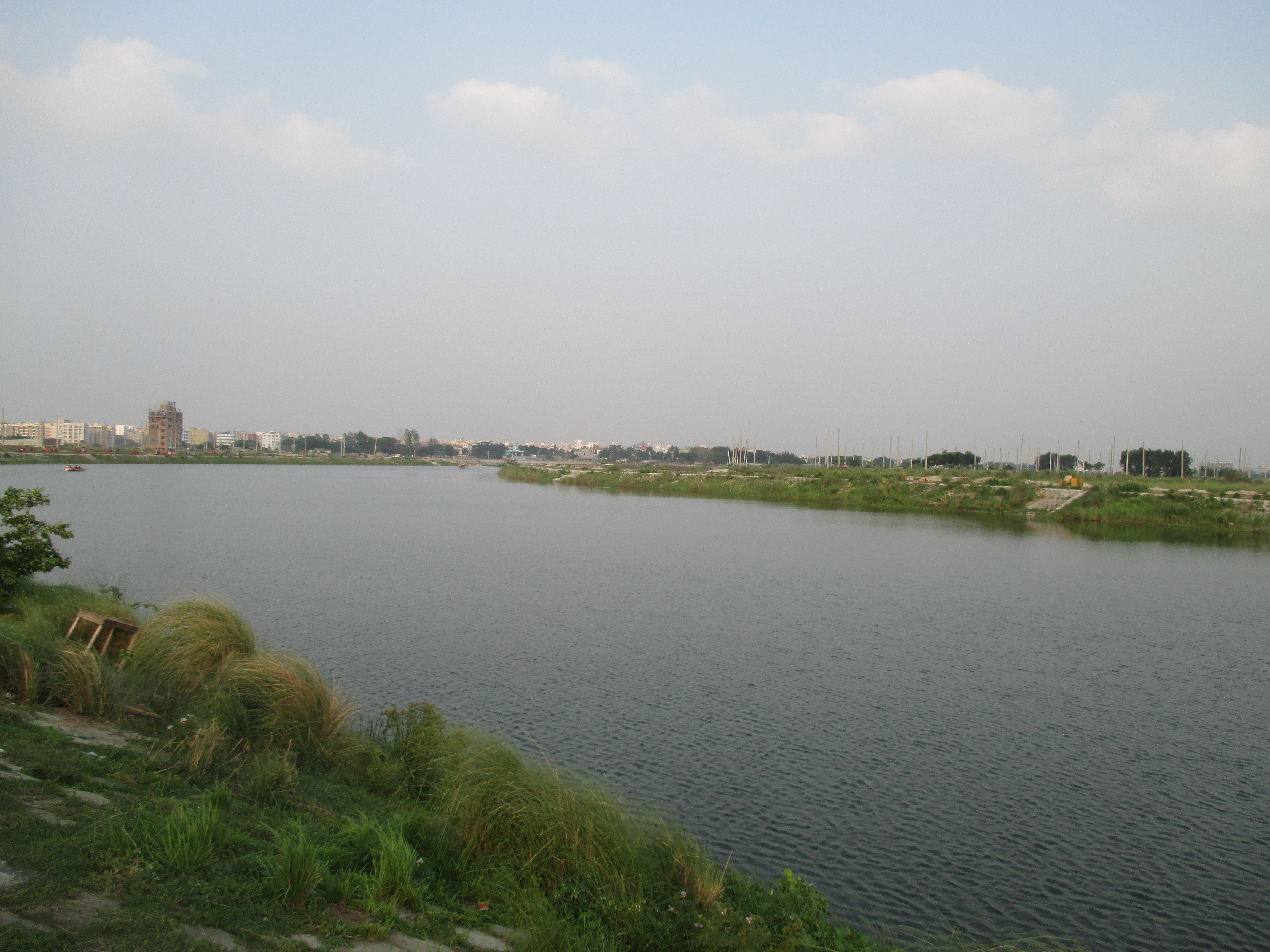
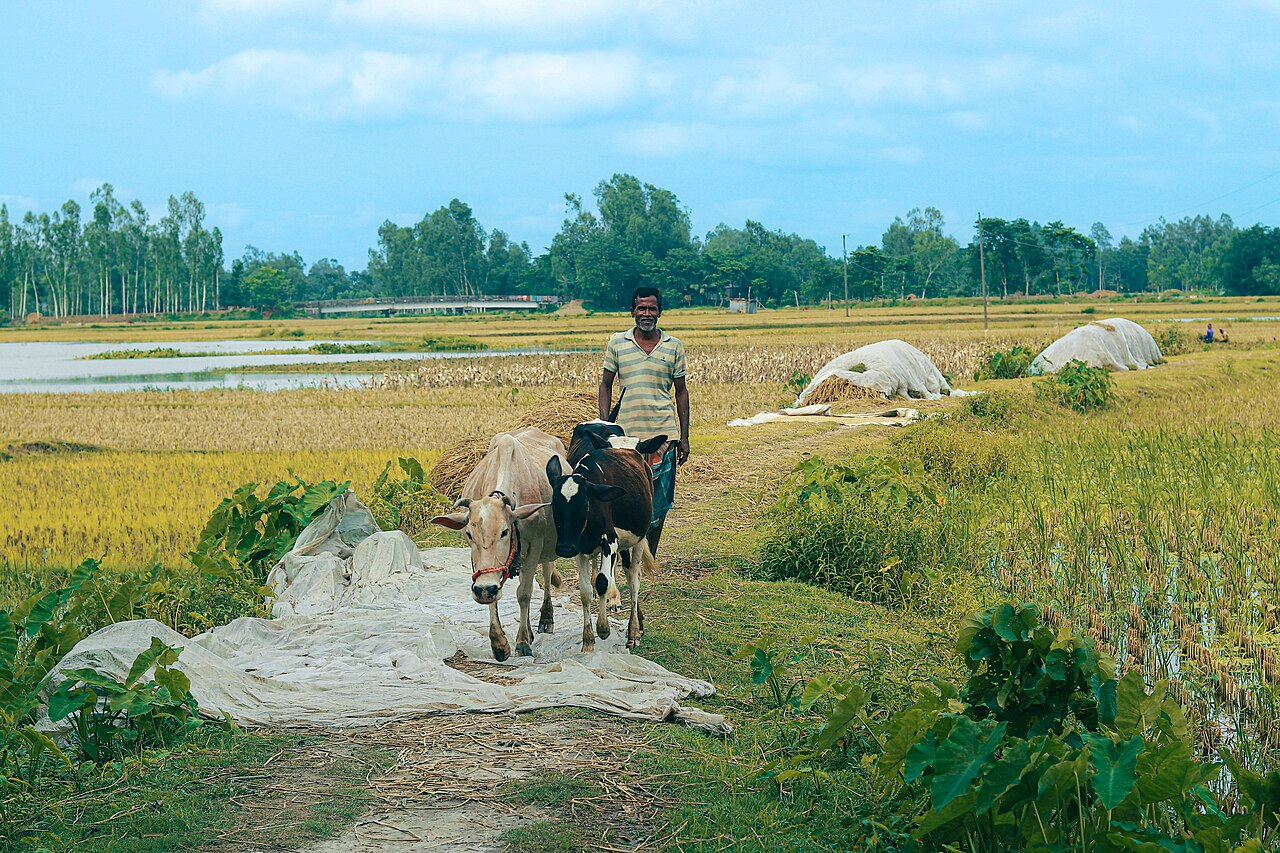
Photo: Wasiul Bahar / Wikimedia Commons (CC BY-SA 4.0)
Sources: Jagonews24, BSS (Bangladesh Sangbad Sangstha), The Daily Ittefaq, UNB, The Business Standard, The Financial Express, Dhaka Tribune, Prothom Alo, Bangladesh Bank, Department of Livestock Services (Livestock Economy at a Glance), Laws of Bangladesh (Penal Code, 1860)
Comments
(0)