

Bangladesh's tourist season means winter, and when winter arrives the beels, haors, rivers and farmland fill with migratory birds. They fly thousands of miles from Siberia and Mongolia to get here. But for several years the flocks have not been seen as before, and their numbers fall every year.
Twenty-eight internationally recognised sites for waterbirds lie within Bangladesh. When winter comes, these waterbodies and various haors, baors, beels and ponds fill with birds of many colours, familiar and unfamiliar, which we call migratory birds. Large numbers also come to Jahangirnagar University, which has 26 lakes, large and small.
Driven by extreme cold and food shortages, these birds fly thousands of miles from Siberia to Bangladesh every year. Unable to survive the cold and heavy snowfall in Mongolia and the Himalayan region of Nepal, they come here in search of warmth and return home when the winter ends.
Habitat loss and poisoned water
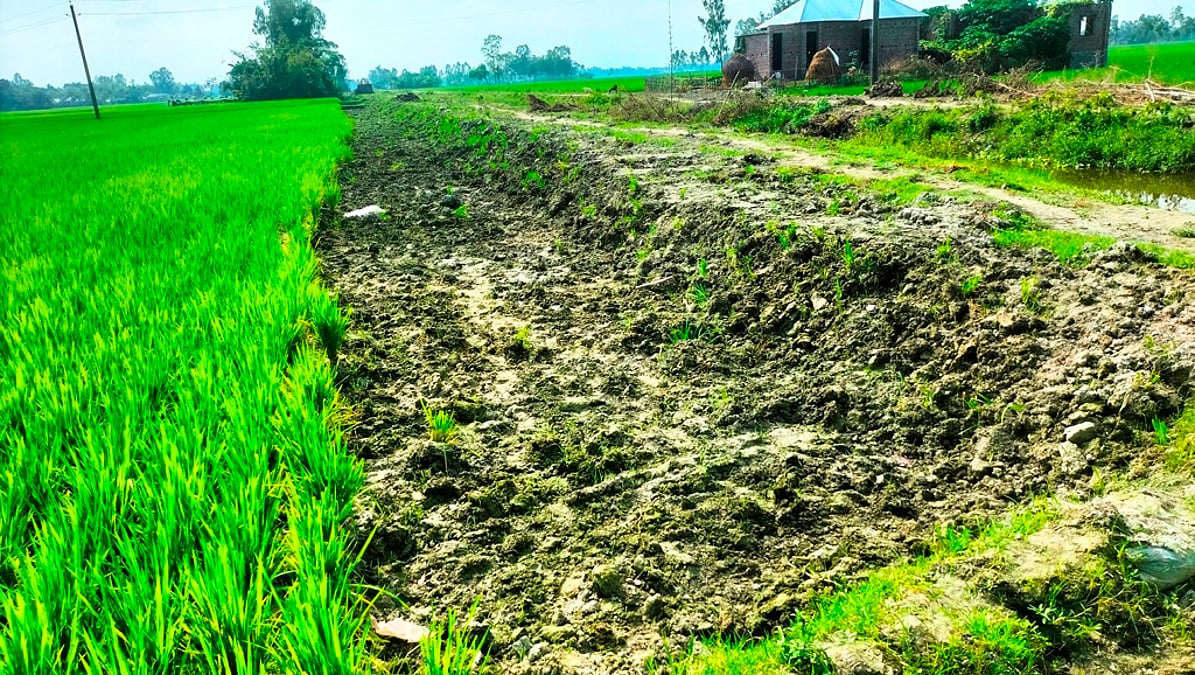
The country's haors, baors, beels, chars and vast riverside wetlands were once known as safe havens for these birds, but in recent winters their numbers have visibly fallen. Housing projects, the filling of waterbodies, sand extraction and brick kilns are destroying the wetlands' natural state. Habitat loss, poisoned bait, hunting and trafficking are cutting bird numbers at an alarming rate.
Pesticides used on farmland, industrial waste and unplanned waste management are making wetland water toxic. This kills snails, mud worms and small fish, the birds' main food, creating a food shortage. Many species become weak without natural food, and some do not land in Bangladesh at all but go further south.
According to naturalists, contact with polluted water causes infection, weakness and reproductive problems in birds. Many cannot survive after the long flight. Even the click of visitors' cameras or a break in the silence can disturb the birds and drive them elsewhere.
Besides, in winter a festival of bird-catching goes on in various parts of the country. Birds are caught with traps, nets and other methods, and they are still sold in local markets for restaurants or personal consumption. This too is reducing their numbers.
Numbers at Jahangirnagar
According to the Department of Zoology at Jahangirnagar University, about 6,000-7,000 migratory birds came in 2021 and 2022. Between 2016 and 2020, the most came in 2020: 6,780 birds came in 2016, 4,731 in 2017, 4,975 in 2018, 4,709 in 2019 and 8,120 in 2020.
Md Nazrul Islam Prantik, professor in the Department of Geography and Environment at Jahangirnagar University, said, "Even while following the international convention on wetland protection, we cannot protect the university's natural wetlands and environmental beauty. Political influence and unplanned development projects are destroying the ecological balance, severely damaging the birds' habitat, which is one of the main reasons fewer are coming. It is not just human noise; the growth of invasive species in the lakes and toxins produced by excess nutrients are also harmful to the birds. They cannot live normally in this environment."
Asked what other reasons lie behind the decline, he said, "Climate change, overcrowding and international air pollution play a big role. In particular, air pollution from industrial areas in India and China affects our skies too. It reduces visibility along the birds' flight paths, making it harder for them to arrive safely."
The professor said the crowds and noise of winter visitors to the campus make the environment uncomfortable for the birds, and changes in temperature and humidity caused by climate change are also destroying conditions suited to their breeding and rest.
The arrival of migratory birds in Bengal's skies is not just a sign of the changing season but a living heritage and the pulse of the environment. Yet ignorance, mismanagement and destruction in the name of development threaten to wipe out that heritage. Environmentalists fear that unless the right steps are taken now, children may one day see pictures of migratory birds only in books, not in the skies of Bengal.
Source: Jagonews24. First published in Bengali on The Agro News.

Comments
(0)