
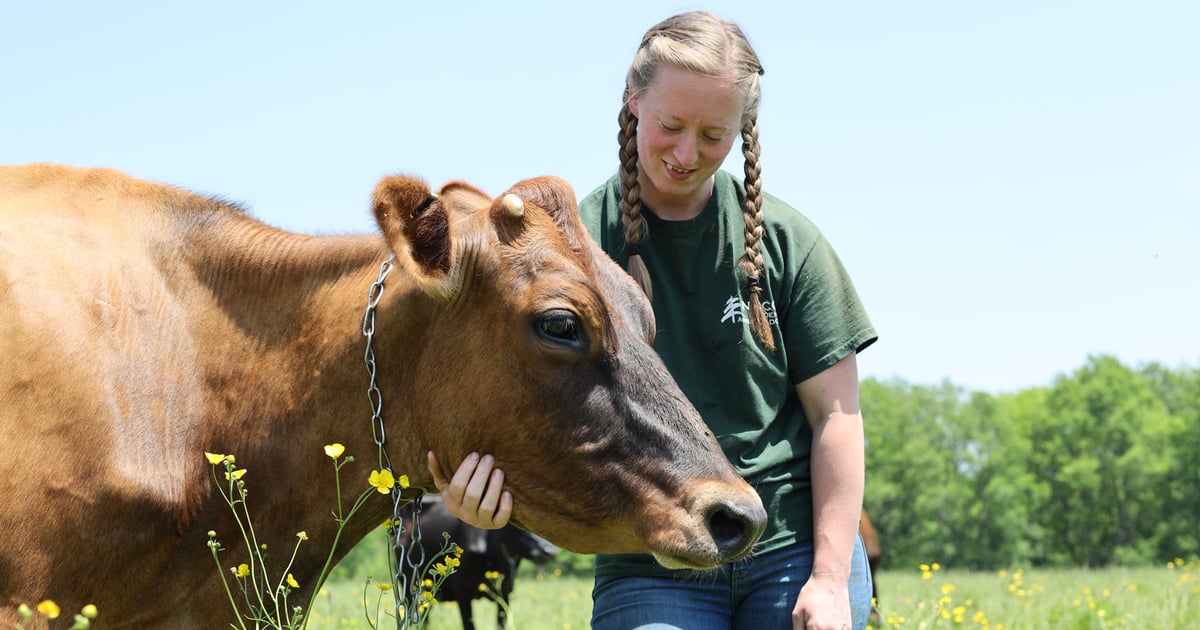
Melissa Moody did not grow up on a farm and planned to follow her mother into accounting. This February she closed on an organic dairy farm at Cincinnatus in central New York, 45 cows and 127 acres, 65 of them pasture, and now does nearly all the work herself. Her route there, told by Farm Progress, runs through a pandemic layoff, two years as a hired hand and a mentor who still answers the phone.
Laid off during the height of COVID-19 and unable to find work she wanted, Moody moved in with her sister in Cincinnatus, where her sister's father-in-law, Carl Hoellerer, ran an organic dairy. She started by feeding his calves. Hoellerer, who had farmed all his life, assumed others would catch on as fast as he had. "He was just like, 'Oh, get on that tractor and drive it.' And I'm like, 'OK, that's not helpful for me. I've never looked at a tractor in my whole life before,'" she said.
She liked the work and the animals, so Hoellerer asked around, and an organic dairy 15 minutes down the road took her on. Its co-owner, who asked not to be named, became the teacher Moody needed, explaining things until they made sense and rephrasing when they did not. Over two years there she learned calves, stalls, milking and everything else a dairy demands.
When Hoellerer began talking about retiring and selling, Moody's first answer was that he was not selling the cows. They agreed she would pay for the herd over five years with an option on the farm at the end. It went faster than that: with a Farm Service Agency loan and the proceeds of a house she had owned, she bought the farm and house outright in February. She is still paying off the cows. Hoellerer and his son still spread the manure; the rest is hers, from 6 a.m. to 9 p.m. every day.
The mentor is still on call. When her fence failed at the end of last year, the neighbouring farmer came over and helped her trace the fault. "It gets a little bit overwhelming when you don't know how to do things, and you're trying to just figure it out yourself," Moody said. The cows have taught her patience: rush them and everything takes longer.
The article cites Ginger Myers, a retired University of Maryland Extension educator, on the "four ships" behind beginning-farmer success, mentorship, relationships, partnerships and ownership, with mentorship the most important. It lists programmes that pair women beginning farmers with mentors, among them Annie's Project, the Women, Food, and Agriculture Network, American Agri-Women, the National Women in Agriculture Association, AgriMentor and FarmHer, the SCORE partnership with USDA, state FarmLink programmes and the Land Stewardship Project's Farm Beginnings course. Reported by Chris Torres for Farm Progress; photographs by Organic Valley.
Source: Farm Progress

Comments
(0)