
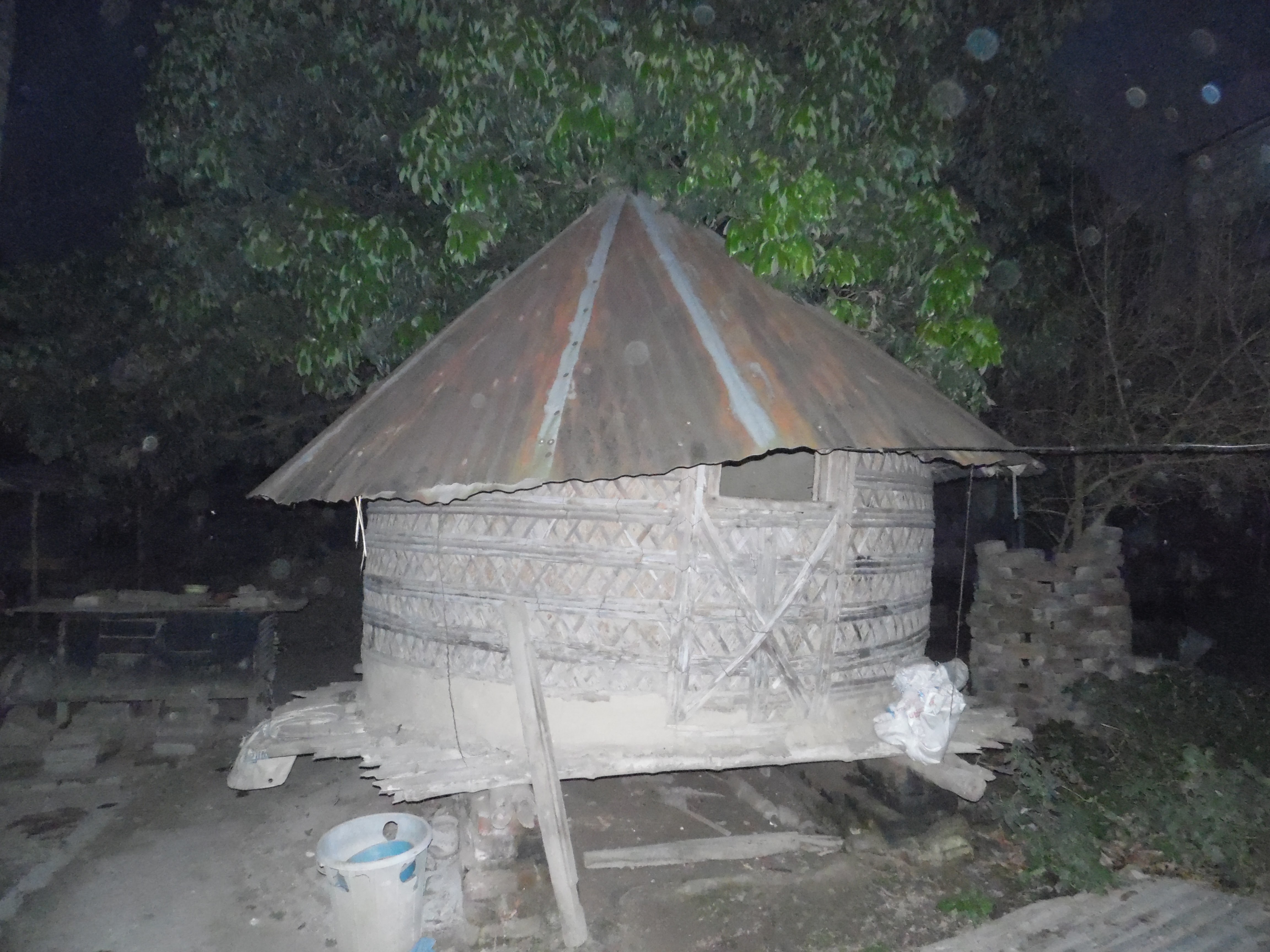
A farmer died of a snakebite in Gangni upazila of Meherpur district in April 2026, several hours after a group of ojhas, the traditional healers many villagers call first after a bite, treated him at home and declared him recovered. Ruhul Amin of Motmura village was bitten at around 9.30pm on Friday, 17 April 2026, on a road beside his house. When he became much worse at around 2am, his family took him to Kushtia Medical College Hospital, where he died while under treatment. Jagonews24 reported the death on 18 April 2026, and Amar Sangbad and the FNS news agency carried the same account that day.
What happened in Motmura village
According to local people quoted by Jagonews24, Ruhul Amin, the son of Ansar Ali of Motmura village, went out at around 9.30pm on Friday to walk on the road beside his home to get some relief from the heat. A snake bit him there. He returned home quickly and told his family what had happened.
The family did not take him straight to a hospital. A group of ojhas came and treated him, said that he had recovered, and left. At around 2am he felt much worse, and his relatives took him that night to Kushtia Medical College Hospital in the neighbouring district of Kushtia. He died there while under treatment.
Amar Sangbad, whose Meherpur correspondent filed the report on the afternoon of 18 April, gave the farmer's age as 45, described the ojha's treatment as traditional rites (jharphuk, chanting and blowing over the patient), and said he died in the early hours of Saturday. Its report also carried the advice that a person bitten by a snake should be taken directly to a hospital instead of losing time with a healer. The FNS report, filed from Meherpur by Faruk Ahmed the same day, gave the same sequence: the bite at around 9.30pm, the healer who said he was cured, the worsening at around 2am and the death at the Kushtia hospital.
Uttam Kumar Das, officer-in-charge of Gangni police station, told Jagonews24 that police had been sent to the scene after news came of a farmer's death from a snakebite in Motmura village. According to FNS, he said the matter would be looked into. None of the reports identified the snake that bit him.
Gangni, Motmura and the road to Kushtia
Meherpur is a district of Khulna Division in south-western Bangladesh. It borders the Indian state of West Bengal on the west and the Bangladeshi districts of Kushtia and Chuadanga on the east, and covers 716.08 square kilometres. The 2022 census counted 705,356 people in 195,322 households, about 22.5 percent of them in urban areas. Agriculture is the main source of income for 68.95 percent of households, ahead of commerce at 13.83 percent. The district has three upazilas: Meherpur Sadar, Mujibnagar and Gangni.
Gangni covers 341.98 square kilometres and, according to the 2022 census, had 322,701 people in 92,768 households, with 20.40 percent living in urban areas. It is divided into Gangni municipality and nine union parishads: Bamondi, Dhankolla, Kathuli, Kazipur, Motmura, Raipur, Shaharbati, Sholotaka and Tentulbaria. Motmura, the farmer's village, also gives its name to one of these unions. The main rivers are the Bhairab and the Kazla.
It is a farming upazila. Encyclopedic figures for Gangni list agriculture as the main occupation of 38.19 percent of people and agricultural labour of another 33.75 percent. Of its cultivated land, 67.5 percent is double-cropped, 19.2 percent triple-cropped and 13.4 percent single-cropped, and about 54 percent is under irrigation. Kushtia district lies along Gangni's northern and eastern edge: Daulatpur upazila of Kushtia borders it on the north, and Daulatpur and Mirpur upazilas of Kushtia, together with Alamdanga upazila of Chuadanga, border it on the east. To the west lies Nadia district of West Bengal.
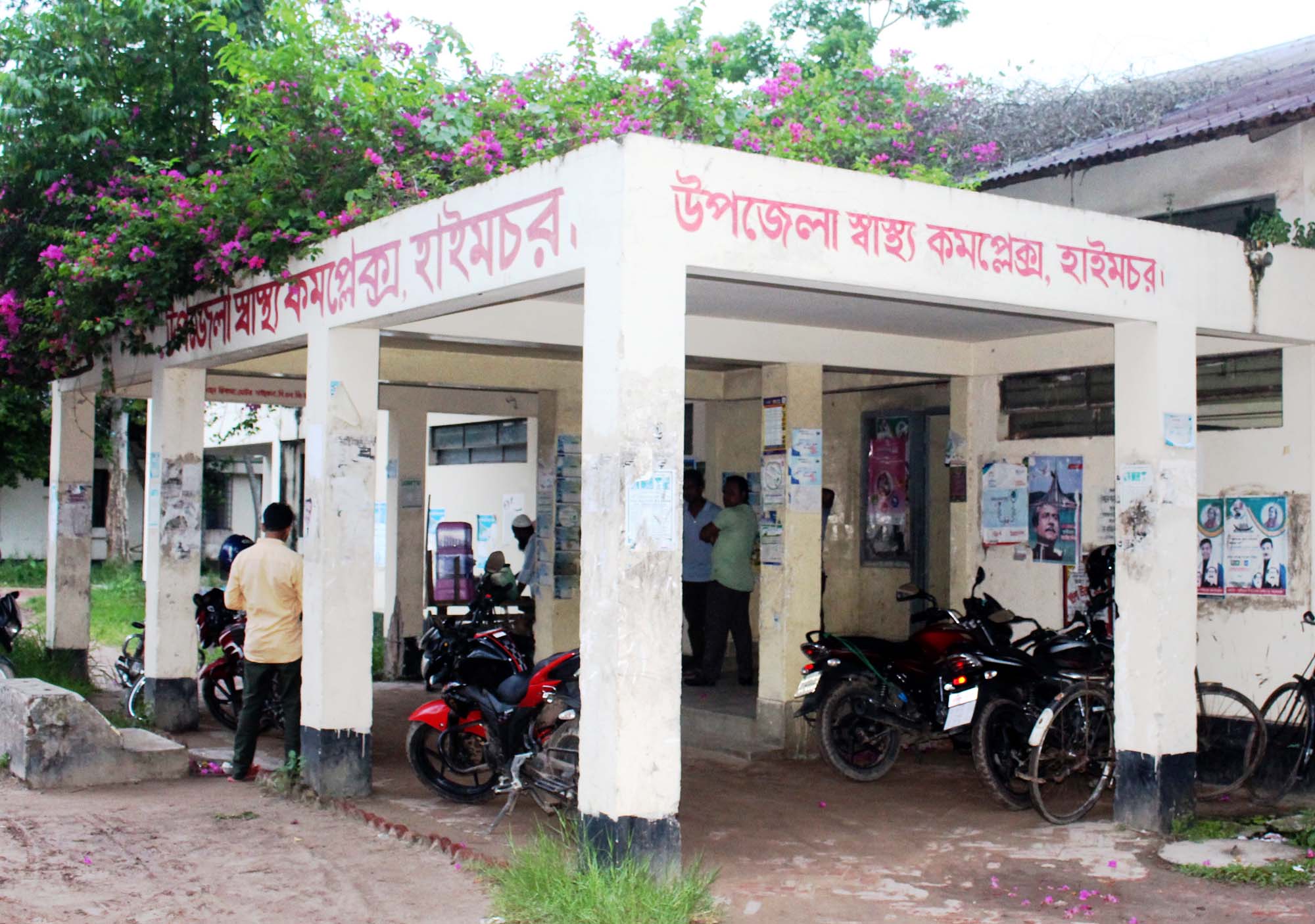
Kushtia Medical College, where the farmer was taken, is a government medical school established in 2011 and affiliated with Khulna Medical University. It admits 65 MBBS students a year. It began teaching in part of the general hospital in Kushtia and runs with a 250-bed hospital; construction of a permanent campus began in 2013 at a cost of Tk 275 crore.

How common snakebite is in Bangladesh
The largest community-based measure of the problem is a national survey carried out from February to June 2009 and published in October 2010 in the journal PLoS Neglected Tropical Diseases by Ridwanur Rahman, MA Faiz and colleagues. The team surveyed 18,857 people in 24 of the country's 64 districts and recorded 98 snakebites, including one death, over the preceding year. That gave an incidence of 623.4 bites per 100,000 person-years, with a range of 513.4 to 789.2.
From those numbers the authors estimated that 710,159 snakebite episodes occur every year in rural Bangladesh, that 589,919 individuals are bitten and that 6,041 die. The highest incidence was in the south-western coastal division of Barisal, followed by Khulna Division, the division to which Meherpur belongs. The authors said the incidence was much higher than earlier estimates.
The survey also showed when and how people are bitten. Most bites happened while people were at work, and 71 percent were on the lower limbs. About 36 percent of bites happened at night, with the morning and the afternoon accounting for about 32 percent each. Bites at night were more frequent at home or on the roadside, at 59 percent. Farmers received most of their bites (71 percent) in the daytime, while housewives received more of theirs at night. The highest share of bites came in October (22 percent) and July (15 percent), and the authors found the monsoon months from June to October to be the peak season.
A paper published in September 2025 in the Journal of Toxicology by Rubait Hasan and colleagues cited a 2016 epidemiological study that found an annual envenoming incidence of 10.98 per 100,000 people and an annual death rate of 1.22 per 100,000 in Bangladesh. A 2023 study in PLoS Neglected Tropical Diseases noted that of the 82 snake species found in the region, 27 are venomous.
Worldwide, the World Health Organization's fact sheet of 12 September 2023 estimated that 5.4 million people are bitten by snakes each year, with 1.8 to 2.7 million cases of envenoming, and that between 81,410 and 137,880 people die each year from snakebites, with around three times as many amputations and other permanent disabilities. WHO said agricultural workers and children are the most affected. A 2019 analysis in The BMJ by Ravikar Ralph and colleagues found that Bangladesh, India, Nepal, Pakistan and Sri Lanka together account for nearly 70 percent of global snakebite deaths.
Which snakes bite in this region
The 2019 BMJ analysis said that in Bangladesh the monocled cobra (Naja kaouthia) and Wall's krait (Bungarus walli) account for the majority of cobra and krait bites, and that green pit viper bites are more frequent than those of the Russell's viper. It found no verified reports of the saw-scaled viper in the country. The 2025 Journal of Toxicology paper described the monocled cobra as responsible for nearly 30 percent of venomous bites in Bangladesh.
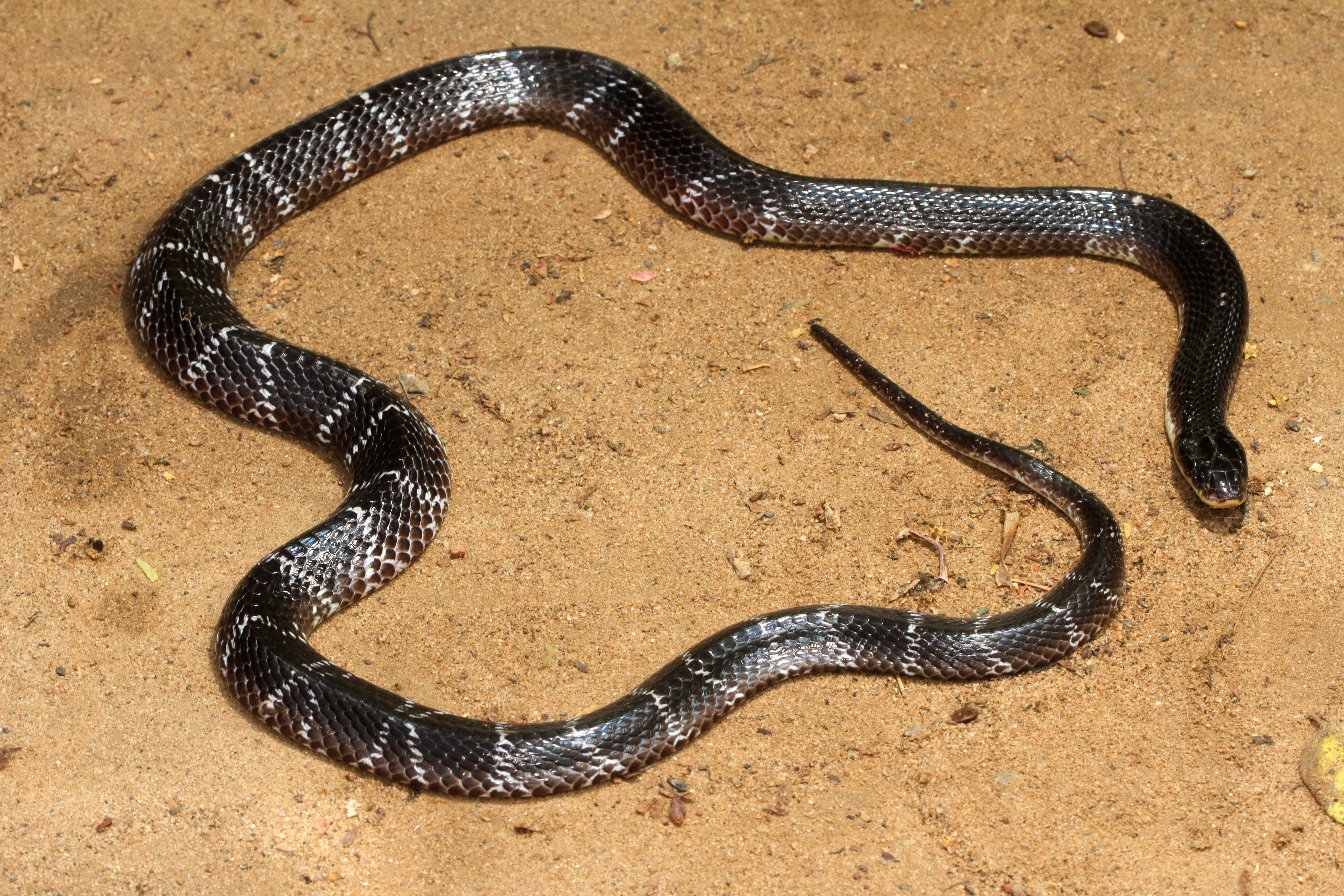
Kraits matter especially for bites at night. The 2010 survey linked the share of night-time bites at home and by the roadside to kraits, which it described as nocturnal snakes that live close to human dwellings and hide in holes, wood piles or homestead gardens, and which enter houses at night, especially at the height of the monsoon, in search of prey such as small snakes, frogs, rodents and geckos. Many bites in that survey happened while people were lying on the ground in bed.
Encyclopedic accounts of the common krait (Bungarus caeruleus), drawing on clinical literature, describe a bite that often causes little or no pain and little local swelling or bleeding, so that it may go unnoticed or give false reassurance. Victims typically develop severe abdominal cramps, shortness of breath and progressive paralysis, and without treatment death from respiratory failure can follow within hours.
The Russell's viper (Daboia russelii) has drawn attention in recent years. According to the 2025 Journal of Toxicology paper, it has been known in Bangladesh for over a century but was scarce until 2013, after which it re-emerged, particularly in the north-west; Chapai Nawabganj and Rajshahi were the most affected districts, with 20 deaths recorded there between 2013 and 2016. The authors linked its spread to intensive farming, with year-round crops supporting more rats, and found that the Indian polyvalent antivenom used in Bangladesh was only partly effective against Bangladeshi Russell's viper venom in their laboratory tests. Its venom causes bleeding disorders and kidney failure.
The reports from Gangni do not say which snake bit Ruhul Amin, and these descriptions are given as background on the venomous snakes of the region, not as an account of his case.
Why families still call the ojha first
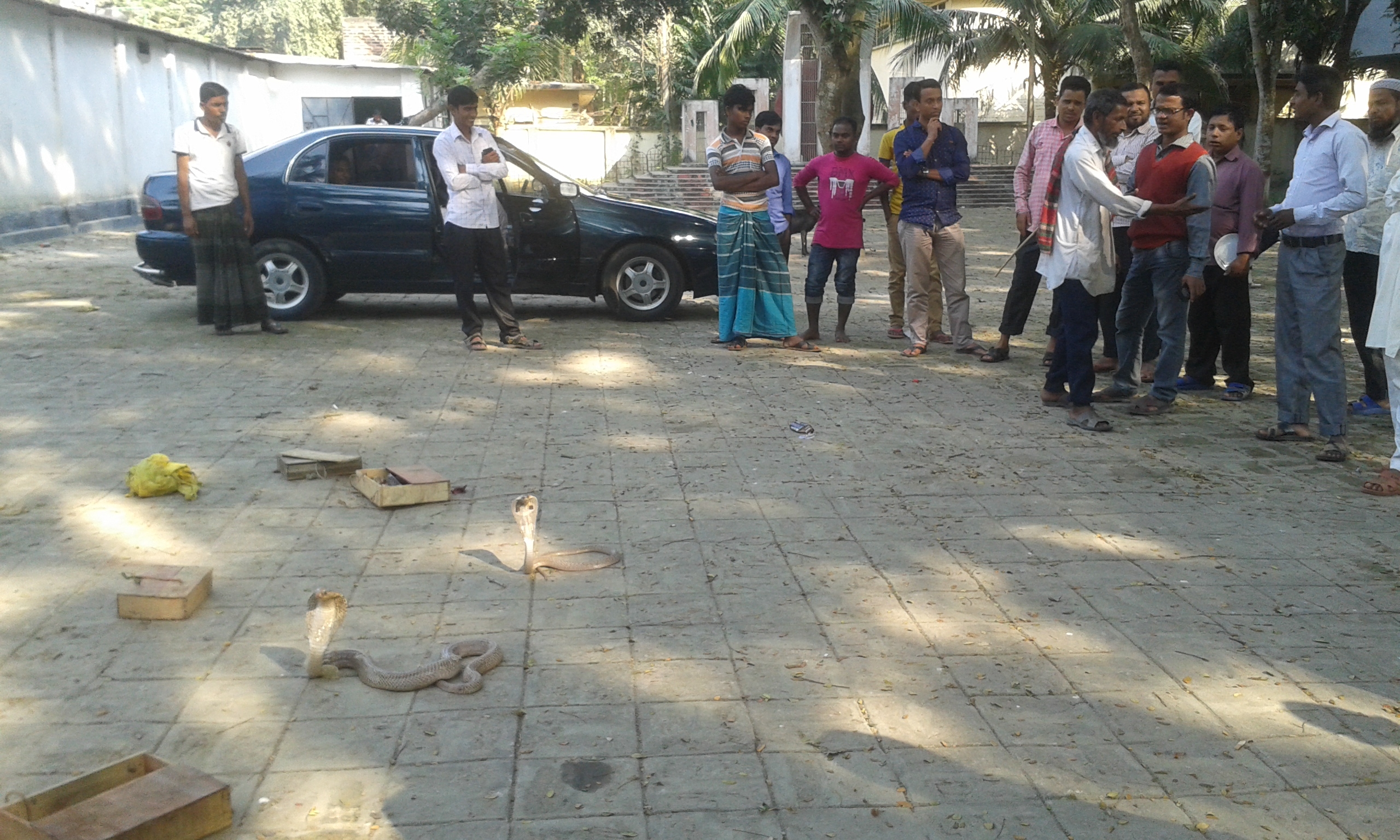
The 2010 national survey found that snake charmers or ojhas were the first contact for 86 percent of snakebite victims. Another 6 percent went first to traditional village doctors, only 3 percent went directly to a registered doctor or a hospital, and 5 percent went elsewhere, for example straight to a drug store. The most common treatment was the recitation of mantras by the ojha, received by 60 percent of victims. The authors reported that potentially harmful practices, such as multiple cuts around the bite, wrongly applied tourniquets and sucking blood from the cuts, were used in an alarmingly high proportion of cases, while the bitten part was kept still in only 31 percent of bites.
The researchers recommended that snake charmers be trained as a priority to stop such practices and to refer patients at once to the nearest health facility, and that snake antivenom be made available free of cost in public hospitals, particularly in remote rural areas.
A 2023 study in PLoS Neglected Tropical Diseases by Ken Yoshimura, Moazzem Hossain and colleagues looked at the Bede, a traditionally nomadic community in which many people earn a living from snakes, as snake charmers, snake catchers and ojhas. The researchers interviewed 38 Bede snake charmers who had survived venomous bites and six families of people who had died, in Pura village of Savar upazila near Dhaka. They described the ojhas who treat snakebite as mostly Bede and cited an estimate of 1.2 million Bede in Bangladesh. They also cited an earlier study by Hossain and colleagues, from 2003, which found that about 61 percent of victims sought treatment from a traditional healer or herbal practitioner.
The study found four barriers that kept people away from hospital treatment: accessibility, affordability, availability and acceptability. Thirty-three of the 38 snake charmers said hospital treatment is the best way to care for a snakebite, yet only five had gone to a hospital. One healer told the researchers: "We rarely receive an antivenom injection at hospitals in Bangladesh and India. Most hospitals do not supply the antivenom injection." Two others said opening hours were a problem; one said the hospital in the area where he was bitten was closed at night.
Beliefs about first aid remain a problem. A survey of 2,954 people in Shibganj upazila of Chapainawabganj and Kalapara upazila of Patuakhali, published in July 2025 in the Transactions of the Royal Society of Tropical Medicine and Hygiene by Farheen and colleagues, with MA Faiz as senior author, found adequate knowledge of snakebite prevention in only 15.9 percent of respondents and adequate practice in 14.5 percent. More than 77 percent believed that tying a tourniquet above the bite was effective first aid, and 45.4 percent believed that going to a traditional healer was effective. Poor knowledge was more likely among farmers, fishers, homemakers and lower-income households.
The 2019 BMJ analysis described the same pattern across South Asia: with poor access to health facilities, people often turn to traditional faith healers who chant, cut the wound, try to suck out venom, tie tourniquets or apply herbs, cow dung or snakestones. These measures delay treatment and increase deaths, the authors wrote, and delayed treatment can be fatal, especially beyond six hours after a bite.
Antivenom: the treatment that works
WHO stresses that, unlike many serious health conditions, snakebite envenoming has a highly effective treatment. High-quality antivenoms are the most effective way to prevent or reverse most of the effects of venom; they are on the WHO List of Essential Medicines and, WHO says, should be part of any primary health care package where snakebites occur. Most deaths and serious consequences are entirely preventable by making safe and effective antivenoms more widely available. WHO also notes that cases reported by clinics and hospitals are often only a small share of the real burden, because many victims never reach a health facility and opt for traditional practices instead of hospital care.
Antivenom has to be given by trained staff in a health facility. The 2023 Bede study described snakebite treatment as time-critical, requiring the right antivenom given by adequately trained staff in a well-equipped hospital. The 2019 BMJ analysis said that most rural health centres and hospitals in South Asia lack critical care facilities and refer patients elsewhere, which delays treatment, and that studies among primary care doctors and health workers in Bangladesh, India and Pakistan showed gaps in recognising systemic envenoming and in giving antivenom. It also noted a project begun in 2018 in Bangladesh to establish a snake venom production, research and preclinical testing facility in Chittagong.
In hospital, doctors can check for venom that stops blood from clotting with a simple bedside test. A 2022 clinical review in The BMJ described the 20-minute whole blood clotting test: a few millilitres of venous blood are placed in a clean, dry test tube and left undisturbed for 20 minutes; if the blood has not clotted, or the clot breaks down when the tube is tipped, it points to a clotting disorder. Clinical validation studies cited in the review report a sensitivity of 82 to 89 percent.
Snakebite is now on the global health agenda. In June 2017 WHO listed snakebite envenoming as a highest-priority neglected tropical disease, and in May 2018 the World Health Assembly passed a resolution urging member states to step up their efforts. WHO's road map aims to halve deaths and disability from snakebite by 2030 through four objectives: empowering and engaging communities, ensuring safe and effective treatment, strengthening health systems, and increasing partnerships, coordination and resources.
First aid on the way to hospital
First aid cannot replace antivenom; its purpose is to slow the spread of venom and get the person to a hospital quickly. The 2022 BMJ review lists the following steps, and the wider clinical literature adds the practices to avoid:
- Reassure the person to calm their fear.
- Arrange rapid transport to the nearest health facility, preferably one with antivenom and critical care.
- Keep the person, and especially the bitten limb, as still as possible to slow the spread of venom.
- Remove rings and other tight objects from the bitten limb.
- Do not tie a tourniquet: it can cause severe local damage and gangrene and must not be used.
- Do not cut the bite or try to suck out the venom: cutting causes further damage and risks infection, suction removes only a clinically insignificant amount of venom, and both waste time.
- Do not wait at home for symptoms or for a healer's verdict: some bites, such as those of kraits, cause little pain at first while the venom works.
Anyone bitten by a snake should be seen by a doctor at once, even if the bite looks minor. This report gives background only and is not a substitute for medical care; the treatment decision belongs to the doctor at the hospital.
Keeping snakes away from homes and fields
Prevention starts around the house. The 2019 BMJ analysis listed measures that communities often do not use because of low awareness: keeping the area around the home free of rubbish, rubble and firewood, controlling rats and other rodents, building houses that snakes cannot easily enter, and wearing protective footwear. Encyclopedic summaries of the medical literature add avoiding places where snakes live and not handling snakes.
The 2010 survey's finding that many night-time bites happened at home, on the roadside or while people were lying on the ground in bed points to the risk of moving about or sleeping on the floor in the dark in areas where kraits live. The same researchers, and the BMJ authors, called for snakebite prevention and first-aid training aimed at people at risk, and for work with traditional healers so that they send patients to hospital at once rather than keep them at home.
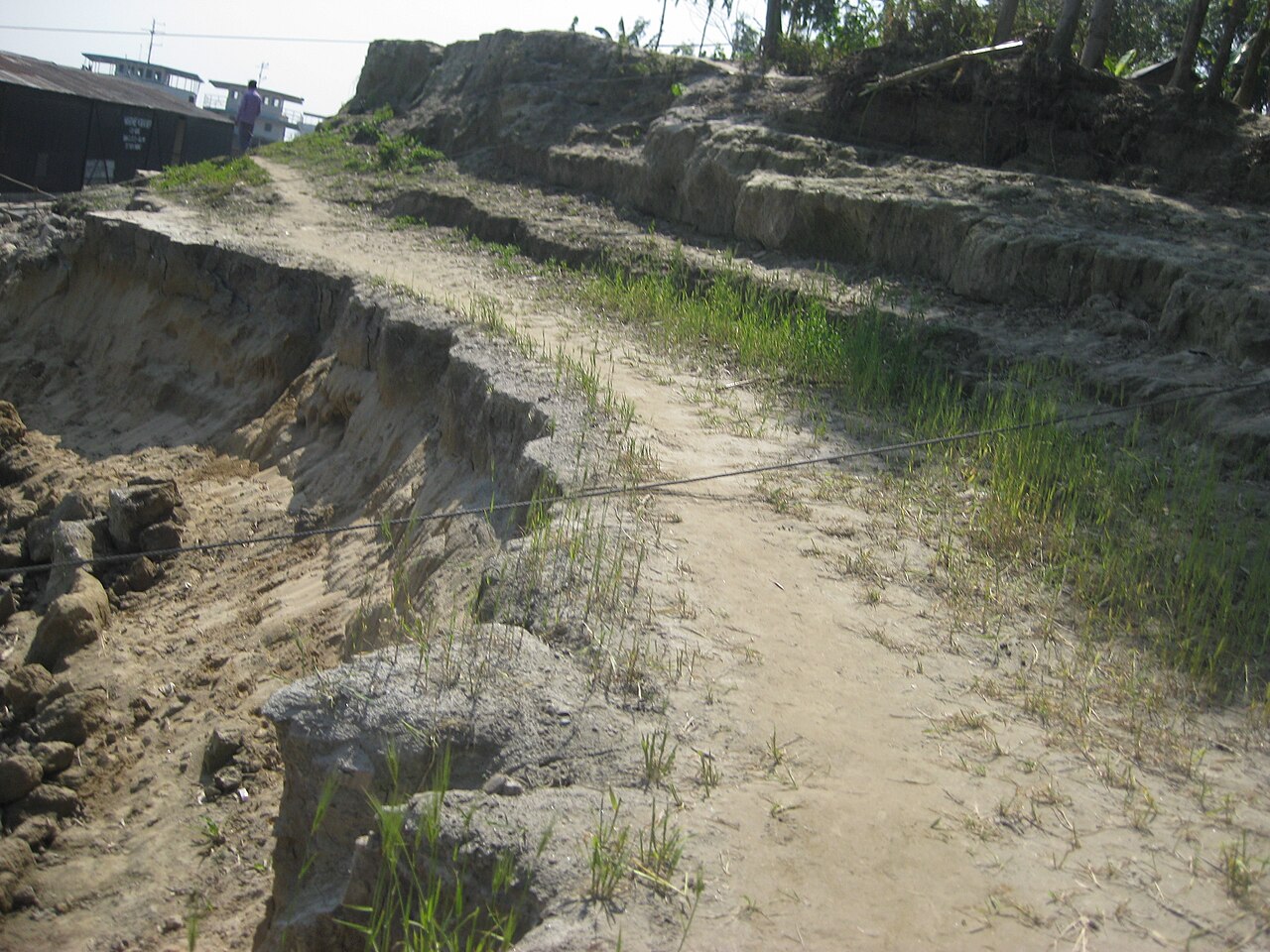
Photo: Salim_Khandoker / Wikimedia Commons (CC BY-SA 3.0)
Sources: Jagonews24, Amar Sangbad, FNS, World Health Organization, PLoS Neglected Tropical Diseases (Rahman et al. 2010; Yoshimura et al. 2023), The BMJ (Ralph et al. 2019 and 2022), Transactions of the Royal Society of Tropical Medicine and Hygiene (Farheen et al. 2025), Journal of Toxicology (Hasan et al. 2025), Wikipedia
Comments
(0)