
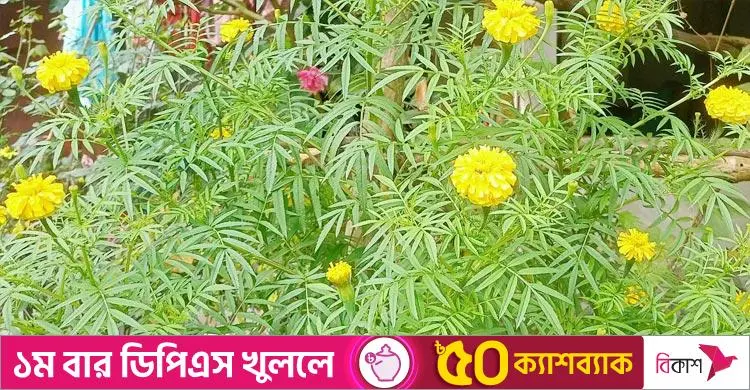
Marigold plants can be seen at almost every village home at this time of year, and the plants are now full of flowers. You can also grow marigold plants from the seeds of these flowers. Here is how:
- In rural Bangladesh, start sowing marigold seed at the beginning of winter.
- Fill a small pot or tray with lightly moist soil, with drainage holes in the bottom.
- Scatter the seeds evenly over the surface of the soil and simply press them lightly into it.
- Cover the seeds with a thin layer of vermiculite to retain moisture, then cover the whole tray or pot with plastic wrap or a lid.
- Direct sunlight is not needed for marigold seeds to germinate. Keep the pot somewhere warm; the first sprouts will begin to appear in about four to five days.
- Once the seeds start to germinate, remove the plastic wrap and give them light and air to develop further.
- Place the tray or pot where it gets four to five hours of direct sunlight a day. Marigolds need a sunny spot to grow.
- Keep the pot moist but avoid overwatering, as damping-off fungus can grow in waterlogged soil.
- You can then transplant the seedlings into the garden. Once a few new leaves have grown, the plant is strong enough.
Source: Jagonews24. First published in Bengali on The Agro News.

Comments
(0)