
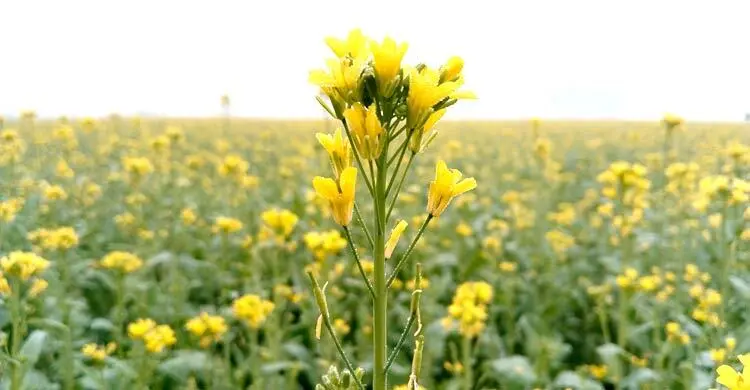
Because of rain and waterlogging, mustard has been grown on less land than targeted in Manikganj this year. Although mustard earns more for less cost, farmers managed to grow it on 8,248 hectares less than last year.
According to the district agriculture office, mustard was grown on 71,250 hectares across the district's seven upazilas last year. This year it has been grown on 63,002 hectares. Because untimely rain and waterlogging stopped them sowing mustard on time, farmers have turned to maize.
Low land stayed under water
Farmer Sumon Shil of Sapair in Harirampur upazila told Jagonews24: "Because of untimely rain this year, water was slow to drain from our Chak Bhatchala beel, so we could not grow mustard this year. Our chak grows the most mustard in Harirampur. At this time of year it looks like a yellow river. This year we are still having to work in the chak."
Farmer Rabiul of Nali union told Jagonews24: "This year I sowed mustard on 7 bighas. It will cost Tk 10,000-12,000 a bigha until harvest. If the yield is good I will get 6 maunds a bigha, and I hope to make a profit. I only hear people say that agriculture office staff come and help farmers. We are the biggest farming family in the area, and agriculture office staff have never come to us."
Farmer Ratan of Ubhajani village told Jagonews24: "Because our land is high, we could sow mustard on time. Those with low land could not grow mustard this year because of the rain. Most of them have grown maize, black cumin and spices."
Dr Rabiah Nur Ahmed, deputy director of the district Department of Agricultural Extension (DAE), told Jagonews24: "Because of untimely rain, the soil did not have the right moisture at mustard sowing time, so less mustard was grown this year. But maize and onion cultivation have increased in the district. Mainly, on land where mustard could not be grown, farmers planted maize and onion after the water receded."
Source: Jagonews24. First published in Bengali on The Agro News.


Comments
(0)