
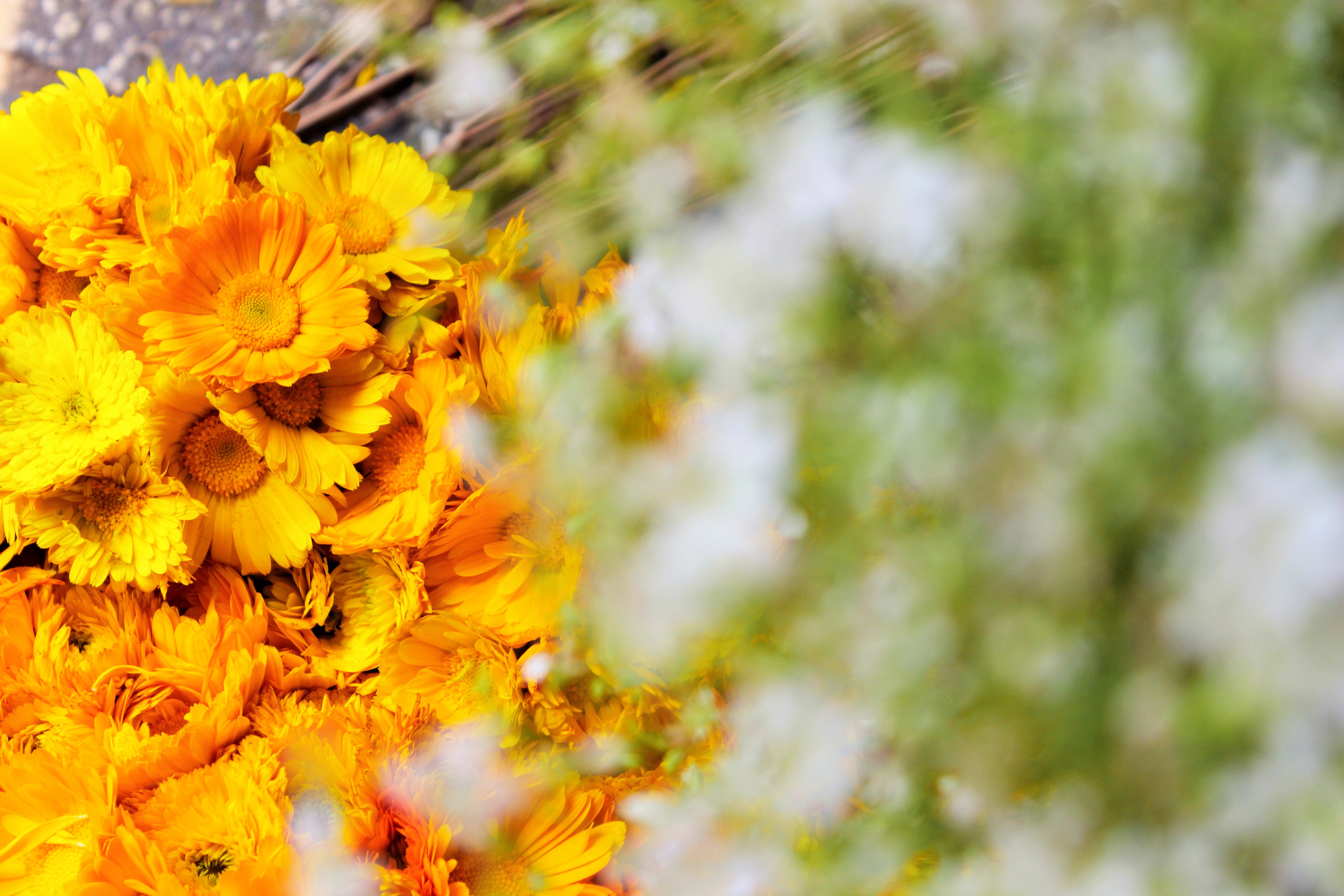
On 14 February 2026, the day Pahela Falgun, the first day of spring in the Bengali calendar, and Valentine's Day fell together, young people crowded the flower shops of Magura town in south-western Bangladesh. From the morning, buyers were a noticeable presence at the permanent and temporary flower shops around the town's Chowrangi intersection and along the roadside, Jagonews24's Magura district correspondent reported in a story published at 1:49 pm that day.
Roses, marigolds and bouquets at Chowrangi
Sellers had laid out red roses, marigolds, gerberas, tuberoses and bouquets of various kinds. Red roses and yellow and orange flowers were in particular demand, the report said. Besides young people, many had come out with their families to buy flowers.
The flower sellers told the correspondent that sales had risen several times over because the two occasions fell on the same day. They also said that swings in prices in the wholesale market had been passed on to retail prices. Depending on quality and size, a single rose was selling for Tk 30 to 60 in Magura that day, and bouquets of various designs for Tk 300 to 1,500.
Young people dressed up for the day were buying flowers at the shops and spending time with friends. Young women told the reporter they hoped the day would bring everyone a beautiful future, and that everyone would find the person they love.
Buyers were divided on prices. Some said that because it was a special day the prices seemed a little high, but they had to buy flowers for their loved ones all the same. Others felt that prices were bearable compared with other years.
Not every trader shared the upbeat view of sales. A trader named Sohel told Jagonews24: "Pahela Falgun is not celebrated the way it used to be, so flower sales have also fallen. But the crowd will grow further after the afternoon." The report recorded both accounts and described the market as festive overall: opinions differed over prices, but buying and selling were lively.
The colours in demand matched the day. On Pahela Falgun young people in Bangladesh dress in yellow, orange and basanti (spring yellow) clothes, The Daily Star's Bengali edition noted in its report on the day in 2024, when it also described flower shops and shopping centres taking on a festive look. Red roses, meanwhile, are the flower most associated with Valentine's Day.
Why spring and Valentine's Day share one date
Until a few years earlier, Pahela Falgun and the Western Valentine's Day were celebrated on two consecutive days. The change came with a revision of the Bengali calendar used in Bangladesh. According to The Daily Star's Bengali edition, the calendar was revised from 2019, that is, the Bengali year 1426, to align the historic days of the state with the Gregorian calendar. The revision brought 21 February onto 8 Falgun, as it was in 1952, and 16 December onto 1 Poush, as it was in 1971. A side effect was that Pahela Falgun moved onto 14 February, and from 14 February 2020 the two days have been celebrated together.
Spring has long been known in Bengal as a season of youth and renewal. The first day of spring is popularly called the Bengalis' own day of love, the same report said, and it quoted Rabindranath Tagore's song on "this new Falgun day". The paper also recorded that, according to history, Emperor Akbar introduced the Bengali calendar, the Akbari or Fasli year, in 1585 together with fourteen festivals to be held each year, one of which was a spring festival.
The present-day spring festival in Bangladesh is much more recent. It began in the 1990s on a small scale at Bakultala, in the Faculty of Fine Arts of Dhaka University, as part of a cultural movement during a turbulent period of politics. From the Bengali year 1401 the festival was formally organised in Dhaka by the Jatiya Basanta Utsab Udjapan Parishad, the national spring festival committee, according to The Daily Star's Bengali edition. On the first day of spring, the paper wrote, people across the country welcome the season with colourful events, and the flower shops of the towns are dressed for the occasion.
That coincidence of two celebrations is what Magura's sellers pointed to on 14 February 2026, when they said sales had multiplied because both fell on the same day.
How Valentine's Day reached Bangladesh
Valentine's Day, also called Saint Valentine's Day or the Feast of Saint Valentine, is observed every year on 14 February. It began as a Christian feast day honouring a martyr named Valentine; the eighth-century Gelasian Sacramentary records the feast on that date. The day became associated with romantic love in the 14th and 15th centuries, and in 18th-century England it grew into an occasion for couples to express their love by giving flowers, sweets and greeting cards. That custom of giving flowers lies behind the rose trade that peaks every February.
In Bangladesh the day has been celebrated since the 1990s and is known in Bengali as Bhalobasha Dibos, literally "Love Day". The journalist Shafik Rehman is widely credited with introducing it, The Daily Star wrote in a 2016 profile. He founded the weekly Jai Jai Din in 1984, presented television programmes including a talk show called Lal Golap (Red Rose), and persuaded the Dhaka city authorities to name the Tejgaon road on which his paper had its office "Love Road".
The day is mainly celebrated in towns and cities, although in recent years it has reached village society too, and it is not a public holiday. Lovers, friends, married couples, parents and children, and students and teachers exchange cards, flowers, chocolates and other gifts. Some conservative sections of society regard it as an import of Western culture, while businesses have come to offer special deals on the day. The scene described in Magura, of young people and families buying roses, showed the day being kept in a district town as well as in the capital.
Magura: the district and its town
Magura is a district of Khulna Division with an area of 1,039.10 square kilometres, according to Banglapedia, the national encyclopedia of Bangladesh. It is bounded by Rajbari District to the north, Jashore and Narail to the south, Faridpur to the east and Jhenaidah to the west. Its rivers are the Gorai-Madhumati, the Nabaganga and the Kumar. Magura was made a subdivision in 1945 and became a district on 1 March 1984.
The district has four upazilas, Magura Sadar, Mohammadpur, Shalikha and Sreepur, with 36 unions, 513 mouzas and 711 villages, and one municipality, in Magura Sadar. At the 2011 census the district had 918,419 people. Agriculture was the main source of income, at 66.3 per cent, followed by commerce at 12.34 per cent, service at 7.85 per cent and transport and communication at 3.59 per cent, Banglapedia records.
Magura town stands on the banks of the Nabaganga, a river that rises near Chuadanga and is joined by the Kumar at Magura. The town is the headquarters of both Magura Sadar Upazila and the district. Its municipality was formed in 1972 and is divided into nine wards and 61 mahallas over 44.36 square kilometres. At the 2022 census the municipality had 28,733 households and a population of 114,249.
The town is a road transport hub on Asian Highway 1. Its Vaina More circle leads in six directions, among them east to Dhaka through Faridpur, west to Kushtia and Chuadanga through Jhenaidah, and south to Khulna and Benapole through Jashore. There is no railway in Magura; the nearest station is in neighbouring Jashore, and the bus journey to Dhaka takes about three hours. The road south to Jashore matters for the flower trade, because the country's best-known flower-growing area lies just beyond the district's southern border.
Where the flowers come from: Jashore's Godkhali
Much of the cut flower trade in Bangladesh is supplied from Jhikargachha upazila in Jashore District, centred on the Godkhali wholesale market beside the Jashore-Benapole road. Jhikargachha is divided into a municipality and eleven unions, among them Godkhali, Panishara, Navaron and Nirbashkhola, whose fields are known for flowers.
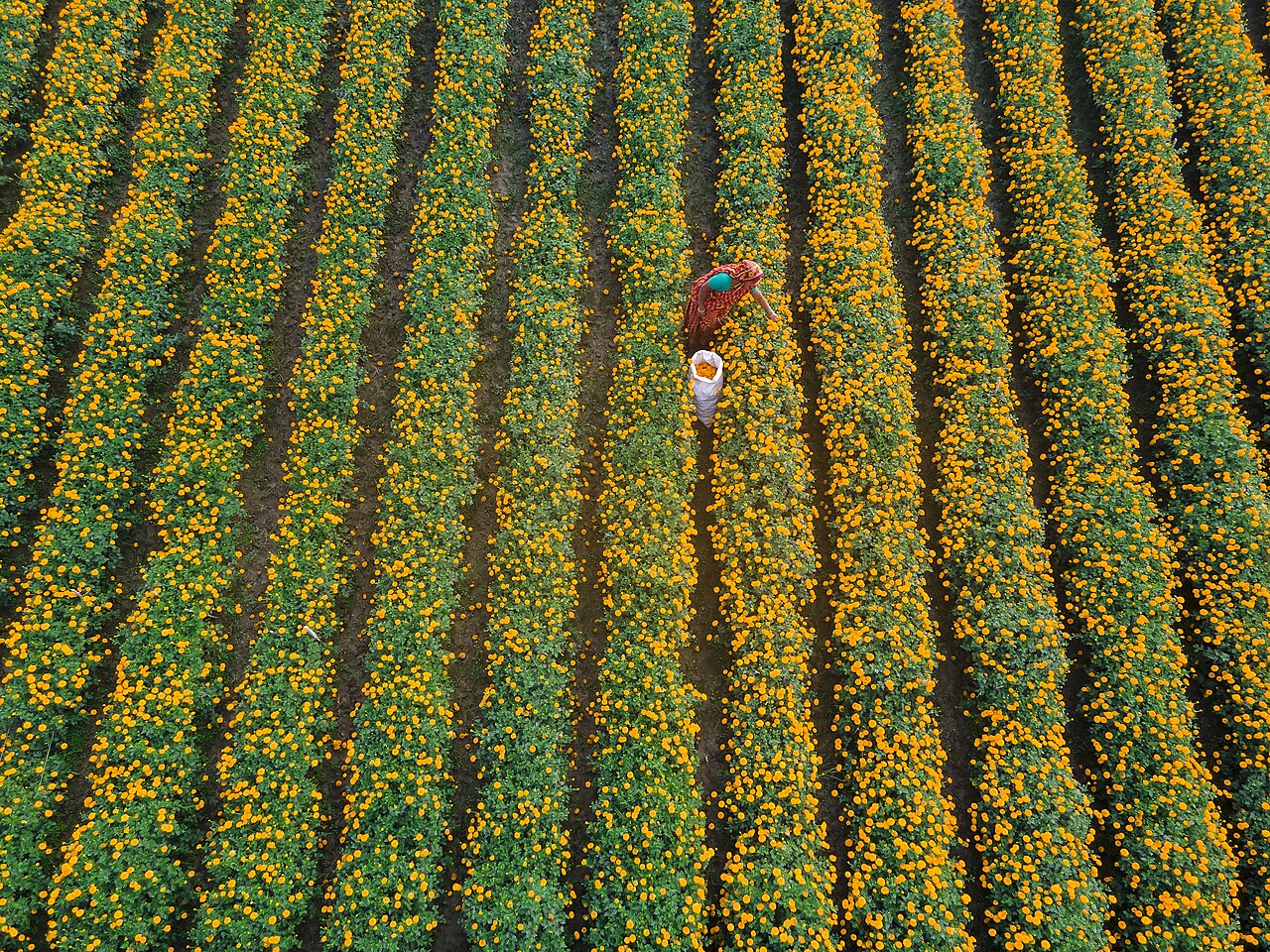
In December 2024, UNB reported that, according to the Department of Agricultural Extension (DAE), around 1,200 hectares of land in Jhikargachha were under flower cultivation that year, involving some 6,000 families. Farmers there grew 11 varieties, including roses, tuberoses, gladioli, gerberas, marigolds and chrysanthemums. The news agency described the region as supplying some 70 per cent of the country's flower demand, with a peak season from December to April built around Victory Day, New Year, Pahela Falgun, Valentine's Day, International Mother Language Day and Independence Day.
Earlier in 2024, unseasonal heavy rain and high temperatures had damaged crops in Jashore and caused farmers losses, the same report said. Abdur Rahim, president of the Jashore Flower Producers and Marketing Cooperative Society Ltd, told UNB that if everything went well, farmers could sell flowers worth Tk 100 crore that season. Jahangir Alam, the Jhikargachha Upazila Agriculture Officer, said sales of that size were within reach if the weather stayed stable and market conditions were favourable.
On 8 February 2025, a year before the Magura report, UNB described Godkhali farmers preparing for Pahela Falgun, Valentine's Day and International Mother Language Day. That report put the area under flowers in the Godkhali, Navaron and Panisara unions at nearly 600 hectares, supporting about 6,000 farmers; reports drawing on different areas and sources have given different figures. A rose grower said roses that had sold for Tk 5 two days earlier were fetching Tk 8 to 10 each. Gerberas were then Tk 8 to 10 each, tuberoses Tk 8 to 10 a stick and marigolds Tk 300 to 400 per thousand. Abu Zafar, general secretary of the Godkhali Flower Growers and Traders Association, told UNB that traders expected sales to reach Tk 100 crore over the three-day festive period.
The February peak has a long history. In February 2022, after two years of Covid-19 restrictions, UNB reported that the Godkhali market had revived ahead of Valentine's Day and Pahela Falgun. A grower said each rose was selling for Tk 15 to 20 depending on quality, against Tk 1 to 3 a month earlier. According to the Bangladesh Flower Society, there were 6,000 flower growers in Jashore cultivating 1,500 hectares, and its president, Abdur Rahim, said flowers worth at least Tk 20 crore were expected to be sold in three days. The same report noted that a Panisara grower had begun growing tulips, a cold-climate flower, for the first time in the area.
The flowers on Magura's stalls
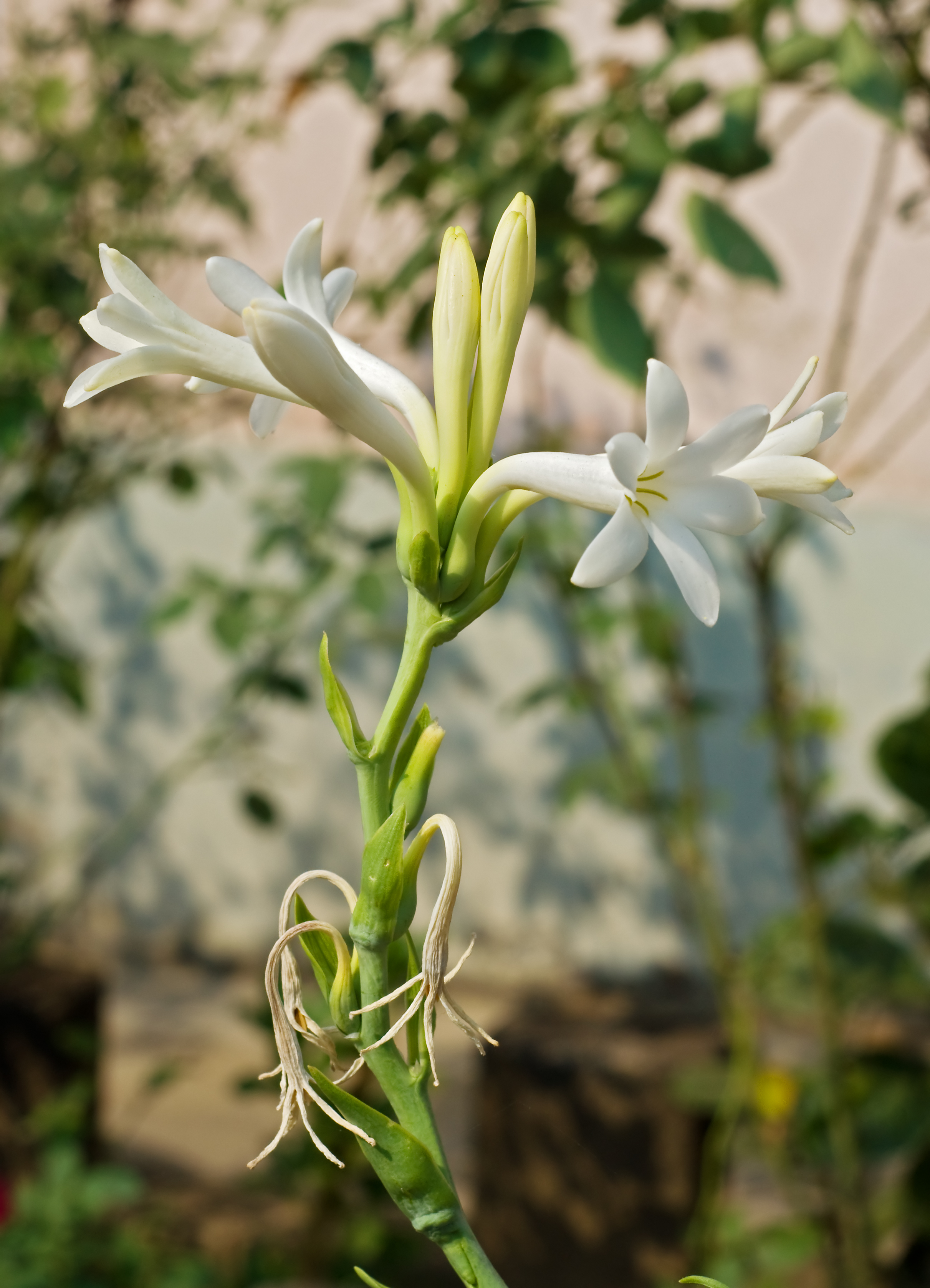
Banglapedia lists the flowers grown commercially in Bangladesh as the rose, gladiolus, marigold in yellow, red and orange, chrysanthemum, tuberose in single and double forms and, more recently, the lotus. Three of these, together with the gerbera, were the flowers named on sale in Magura on 14 February 2026.
The rose belongs to the genus Rosa, of the family Rosaceae, a genus of more than 150 species. Bangladesh has one native species, Rosa involucrata, a marshland shrub of Mymensingh, Sylhet and Chattogram that is not especially showy. Banglapedia records that the Mughal emperor Babar brought a strongly scented light pink rose called Bashra to the subcontinent, and that local varieties such as 'Fatema Sattar', 'Shibly', 'Bhasani' and 'Sher-e-Bangla' exist in the country. Commercial growers mostly propagate roses by budding; well-known varieties grown this way in Bangladesh include Papa Meilland, Double Delight, Dutch Gold, Queen Elizabeth and Montezuma. Rose water is valued in Muslim culture and is used at Milad gatherings.
The marigold of Bengali garlands is Tagetes erecta, together with the smaller Tagetes patula. Despite the common name African marigold, Tagetes erecta is native to Mexico and Central America, where the Aztecs grew it for ceremonial, medicinal and decorative use. It is a herbaceous plant 30 to 110 centimetres tall with yellow to orange flower heads, and it reproduces easily from seed. In the wholesale markets it is sold by the thousand rather than by the stem.
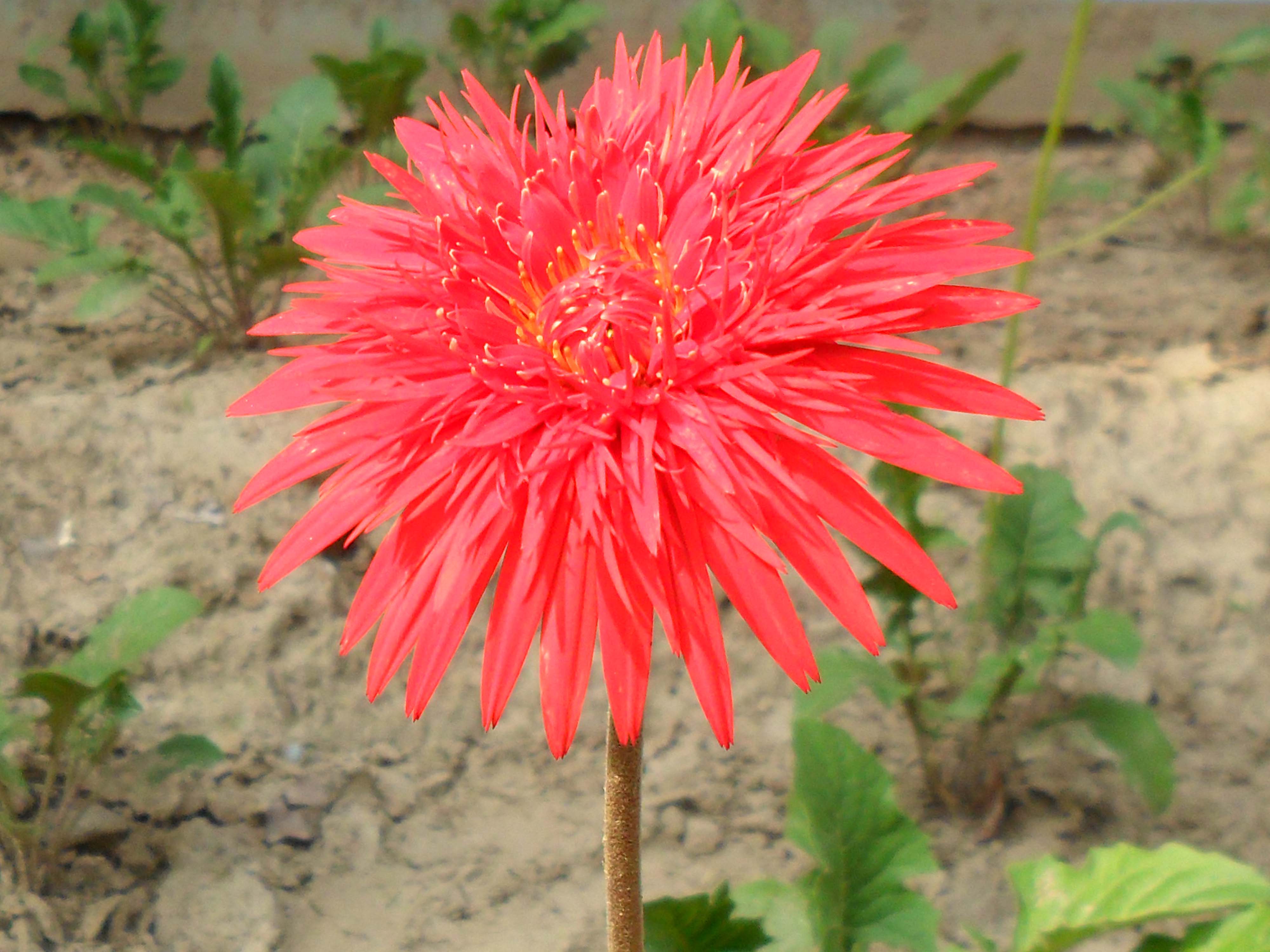
The gerbera is a genus of the daisy family, Asteraceae, native to tropical Africa. The first species to be described scientifically, Gerbera jamesonii, the Barberton or Transvaal daisy of south-eastern Africa, was described by J. D. Hooker in 1889. The gerberas sold as cut flowers are mostly hybrids of Gerbera jamesonii and Gerbera viridifolia, known as Gerbera x hybrida, in thousands of cultivars of white, yellow, orange, red and pink. The gerbera is the fifth most used cut flower in the world after the rose, carnation, chrysanthemum and tulip, and it is propagated by tissue culture and seed.
The tuberose, Polianthes tuberosa, called rajanigandha in Bengali, is a perennial of the family Asparagaceae native to central and southern Mexico. It grows from underground tubers and carries a spike up to a metre tall of pure white, waxy, strongly fragrant flowers; the double-flowered cultivar 'The Pearl' has shorter spikes. Its scent has been distilled for perfumery since the 17th century, when the flower was first taken to Europe.
From the field to the town shop
Magura's sellers linked their prices to swings in the wholesale market. The prices reported from Godkhali in earlier seasons were wholesale prices for loose stems paid at the source market. The Magura figures were retail prices in a district town, for single roses and for made-up bouquets, on the year's busiest day for flowers.
Banglapedia traces the cut flower trade in Bangladesh to sales near shrines and places of worship, where devotees bought flowers. Cut flowers became popular with the general public after independence, when locally collected flowers and imported cultivated cut flowers began the commercial trade, and farmers gradually started growing flowers to supply the capital and other cities and towns. The encyclopedia describes both amateur and commercial floriculture as still at a nascent stage, with demand rising slowly for foliage plants, cut flowers, mainly rose, tuberose, orchid and gladiolus, and seeds of seasonal flowers, and with private nurseries emerging to meet it.
Scientific research and training in floriculture were almost non-existent, Banglapedia notes, but the Bangladesh Agricultural Research Institute (BARI) opened a floriculture section and a Floriculture Research Centre to promote commercial cultivation. Limited quantities of rose and tuberose are exported to the Middle East and Europe.
Government extension work has also turned to what happens after harvest. In December 2024 UNB reported that the DAE was organising training sessions and workshops for Jashore growers on producing perfumes and essential oils from their flowers, and that efforts were under way to improve the transport and preservation of flowers so that growers would earn more. For a district town such as Magura, where flowers are brought in from growing areas and must be sold within days, that chain from field to shop shapes both freshness and price on a day such as 14 February.
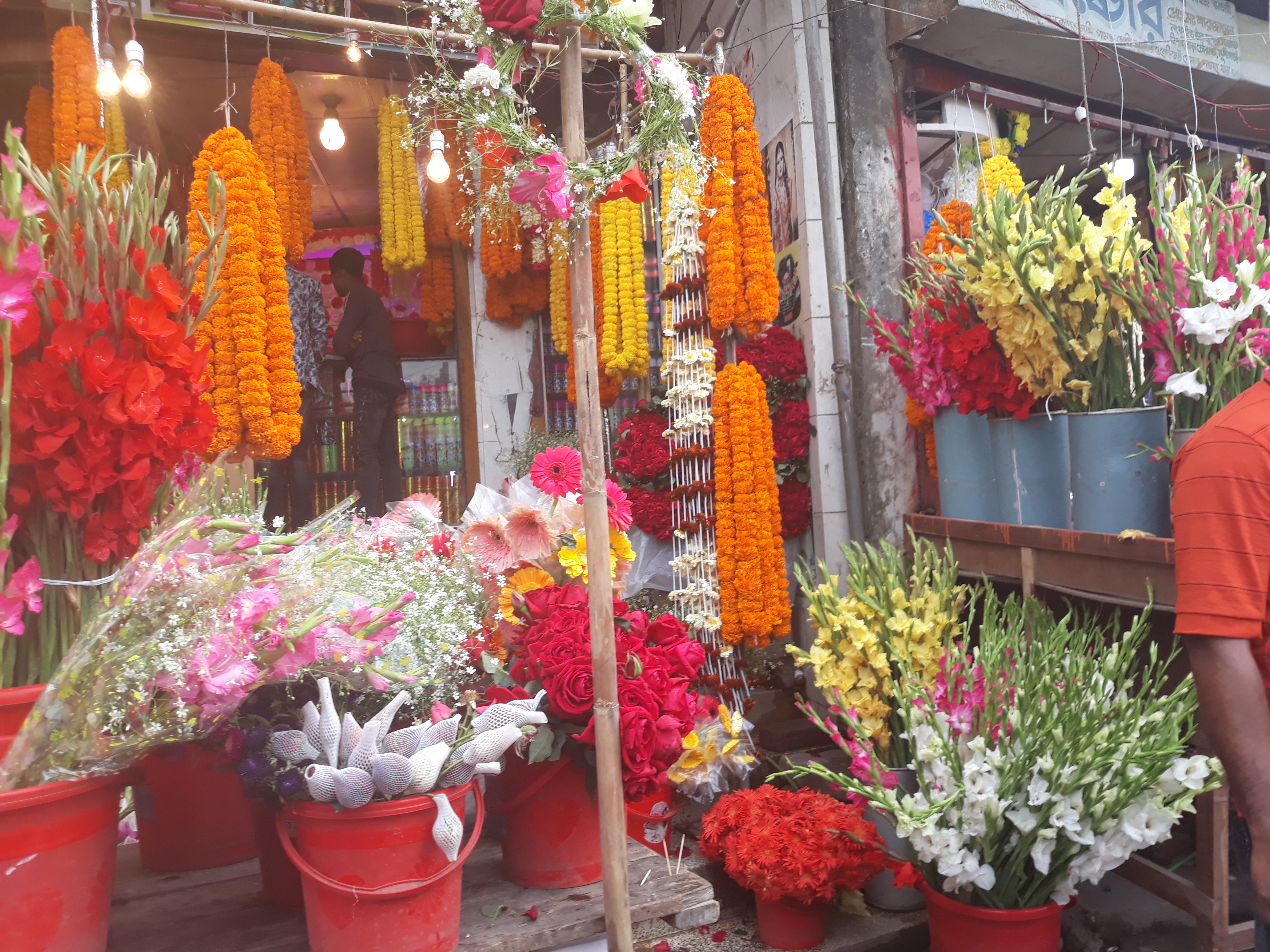
Photo: Kanok Wohab / Wikimedia Commons (CC BY-SA 4.0)
Sources: Jagonews24, UNB, The Daily Star, The Daily Star Bangla, Banglapedia, Wikipedia
Comments
(0)