
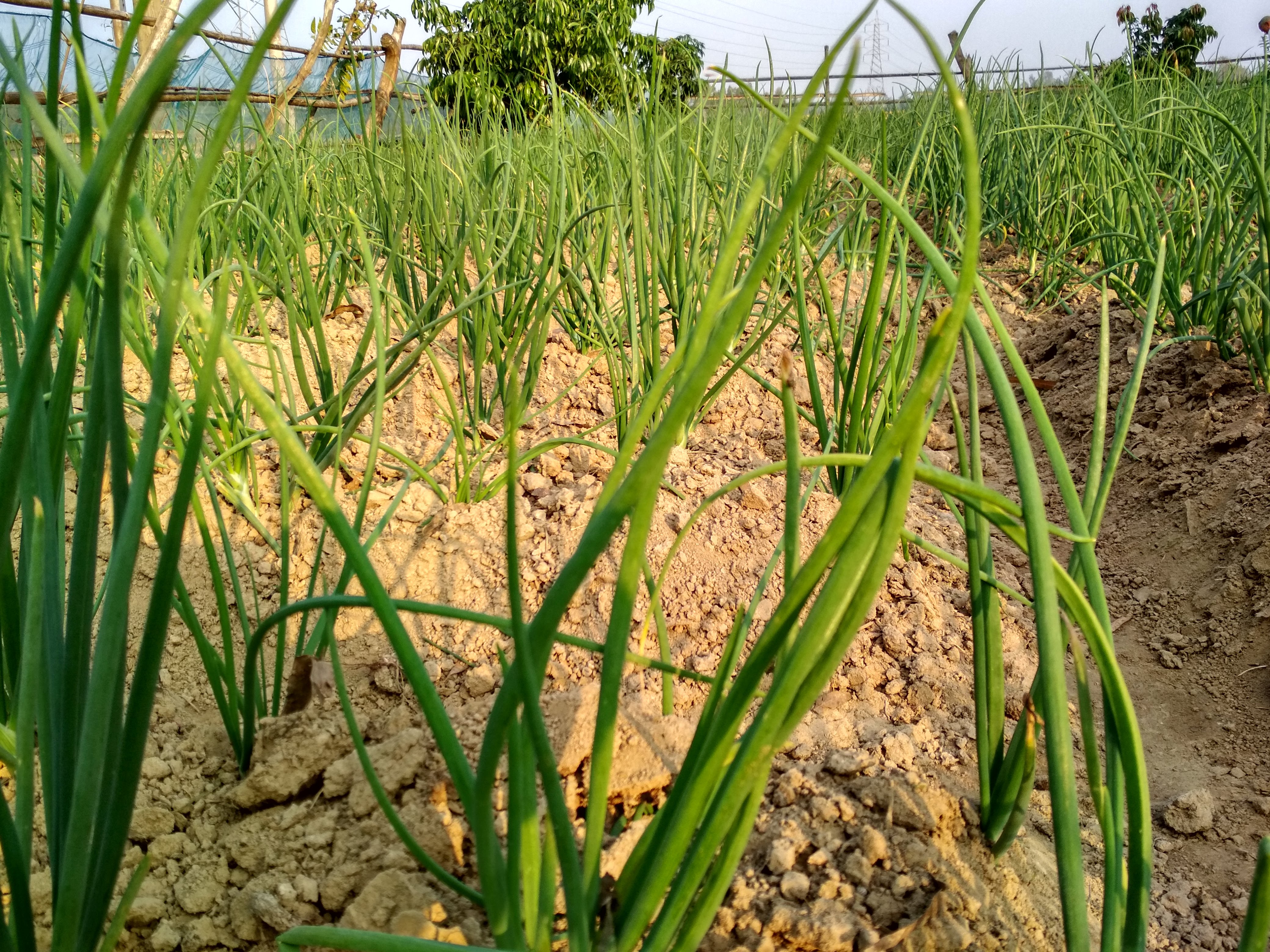
At the start of the Bengali month of Poush in December 2025, farmers in all four upazilas of Magura district were busy planting early onion. Jagonews24 reported on 29 December 2025 that, despite severe cold, they went out to the fields from dawn carrying bundles of onion seedlings. In the Kadamtala Uttar Gobindapur field of Nakol village in Sreepur upazila, farmers were seen from the early morning setting the seedlings into the soil by hand, line after line in neat rows.
The planting came during the first cold wave of the 2025-26 winter. Two days earlier, on 27 December, the Bangladesh Meteorological Department listed a mild cold wave over Jashore, the district that borders Magura to the south, and over Chuadanga, Gopalganj, Rajshahi, Pabna, Sirajganj and Nilphamari. Jashore recorded the country's lowest temperature that day, 8.8 degrees Celsius, UNB reported in a dispatch carried by The Business Standard.
Farmers in the field: cold, labour and costs
Farmer Harez Ali described working through the cold. "It has been four days since we properly saw the sun," he told Jagonews24. "Ordinary farmers don't want to come to work in this severe cold. But because of our families' financial hardship we have to work. Our work is with mud, soil, water and sickles."
Robiul Islam, a farmer of Nakol village, explained how the early crop is raised. "I sowed the onion seed for seedlings a month ago," he said. "Within a month of germination the seedlings have to be lifted and planted out in the field. At the start of Poush I am planting early onion seedlings on 20 bighas, and I have hired 8-10 labourers for it."
He gave his costs and expectations in detail. "Each labourer costs Tk 500-600 a day. The production cost for onions on 20 bighas is Tk 15 lakh. I hope that if the weather stays favourable there will be a bumper onion crop this time. If there is a bumper crop, I will earn Tk 30 lakh from it. These onions will start coming in at the beginning of Chaitra."
Ikram Molla, a grower of Kadamtala Uttar Gobindapur village, was planting 15 bighas. "With the weather favourable, the onion crop will be good," he said. "I am planting onion seedlings in the severe cold. I will earn Tk 6-7 lakh from it, and it is costing me Tk 4 lakh. The land has to be prepared before planting, and after planting the field needs regular fertiliser and irrigation."
He also described the care the crop needs after transplanting. "When the seedlings grow after a month, the field needs more care. Very dense fog often stunts the seedlings. If the seedlings are badly damaged, you have to seek advice from the agriculture department. This time I have sown seed of two onion varieties. I hope there will be a bumper yield if the weather and conditions stay favourable." The report did not name the two varieties.
The figures the farmers gave are their own estimates of cost and income at planting time, before a single bulb had been lifted. The bigha they used is a local land measure: in Bangladesh one bigha is 20 katha, or 14,400 square feet (about 1,337.8 square metres), and an acre is 3.025 bighas.
What the district agriculture office said
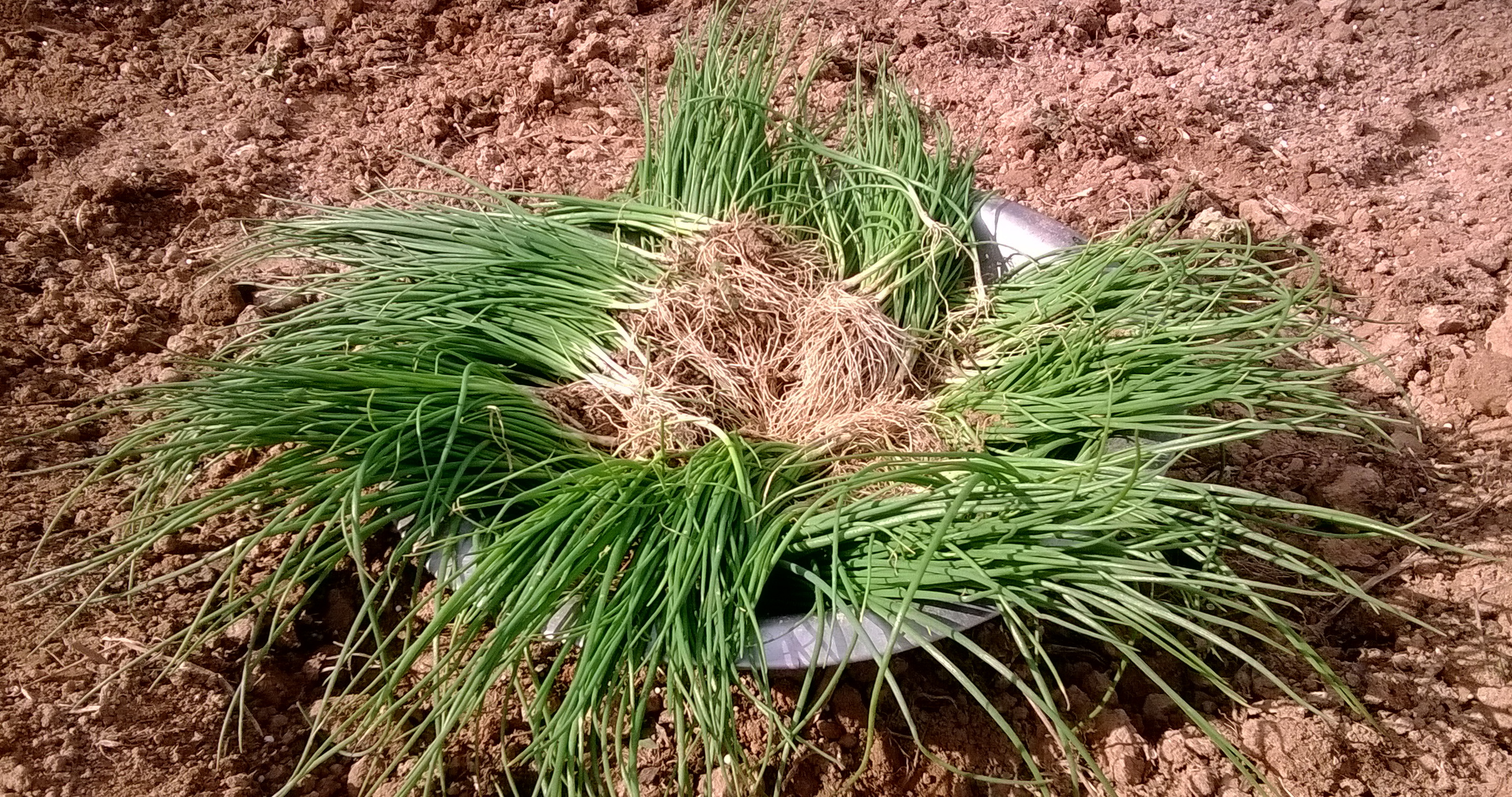
Agriculturist Md Tajul Islam, deputy director of the Department of Agricultural Extension (DAE) in Magura, confirmed the activity. "This winter season farmers in villages across Magura's four upazilas are busy with early onion," he said. "If the weather and conditions stay favourable, there will be a bumper onion yield."
He gave the area under the crop: "This year onion has been grown on 858 hectares in the district: 140 hectares in Sadar, 450 in Sreepur, 205 in Shalikha and 163 in Mohammadpur." The four upazila figures as published do not add up to the district total he gave, and the report did not explain the difference or say whether the figures covered only the early crop planted so far or the whole season.
On support for growers, he said: "We are encouraging farmers, and we have distributed fertiliser and seed free of charge to marginal farmers." The report did not say how many farmers received the inputs or in what quantities.
The Department of Agricultural Extension, which made these figures, is the government body responsible for agricultural extension in Bangladesh. It was formed in 1982 under the Ministry of Agriculture by merging several earlier directorates, among them the Agriculture Directorate (Extension and Management) and the Jute Directorate, with plant protection and horticulture work also brought under it. In Magura its district office is headed by a deputy director, the post Md Tajul Islam held.
Magura district and Sreepur upazila
Magura lies in Khulna division, in the south-west of Bangladesh. According to Banglapedia, the national encyclopedia published by the Asiatic Society of Bangladesh, the district covers 1,039.10 square kilometres between 23 degrees 15 minutes and 23 degrees 41 minutes north latitude. It is bounded by Rajbari district to the north, Jashore and Narail to the south, Faridpur to the east and Jhenaidah to the west. Magura was made a subdivision in 1945 and became a district on 1 March 1984.
The district has four upazilas, the same four the deputy director named: Magura Sadar (401.58 square kilometres), Mohammadpur (233.70), Shalikha (228.65) and Sreepur (175.15). It has one municipality, 36 unions, 513 mouzas and 711 villages. The 2011 census counted 918,419 people, and Banglapedia records agriculture as the main source of household income, at 66.3 per cent. Its main rivers are the Gorai-Madhumati, the Nabaganga and the Kumar.
Sreepur, where the reporter watched the planting, is the smallest of the four upazilas by area. Banglapedia lists its eight unions as Amalsar, Kadir Para, Gayeshpur, Dariapur, Nakol, Sreekol, Sreepur and Sabdalpur; Nakol village, where the farmers were working, gives its name to one of them. The upazila borders Pangsha and Baliakandi upazilas of Rajbari to the north, and its rivers include the Gorai, the Kumar and the Mara Kumar. Banglapedia's list of Sreepur's main crops is paddy, jute, wheat, mustard, pulses and vegetables, and agriculture provides 64.35 per cent of household income there.
Onion in Magura in earlier seasons
Onion is not a new crop for Magura. In September 2019 the Financial Express, citing the DAE, reported that onion had been grown on 6,590 hectares in the district that year, with total production of 85,670 tonnes, and that the harvest had been completed in May. A Sreepur farmer told the paper then that he had sold his onions at harvest for Tk 20 a kilogram.
In February 2020 the same paper reported that onion cultivation in Magura had reached 9,050 hectares that season, up from 6,200 hectares the year before. The DAE in Magura also reported 60 hectares under onion seed production, expected to yield 5,625 kilograms of seed, which was then selling locally at Tk 1,800 a kilogram against Tk 700 a year earlier. Growers told the paper that producing their own seed saved them the cost of buying it.
Those earlier figures were for whole seasons. The 858 hectares given in December 2025 was a figure stated during the planting period, and the Jagonews24 report does not say how it compares with the district's full-season target.
How the onion crop is grown
The onion, Allium cepa, is the most widely cultivated species of the genus Allium. It is by nature a biennial or perennial plant, but growers treat it as an annual and harvest it in its first season. Onions are grown either from seed or from partly grown bulbs called sets, and they do best in fertile, well-drained soil. Bulbing onions are sensitive to day length: the bulb at the base of the plant begins to swell when a certain day length is reached, while heat or other stress can make the plant bolt and send up a flower stalk.
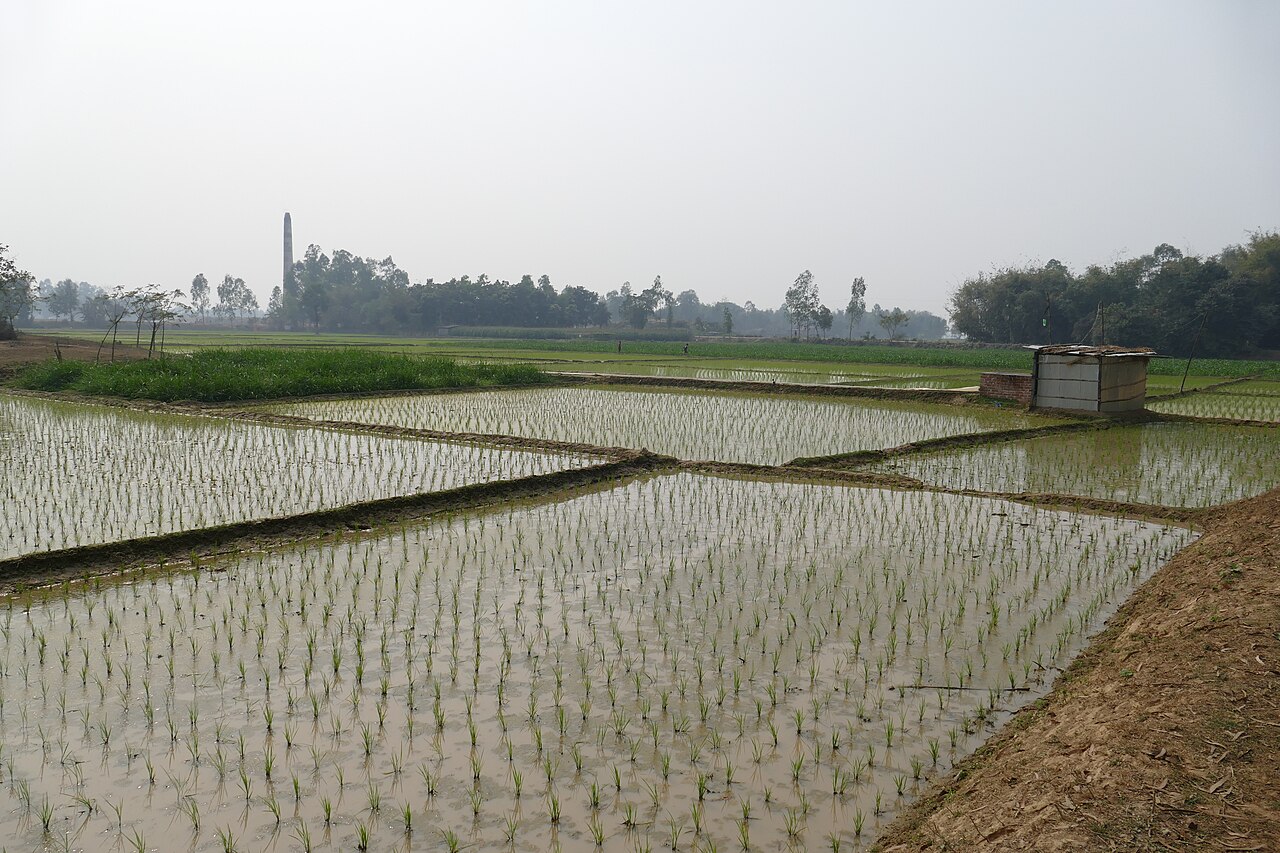
The Magura farmers used the seedling method. As Robiul Islam described it, seed is sown in a nursery bed, and about a month after it germinates the young plants are lifted and transplanted into the prepared field in rows. Banglapedia gives the optimum time for transplanting onion in Bangladesh as December or the first week of January, which is the window in which the Magura farmers were working. It names Tahirpur and Faridpuri as two important local varieties.
Farmers in Bangladesh grow onion in more than one way and more than one season. A Daily Star report of September 2020 explained that farmers traditionally plant the main crop in January and February and harvest it by April or May, before the floods, while a winter onion known locally as mulkata or murikata is planted in November and December and harvested before the main crop. The same report described BARI Piaz-5, a variety from the Spices Research Centre of the Bangladesh Agricultural Research Institute (BARI) at Bogura, developed so that onion could also be produced in September and October, the months when supply usually runs short; the centre was then researching six high-yielding varieties, among them BARI-1, BARI-3 and BARI-5 for the summer season.
The farmers' timetable fits the Bengali calendar used in Bangladesh, in which Poush, a winter month, begins on 16 December and Chaitra, the last month of the year, begins on 15 March. Robiul Islam's expectation that his onions would start coming in at the beginning of Chaitra therefore pointed to a harvest from mid-March 2026.
Ikram Molla's description of the work matches the general practice: the land is prepared before transplanting, and after planting the crop needs regular fertiliser and irrigation, with more care once the seedlings establish. The report gave no fertiliser rates; growers who need them are advised to ask their upazila agriculture officer.
Cold, fog and the risk of leaf disease
The cold the farmers described was part of a wider spell. On 27 December 2025 the Met Office said moderate to dense fog was likely in some areas from midnight to morning, possibly lasting until noon, and warned that temperatures could drop further in the coming days, with cold and fog intensifying. Dense fog that morning stopped eight international flights from landing at Dhaka's Hazrat Shahjalal International Airport, and ferries on the Paturia-Daulatdia and Aricha-Kazirhat routes had been suspended for nearly 15 hours before resuming.
Ikram Molla's concern that dense fog stunts seedlings reflects a known risk. Long periods of leaf wetness favour fungal leaf diseases of onion. One of the best known is purple blotch, caused by the fungus Alternaria porri. According to the Pacific Northwest Plant Disease Management Handbook, published by Oregon State University, Washington State University and the University of Idaho, the fungus survives on infected bulbs and crop debris, can be carried in seed, and spreads by rain, water, equipment and workers moving through fields; infection needs rain or persistent dew, and longer periods of leaf wetness are needed at cooler temperatures.
The handbook describes the symptoms as a small water-soaked spot on the leaf that soon develops a white centre, then enlarges into a brown to purplish lesion, often with a red or purple margin surrounded by yellow tissue. In moist weather the spot becomes covered with a brownish-black powdery growth, and badly spotted leaves yellow and fall over.
The cultural measures it lists are:
- use seed free of the pathogen;
- rotate onion with unrelated crops over long periods;
- reduce the hours the leaves stay wet through plant spacing, plant density and careful irrigation;
- destroy old onion cull piles and bury crop debris;
- avoid injuring the plants during production;
- cure bulbs properly in the field after lifting.
Ikram Molla's own advice, to seek the agriculture department's help if seedlings are badly damaged, is the route extension officers recommend: any chemical treatment and its dose should be decided with the upazila agriculture officer, who can identify the problem in the field.
National production and the December market
Magura's growers were planting into a market that had been tight in the weeks before. The Business Standard reported in August 2025 that the country had produced 42.45 lakh tonnes of onion on 2.80 lakh hectares in the previous season, against a target of 38.21 lakh tonnes, the highest output in its history; production had been 39.11 lakh tonnes in 2023-24 and 34.56 lakh tonnes in 2022-23. A principal scientific officer of the Spices Research Centre at Bogura gave a lower production estimate of about 36 lakh tonnes, put the country's demand at no less than 40 lakh tonnes, and said that about 25 per cent of onions are lost in storage.
On 6 December 2025 Prothom Alo reported that onion had passed Tk 150 a kilogram in Dhaka's retail markets, up Tk 20-30 in a week, while early onion was selling at Tk 120-130 at some shops in Karwan Bazar. The paper cited a Tariff Commission review that gave reasons for the seasonal rise, among them that November and December are the last part of the onion season, when farmers' own stocks run low, and that with no government storage facilities farmers store onions themselves. People in the trade also said rain the previous month in onion districts such as Pabna, Faridpur, Rajbari and Meherpur had damaged a large quantity of early onion.
The next day, Prothom Alo reported that the Department of Agricultural Extension had given 50 importers permits to bring in 1,500 tonnes of onion, at 30 tonnes each, valid until 31 March 2026, and that retail prices in Dhaka eased to about Tk 140 after the announcement. By 19 December, Khoborsangjog reported from Karwan Bazar that new domestic onion had reached the market and the price had fallen by Tk 20 to Tk 90 a kilogram.
It was against that background that the farmers in Sreepur spoke of hopes for a bumper crop and the deputy director said the department was encouraging growers.
Free seed and fertiliser for small farmers
The free seed and fertiliser the deputy director mentioned come from a recurring government programme. Under it, the Ministry of Agriculture gives small and marginal farmers inputs for particular crops from its agricultural rehabilitation budget. In September 2023, for example, the ministry announced Tk 188 crore 49 lakh in incentives for ten rabi crops, winter onion among them, giving free seed and fertiliser to 19,53,700 small and marginal farmers in all 64 districts; each farmer could take support for one crop only, and an onion grower received 1 kilogram of seed for one bigha of land, The Daily Star's Bengali edition reported.
A separate round announced in August 2023 for summer onion gave each of 18,000 farmers 1 kilogram of seed, 20 kilograms of DAP and 20 kilograms of MoP fertiliser for one bigha, together with Tk 2,000 in cash for land preparation and labour, according to a Ministry of Agriculture press release reported by the same paper. The Jagonews24 report of December 2025 did not give the size of the Magura distribution.
Photo: RockyMasum / Wikimedia Commons (CC BY-SA 4.0)
Sources: Jagonews24 (29 December 2025), The Business Standard/UNB (27 December 2025; 15 August 2025), Prothom Alo (6 and 7 December 2025), Khoborsangjog (19 December 2025), The Financial Express (18 September 2019; 25 February 2020), The Daily Star (25 September 2020), The Daily Star Bangla (29 August and 4 September 2023), Banglapedia (Asiatic Society of Bangladesh), Pacific Northwest Plant Disease Management Handbook, Wikipedia
Comments
(0)