
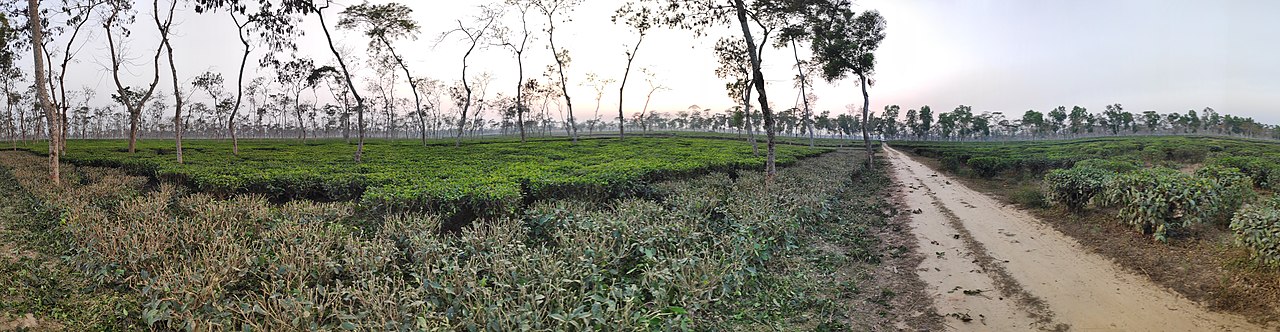
Protected hill land and the high hillocks of tea gardens in Madhabpur and Chunarughat upazilas of Habiganj are collapsing every year in flash floods, their soil washing into rivers and streams. Experts blame people: repeated hill cutting and unregulated building that eats into the slopes.
Residents say the streams (chharas) running through the hills and tea gardens have filled with sand and silt, so in the monsoon and during flash floods the water cannot drain normally and builds into violent torrents that bring the hillocks down. The Satchhari Tripura indigenous settlement, several bridges including the Ramganga bridge, the Surma tea garden and parts of the old Dhaka-Sylhet highway have all been damaged.
Chittaranjan Debbarma, headman of the Satchhari Tripura village, said five homes have been swallowed by the stream and a small footbridge destroyed because the stream was never dredged. Tinku Saontal of the Surma tea garden said this year's flood gouged a huge hole in the approach road of an unfinished bridge, and that dredging the streams and planting trees would prevent much of the slipping.
Babul Sarkar, manager of the Surma tea garden, said hillocks are breaking away across a large part of the estate and that controlling the flow by dredging would stop the erosion. Omaiya Ferdous, a network member of the Bangladesh Environmental Lawyers Association (BELA), said that without lasting government action the hillocks would gradually be destroyed.
Habiganj deputy commissioner G M Sarfaraz said many hillocks, tea gardens and bridges collapsed again this year and that the technical options for stopping the erosion permanently are being examined. Residents say occasional drives are not enough and hill cutting must be stopped firmly.
The report was filed by Samakal's Madhabpur (Habiganj) correspondent.
Photo: Md Tipu Sultan / Wikimedia Commons (CC BY-SA 4.0)
Source: Samakal


Comments
(0)