
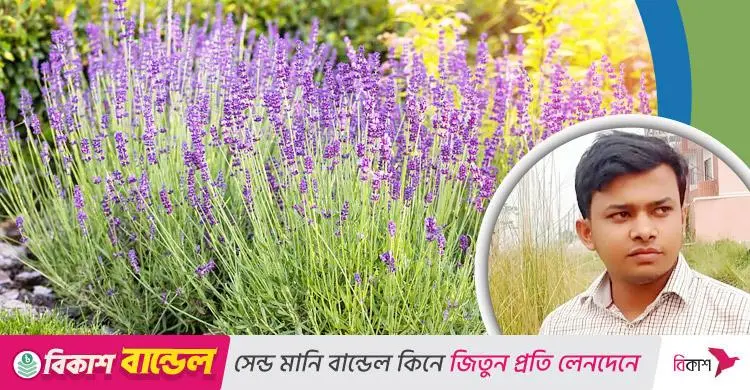
Lavender is a plant admired around the world for its remarkable scent and medicinal properties. Agricultural scientists believe the land used to grow and use lavender in Bangladesh has increased. It could also play an important economic role in developing industry and tourism. Lavender is a long-lived plant able to cope with any climate and can be grown in any soil. Its flowers and oil are used to make fragrant, medicinal and nutritional products, and growing it brings various ways of earning money.
The advantage of lavender is that it grows easily in different types of soil and does not take long to flower, so harvests and economic returns come quickly. It is used to make oil, tea and cosmetics, offering ample opportunity for profit. Lavender products are fashionable, expensive and popular worldwide, and whole growing areas become tourist spots. The plant needs enough sunlight and the right amount of water to grow and flower well. Care is needed when pruning, as it affects the plant's health.
Pests, disease and care
On pests and diseases, lavender has the advantage that cosmetics made from it are used not only for fragrance but also to repel harmful insects. Lavender oil is especially effective and popular against mosquitoes and bedbugs, though because these products are imported and expensive they are still little used in Bangladesh. Pest and disease problems do arise from time to time; they can be controlled with proper care and pesticides, and possible problems should be identified early. Warm, dry, sunny places are best for lavender.
Lavender is a perennial that can be grown in various weathers and soils, so Bangladesh cannot be called unsuitable for this promising new crop. It grows easily and flowers quickly. Growing it needs seedlings, suitable soil and other equipment, proper irrigation and shears for pruning. Watering correctly and keeping the soil's nutrients balanced are important, pruning is needed to increase flowering, and regular care and observation are essential.
Tourism and the economy
Farmland given to lavender can bring several financial benefits. Oil, flowers, tea, soap and candles can be made and sold from it. In countries where lavender is widely grown, gardens become tourist spots automatically, after which other provisions for tourists become necessary. It helps regulate temperature, resists drought and improves soil nutrients. Lavender farms strengthen product-making industries as well as hotels, resorts and other tourism ventures, and research can open the way to more products and benefits.
Because it was not grown here before, we are not very familiar with this flower. If Bangladesh's workforce were trained in lavender, it could be grown everywhere and a large tourism- and industry-based economy built. The United Kingdom has many lavender gardens and farms. People who have visited lavender gardens in Europe and North America say the scent itself leads lovers of lavender to the gardens, which are always crowded with visitors.
Lavender is grown mainly in summer. Lavender gardens in England have every facility, from cafés to gift shops, car parking and toilets; tractors can even be hired to tour the whole garden. The cafés serve lavender tea as well as coffee, and shops beside the gardens sell goods and foods made with lavender. The farms also sell lavender plants and seedlings, not very expensively: from three pounds to ten pounds.
Fragrance is lavender's capital
The aristocratic and refined French of old liked to stay in a cheerful mood all day with the scent of lavender extract. In the parts of Spain with large lavender gardens, the air is filled with its scent, and perfume lovers adore it. On France's southern coast lies Grasse, the "capital of flowers". Nestled in the Alps among majestic, quiet hills and lovelier than a picture, the town is also called the "perfume city". France's famous perfume factories are here, and many large and small businesses have grown up around the beautiful purple flower.
Lavender is widely used in scented soap, shampoo and thousands of kinds of cosmetics and perfumes, including perfumes for women. Its extract has a permanent place in many Chanel cosmetics and perfumes, and many Western perfumes and cosmetics are unthinkable without it. Like the legendary fairy maiden Lavandin, lavender is a true legend in the vast world of cosmetics and perfume, an almost unmatched, miraculous creation, like a flower of purple tears fallen from heaven.
Since ancient times the Romans and Greeks knew of lavender's medicinal properties. Lavender extract was a daily companion in the baths of Roman kings, and it has long been popular for protecting expensive cloth from insects. Many creams and lotions with lavender extract and essential oil are on the market for fungal infections, inflammation, fast healing of wounds, relief of muscle pain, shinier hair and skin care.
In short, if lavender cultivation gains pace in Bangladesh, it will create laboratories, industries, hotels, motels, resorts and promising holiday centres, as well as new areas for foreign investment. In the countries where lavender is grown now, it draws people more by developing tourism than by benefiting them as a cash crop.
The writer, Mohammad Abdullah Majumder, is a tourism analyst.
Source: Jagonews24. First published in Bengali on The Agro News.


Comments
(0)