
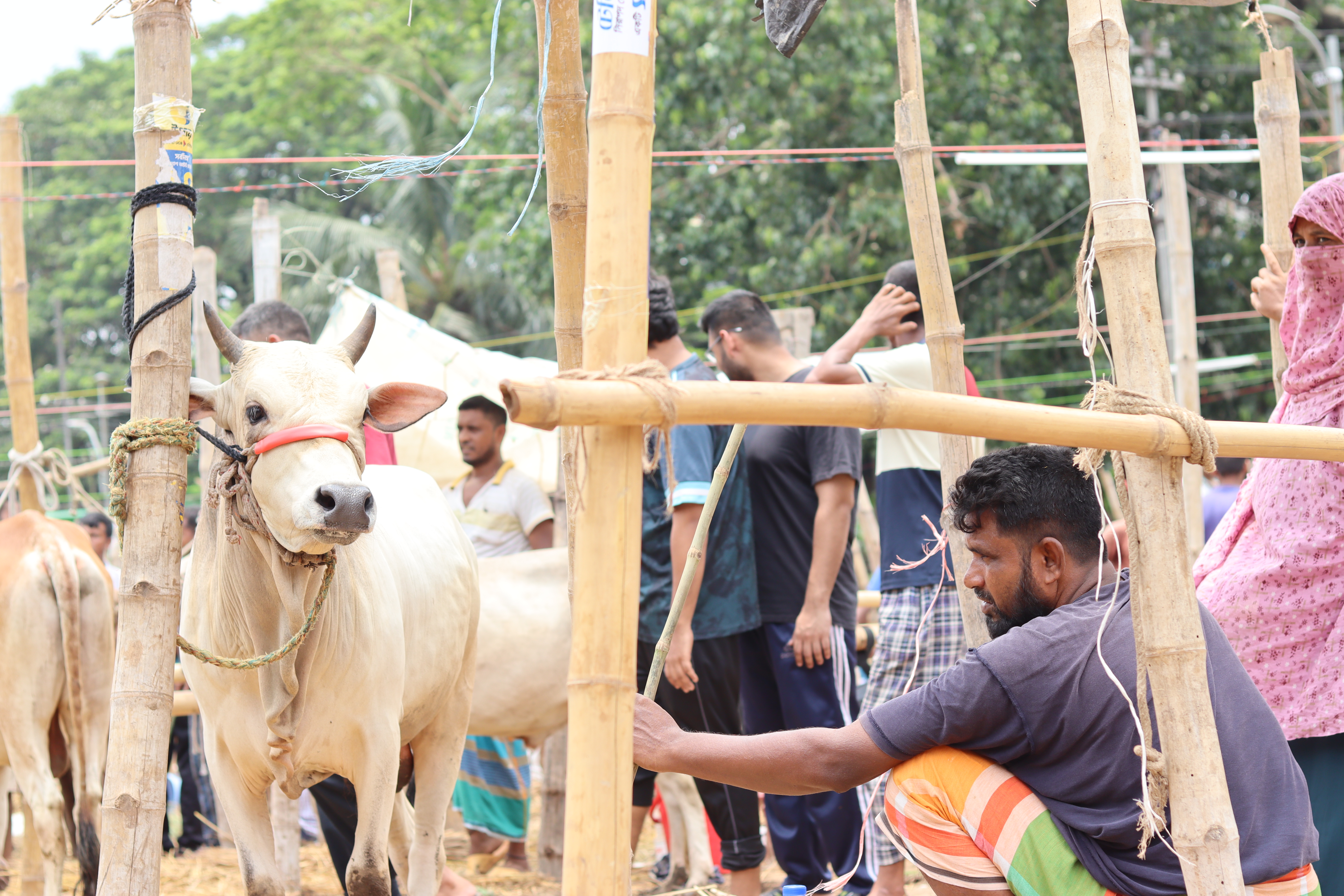
Ahead of Eid-ul-Azha in 2026, a large black-and-white bull was prepared for sale at the farm of lawyer Mazmul Pramanik in the Dauljor area of Aditmari upazila, Lalmonirhat district, in northern Bangladesh. The people on the farm had nicknamed it "Zayed Khan". Jagonews24 reported the story on 19 April 2026. According to those involved with the farm, it was the biggest animal prepared for the Eid sacrifice in Lalmonirhat at that point, and the asking price was Tk 12 lakh.
According to the report, Mazmul Pramanik is a practising lawyer who, as a hobby, turned unused land into a farm that keeps fish, pigeons and various crops as well as cattle. He has been preparing animals for Eid-ul-Azha for 25 to 30 years.
Size and diet
Jagonews24 reported that a tape measurement put the bull at about 5.5 feet tall and 9 feet long, with a chest girth of close to 6 feet. It had not been weighed on a scale. Cattle traders and wholesalers who visited the farm estimated that it would yield 26 to 27 maunds of meat. The bull was described as handsome but bad-tempered.
According to the farm, its daily diet included concentrate feed, wheat bran, fresh green grass and straw, and it needed three kilograms of concentrate at a single meal. Two experienced workers looked after it round the clock. The farm said the bull had been raised for five and a half years by local, natural methods, without any harmful drugs.
Born by artificial insemination
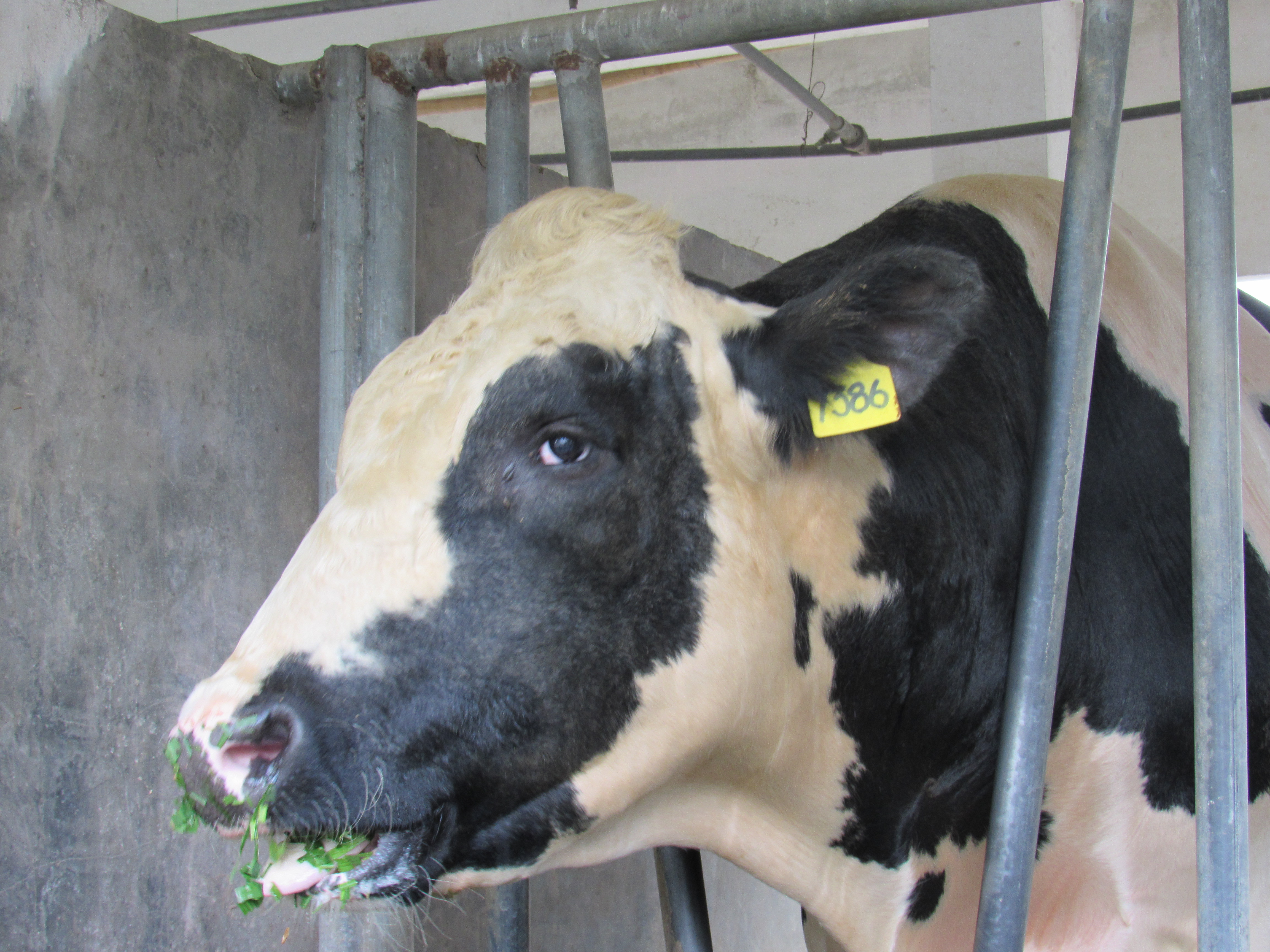
The report said the bull was born after a cow of another breed was artificially inseminated with semen from an improved breed, and the farm described it as a Burma breed. Artificial insemination uses frozen semen from selected bulls to breed cows and is a common way of improving cattle breeds.
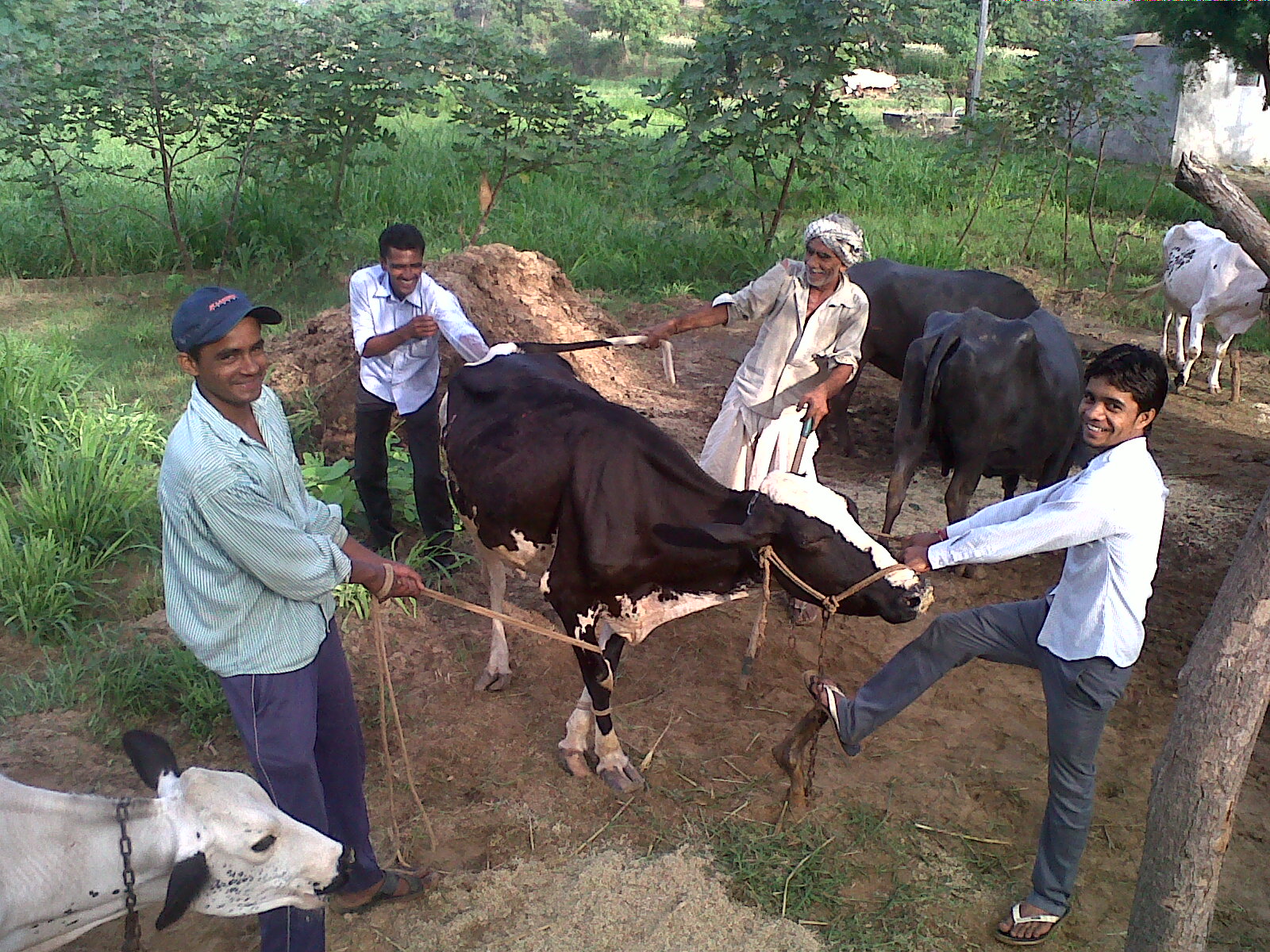
The bull's main caretaker, Nobur Ali, told Jagonews24 that the farm had raised it like their own child for more than five and a half years and that everyone on the farm had named it "Zayed Khan" for fun. The breed, he said, is big and eats a lot.
Sold from the farm, not the market
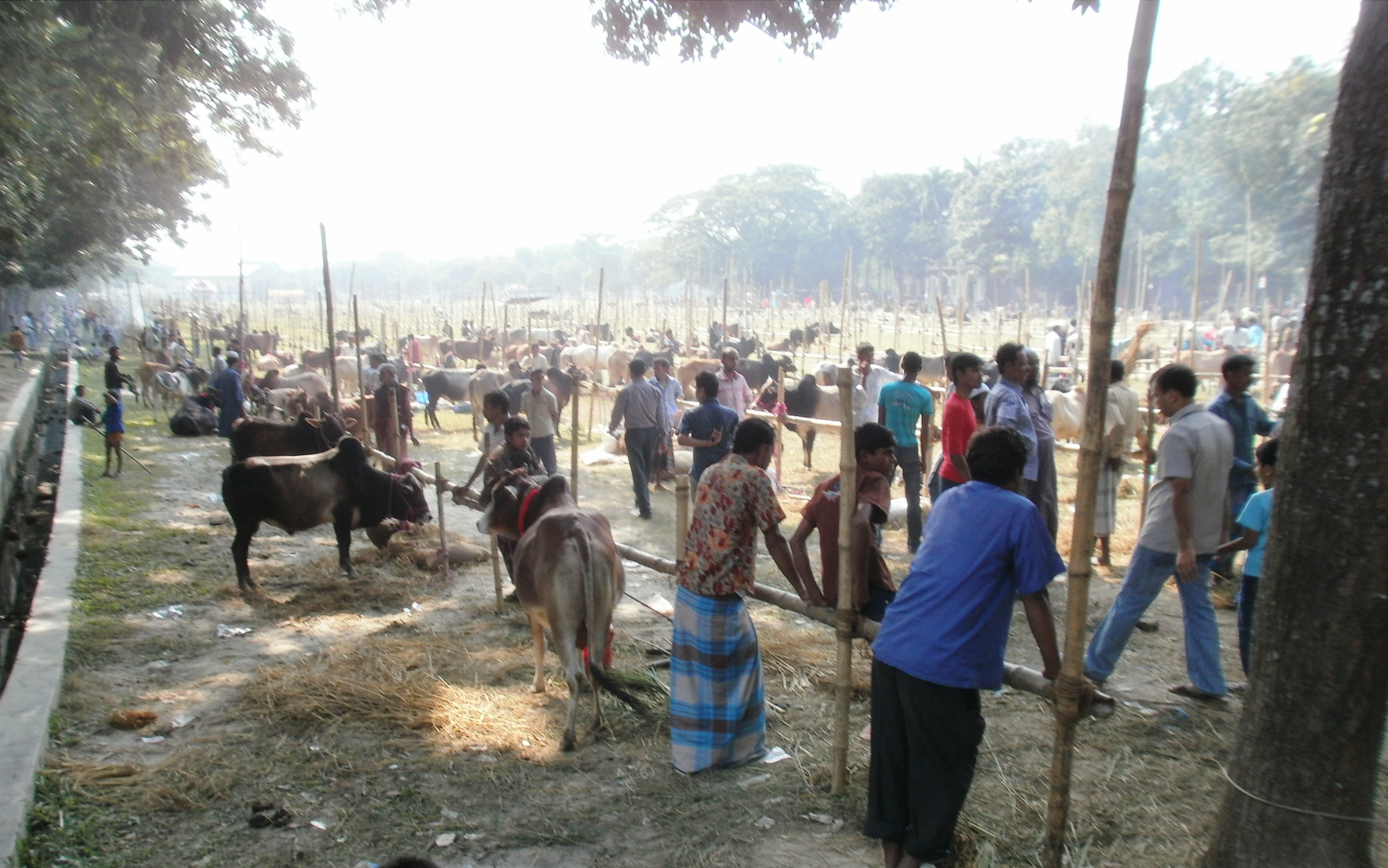
Although the farm keeps cattle of several breeds, only this bull was prepared for sale that Eid. Nobur Ali said that such a large, heavy animal could be injured at a cattle market and could become exhausted and lose condition in the heat and crowds, so buyers would have to come to the farm.
Mazmul Pramanik said the farm always has many cattle, but this time "Zayed Khan" stood out. He said he hoped it was the biggest animal in Lalmonirhat district in size and weight.
Natural fattening and the law
Officials of the Department of Livestock Services (DLS) have warned at various times against using steroids to fatten cattle quickly before Eid. A Dhaka Tribune report of 2019 noted that under the Fish Feed and Animal Feed Act, 2010, lacing animal feed with antibiotics, growth hormones, steroids or other harmful chemicals is prohibited, with a maximum jail term of one year, with or without a fine of up to Tk 50,000. A DLS director quoted in that report said steroids fatten cattle in two or three weeks, against three to four months by conventional methods, and that the drugs can cause liver failure, jaundice and hepatitis in people.
A year earlier, in May 2025, the state news agency BSS reported that more than 230,000 sacrificial animals had been prepared in Lalmonirhat district. District Livestock Officer Dr Md Jahangir Alam said then that most farmers had fattened their cattle naturally and that the use of hormones or injections had largely stopped. Farmers seeking advice on raising or fattening cattle can contact their upazila livestock office.
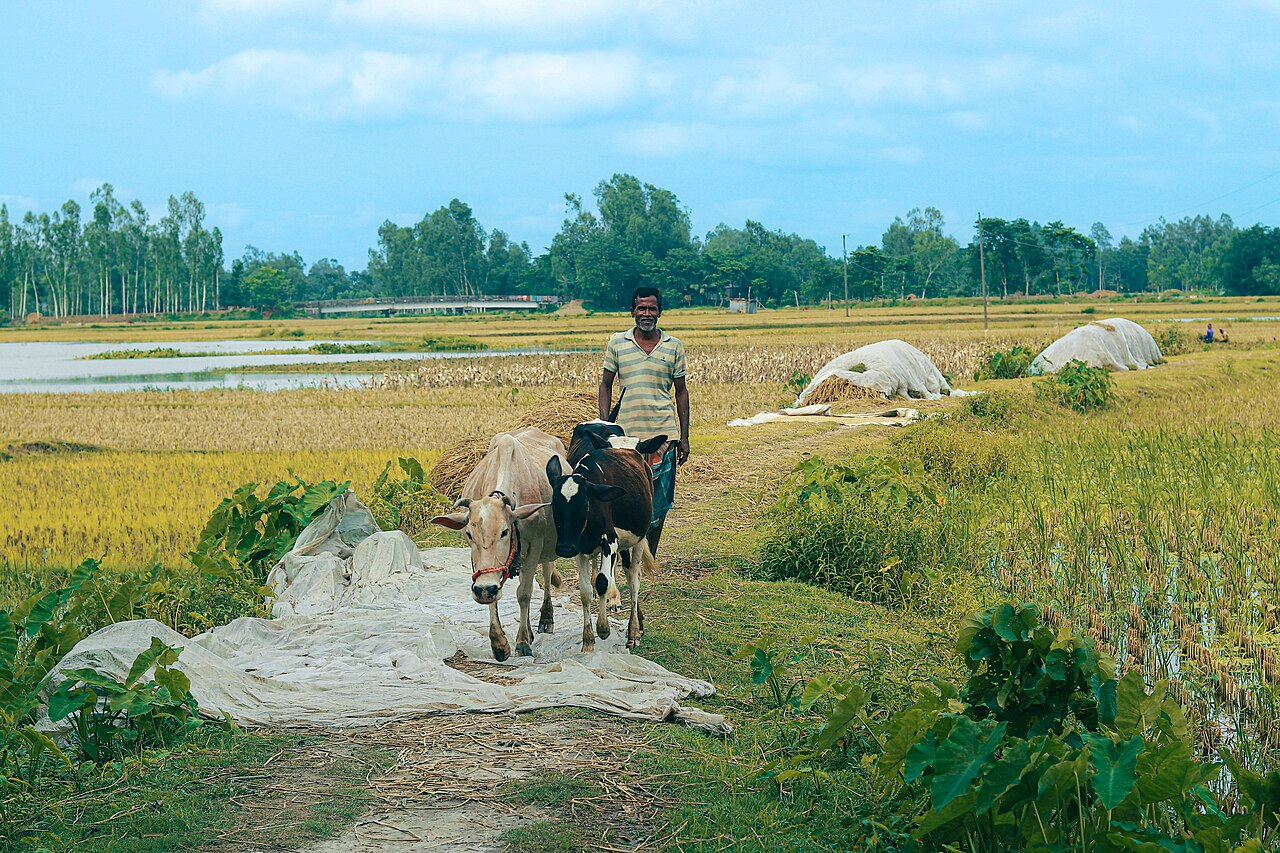
Photo: Wasiul Bahar / Wikimedia Commons (CC BY-SA 4.0)
Sources: Jagonews24, Bangladesh Sangbad Sangstha (BSS), Dhaka Tribune, Laws of Bangladesh (Fish Feed and Animal Feed Act, 2010), Wikipedia
Comments
(0)