
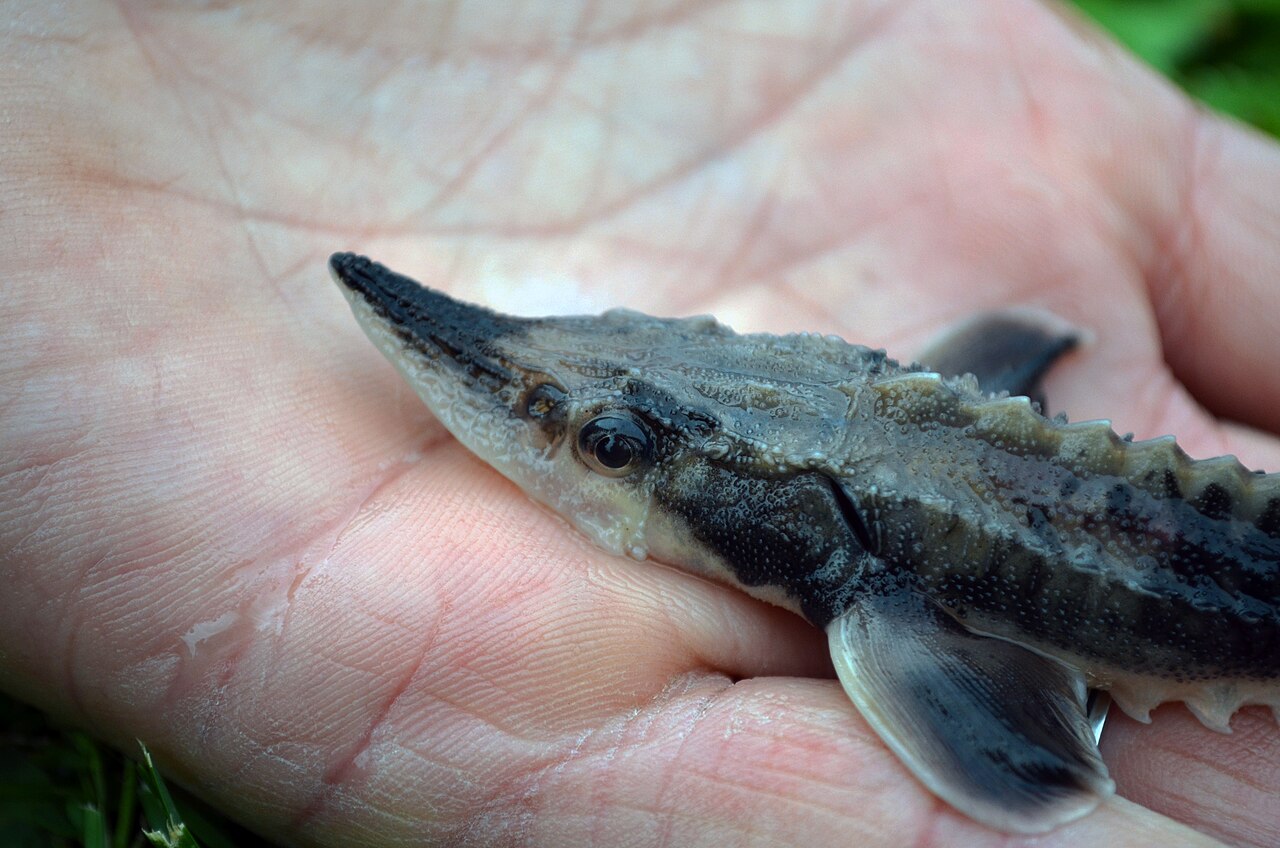
Crews from the US Fish and Wildlife Service's Alpena Fish and Wildlife Conservation Office, on a routine mission in Cleveland Harbor last month, caught three healthy year-old lake sturgeon. Each carried a Passive Integrated Transponder (PIT) tag, which showed they came from a batch of 2,000 reared at Genoa National Fish Hatchery in Wisconsin and stocked the previous autumn: two in the Cuyahoga River in downtown Cleveland and one in Cuyahoga Valley National Park, about 20 miles south.
The fish were about 6 inches long when released; when caught again, two measured 17 inches and one 16. "To some of us, it was a bit of a surprise how fast they grew," said Jason Fischer, a fisheries biologist with the service. Lake sturgeon, which can reach 6 feet and have changed little over hundreds of millions of years, are endangered in Ohio. Overfishing and dams over the last century degraded their rivers, and before the Clean Water Act of 1972 the Cuyahoga was so polluted that it caught fire and was considered devoid of life.
Fischer estimates that about half of the 2,000 sturgeon stocked last year may still be alive in Lake Erie. Young fish are easy prey for cormorants, gulls, herons and larger fish such as walleye. This year 1,500 more went into the Cuyahoga, 750 of them at Rivergate Park in Cleveland, where families lined up to release them. Because males mature at around 10 years and females closer to 20, biologists expect about 25 years of stocking before they know whether the fish return to spawn on their own.
Ohio's programme began on the Maumee River in 2018, said Eric Weimer of the Ohio Division of Wildlife; full-scale stocking of the Cuyahoga and the first stocking of the Sandusky River followed in 2025. Survival on the Maumee has been so good that biologists are now asking whether they stock more fish than its habitat can support. Acoustic transmitters implanted by the Division of Wildlife, the US Geological Survey and the Fish and Wildlife Service show tagged Cuyahoga fish reached the lake within a month, and many stayed around Cleveland Harbor.
At the University of Toledo, freshwater scientist William Hintz's group tracks tagged sturgeon across Lake Erie's Western Basin to see which survive and what habitats they use. Sturgeon smell a river's chemical signature and must return to their home river to spawn, he said, and because they grow slowly, live long and do not spawn every year, they are sensitive to environmental change. He called rivers "the most modified ecosystems on the face of the planet": the Maumee once ran through the Great Black Swamp, which settlers drained for farmland in the late 1800s.
Michael Durkalec, an aquatic biologist with Cleveland Metroparks, a partner in the yearly release, said the fish show how far the Cuyahoga has come. The original report is by Paul Rowley for Farm and Dairy.
Photo: Joanna Gilkeson, USFWS / Wikimedia Commons (public domain)
Source: Farm and Dairy



Comments
(0)