
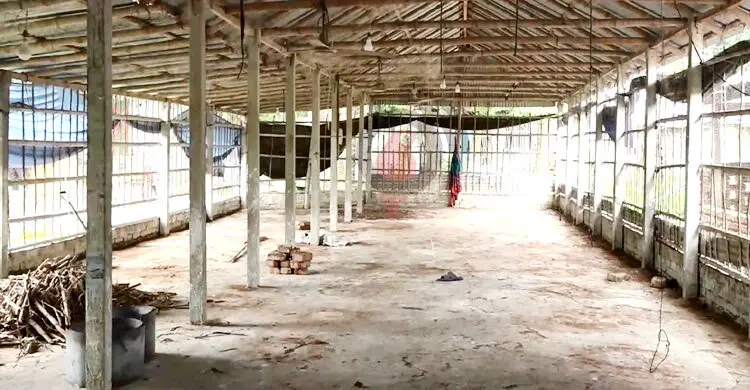
Abnormal load-shedding and repeated rises in feed prices have caused a severe slump in Kushtia's poultry industry. The once-profitable sector has collapsed in the district: about a third of its poultry farms have already closed, and those still running face many problems. Many traders linked to the industry have lost their capital through continuous losses.
Meanwhile, countless birds are dying every day because of the intense heat combined with excessive load-shedding. Farmers say that unless load-shedding and feed prices are brought under control, the once-profitable poultry industry will soon be destroyed.
According to the district livestock office and the poultry association, there are about 3,000 poultry farms in Kushtia. The coronavirus pandemic dealt the industry a heavy blow, and as it tried to recover, feed prices kept rising again and again. Recently, chickens have been dying because of load-shedding across the country, and traders are being forced to close their farms.
Feed nearly doubled
Shakil Islam, a poultry farmer in Ailchara village of Kushtia Sadar upazila, said a 50-kg sack of poultry feed cost Tk 1,800 before the pandemic. After repeated rises it now costs about Tk 3,300 a sack. The medicines given to keep chickens free of disease have also become several times dearer. While feed and medicine prices have risen repeatedly, chicken prices have not kept pace, and even when they rise a little, marginal farmers do not benefit; the benefit goes to the traders who sell chickens in the market, he said.
"It takes at least 40 days to raise a chicken ready for sale. After feeding and caring for the birds like our own children all that time, we cannot even recover the cost at sale, let alone make a profit. So, because of continuous losses, many like me have been forced to close their farms," he said.
Jasim Uddin, a farmer in the Elengipara area of Kumarkhali upazila, said the pain of repeated feed and medicine price rises has been joined by the trouble of load-shedding. Most farms are in villages, and in these areas served by rural electricity there is no power for at least 12 to 16 hours out of 24, every day. So chickens are dying daily in the extreme heat, he said.
"Now, to keep raising chickens, we would have to sell everything we own to repay debts. That is why hundreds of farmers in the district like me have closed their businesses," he added.
Differing estimates of closures
Md Asadul Islam, president of the Kushtia District Poultry Association, claimed that repeated rises in feed and medicine prices, together with a lack of government support, have brought the district's poultry industry to the brink of destruction. He claimed that about 70 per cent of the district's farms have already closed, and those still running are limping along.
On government help during the pandemic, he said only a handful of the district's roughly 3,000 farmers received support, and it was very inadequate. As an example, he said a farmer received only Tk 20,000 in government support while losing Tk 5 lakh. Now, while farmers are badly hit, the traders who buy chickens from them cheaply and sell at higher prices in the market are the ones profiting, he said.
To save the district's poultry industry, the association leader urged government support, uninterrupted electricity, bringing feed prices to a tolerable level, and quickly identifying and solving the problems.
Acknowledging the plight of the district's poultry farmers, Kushtia district livestock officer Dr Siddiqur Rahman said about 20 to 30 per cent of the district's poultry farms have already closed because of multiple crises.
Source: Jagonews24. First published in Bengali on The Agro News.

Comments
(0)