
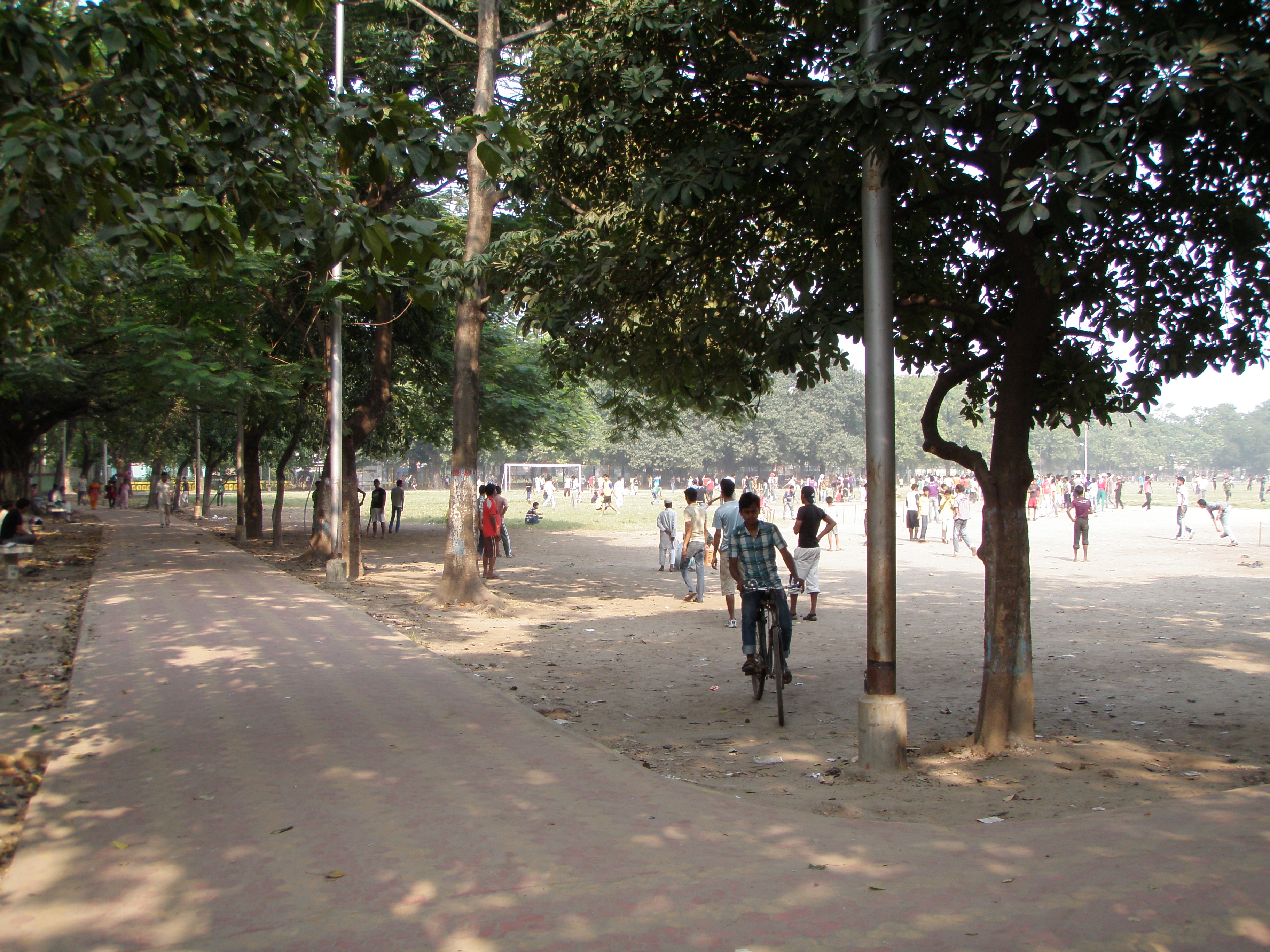
The Allah Bharosa cattle market, held every year on Rifle Range Road in Kolkata's Park Circus ahead of Eid-ul-Azha, was not held in 2026. Jagonews24's West Bengal correspondent reported on 24 May 2026 that the market had been shut because of the new state government's strict animal slaughter policy and licensing restrictions, introduced after the change of government in West Bengal. Clothing stalls for Eid had been set up on the ground where cattle used to be bought and sold.
Eid-ul-Azha is one of the two main religious festivals of Muslims. Ahead of it, cattle markets had been set up in Kolkata and in districts across West Bengal, but the Park Circus market, regarded as one of the largest in the state, did not open, the report said. Sheikh Sikandar, the market's secretary, declined to comment when contacted. Reports and court proceedings at the time put the festival in West Bengal on 27 or 28 May.
The Park Circus market and Kolkata's Eid trade
Park Circus is a neighbourhood of south Kolkata and one of the city's important road junctions. It is bordered by Entally and Sealdah to the north, Park Street and Chowringhee to the west, Tangra to the north-east, Topsia to the east and Ballygunge to the south, and it connects to Park Street and AJC Bose Road. It falls under Karaya police station in the South-East Division of Kolkata Police.
According to Jagonews24, local (deshi) cattle dominated the Allah Bharosa market on Rifle Range Road. Every year animals arrived from several Indian states, among them very large cattle. The correspondent wrote that the traditional market had closed ahead of Eid-ul-Azha amid the tangle of the state's animal laws.
Other Kolkata markets were changing too. The Business Standard's Bengali edition in Dhaka reported on 21 May 2026 that, with cattle sales falling, large markets such as Raja Bazar were crowded with buyers of goats and sheep, which people saw as a 'safe alternative'. The report noted that, although the rules called for health checks on all animals, these were rarely enforced for goats and sheep.
The same report quoted the Calcutta Beef Dealers Association as saying the government slaughterhouse at Tangra had been closed for two days and that only two buffaloes a day were being slaughtered, to feed the animals at Kolkata's zoo. A member of the association said they had been given no advance notice of the closure. Beef prices in Kolkata, the report said, had jumped from 280 rupees a kilogram to 600 rupees within days. The Indian outlet The Mooknayak reported on 19 May that beef dishes had been discontinued at Kolkata's Nizam's restaurant because of the shortage.
What the 13 May notice said
In the 2026 assembly election the Bharatiya Janata Party (BJP) won 206 of West Bengal's 294 seats, ending 15 years of Trinamool Congress rule under Mamata Banerjee. According to Prothom Alo on 20 May, the new government led by Suvendu Adhikari was sworn in on 9 May, and four days later, on 13 May, it issued a public notice on animal slaughter.
Dhaka Tribune, citing The Times of India, reported on 14 May that the notice invoked the West Bengal Animal Slaughter Control Act, 1950, and a 2018 order of the Calcutta High Court. The government's position was that it was enforcing an existing law and court directions rather than making a new law. The main conditions were these:
- No bull, bullock, cow, calf or male or female buffalo may be slaughtered without a certificate that the animal is 'fit for slaughter'.
- The certificate is issued jointly by the chairperson of the municipality or the president of the panchayat samiti and a government veterinary officer.
- It may be issued only if the animal is over 14 years old and unfit for work or breeding, or permanently incapacitated by age, injury, deformity or incurable disease.
- A refusal may be appealed to the state government within 15 days.
- Slaughter is allowed only at municipal slaughterhouses or places designated by the local administration; slaughter in open public places is prohibited.
- Violations are punishable by up to six months in prison, a fine of up to 1,000 rupees, or both.
Scroll reported on 14 May, citing The Telegraph, that the new rules did not carry the earlier exemptions for religious, medicinal and research purposes, and a second Scroll report on 20 May said the notice provided no such exemptions. When the notice was issued, Eid was about two weeks away.
What the 1950 Act provides
The West Bengal Animal Slaughter Control Act dates from 1950. It applies only to the animals listed in its schedule: bulls, bullocks, cows, calves, male and female buffaloes, buffalo calves and castrated buffaloes. Goats, sheep and camels are not covered.
Under the Act, the slaughter certificate is issued jointly by the head of the municipality or panchayat samiti and a veterinary surgeon; if the two disagree, a district-level or higher veterinary officer decides. Even with a certificate, an animal may be slaughtered only at a prescribed place. The Act gives officials powers to enter and inspect premises, makes its offences cognizable and applies the same penalty to abetment and attempts.
Section 12 allows the state government, by general or special order and on conditions it sets, to exempt the slaughter of any animal for religious, medicinal or research purposes. Much of the dispute in May 2026 turned on this section.
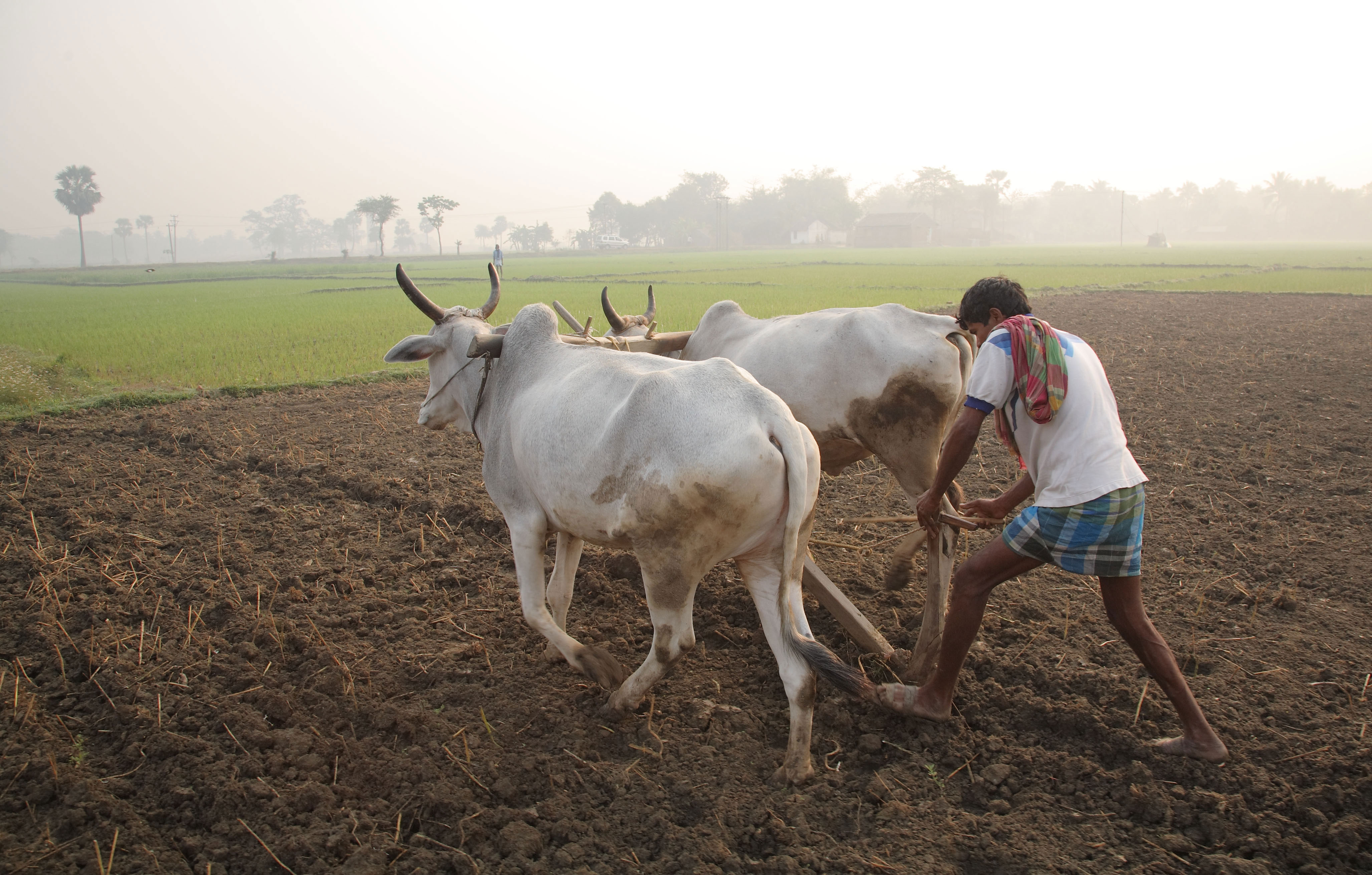
India's Supreme Court explained the purpose of the Act in a 1994 judgment: to increase the supply of milk and to avoid wasting the animal power needed to improve agriculture. For that reason, the court said, the Act imposes a total ban on slaughtering healthy cows and the other scheduled animals that are not fit for slaughter.
Two earlier Supreme Court rulings
The legal question over cow slaughter at Eid in West Bengal was not new. On 16 November 1994 a Supreme Court bench of Justices Kuldip Singh, B. L. Hansaria and S. B. Majmudar decided State of West Bengal v. Ashutosh Lahiri. According to the judgment, the state government had used Section 12 to exempt the slaughter of healthy cows on the day of Eid-ul-Azha. Twenty-seven people challenged this in the Calcutta High Court, whose division bench ruled on 20 August 1982 that slaughtering cows on that day was not an essential requirement of Islam, that the exemption was therefore outside Section 12, and that the state must not grant it in future.
The state and appellants from the Muslim community argued before the Supreme Court that Section 12 speaks of 'any religious purpose', which could include an optional one. The Supreme Court dismissed the appeals and upheld the High Court. To lift the ban, it said, it must be shown that sacrificing a healthy cow is essential for a religious purpose; because sacrificing a healthy cow at Eid-ul-Azha is not an essential religious requirement for Muslims, Section 12 could not be used for it.
That ruling followed the 1958 Constitution Bench judgment in Mohd. Hanif Quareshi v. State of Bihar. As quoted in the 1994 judgment, Chief Justice S. R. Das cited a translation of the Hedaya, a work of Islamic jurisprudence, to note that the sacrifice for one person is a goat and for seven a cow or a camel, so sacrificing a cow is optional rather than obligatory. The 1958 judgment also recorded the argument that a man with six family members might afford one cow but not seven goats, and described this as a possible economic compulsion.
The High Court case and the order of 21 May
Several petitions against the 13 May notice reached the Calcutta High Court. The petitioners included Trinamool Congress MLA Akhruzzaman, Trinamool MP Mahua Moitra, Muslim organisations and cattle traders. Scroll reported on 20 May that the Communist Party of India (Marxist-Leninist) Liberation had also filed a petition the previous day, calling the notice 'an assault' on Muslims' religious freedom and on cattle traders' livelihoods.
According to the legal news site LiveLaw on 21 May, Senior Advocate Shadan Farasat, appearing for Mahua Moitra, argued that Section 4 of the Act allows only animals over 14 years old to be slaughtered, while qurbani requires healthy animals. He said many families could not afford seven small animals in place of one large animal shared by seven people, and sought an exemption under Section 12 for the festival.
Senior Advocate Bikash Ranjan Bhattacharya, for another petitioner, argued that the Act was made when farming depended on draught animals and that technology had made that purpose obsolete. He also said there was no practical way to determine an animal's age, that the fee of one rupee per animal was outdated, and that a notice issued on 13 May for an Eid on 28 May left no room for the 15-day appeal period.
The state told the court that the notice implemented the High Court's own directions, applied uniformly across West Bengal and had been widely publicised. According to LiveLaw, the state also said no applications for certificates had been received so far, and that while designated officers were in place, designated slaughterhouses were not yet available. For the Union government, Additional Solicitor General Ashok Chakraborty said the notice followed an unchallenged 2018 order and that animal sacrifice at Eid was an optional practice. He claimed that cattle smuggling to Bangladesh had reduced the state's cattle numbers since 2019.
On 21 May a division bench of Chief Justice Sujoy Paul and Justice Partha Sarathi Sen refused to stay the notice. LiveLaw reported that the court found the notice implemented the 2018 order in Rajyashree Chaudhuri v. State of West Bengal (WP 328 of 2018), which had not been challenged and had attained finality. The court directed the state to:
- amend the notice to state expressly that slaughter of animals, including cows and buffaloes, in open public places is strictly prohibited;
- add, following the Hanif Quareshi judgment, that sacrifice of a cow is no part of the festival of Eid-ul-Azha and is not a religious requirement under Islam;
- decide within 24 hours on requests for exemption under Section 12 for the coming festival.
The court granted no interim relief on the challenge to the constitutional validity of Sections 4, 6, 7, 8 and 11, noting the presumption of constitutionality for a statute in force for more than 76 years. Scroll reported on 22 May that the court also asked the state to make sure it had a working mechanism for issuing certificates and adequate infrastructure for slaughter.
Empty markets, indebted farmers
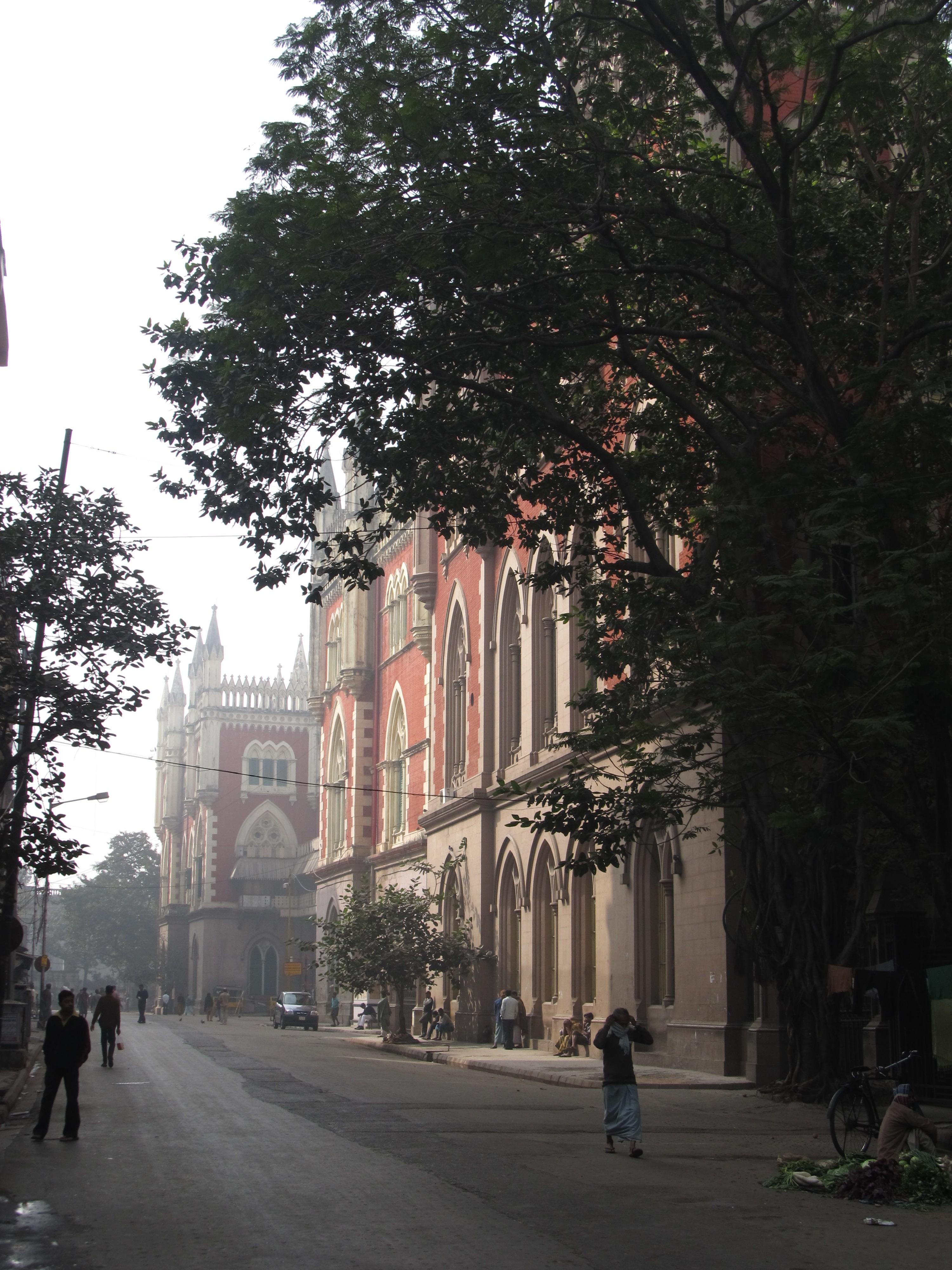
In the days before the Park Circus report, the press also described the state's rural markets. The Business Standard's Bengali edition reported on 21 May that the Polerhat cattle market in Bhangar, South 24 Parganas, normally traded about 2,000 cattle a day, but in the run-up to that Eid only 20 to 25 animals could be seen there. The report said markets were almost deserted because there was no clear system for determining an animal's age and issuing certificates, and because people feared the consequences of breaking the law.
A farmer in Ghoshpara, Bhangar, told the paper he had borrowed 500,000 rupees from a local moneylender at 4 per cent interest, hoping to repay it by selling nine of his ten cows, and that feed was costing him 500 rupees per cow per day. Another farmer in the area, with 22 cows, had hoped to sell 15 and had borrowed 700,000 rupees at 5 per cent. He said selling cows whose milk had fallen or that could no longer calve at this time of year was a family practice, and that in the Eid season a cow bought for 70,000 to 80,000 rupees would fetch at least 100,000. A seller who had brought five cows about 42 kilometres from Basirhat said he had hoped for 40,000 rupees each but had been offered only 15,000.
The Mooknayak reported on 19 May that many of the affected farmers and traders came from the Ghosh and Goala communities traditionally engaged in cattle rearing and trade, and that many had borrowed lakhs of rupees to raise animals for the Eid season. Prothom Alo on 20 May quoted Yunus Ali, a BJP leader in North 24 Parganas, who explained that in West Bengal cattle were mostly reared by Hindu Ghosh herders, who earned from selling milk and later sold the animals, which Muslims bought. 'The matter has created some problems. But I hope the party will handle it before Eid-ul-Azha,' he told the paper. Women from herding families told Prothom Alo that the money from selling cows at this time of year usually went to repaying farm loans and microcredit.
What political and religious leaders said
The Business Standard's Bengali edition reported that Naushad Siddiqui, an Indian Secular Front (ISF) leader and the MLA for Bhangar, wrote to the chief minister on 18 May asking for veterinarians to be posted at panchayat level so certificates could be obtained quickly, and pointed to the state government's power under Section 12 to grant exemptions for religious purposes. Earlier, Congress leader Adhir Chowdhury had written to the chief minister suggesting that district authorities in Muslim-majority areas such as Murshidabad mark out specific places where people could perform their religious rites.
BJP Rajya Sabha member Rahul Sinha told the same paper that 'for a greater, noble cause some people have to bear some discomfort', and said an existing law had been properly enforced after long consideration. Trinamool MP Mahua Moitra said on social media that the restrictions had hurt the rural economy and that Ghosh and Das families as well as Muslims were part of the trade, Prothom Alo reported.
Maulana Muhammad Shafiq Qasmi, imam of Kolkata's Nakhoda Mosque, told The Business Standard's Bengali edition that infrastructure should have been built in consultation with all stakeholders before the law was suddenly enforced. 'We respect the law, everyone will follow the law, but the government must find ways to make people's lives easier,' he said, adding: 'We are law-abiding citizens. We will not sacrifice cows.' Prothom Alo's English edition reported on 19 May that, in a statement, he noted the law had been enacted in 1950 and was not made by the BJP, and appealed to Muslims to stop cattle sacrifice and to stop eating beef permanently.
West Bengal's cattle in numbers
West Bengal is one of India's largest cattle-holding states. According to the key results of the 20th Livestock Census by India's Department of Animal Husbandry and Dairying (launched in October 2018 and published in 2019), the state's cattle rose from 16.5 million in 2012 to 19.0 million in 2019, an increase of 15.18 per cent. That put West Bengal first among the states for cattle, ahead of Uttar Pradesh (18.8 million) and Madhya Pradesh (18.7 million).
The same census recorded West Bengal's total livestock rising from 30.3 million to 37.4 million (23.32 per cent), the fastest growth of any state. Its goats rose from 11.51 million to 16.28 million, second only to Rajasthan. West Bengal did not appear among the top ten states for buffaloes.
Across India in 2019 there were 192.49 million cattle, 109.85 million buffaloes and 148.88 million goats. The census found that exotic and crossbred cattle had grown by 26.9 per cent while indigenous cattle had fallen by 6 per cent. The deshi cattle that Jagonews24 said dominated the Park Circus market were the type declining nationally.
Eid-ul-Azha and the rules of qurbani
According to Banglapedia, Eid-ul-Azha is one of the two main Muslim festivals and in Bangladesh is popularly known as Kurbanir Eid or Bakra Eid; in Arabic, 'Eid' means festival and 'Azha' sacrifice. It commemorates the readiness of the Prophet Ibrahim (AS) to sacrifice his son, the Prophet Ismail (AS), at Allah's command.
The festival falls on the 10th of Dhul Hijjah. Sacrifice begins after the Eid prayer and may continue for the next two or three days. Sacrificial animals must be of a set age and free from defects: they may not be blind or have broken legs or horns, or ears cut off. Banglapedia notes that a camel, cow or buffalo may be sacrificed on behalf of seven people, and a sheep or goat on behalf of one. One third of the meat is kept by the owner, one third goes to relatives and the rest is given to the poor.
This rule is why large animals, cows above all, are the centre of the subcontinent's Eid markets. It also came up in the Calcutta High Court, when the petitioners' counsel argued that many families could not afford seven small animals in place of one large one.
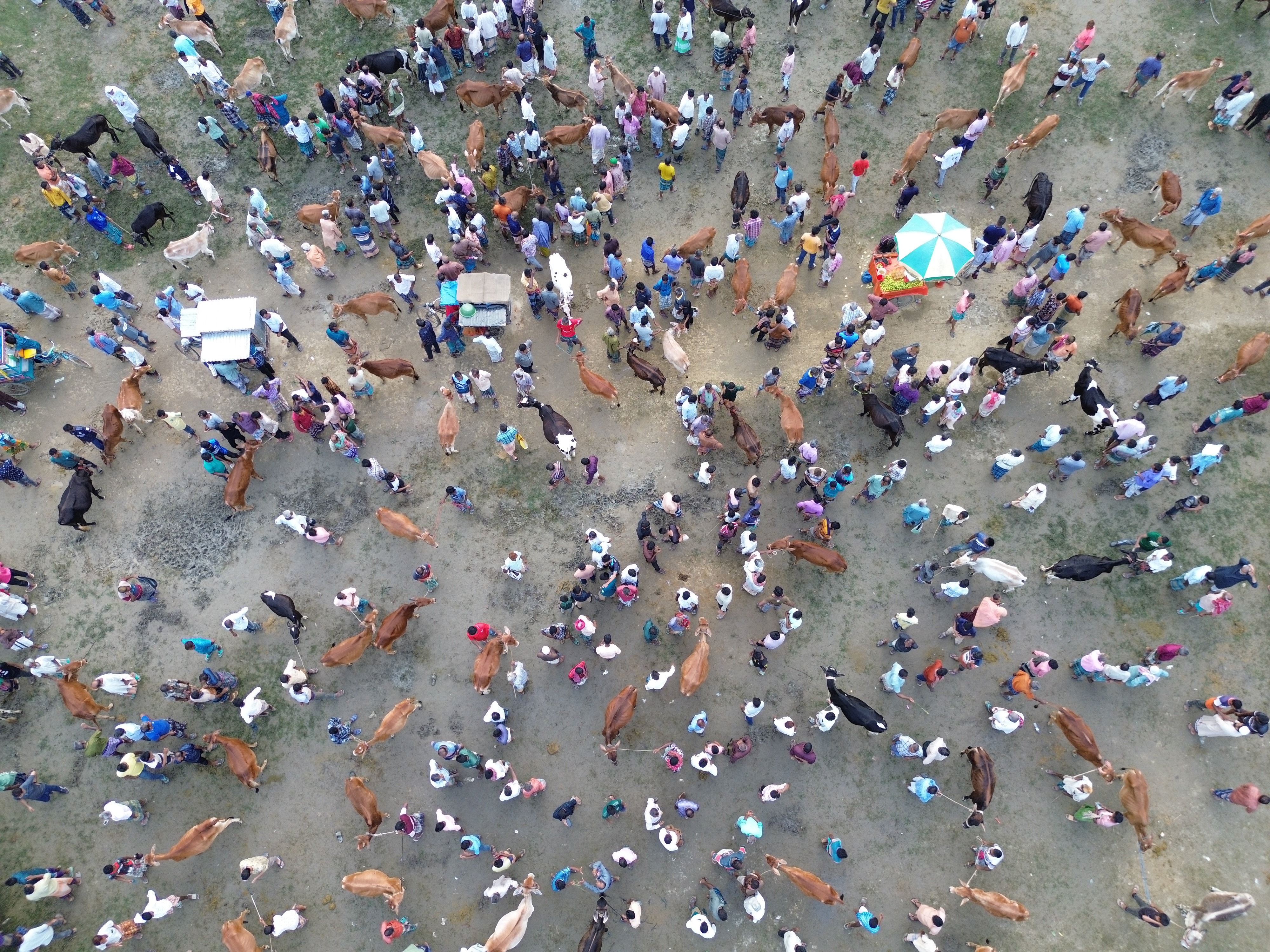
Photo: Biswarup Ganguly / Wikimedia Commons (CC BY 3.0)
Sources: Jagonews24, The Business Standard (Bangla), Prothom Alo, Dhaka Tribune, LiveLaw, Scroll, The Mooknayak, Supreme Court of India (State of West Bengal v. Ashutosh Lahiri, 1994), West Bengal Animal Slaughter Control Act 1950, Department of Animal Husbandry and Dairying, India (20th Livestock Census), Banglapedia, Wikipedia
Comments
(0)