

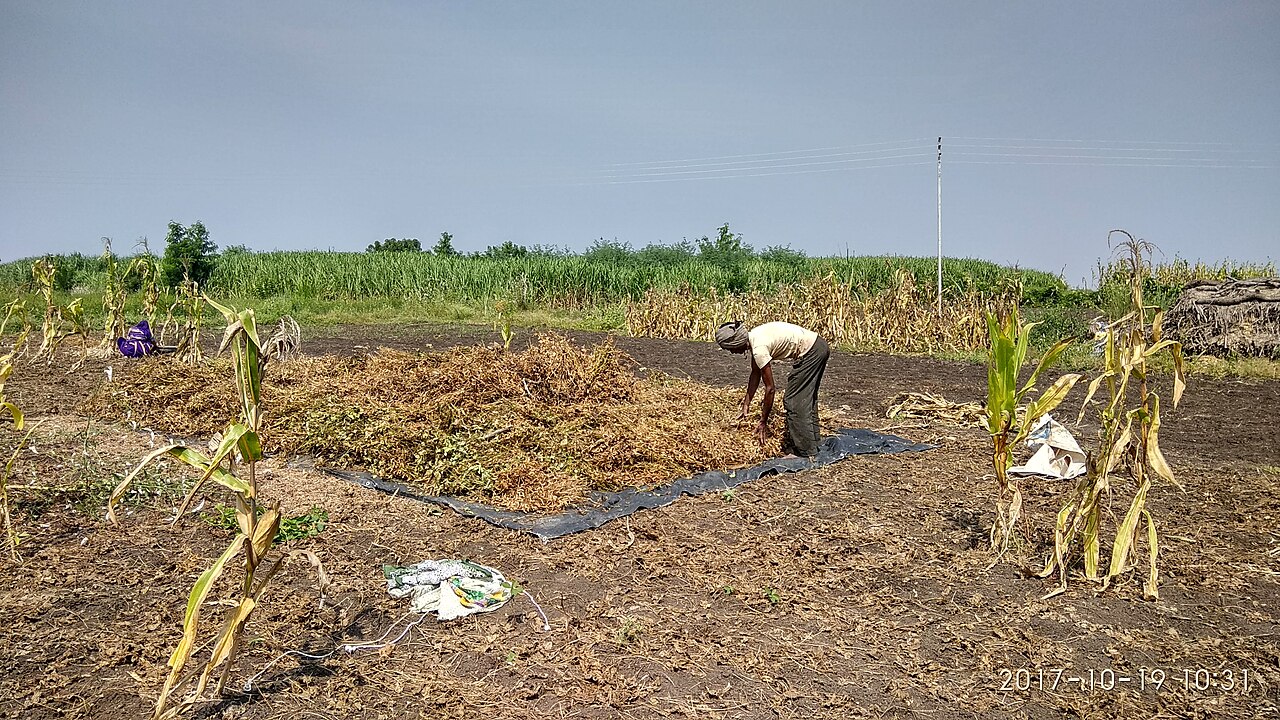
Wet paddy lies heaped in the khola, the threshing yard. With no sun, it has sprouted. Beside it, Kamrul Hasan, a farmer from Itna, looks on in despair. He spent about Tk 1.5 lakh growing boro on three acres, but heavy rain and upstream flash floods submerged half the crop, and what was saved had to be cut half-ripe. Now he is selling that paddy for only Tk 650 a maund, a loss of Tk 300 to 400 a maund against his production cost.
"Shall I repay the loan or run the household? That is my worry," he said, his face drawn.
Almost every haor farmer is in the same position this boro season. Although the government price is Tk 36 a kg, or Tk 1,440 a maund, there is no sign of it in practice. Middlemen are buying paddy from the kholas for only Tk 650 to 750.
Scale of the damage
The district Department of Agricultural Extension (DAE) said boro was grown on 168,262 hectares in Kishoreganj's 13 upazilas this season, 104,581 hectares of it in the haors. The district's rice production target is 796,686 tonnes, much of it from the haors. By Monday afternoon, crops on about 12,500 hectares had been damaged by heavy rain and flash floods, affecting about 49,000 farmers.
Local farmers said paddy prices were higher at this time last year. This year they face pressure from two sides, the disaster and the price fall. Where the production cost is Tk 1,000 to 1,200 a maund, selling at Tk 700 means a loss of Tk 300 to 400 a maund.
Touhid, a farmer from Alinagar village in Austagram, said: "There is a labour shortage and higher wages, and with water in the fields we cannot bring in harvesters either. On top of that we have to sell paddy cheaply. How will we survive? If this goes on, we will have to give up farming, our forefathers' profession."
A visit to several haors in the district found the same situation in Itna, Austagram, Mithamain, Nikli and other areas. Farmers are cutting paddy in waist-deep water. Unable to dry it in the kholas, they leave it lying wet, and in many places it is sprouting.
Wet paddy, no buyers
Alal Mia, a farmer from Gopdighi village in Mithamain, said: "I borrowed to grow paddy on seven bighas. When I bring it to the khola, they offer Tk 600 to 700. No one wants wet paddy. I heard the government will buy at Tk 1,440, but I did not even get the news properly. And even if I did, the government warehouse won't take paddy that went under water, because of its colour and because it is not properly dried."
Amena Khatun, a woman farmer from Nikli, said: "There is no sun, the paddy doesn't dry. It is spoiling in the khola. We are forced to sell cheaply. To sell to the government warehouse you need dry paddy with a bright colour, and we did not get that chance this time."
Paddy trader Mojlu Kha said: "Buying wet paddy carries more risk. Because of drying costs, weight loss and damage to quality, we buy at a lower price." Farmers, however, accuse the middlemen of imposing whatever price they like, taking advantage of the crisis.
Government procurement
Government paddy procurement began on Sunday, 3 May. According to the district food department, paddy is being bought directly from farmers through the LSDs, with payment made through banks.
Kishoreganj Assistant Food Controller Md Mosharraf Hossain said the target this season is to buy 18,330 tonnes of paddy at Tk 36 a kg from the district's 13 upazilas. Paddy will be bought directly from farmers if it meets the set standard.
Many farmers, however, cannot sell to government warehouses because they cannot keep the required moisture level, and many reportedly do not know about the programme.
People involved in agriculture say three factors have caused this: information not reaching the field, the complexity of the purchase process and a lack of storage facilities. In their view, the huge gap between the government price and the real market is not only an economic crisis but a fight for farmers' survival, and if it is not resolved farmers will lose interest in farming.
Kamrul Hasan of Itna said the same: "I grew the paddy, but I can't sell it at a fair price. How long can I survive in farming like this?"
Md Sadequr Rahman, assistant professor of sociology at Kishoreganj Pourashava Mohila College, said: "Temporary paddy-drying facilities at union level, quick direct purchases from farmers, information through mobile phones or SMS and stronger monitoring of middlemen are needed. These steps could improve the situation. Otherwise, farmers will lose heart and interest in farming, and food production will fall short."
Md Mosharraf Hossain told Jagonews: "So that farmers can easily sell paddy to government warehouses, the message has been spread in every upazila through loudspeaker announcements and sub-assistant agriculture officers. Considering the disaster, procurement, which was to start on 15 May, was brought forward to 3 May."
On paddy that went under water, he said: "Paddy must meet the set standard to be delivered to the warehouse. There will be no relaxation on this."
On the middlemen, he said: "The district administration has given strict instructions to everyone concerned at the district monitoring committee meeting so that middlemen or faria traders cannot deprive farmers of a fair price."
Source: Jagonews24. First published in Bengali on The Agro News.
Comments
(0)